
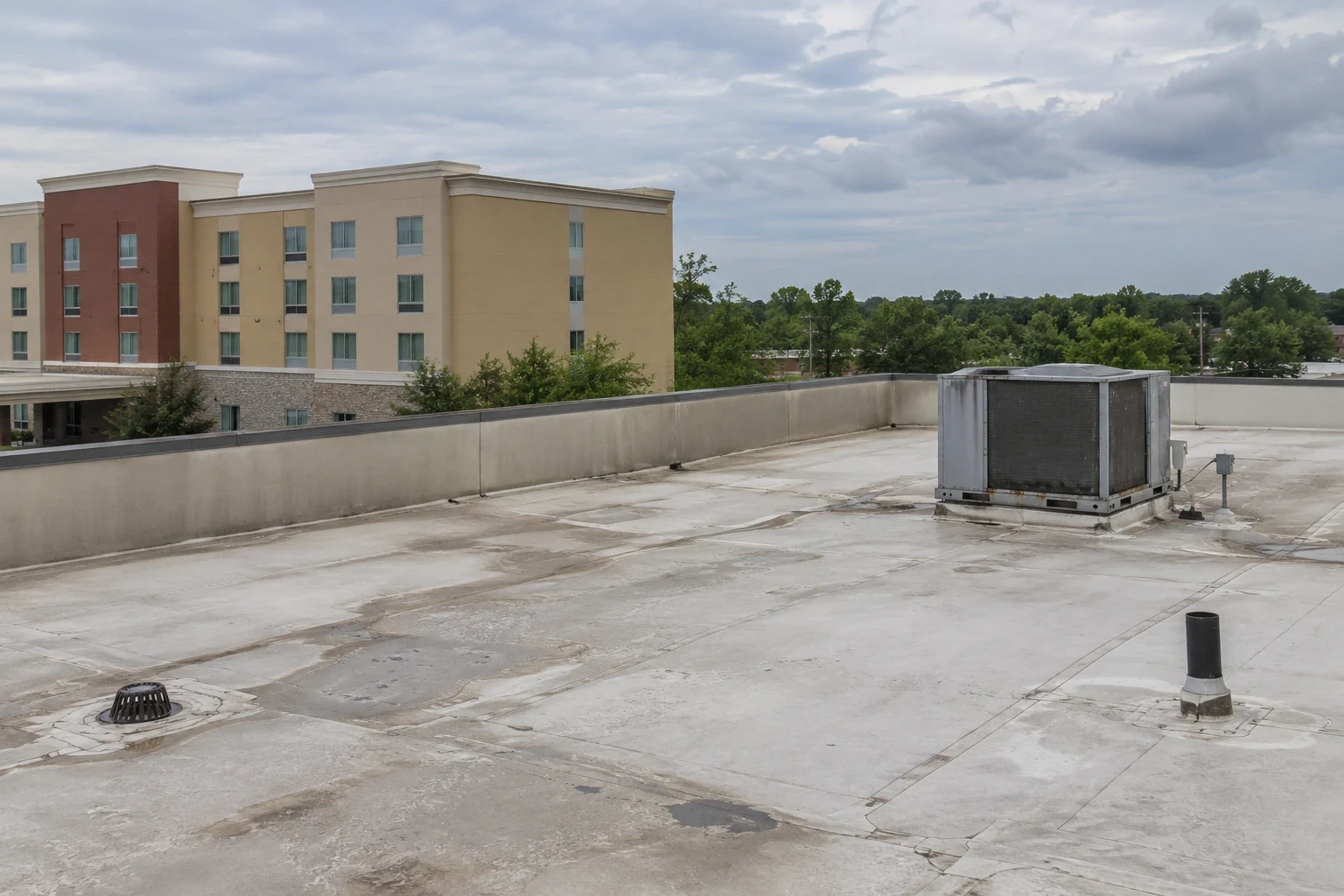
Plan hotel roof inspections, repairs, drainage work, and renewal around guest access, rooftop equipment, weather exposure, and operating needs.
A roof leak over guest rooms or a loose edge above an entrance needs a defined inspection route and a plan for people below. We identify the roof assembly, check penetrations and drainage, and document the area that can be reached. York County describes hotel, restaurant, retail, and office activity in the Carowinds Boulevard growth area and at Kingsley Town Center. Those names describe broad commercial districts, not a particular hotel property. We can coordinate access around Carowinds Boulevard or Kingsley Town Center with the facility contact and its guest-service requirements.
Inspect the Roof Around Guest Areas
Before work is priced, we walk the accessible roof and identify membrane type, edge conditions, drains, curbs, penetrations, and prior repairs. A stain in a guest room can be separated from the actual roof entry by a deck, insulation, conduit, or wall cavity. We compare the indoor report with the nearest roof transitions and mark what we can verify. If access is limited, we state which areas were not inspected instead of extending a finding across the whole roof.
A leak investigation can trace water from a ceiling symptom toward a roof detail. We record whether the likely entry point is confirmed, probable, or still uncertain. When an opening or moisture test is proposed, the property team approves the location, interior protection, and closure steps first. Use each test opening to identify its roof zone, then compare the layers and moisture findings with other wings before setting a building-wide scope.
Check Equipment Bases and Roof Openings
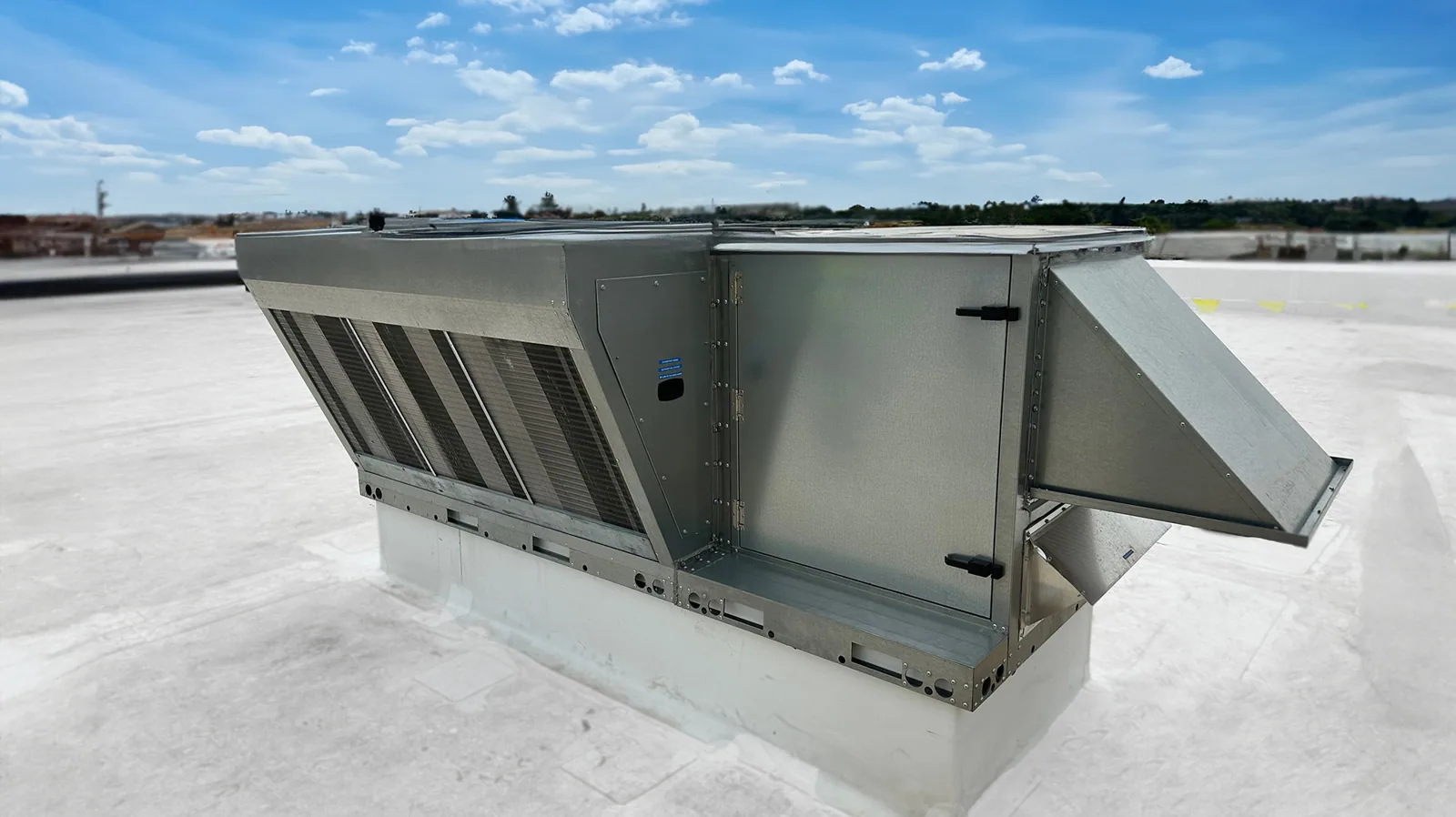
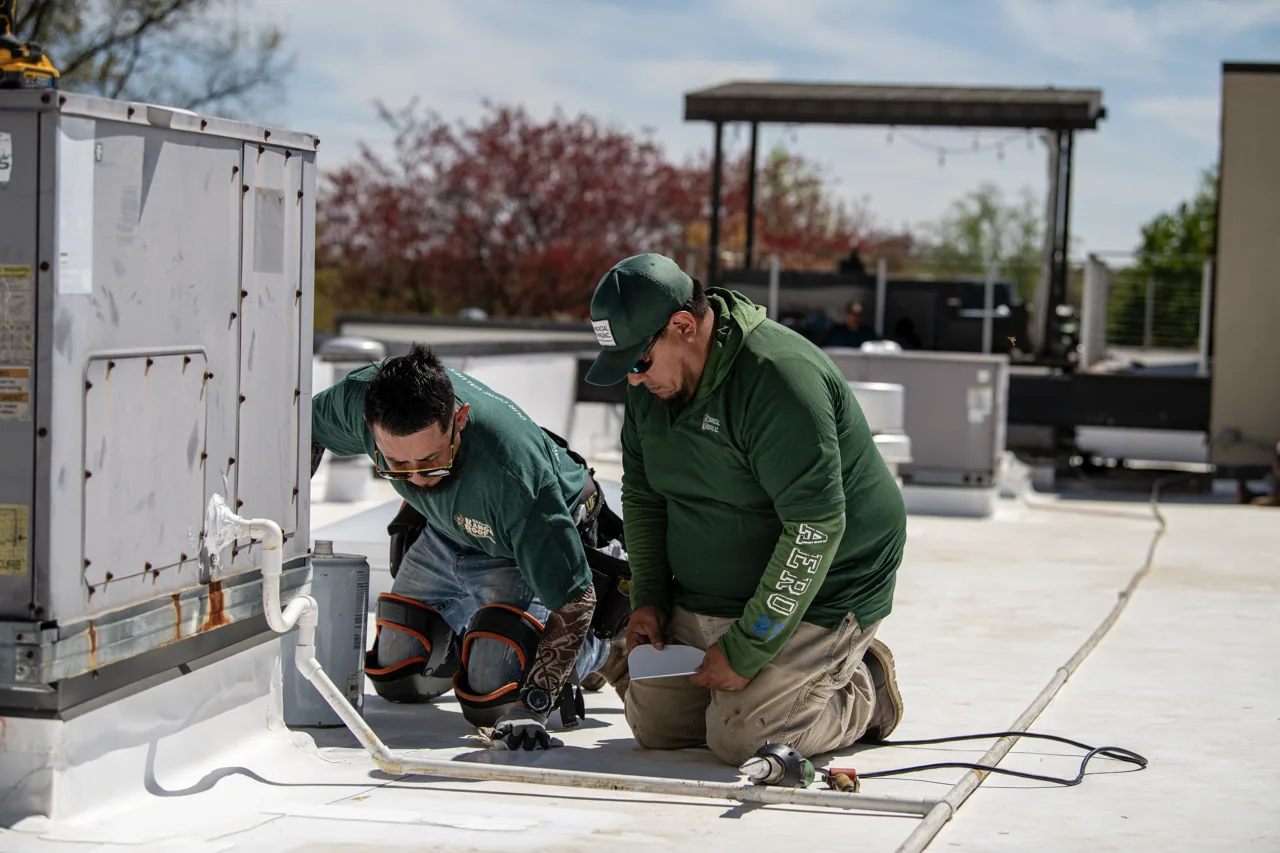
Heating and cooling equipment, exhaust fans, plumbing vents, antennas, and conduit can interrupt the waterproofing surface. We examine curb flashing, pitch pockets, metal transitions, attachment points, and seams around each accessible detail. Replaced equipment may leave a former opening or unused support that still needs a watertight closure. The repair scope identifies which roof details are included and separates them from mechanical work.
For a curb and equipment-support repair, we check whether the base is sound, whether flashing follows the curb, and whether water can collect along its upslope edge. A replacement unit should not conceal a damaged membrane connection. If the equipment contractor will remove or reset a unit, the trades need a clear sequence for protecting the open area and restoring the roof tie-in.
Roof material matters when selecting a repair. Thermoplastic membrane, EPDM, bitumen, and metal need different preparation and compatible products. We confirm the surface from visible evidence or available records before specifying a patch or coating. If the assembly remains unclear, the proposal identifies the needed test or record instead of assuming a system from the building's use or appearance.
Trace Drainage and Edge Conditions
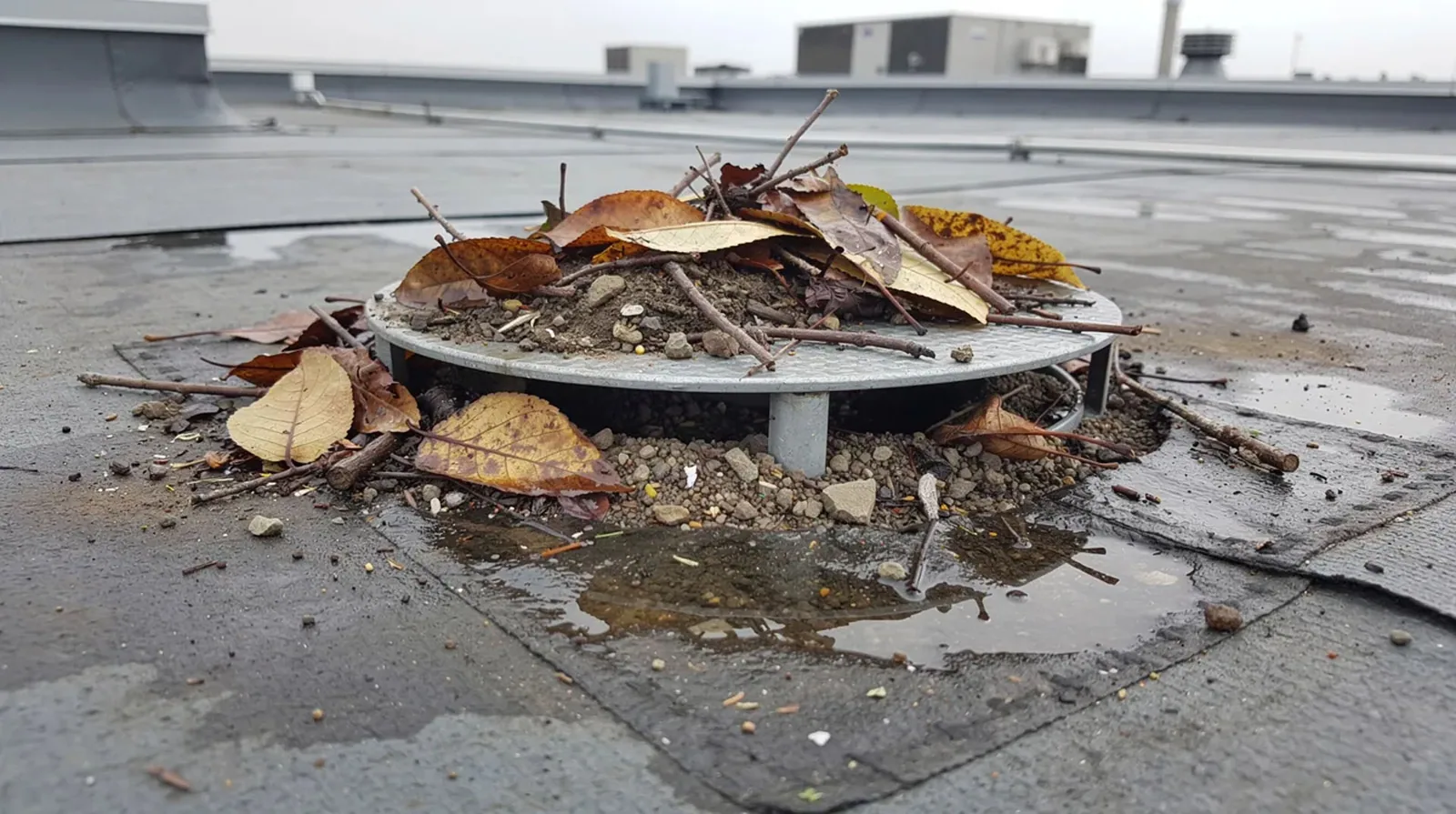
Water management connects roof drains, scuppers, gutters, downspouts, and discharge points. We check accessible outlets for debris, separation, loose strainers, and damaged membrane connections. A drain or scupper repair may address a failed transition, while continuing ponding can require review of roof slope or outlet capacity. We document the condition separately from routine debris removal so the property can see what work was completed.
At the perimeter, we inspect coping, edge metal, fasteners, sealant, and termination details for movement or gaps. A loose metal section over a public entry has a different access and protection need than a defect over a restricted roof zone. We identify the affected length and plan the work boundary with staff before staging materials. If water has reached a wall or ceiling, we compare the interior location with the discharge path rather than assuming the nearest edge is responsible.
Rock Hill sits in the warm, humid Carolina Piedmont, where regular rainfall and a long warm season make drainage and weather-ready closure important planning items. York County also appears in regional tornado records. A storm report alone does not show that a hotel roof sustained damage; after a reported event, an inspection should record visible displacement, punctures, or open flashing and the portions that could be reached.
Coordinate Repairs With Hotel Operations
Roofing activity can affect guest entrances, balconies, parking areas, loading routes, and occupied rooms. We ask the property contact to identify quiet periods, access controls, deliveries, roof hatches, lift areas, and rooms or public spaces that must remain available. These details guide the sequence, but they do not remove the need to close or protect an area when the roof is open. The work plan names the boundary, access route, and temporary cover for each phase.
A phased occupied-building plan can reduce disruption by moving through defined roof sections and coordinating each closure with staff. Weather, roof condition, crew access, material preparation, and cure requirements influence the sequence. We do not promise that every task can proceed while every room remains in use. If work must pause, the open area needs a secure temporary condition before the team leaves it.
Where concealed wet insulation or deteriorated decking appears, we photograph the location and explain the additional area before expanding scope. The facility contact can decide whether to authorize the added repair, request a separate price, or preserve the area for further assessment. That boundary helps operations staff understand which rooms or roof sections may be affected during the next shift.
Choose a Repair or Renewal Scope
A repair is appropriate when the defect is identifiable and the surrounding assembly can support a compatible detail. The proposal describes the roof zone, preparation, materials, flashing, access, and closeout. We avoid calling a patch a whole-roof solution when other areas were not inspected. If recurring leaks, widespread seam failure, or extensive wet material indicate broader work, we explain what evidence supports comparing repair with renewal.
Cost and duration depend on the roof system, quantity of details, access, protection, disposal, and any concealed work discovered after opening. We define included and excluded items before work starts. If a test cut reveals a different assembly or damaged substrate, the crew protects the opening and reviews the change with the authorized contact before continuing beyond the agreed boundary.
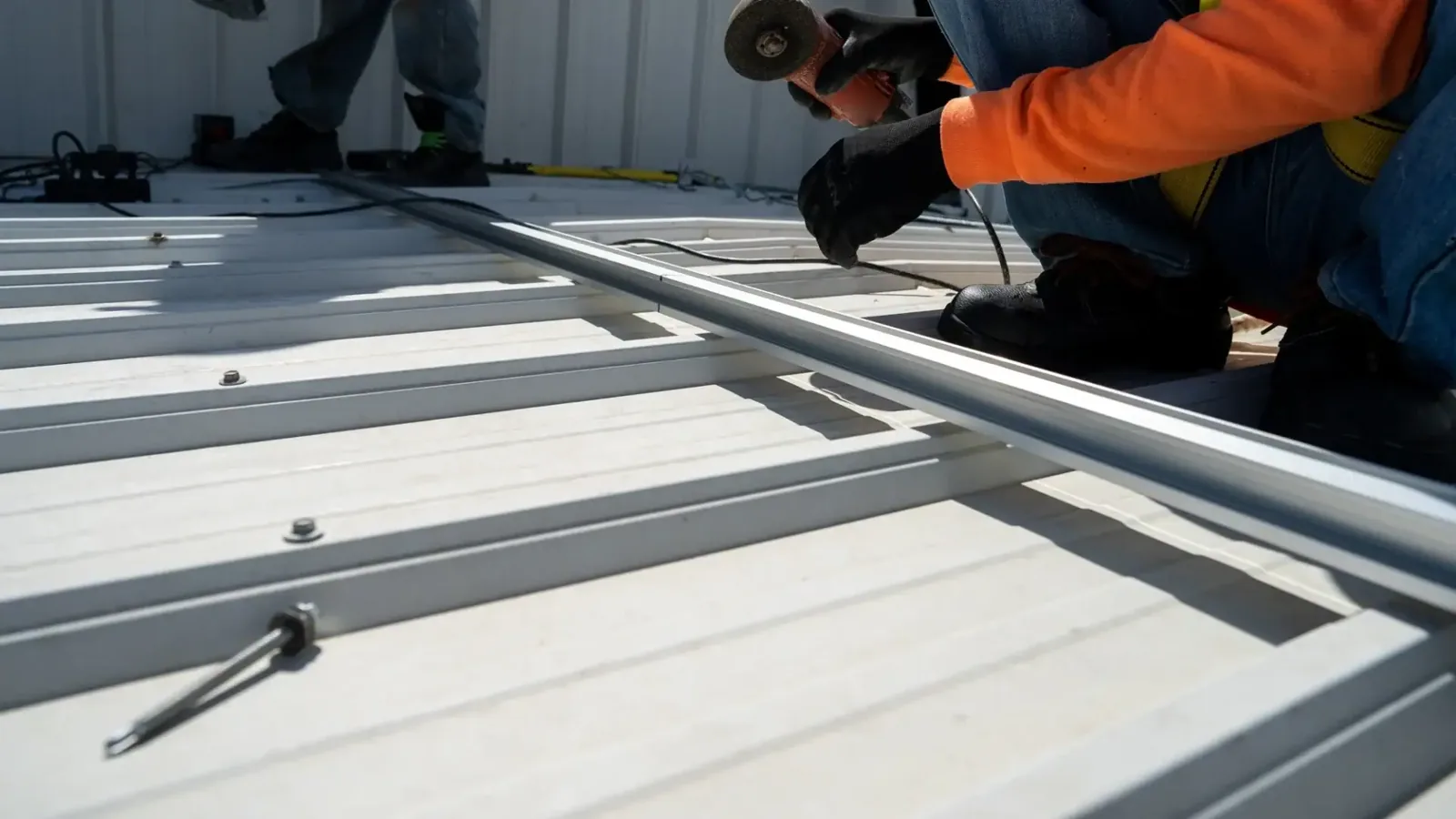
A commercial roof repair can address an identified defect; routine follow-up may help monitor repaired areas. For mixed lodging and food-service properties, a restaurant roof plan has different kitchen and exhaust coordination, while an apartment roof inspection addresses resident notices and shared access. The actual facility layout determines the roofing scope.
Leave Clear Roof Records for the Next Visit
Closeout notes should identify inspected sections, repaired details, photographs, materials used, and any conditions left for follow-up. We can mark equipment curbs, drains, seams, and perimeter transitions on a simple roof plan supplied by the property. A dated record helps a later manager compare a reported leak with prior work or a mechanical change. It also distinguishes a completed repair from an area that was inaccessible or still requires testing.
A planned maintenance visit can revisit drains, edge details, penetrations, and prior repairs. The route and frequency should reflect the observed roof, access conditions, and owner priorities; we do not assume a universal interval. Share prior leak logs, roof plans, equipment work, warranty information, and any recurring guest-area concern so the inspection can focus on useful evidence.
Related Roofing Work


Questions About Hotel Roofing
Some repairs may be staged while nearby areas remain open, but that depends on the defect, weather, access, and interior protection. We define the work boundary with hotel staff and identify any space that needs to be closed before the roof is opened.
Water can move through insulation, along a deck, or beside a pipe before showing inside. We compare the reported room with roof seams, drains, walls, and equipment bases, then document whether the entry point is confirmed or remains uncertain.
Yes, accessible curb flashing and nearby roof material can be included in the inspection. We note the membrane type, base condition, and any opening or movement. Mechanical removal, service, or replacement stays separate unless the agreed scope includes it.
Share roof plans, access rules, recent leak reports, equipment work, and the rooms or public areas involved. Identify the roof hatch, lift route, guest restrictions, and staff contact who can approve a test or temporary closure.
Plan a Hotel Roof Inspection
Share the affected rooms or public areas, roof plans, prior repair notes, mechanical work, access rules, and operating constraints. We will document the roof conditions reached and define a repair or renewal scope with the hotel contact.
