Inspect commercial rooftop equipment curbs, pipe supports, and flashing in Rock Hill, with attachment checks and repair limits by roof zone.
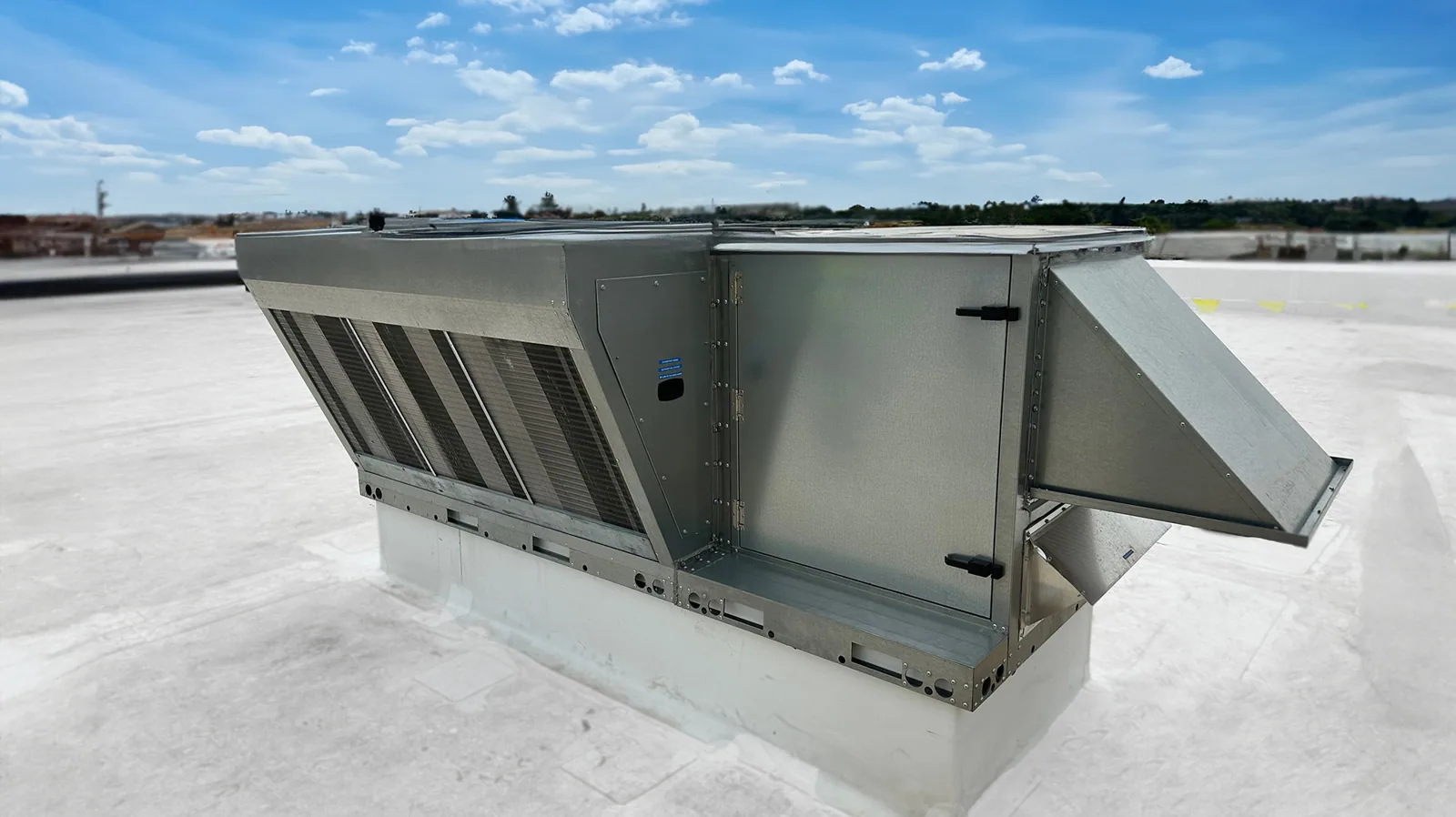
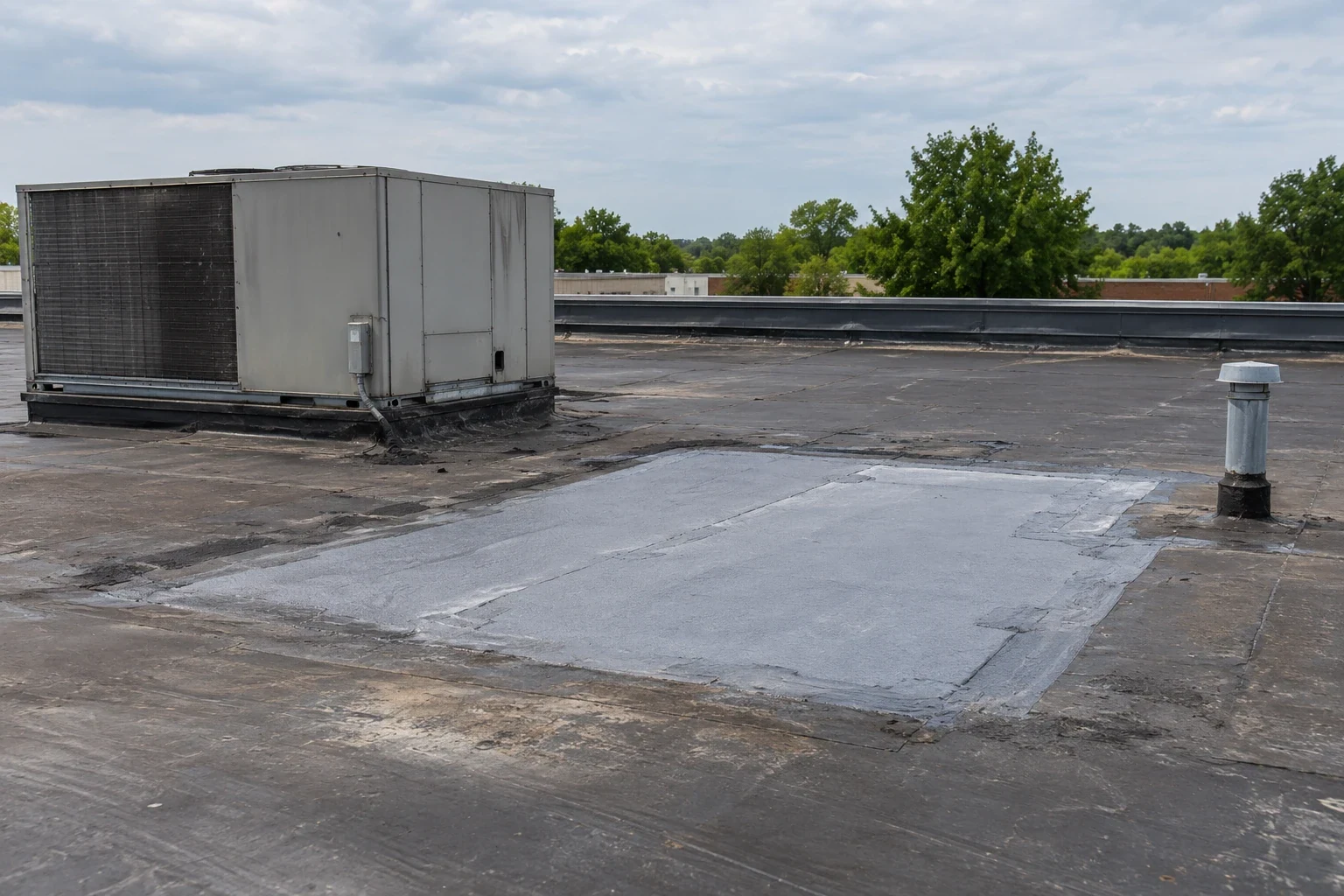
A rooftop unit moves and vibrates against the curb that separates it from the roof surface. That connection needs sound support, secure attachment, and continuous flashing so equipment service does not open a water path. We inspect curb walls, base flashing, supports, fasteners, and nearby membrane, then record the transition by roof zone. Rock Hill's business parks include manufacturing, distribution, and office uses, with Riverwalk and TechPark among the city's named employment areas. Along Riverwalk and TechPark, we begin with the building's roof plan, access route, and current curb condition. A repair near Riverwalk Business Park or TechPark starts with the actual support and roof assembly at that building. If the site has multiple units, we number each curb against the roof plan and photograph attachment and flashing from the same angle for follow-up.
Inspect the Equipment Curb
We check the curb for movement, corrosion, loose attachment, damaged corners, and open joints. The base flashing should rise and terminate in a way that sheds water without leaving a gap at the field membrane. We inspect the curb cap, seams, corners, and any area where equipment lines pass through the assembly. A failed bead of sealant can point to movement below it, so we look at the attachment and flashing rather than simply adding material over the surface.
Recent HVAC service may have changed a curb, conduit, or flashing detail. The facility contact can share work records and identify equipment that needs to remain accessible during the roofing visit. We compare those records with the current condition and document what can be seen. If the curb base or support is unstable, roofing work may need coordination with the mechanical contractor before the membrane is closed. A penetration flashing inspection can also be scoped where pipes or conduits create a separate roof opening near the equipment.
Check Pipe and Equipment Supports
Pipe stands, rails, and equipment supports transmit weight to the roof assembly. We look for cracked pads, corrosion, loose fasteners, movement, and concentrated loading that may have damaged the membrane beneath the support. Where lines or conduit rest on the roof, we check whether the support remains stable and whether the membrane is abraded or punctured. We do not move operating equipment or alter mechanical connections as part of a roofing repair unless that work is included and coordinated.
Rock Hill's commercial stock includes industrial parks, offices, retail areas, and institutional buildings. The market's varied uses can bring different rooftop equipment arrangements, while the condition of each support must be checked at the site. The support layout, deck, and attachment need to suit the actual assembly. For planned equipment changes, the owner should review proposed loads and structural attachment with the appropriate design professional; a roof flashing inspection does not evaluate building capacity. If an equipment vendor is scheduled, we coordinate the repair boundary so roof work does not block service access or close a detail before the equipment work is finished. A written scope identifies which support pads, curbs, or membrane transitions are included and which remain for another trade.
Trace Water Around Curb Bases
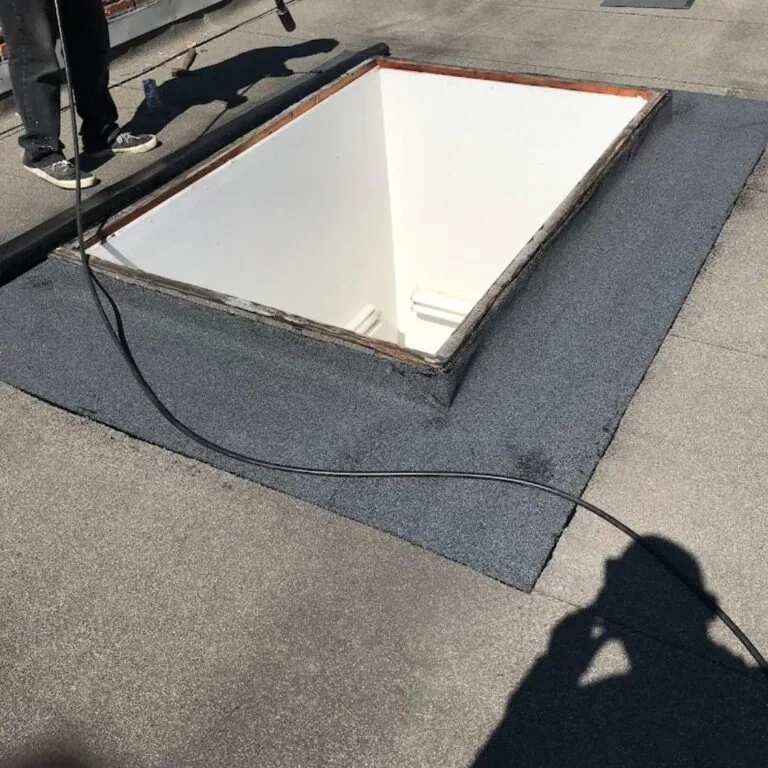
Water can enter where curb flashing separates, at a corner with an open lap, or through a penetration that has shifted. We trace the reported interior symptom to the roof zone and inspect the curb together with adjacent seams, drains, and prior patches. Photographs track the stain's alignment against nearby roof marks so the owner can see which water route needs another check. If the path remains uncertain, we record the details checked and identify whether a test or opening would clarify the route.
Rock Hill's warm, humid Piedmont brings regular rainfall; we check curb corners, lap direction, and nearby drains for a path that keeps water moving to an outlet. A controlled water test may help when safe and when the facility can support it, but test results apply only to the locations included. We document whether conditions suited a test at that visit. A leak investigation can follow the water path when the source is unclear. For membrane damage around a support, commercial roof repair can define the patch or flashing work without treating the whole equipment area as failed.
Coordinate Roofing and Mechanical Work
Repair may include resetting or replacing a flashing, reinforcing a curb corner, renewing a membrane tie-in, or replacing a damaged support pad. The method depends on the roof system and the condition of the curb or support. We protect open areas, prepare the substrate, and make the tie-in to sound membrane. If the curb itself must be altered, mechanical coordination is required so equipment and connections remain supported and serviceable.
Work sequence can affect access to rooftop units and the amount of equipment that must be protected. We agree on the route, staging area, and temporary restrictions with the facility contact, then keep the work boundary visible. In Rock Hill's manufacturing and distribution settings, equipment access may intersect with ongoing site operations, so the approved sequence should identify who is responsible for equipment shutdown or service coordination. Cost and timing depend on the number of details, access, assembly, and whether another trade must complete related work. A compatible TPO flashing detail or EPDM membrane transition can be selected only after the existing material is identified.
Record the Support and Flashing Boundary
At completion, we photograph the curb base, corners, support pads, and membrane transitions that were repaired. The work record names the equipment area, materials used, and any adjacent condition left outside the boundary. If a component could not be inspected without moving equipment, we state that limit. A later service visit can refer to the same photo and roof-zone mark before equipment is changed or additional lines are installed.
Share the building use, equipment service schedule, reported leak location, roof plan, and access requirements before we arrive. We will inspect the support and flashing details, explain what the roof evidence supports, and coordinate the approved repair area. If water appears again, the marked curb and adjacent roof zone provide a concrete starting point for follow-up. The roofing scope records visible curb supports and membrane transitions; the mechanical and structural teams can assess equipment operation and concealed deck capacity.



Questions About Commercial Rooftop Equipment Curb and Support Repair
A leak can develop where the flashing separates, a curb corner opens, or a penetration shifts. We inspect the curb attachment and surrounding membrane, then trace the reported water path. The interior stain is one clue; we compare curb flashing, adjacent seams, and drains, then identify which roof detail needs repair or a closer test.
Some flashing work can be completed with equipment in place, depending on access, curb condition, and the approved scope. If the curb or support must move, mechanical coordination may be needed. We identify access limits and equipment responsibilities before opening the roof.
Equipment movement and mechanical connections require coordination with the facility team and qualified mechanical contractor. The roofing scope identifies whether that work is included or remains with another trade. We do not treat a roof flashing repair as authorization to alter HVAC equipment.
We review new penetrations, curb corners, flashing, support pads, fasteners, and the membrane around the service area. Photos or work records can help identify changes. Any new opening or damaged transition is documented by roof zone and kept separate from unrelated conditions.
Inspect a Rooftop Equipment Detail
Share the unit or support location, reported leak, roof system if known, mechanical service schedule, and access limits. We will inspect the flashing and attachment, then define the roofing work boundary.