
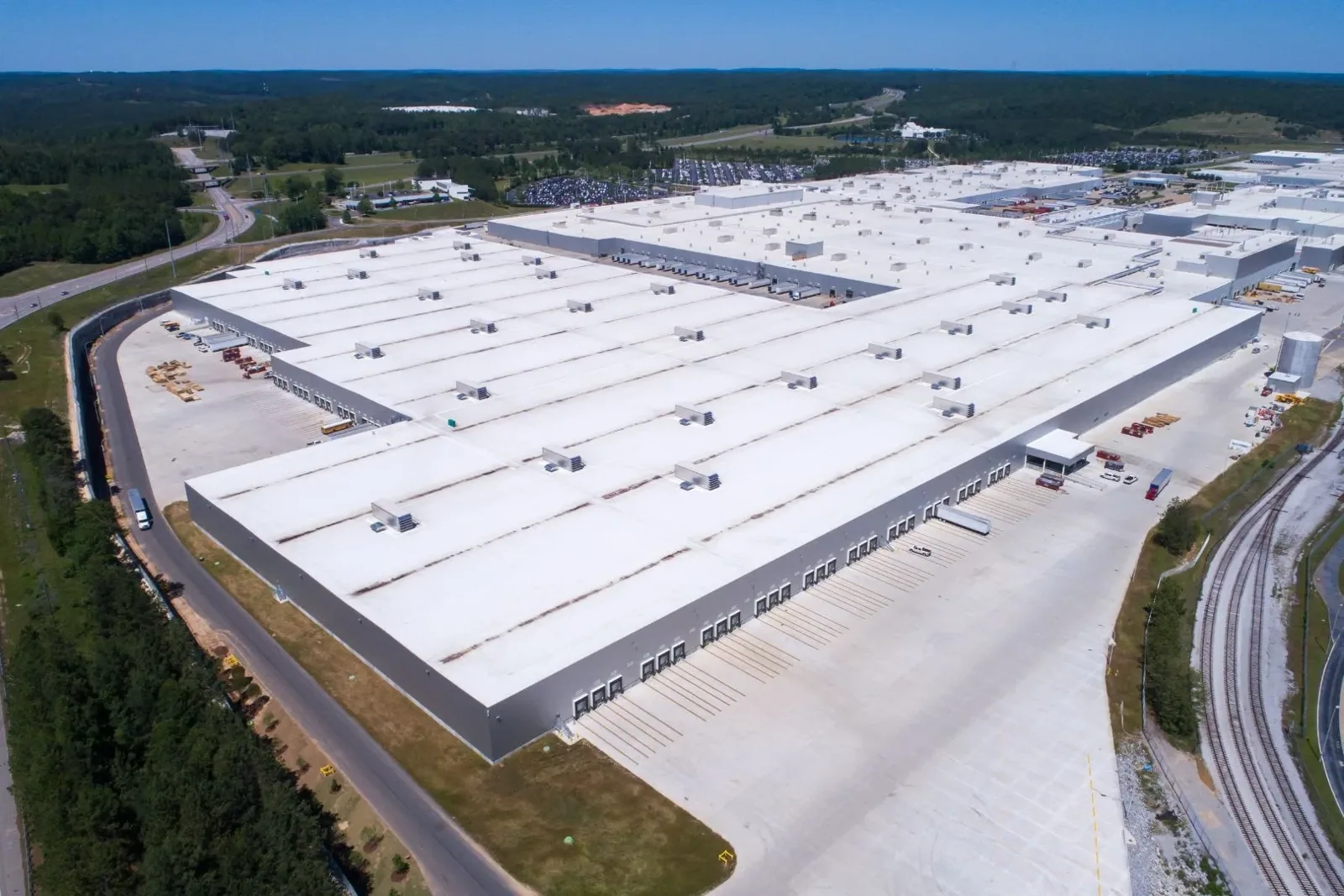
Install, inspect, or repair a TPO commercial roof in Rock Hill with heat-welded seam checks, compatible flashing, and drainage review by roof zone.
A TPO seam is only as sound as the cleaned, heated, and rolled surface where the sheets meet. We inspect the field membrane, welds, flashing, attachment, and drainage as one roof assembly, then mark the detail that needs work. Summer heat and humidity linger in Rock Hill's Piedmont setting, and recurring showers make the route from seam to drain part of the inspection. Riverwalk Business Park supports manufacturing, distribution, and office uses, while the Cherry Road corridor has retail and institutional improvements. We confirm the installed sheet and attachment at the property before selecting a TPO repair. At a property near Riverwalk Business Park, we first confirm that TPO is present and inspect its actual attachment and seam condition.
Read the Welds and Sheet Layout
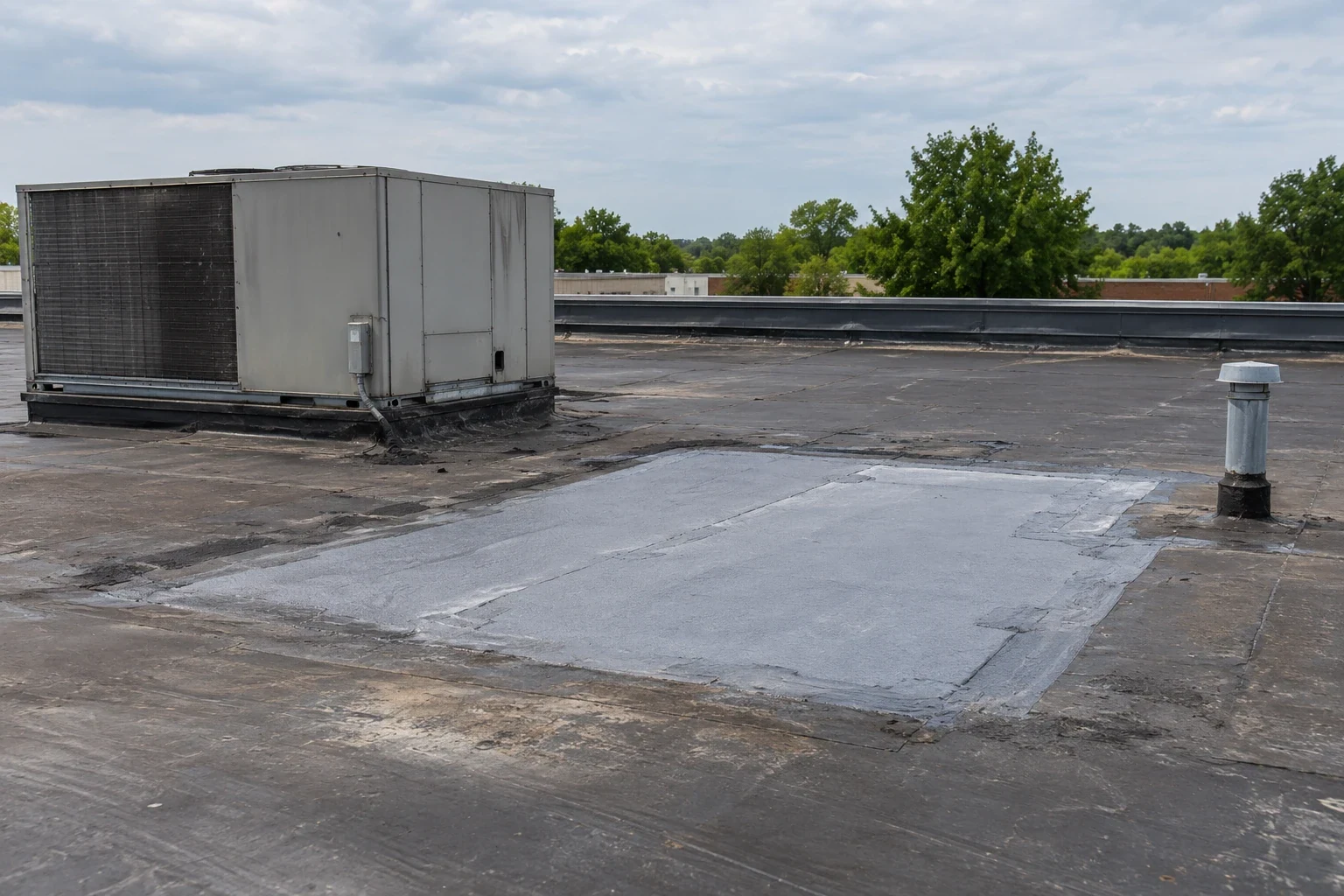
We inspect TPO seams for incomplete welds, open edges, wrinkles, contamination, and signs that a prior patch has lifted. A probe check can locate a weak section, but the result applies to the tested line and does not certify every seam on the roof. We identify the sheet layout and follow the seam beyond the visible defect to determine whether it is isolated or continues into another roof zone. The field mark records where the repair begins and ends.
At corners, laps, and T-joints, the sheet geometry changes and additional attention may be needed. Dirt, moisture, temperature, and surface preparation affect the welding process, so the repair area must be cleaned and dried before compatible material is placed. If the membrane is brittle, heavily patched, or pulling at its attachment points, a local weld may not address the broader condition. We document those findings and set a repair boundary that reflects the actual sheet and underlying assembly. Where the old sheet has been exposed or coated, a small test weld can help establish the settings before a larger repair line is completed.
Inspect Curbs, Pipes, and Perimeter Details
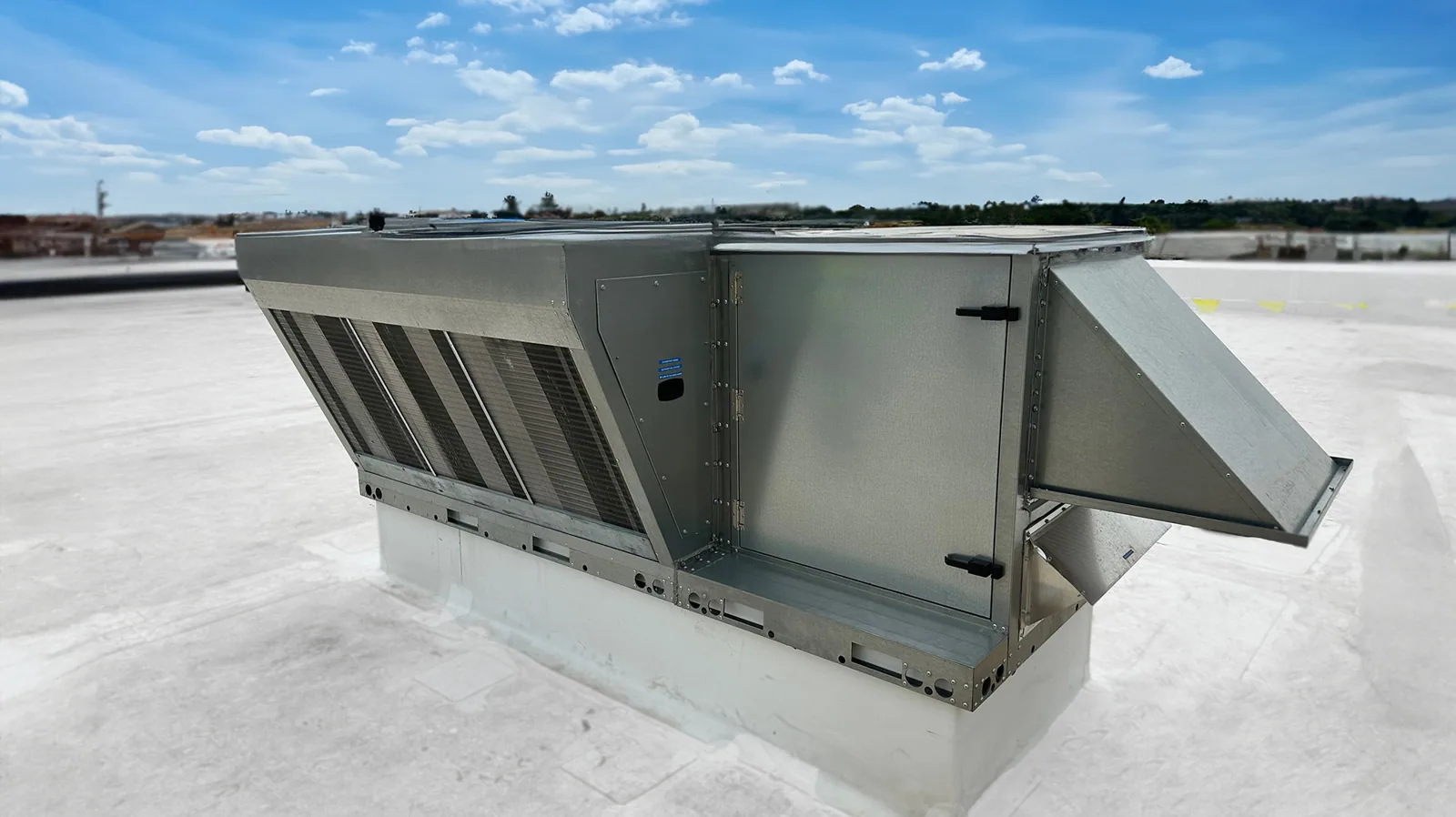
At a curb or pipe, the TPO turns from the field into a vertical flashing detail. We check the base attachment, corners, seams, terminations, and any clamp or counterflashing that holds the transition in place. Around rooftop units, equipment movement can stress the flashing. At parapets and edges, we inspect how the membrane meets metal and whether the termination remains secure. A bead of sealant cannot substitute for a properly attached and continuous detail.
Where a leak is reported below a curb, we compare the interior symptom with the roof transition and nearby seams. Water can travel before reaching the ceiling, so the closest fitting is not automatically the source. A leak investigation can trace the water path if the opening is not visible. For equipment bases, curb and support work can coordinate the roof detail with the actual support condition. The inspection note distinguishes TPO flashing from adjacent equipment or wall components.
Check Attachment and Roof Movement
TPO can be mechanically attached, adhered, or installed over another approved assembly. We look for visible movement, pulled fasteners, loose plates, adhesive separation, and stress at corners or transitions. The attachment method affects how a repair is made and how the roof responds to wind. We also check whether nearby edges or penetrations show stress that could affect the same sheet. York County has hail and tornado history; after a reported event, inspect the TPO sheet, seams, attachment, and flashing for visible change at the property. We inspect the building and record what is displaced or open.
When the attachment cannot be confirmed from the surface, available plans or a test opening may help identify the layers. We explain the proposed test location and repair before proceeding. If an edge or seam failure appears after a reported event, the finding stays tied to that roof zone and date. The report names visible storm-related changes and keeps the TPO repair scope within the sheet and roof details inspected.
Select a Compatible TPO Repair
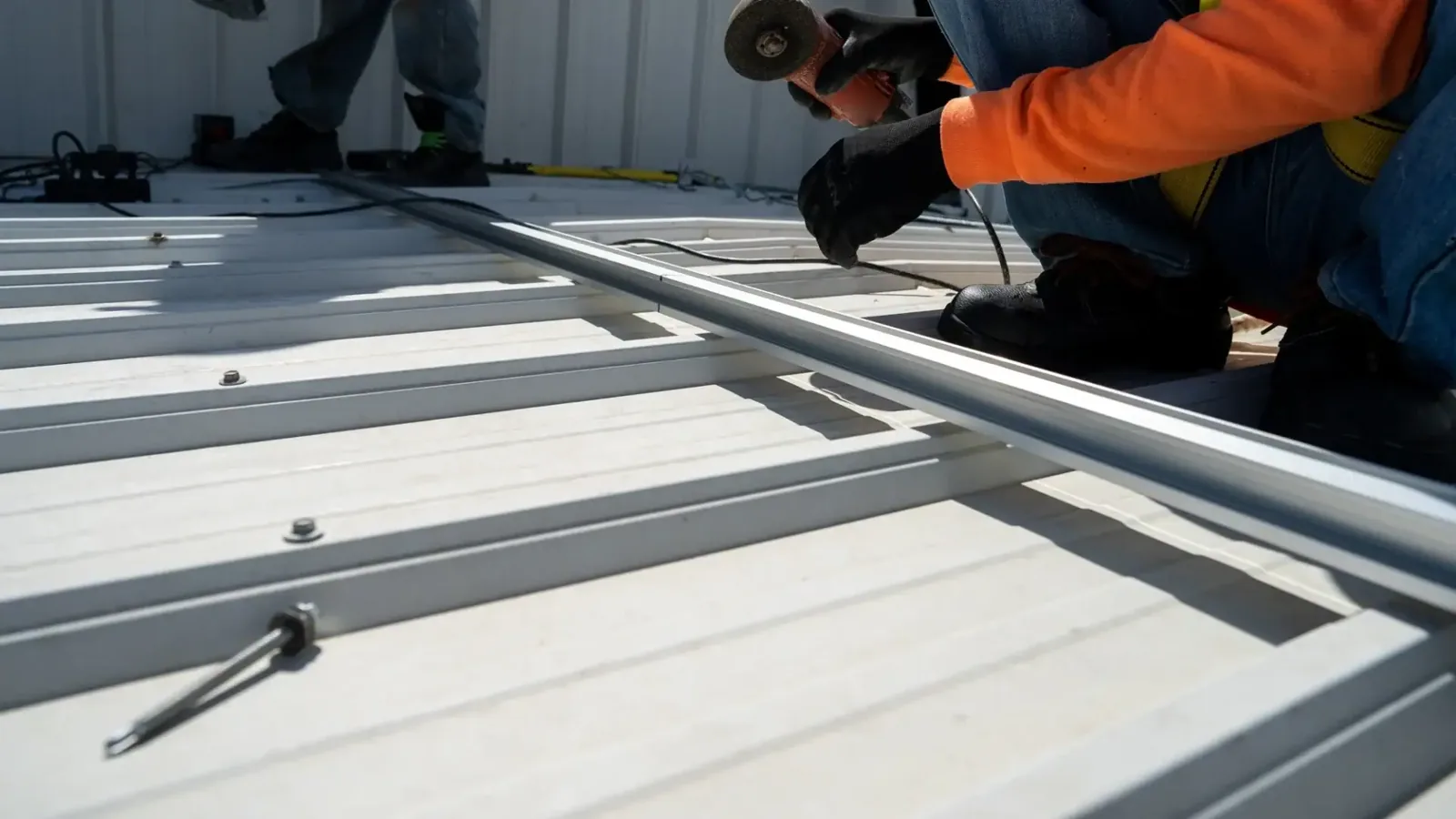
A repair begins by cleaning and preparing the membrane, removing loose material within the approved limit, and welding compatible TPO over the defect or failed detail. The patch needs sound sheet around its perimeter and a finished edge that does not collect water. We check the weld after cooling and photograph the completed area. If removal reveals wet insulation, weak attachment, or a damaged deck, we stop at the authorized boundary and confirm the added scope with the owner.
Rock Hill's commercial stock includes industrial parks, retail centers, institutional campuses, and mixed-use redevelopment. Those building types can carry different equipment and access needs, but the roof system must be identified at the property. We coordinate staging and work zones with the facility contact and protect open seams if weather interrupts the work sequence. If repeated seam or flashing failures extend across several areas, a commercial repair scope can define the broader membrane work. A new assembly may need review when the existing sheet and attachment no longer support isolated repairs. The work sequence and cost depend on sheet condition, repair length, access, and whether flashing or insulation needs correction. We list those drivers before work begins so the owner can see what sits beyond the weld itself.
Compare Repair, Recover, and Replacement
Repair is appropriate when the defect is localized and surrounding TPO remains suitable for a compatible tie-in. A recover requires review of moisture, attachment, existing layers, drainage, and the added height at edges and drains. Replacement is considered when the roof assembly has broader deterioration or cannot support another layer. We explain which observations support each option and state what was not tested. A recover evaluation can determine whether existing layers can remain, while a replacement plan sets the removal and new assembly boundary. If the building has a different single-ply membrane, its seams and repair process will need separate review, such as the PVC sheet assembly or EPDM membrane system.
At project closeout, photos and notes identify welds, flashings, drains, and roof zones included in the work. The report describes accessible conditions at the visit, not concealed areas that were not opened. Share the roof plan, leak history, prior repair details, building use, and access limits before work is set. We will inspect the sheet and detail, then define the compatible scope supported by those conditions.

Questions About TPO Commercial Roofing
We inspect the weld visually and use a probe check where appropriate to locate an open edge. A test covers the seam area checked; it does not certify the entire roof. We mark any weak section and determine whether the repair should stop at a localized defect or continue to a transition.
The old patch and surrounding sheet need inspection first. Loose material, contamination, or a deteriorated surface can prevent a reliable tie-in. We remove failed material within the approved boundary, prepare sound TPO, and confirm that the selected patch is compatible with the existing membrane.
The specified membrane must suit the project and be installed with sound seams, attachment, flashings, and drainage. Rock Hill's warm season and regular rainfall are useful context, but they do not establish the condition or performance of one roof. We inspect the assembly and document its details.
Repeated failures, deteriorated sheet, wet insulation, or widespread attachment problems may indicate a broader assembly issue. We inspect the affected zones, identify the evidence, and compare repair with recover or replacement options. Any concealed area remains unconfirmed unless it was tested.
Inspect a TPO Roof
Share the roof plan, leak locations, prior repair history, building use, and access limits. We will confirm the membrane and attachment, check seams and transitions, and define a TPO repair or renewal boundary.