
Schedule commercial roof maintenance in Rock Hill with drain clearing, seam and flashing checks, Diligence Notes, and repair priorities for each roof zone.
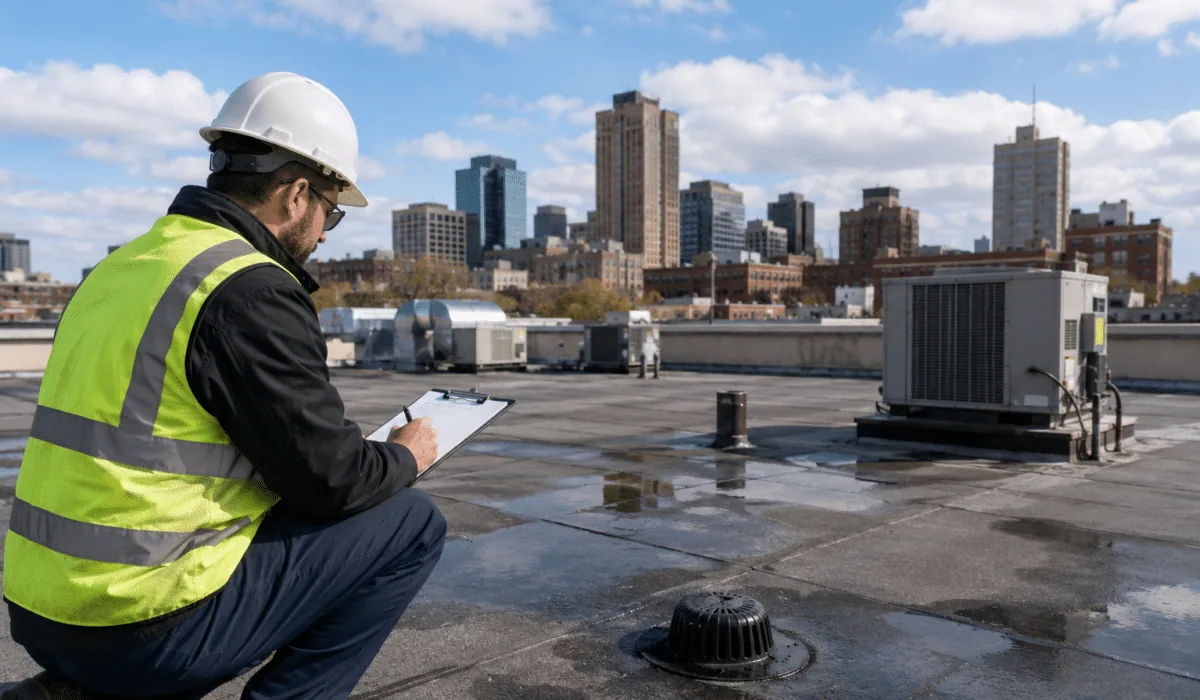
A drain bowl packed with leaves, a lifted seam, or an open curb flashing can turn a routine roof visit into a water-entry problem. Preventive maintenance gives those details a scheduled check before they widen into a repair. We walk agreed roof zones, clear accessible drainage paths, examine transitions and penetrations, and record conditions that need work or follow-up. Rock Hill's warm, humid Piedmont climate brings a long warm season and regular rainfall, so the maintenance calendar should account for water movement as well as surface wear. At manufacturing and distribution properties around Riverwalk Business Park and Waterford Business Park, the visit also needs to respect roof access and active facility operations. We set the inspection boundary with the building contact, then leave a record that ties each finding to a roof zone.
Set a Useful Maintenance Cycle
The right visit interval depends on the roof's condition, drainage, surrounding exposure, and the owner's maintenance plan. We start with the known assembly and history, then set recurring checks around the details most likely to need attention. After a major repair, new rooftop work, or a reported storm, an additional visit may help confirm that the affected area remains closed and nearby transitions were not disturbed. The schedule is written for the building and should be adjusted when inspections reveal a changed condition.
Rock Hill sees regular rainfall within a warm, humid climate. That makes drains, scuppers, discharge points, and low areas practical items to revisit throughout the year. Seasonal leaf or debris accumulation, roof traffic, and work by other trades can also change a roof between planned visits. We record the date and visible conditions so the next maintenance check can compare like areas rather than rely on memory. A hands-on roof inspection can establish broader baseline findings when the roof history is incomplete or a new facility team is setting its schedule.
Keep the Water Path Open
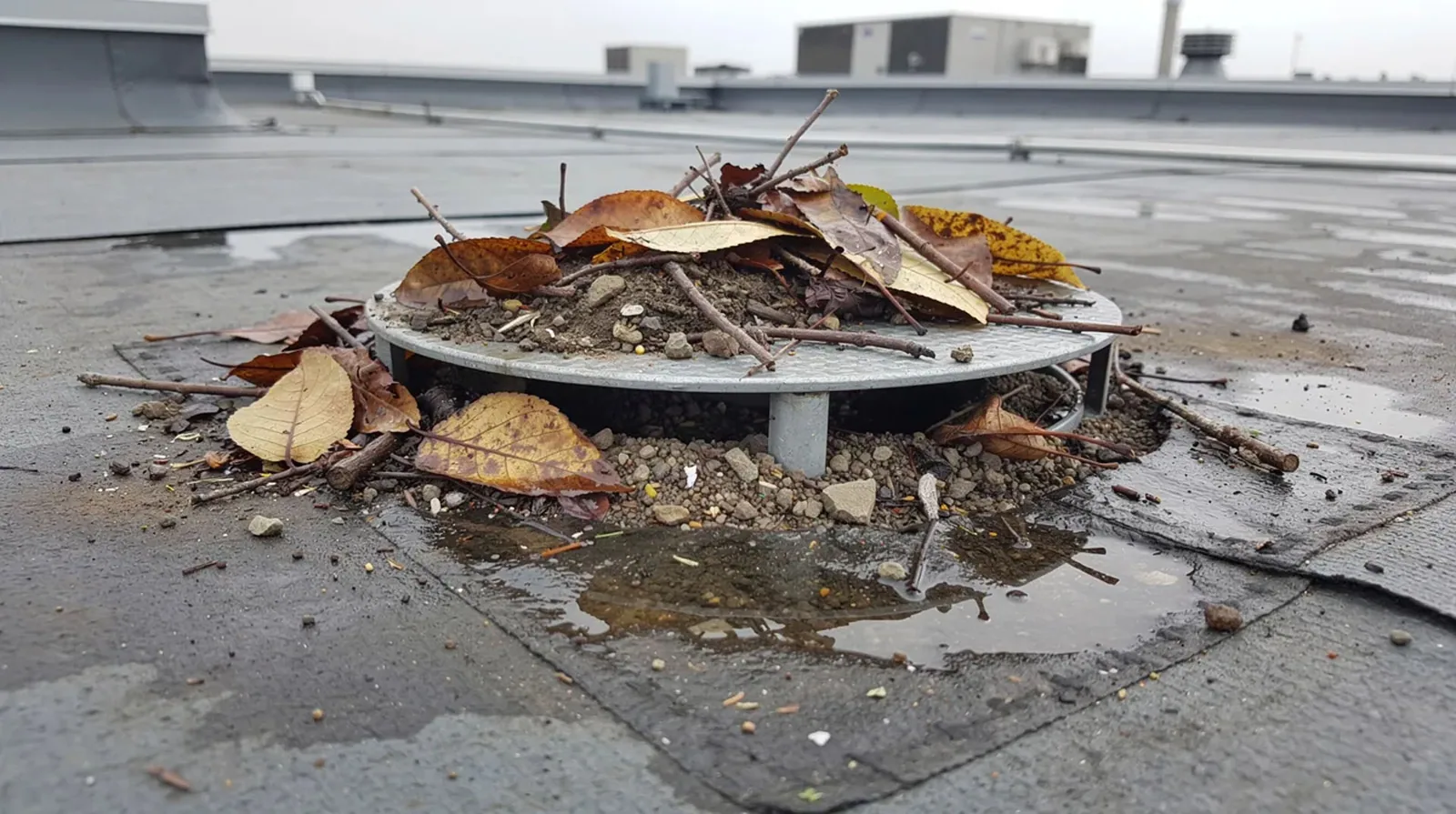
At each drain, we remove accessible debris and check the bowl, surrounding membrane, and visible connection. At a scupper, we look for an unobstructed opening and a clear discharge route. Downspouts and lower discharge points are checked where they are part of the roof drainage path and included in the scope. A clear opening is only one part of drainage: the surrounding slope, membrane tie-in, and low areas also affect where water collects. We note standing water or a recurring low spot for closer review rather than assuming that clearing debris solves the cause.
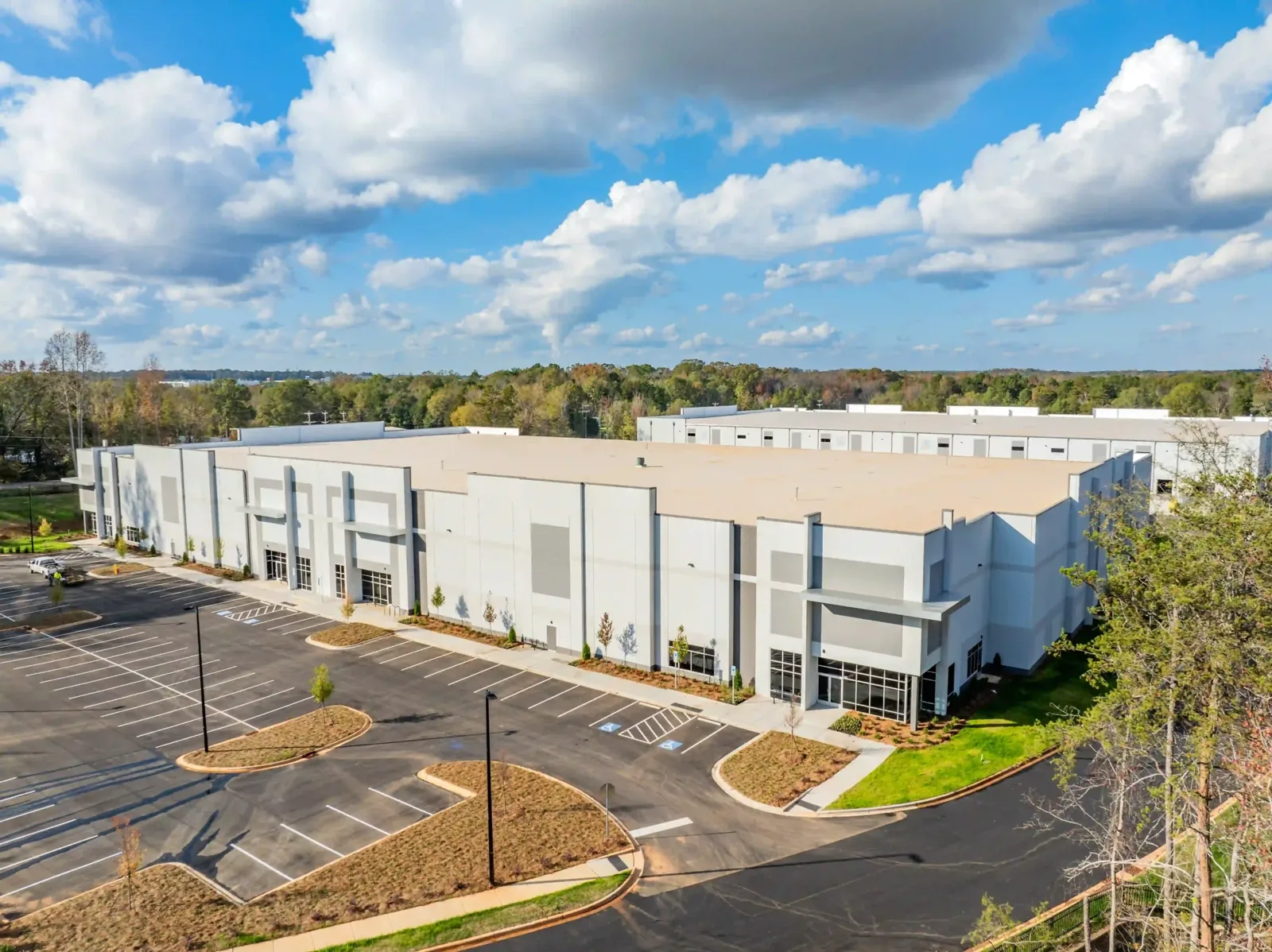
Riverwalk Business Park supports manufacturing, distribution, and office uses. The property contact confirms access and current operations; our roof walk maps the actual drainage layout and any blocked or damaged detail by zone. We inspect the actual system and identify any blocked or damaged detail by zone. If the drain assembly needs repair beyond routine clearing, a drain and scupper repair can be defined with its own boundary. A ponding concern that appears tied to slope or discharge can also be assessed through a ponding-water evaluation before a repair method is chosen.
Check Seams, Flashings, and Roof Edges
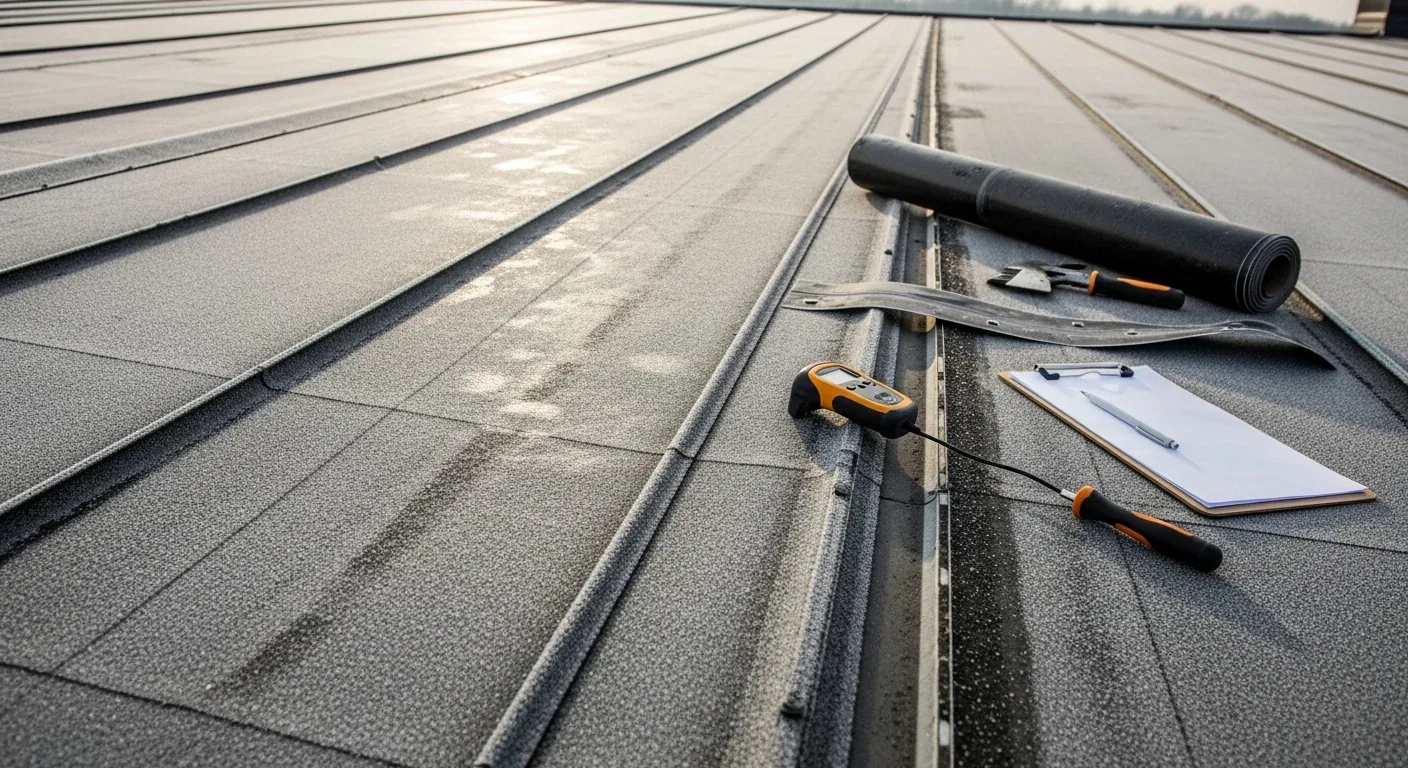
On the field membrane, we look for open or stressed seams, punctures, loose patches, surface wear, and conditions that could direct water below the roof. At curbs and pipes, we inspect flashing turns, attachment, sealant, and movement at the connection. Along parapets and perimeters, we check accessible edge metal and terminations for visible displacement or loose components. We photograph a concern and mark its location, then distinguish maintenance work from a repair that needs separate authorization.
Rock Hill's commercial stock spans industrial parks, retail centers, institutional campuses, recreation facilities, and downtown mixed-use redevelopment. We identify each building's assembly and operating constraints during the inspection. We identify the material where it can be confirmed and note unknown layers rather than guessing. When a flashing or edge detail needs work, a defined edge metal and coping repair can address the observed condition. At a roof penetration or skylight, flashing maintenance focuses on the transition where water can enter.
Plan Visits Around Facility Work
Before the visit, we confirm roof access, site check-in, escort requirements, and any areas that need to remain clear. The facility contact can identify scheduled deliveries, rooftop equipment service, tenant activity, and other work that may overlap with the maintenance route. We mark where materials or tools will be staged and keep the inspection path distinct from operating areas. If a portion of the roof cannot be reached safely, we report the limit rather than describing it as checked.
Waterford and Riverwalk are Rock Hill business and industrial parks in the city's southern area. Each maintenance route follows the property's access rules and current use. Where another trade has worked on the roof, we review visible penetrations and the affected membrane transitions. We can identify a new opening, document the condition, and coordinate the next repair boundary with the owner. The visit record distinguishes work completed during routine maintenance from observations that remain pending a separate scope or a more detailed inspection.
If repeated defects begin to appear across several zones, a roof asset management plan can organize condition history and upcoming maintenance decisions across the property portfolio.
Record Findings and Set Priorities
After the walk, we provide notes tied to roof zones, photographs of relevant details, and a list of maintenance completed. Each open item identifies the visible condition, its location, and the next action that would answer the remaining question. We separate urgent water-entry concerns from routine housekeeping and monitor items. If a test opening, moisture survey, or repair is recommended, the record states why and defines the area involved.
The maintenance record is a snapshot of accessible conditions on the visit date. It does not verify concealed layers outside a test area or promise that weather will not change the roof before the next scheduled check. A later visit can return to the same field mark and compare the repair or condition with the earlier photo. Share any leak report, prior repair, roof plan, and access change before the next visit. That context lets us set the route around the current building question and keep the maintenance boundary clear. Where a repair is approved, we can document the completed work and preserve the observation for the next scheduled review.

Questions About Commercial Roof Maintenance
The agreed visit can include drains, scuppers, membrane seams, flashing, curbs, penetrations, roof edges, and visible rooftop conditions. We clear accessible debris, document findings by roof zone, and note any area we could not safely reach. The exact route reflects the roof and the maintenance scope for that property.
Routine tasks can be completed when they are within the authorized scope and appropriate for the condition. If an inspection finds a larger defect, a material question, or work beyond the agreed boundary, we document it and confirm the next scope before proceeding. The record separates completed maintenance from recommended repair.
Regular rainfall makes clear drainage paths and sound transitions useful items to check. We set the visit cycle using the roof's condition, history, drainage, and building needs, then adjust when a repair, rooftop project, or new leak report changes what should be reviewed.
Yes. The record identifies the areas included, conditions observed, work completed, and any access or safety limits. It also states when a test or separate repair is needed. This keeps an inaccessible area or concealed layer from being treated as confirmed.
Build a Roof Maintenance Schedule
Share the building use, roof plan or known system, leak and repair history, and access limits. We will set a practical inspection route, document roof-zone findings, and identify the maintenance or repair work each condition supports.
