
Inspect and repair built-up commercial roofing in Rock Hill with ply, surfacing, flashing, and drainage findings tied to the existing roof assembly.
A built-up roof has several plies, so surface wear may be only the first visible part of a larger condition. We inspect the surfacing, seams, flashing, drains, and accessible edges, then identify where a repair can tie into sound material. Rock Hill's warm, humid Piedmont climate brings regular rainfall during a long warm season, which makes drainage and open laps practical inspection points. Commercial improvements along Dave Lyle Boulevard and planned industrial activity near Legacy Park reflect different building uses. We identify the roof assembly at the property and document its layers before choosing a repair method.
Read the Surface and Layer Condition
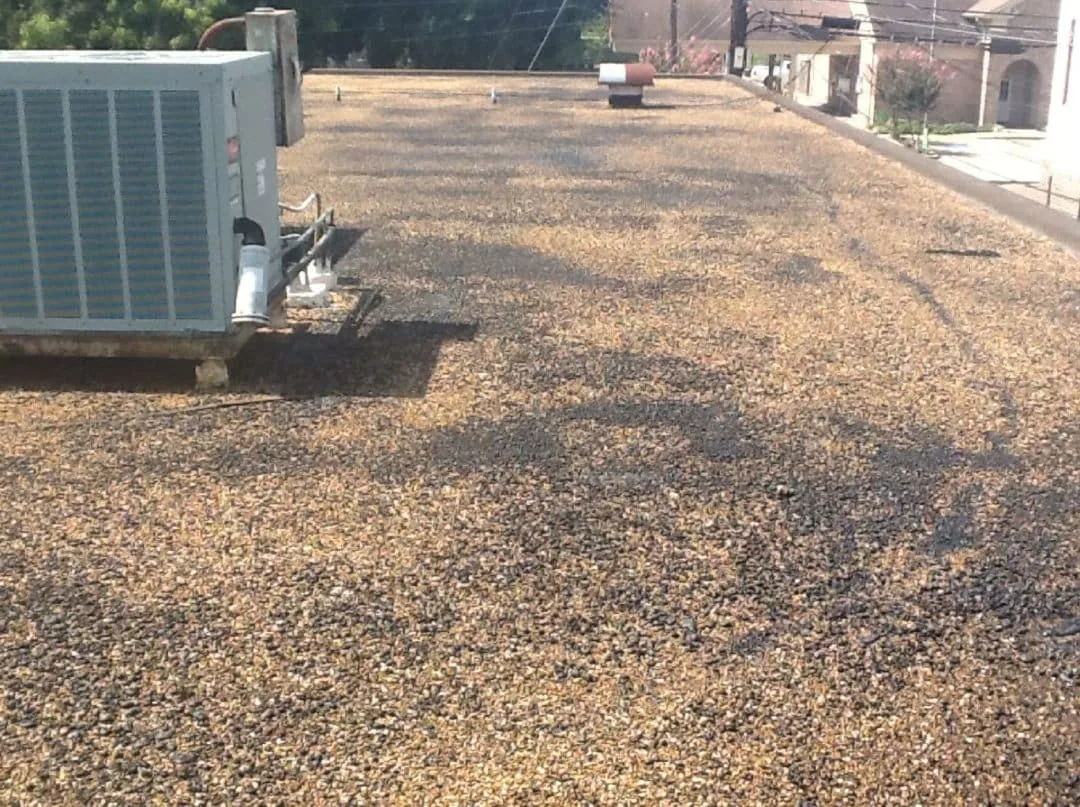
We look for exposed felt, aggregate loss, cracks, blisters, wrinkles, open laps, and patches that have separated. A gravel surface can conceal the membrane beneath it, so we identify areas that need closer access before drawing a conclusion. Alligatoring or surface cracking may show aging at the top layer, but the condition of lower plies and insulation may remain unknown without an opening. We mark the observation and state whether further testing is needed.
Where records list several roof projects, we compare them with visible edges, drains, and previous repairs. Built-up roofs can have different ply counts and surfacing, so the method needs to match the assembly found. A test cut may show the layers at one location, but it cannot establish conditions everywhere. We photograph the exposed cross-section and close the opening with a compatible repair. If the roof contains an overlay or later membrane, the report distinguishes those materials from the original built-up layers.
Check Aggregate, Cap Sheet, and Walk Paths
Surfacing protects the bitumen from exposure and affects where maintenance staff can safely walk. We inspect aggregate distribution, exposed cap sheet, loose granules, and footpaths to see whether the top layer has moved or worn. At equipment routes, service work can displace gravel or abrade a cap sheet. We identify the affected zone and compare it with nearby membrane, curb, and penetration details before defining a patch. Where surfacing has shifted, we compare the exposed area with nearby field and flashing details. A repair stays within sound plies, and aggregate or cap material is restored only where the assembly calls for it.
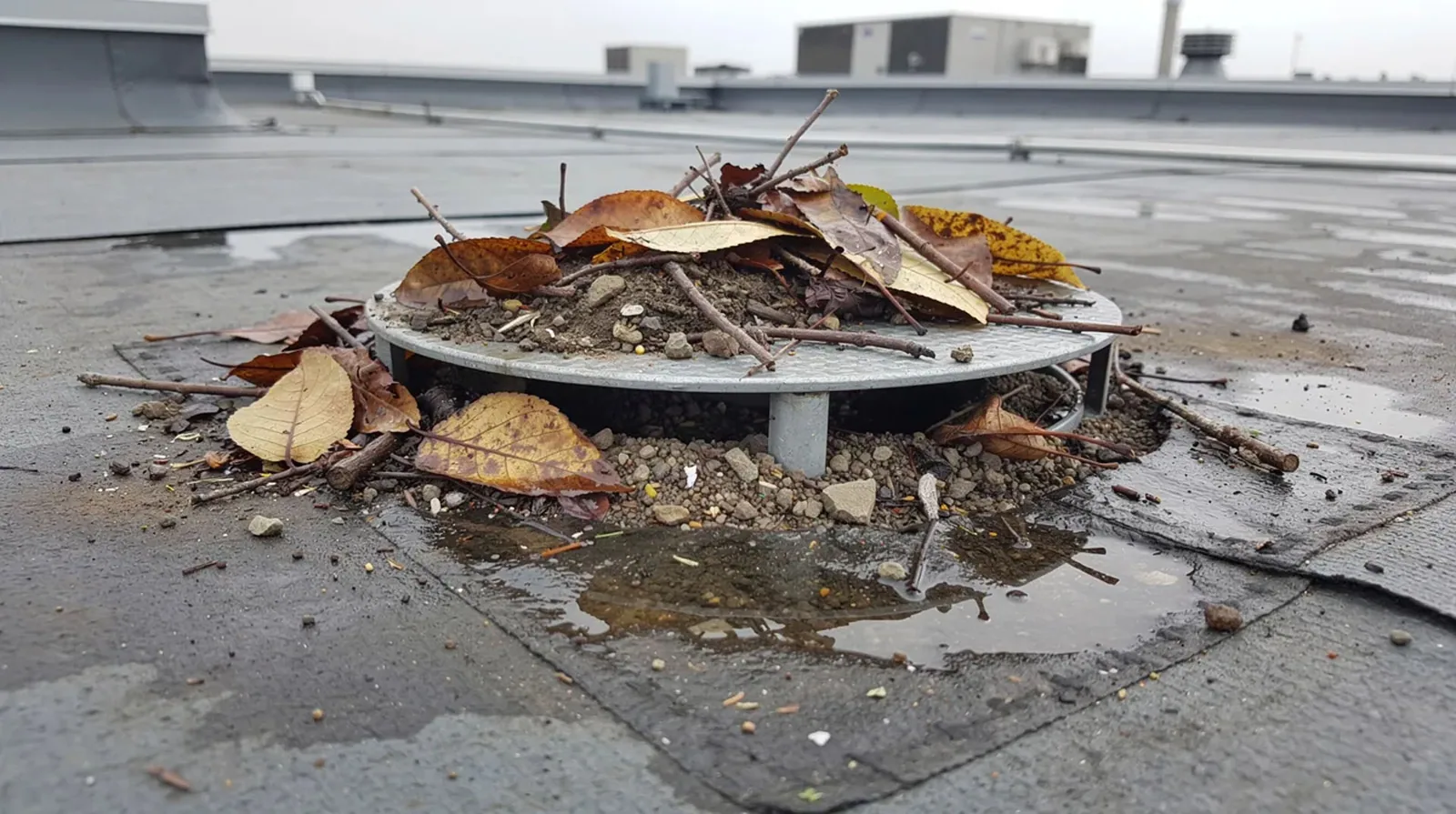
Rock Hill's regular rainfall makes blocked drains and water held beneath displaced aggregate worth checking. We look for debris, low spots, and stains at the roof edge that may point to runoff or overflow. Surface material should not be swept over an open seam or used to hide a blister without understanding the layer below. A maintenance visit can remove accessible debris while documenting any condition that calls for repair. The Diligence Notes distinguishes surface housekeeping from work on the built-up membrane itself.
Trace Flashing and Drain Transitions
At curbs, parapets, pipes, and drains, the built-up membrane must turn and connect without an open edge. We inspect base flashing, termination, corners, drain bowls, and visible metal. A split at a flashing turn may let water enter beneath multiple plies. A drain tie-in can also separate where the roof moves or a prior repair no longer bonds. We check nearby surface conditions and follow the reported leak path before identifying the opening.
Commercial and industrial development is growing along I-77 South, including warehouse and distribution activity. Facilities along the corridor vary in use and access needs, so we plan the inspection route with the site contact. We coordinate the inspection route with the site contact and avoid assuming identical drain layouts. If the outlet detail is the failure point, drain and scupper repair can address that connection. A leak investigation can locate an entry path that does not sit directly beneath the interior stain.
Repair the Built-Up Assembly
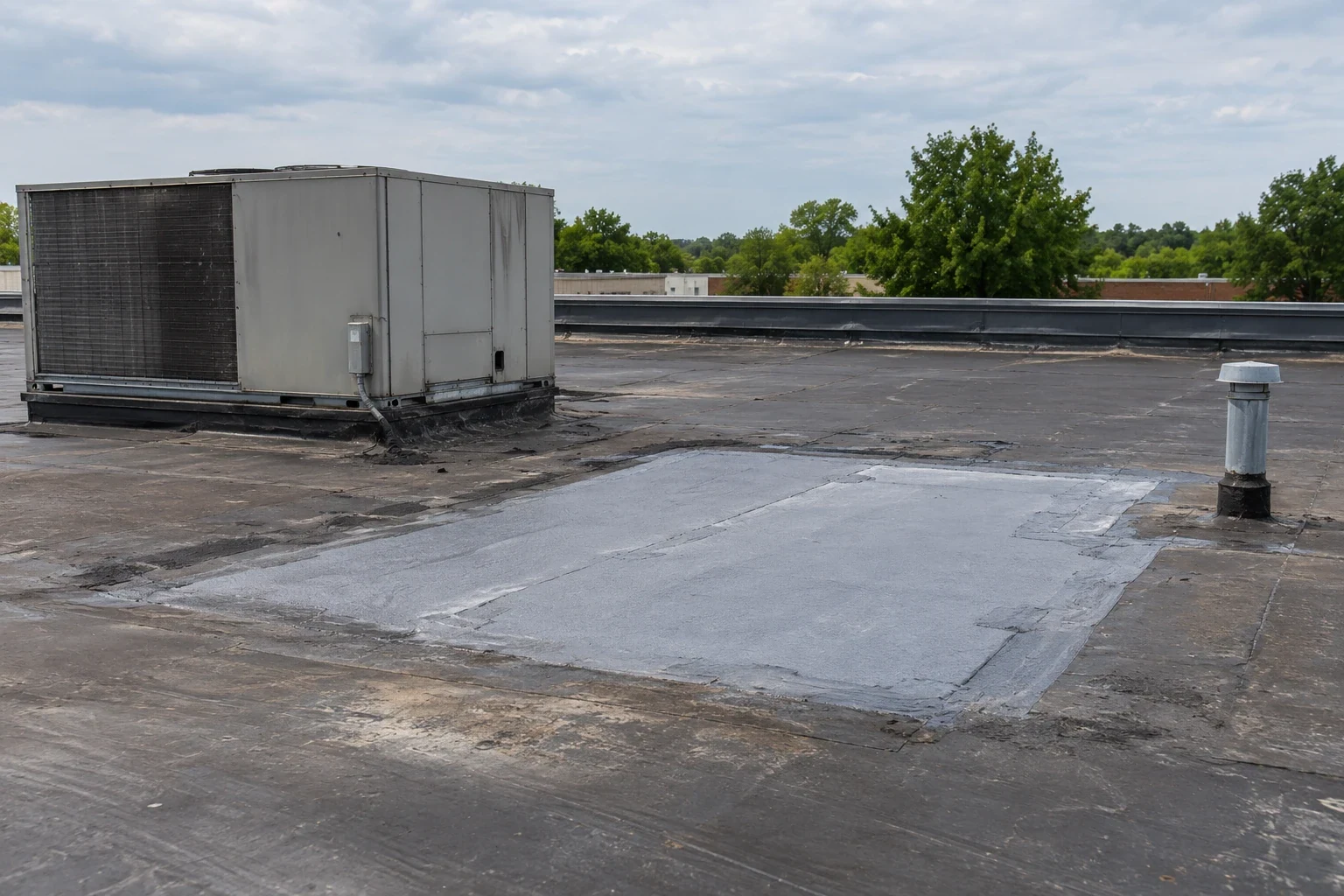
A repair removes loose surfacing or membrane only within the approved boundary, then restores the affected ply or flashing with compatible bitumen materials. The repair may use a cap sheet, reinforced mastic, or another specified detail suited to the existing assembly. We check that material extends onto sound roof and that aggregate or coating is restored where the system requires it. Heat-applied methods require preparation and safety controls appropriate to the building and work zone. Before work begins, we establish the material staging area, protect nearby equipment and openings, and confirm how the active roof will be closed at the end of the shift. The selected method must follow the product and project requirements. If weather, access, or site conditions prevent the specified process, we pause and adjust the sequence with the facility contact. That coordination matters where work crosses an occupied area or another trade needs access. The approved repair limit remains marked while surface preparation and ply replacement proceed. These steps help keep the repair connected to sound material and leave a clear record of the completed area.
Repair length, number of layers, aggregate removal, access, and concealed moisture affect scope and schedule. If a test opening reveals wet insulation or damaged deck, we document the condition and confirm the added work before closing the area. A commercial roof repair scope can group related flashing and field defects. If the built-up layers are deteriorated across several zones, a recover assessment or replacement plan can compare options after attachment, moisture, and edge height are reviewed.
Keep the Roof History by Zone
Built-up roof records benefit from clear zone marks because multiple plies and prior patches can make a later repair harder to place. We photograph the surface, note any test opening, and list the layers observed at that point. The maintenance record also identifies drains, curbs, and flashing transitions checked during the visit. If a condition changes, later work can compare the same area rather than assume the whole roof has remained uniform.
Near Dave Lyle Boulevard's commercial activity or Legacy Park's planned employment area, the facility's access rules determine where the inspection can proceed. The broad location does not describe an individual building's roof construction. Share repair records, roof plans, leak locations, and access limits before scheduling. A preventive maintenance plan can revisit accessible surfaces and drainage. For comparison, modified-bitumen roofing uses manufactured sheets with a different ply and surfacing detail, while EPDM roofing is a single-ply membrane. We keep findings specific to the assembly inspected. Facility staff can use these marks during a later inspection.
Questions About Built-Up Commercial Roofing
The number of plies can vary by assembly and prior project. We review records and inspect visible edges or an authorized test opening to identify layers at the checked location. The report does not apply one test result to uninspected roof zones.
Aggregate may be restored when the system and repair detail call for it. We first prepare and close the membrane repair, then place compatible surfacing over the finished area. Loose gravel cannot replace a patch or confirm that the plies beneath it are sound.
A blister is a raised area that needs inspection to understand its bond and underlying condition. We check the surrounding surface and may recommend a test opening if moisture or ply separation cannot be confirmed from above. The repair method follows what the opening reveals.
Widespread ply separation, recurring leaks, wet insulation, or deteriorated surfacing can point beyond isolated repair. We document affected zones and compare repair, recover, and replacement based on the assembly, moisture, and project requirements. Concealed conditions remain uncertain until tested.
Assess a Built-Up Roof
Share roof plans, previous projects, leak locations, building use, and access restrictions. We will identify the visible layers, inspect surfacing and transitions, and define the repair boundary supported by the findings.