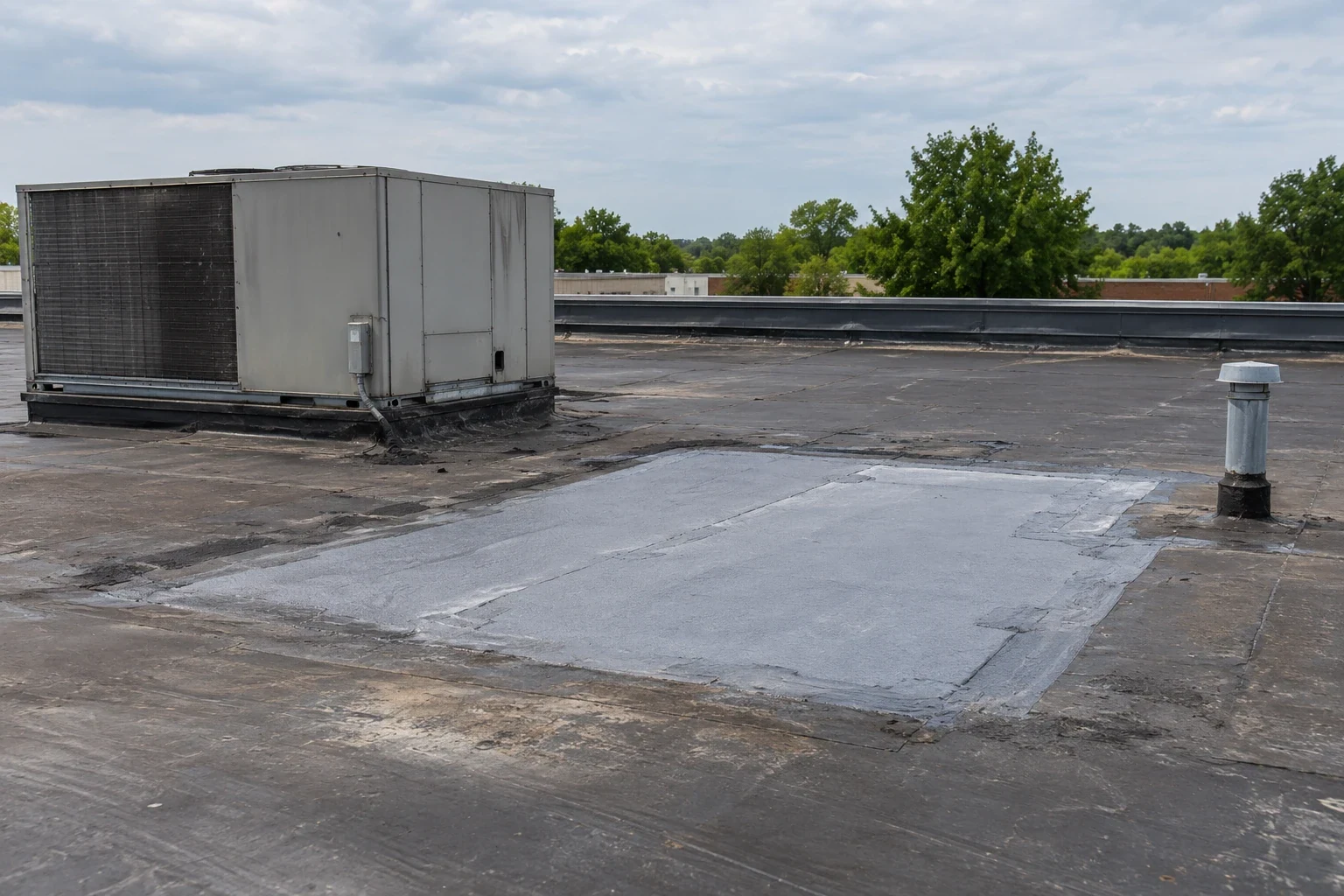
Commercial roof repair in Rock Hill starts with a field mark, water path, and defined repair boundary. We document seams, flashing, and drainage findings.
A planned repair begins by marking the defect and following the water path beyond it. In Rock Hill, SC, repeated rain can expose a loose seam, open flashing, or a drain detail that no longer directs water cleanly. We inspect the membrane, flashing, edge, and nearby transitions, then state what the repair will address and what remains outside its boundary. Commercial access varies by property along Dave Lyle Boulevard and the Celanese Road corridor, so we confirm the authorized roof entry and loading route before choosing a repair window. A repair plan should fit the building's actual roof assembly and use. It should also say how the area will be checked after the work. When the defect is part of a wider failure, we can identify whether a local repair remains suitable or whether the condition calls for more extensive work. A repair at a property along the Celanese Road commercial corridor starts with its roof system, approved access point, and observed leak path.
The Repair Boundary
We start with the reported symptom, then inspect the likely entry points and surrounding roof zone. At a membrane seam, we look for separation, dirt trapped in the weld, wrinkles, and areas that no longer hold a bond. Around a curb or pipe, we inspect the flashing, sealant, attachment, and movement at the transition. At an edge, we check the termination and metal for displacement or loss of secure attachment. A patch placed only over the visible opening can miss a longer split or a separate failure nearby.
The repair record identifies the affected detail, the material used, the limits of the work, and any adjacent conditions that need separate attention. We can mark a seam repair, flashing reset, puncture patch, or small membrane section as a distinct scope. If the membrane is brittle, the insulation is wet, or similar failures repeat in several zones, the owner needs that broader pattern before approving isolated patches. Where the repair boundary appears to grow during work, we document the new finding and confirm the added area before continuing. When the opening is not obvious, leak tracing follows the water path beyond the visible stain.
Seams, Patches, and Field Membrane
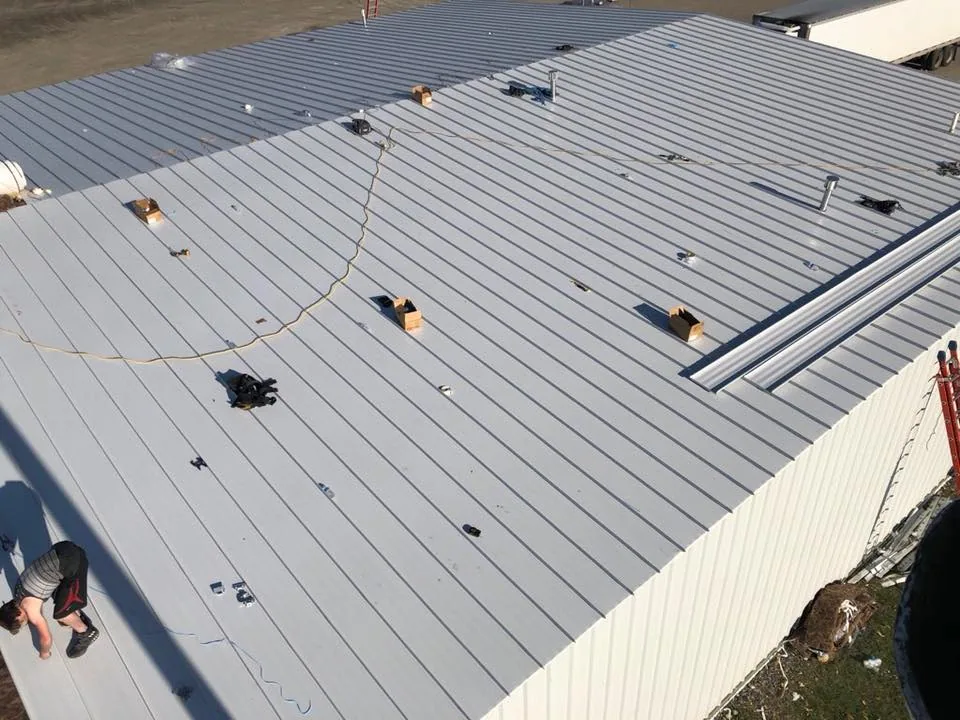
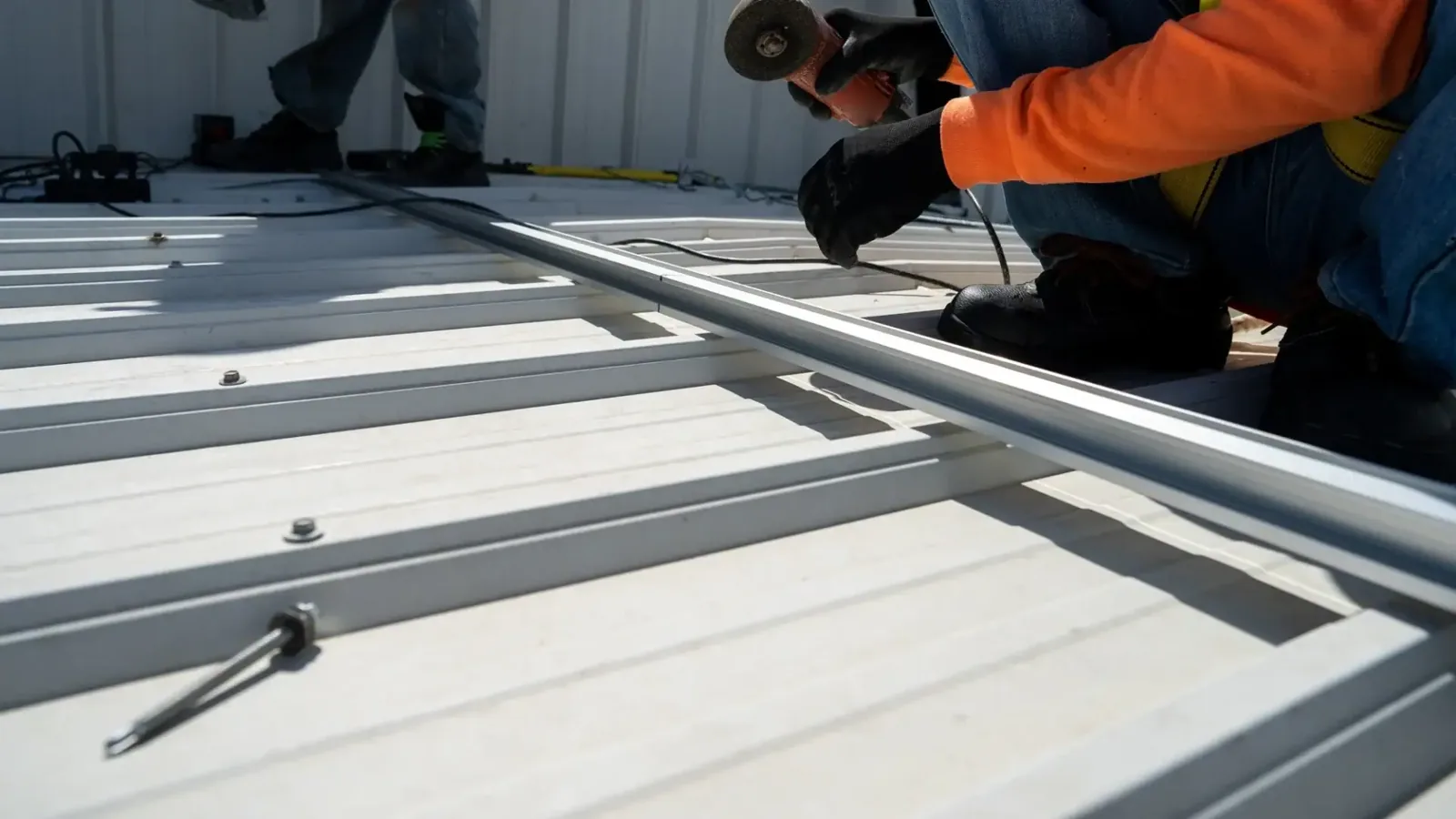
A membrane repair depends on the system already in place and the condition of its surface. On TPO or PVC, we clean and prepare the area before welding compatible material across the defect. EPDM typically needs a compatible primer and patch, with the repair rolled and checked at the edge. Modified bitumen and built-up assemblies require an appropriate repair method for their surface and layers. If the existing system cannot be identified, we record that uncertainty before selecting a repair approach.
Heat and humidity in the Carolina Piedmont affect how the work area is cleaned, prepared, and closed. Rain or standing water on the surface can interfere with adhesion and hide the edge of a defect. We remove loose or damaged material only within the agreed repair boundary, then check the transition between new and existing membrane. A patch needs adequate bond or weld beyond the opening, with no fishmouth, open corner, or unsealed edge that can collect water. Details matter at occupied properties as well, because a repair that sheds water toward a drain should not redirect runoff toward a wall or equipment support. Compare TPO repair details with an EPDM patch assembly when the existing system is known.
Flashing and Perimeter Details
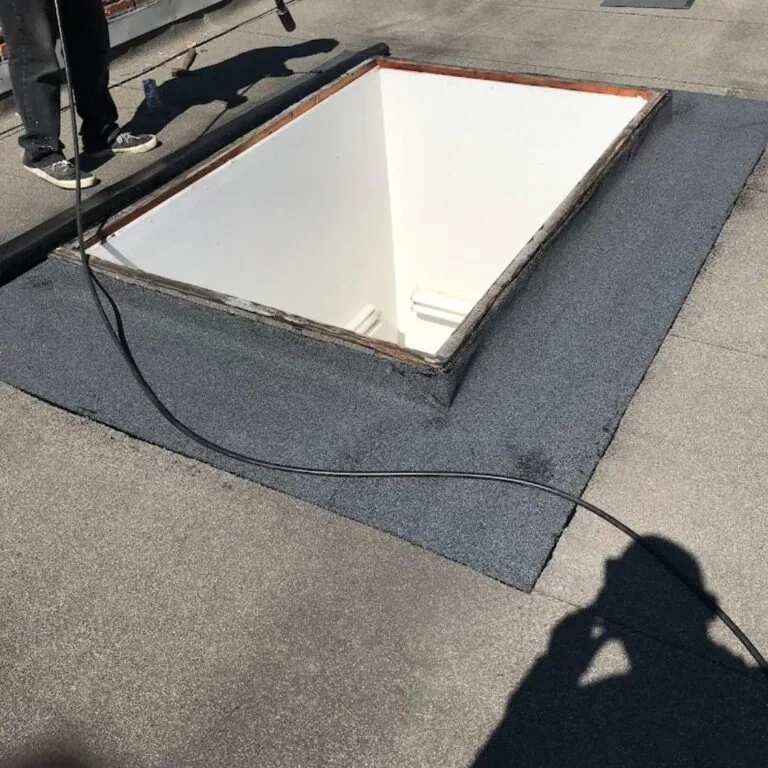
Water often reaches the interior through a transition rather than an open field seam. We inspect flashing at curbs, pipes, parapets, scuppers, and equipment supports, including the point where the vertical detail returns to the roof surface. A failed sealant bead may signal movement or an attachment problem that needs a different repair. Replacing sealant without checking the underlying flashing can leave the entry point intact. Where edge metal is loose, we look at its fastening and termination before closing the exposed roof line.
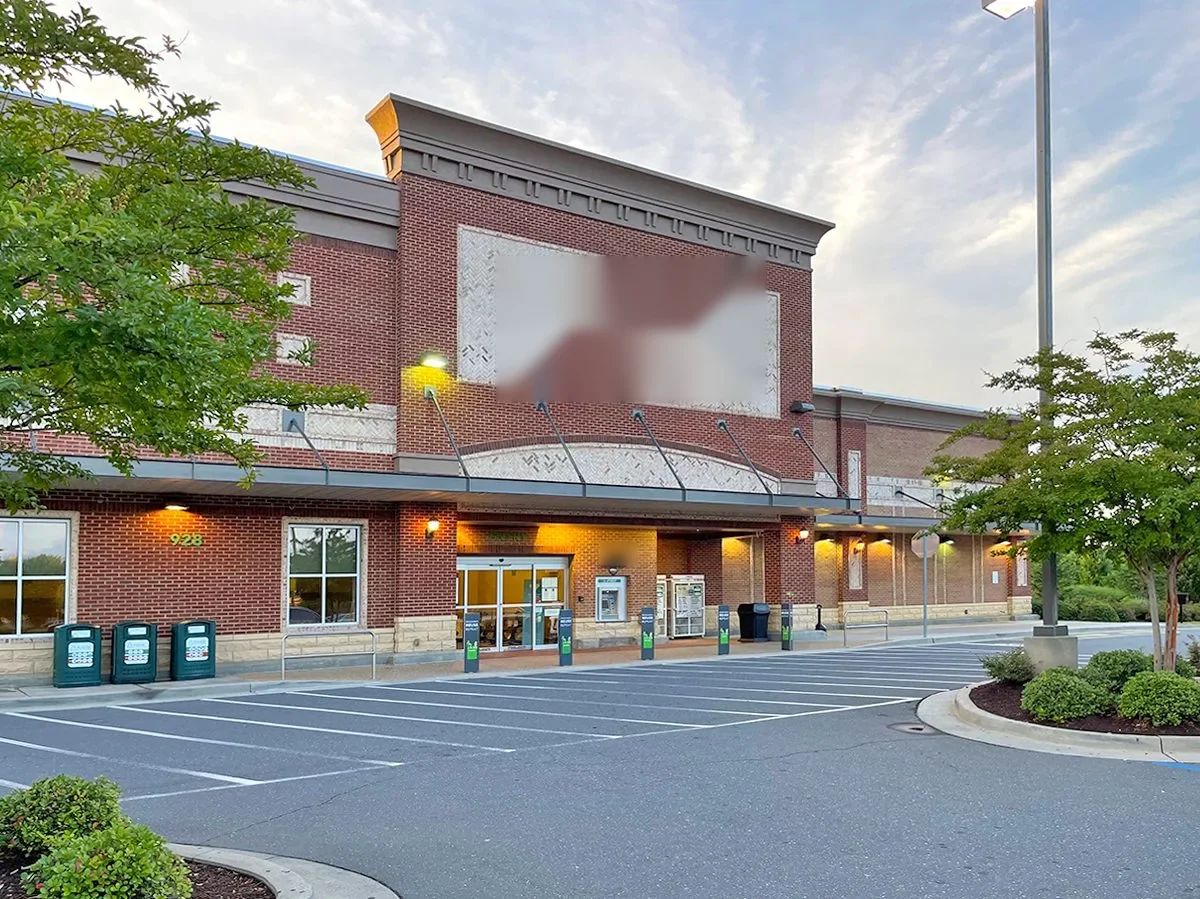
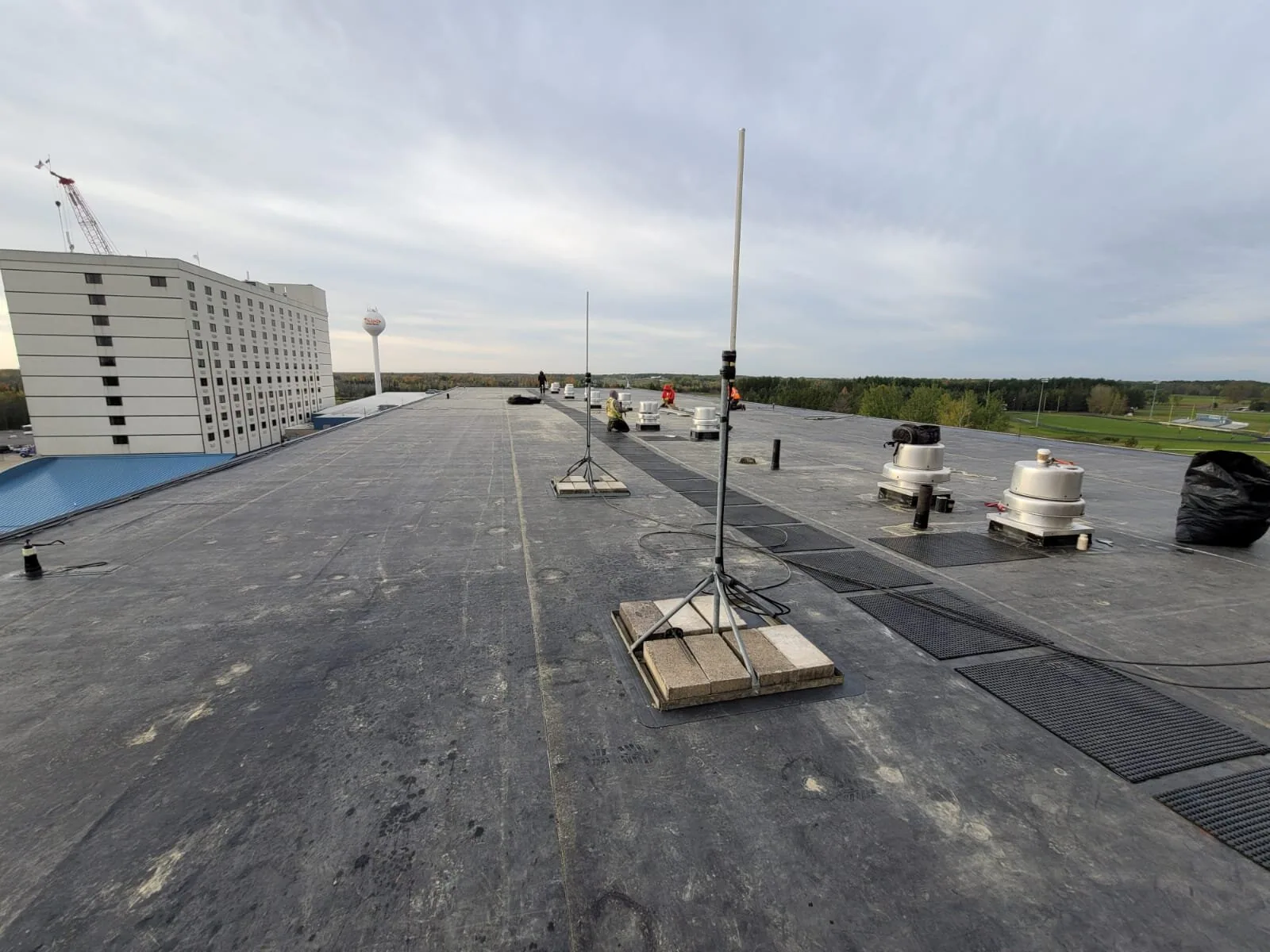
Across Rock Hill's I-77 business parks and commercial corridors, delivery routes and roof access vary from property to property. We confirm those limits with the facility contact before staging material or opening a repair area. We inspect that roof directly and note any equipment, conduits, or previous repairs that affect the working area. If the defect is at an edge or penetration, we can scope edge metal and coping work or penetration flashing as a defined repair rather than a broad allowance.
Drainage and the Water Path
A repair near a drain bowl has to keep the discharge path open. We clear debris from the work area, inspect the membrane tie-in, and check whether water is ponding because of a blocked bowl, a low point, or a failed transition. A patch should not cover the drain connection or leave a raised edge that holds water. We also look at scuppers and downspout transitions where they form part of the roof's drainage route. If the problem lies beyond the repair boundary, we note where the next inspection or maintenance action should begin.
Rock Hill's warm season and regular rainfall make drainage a recurring roof check. Where a storm is reported, we inspect for actual displacement or impact before connecting the event to a repair. York County's tornado and hail history is regional context; it is not a substitute for condition evidence from the property. A separate ponding-water assessment can address slope, discharge, and drain issues when a spot patch will not correct the cause.
Follow-Up After the Repair
After the repair, we inspect the finished seam, flashing, patch perimeter, or edge termination and photograph the completed area. The note names the roof zone, the defect treated, the repair material, and anything observed beyond the boundary. If another trade opens or penetrates the roof later, the marked repair can be located before new work begins.
A follow-up check is useful after rain or when the original symptom was difficult to trace. We compare the same area and the nearby water path, then record whether the observed condition changed. If the repair reveals widespread membrane deterioration, recurring wet insulation, or several failing details, we can summarize the evidence and discuss a replacement or recover evaluation. Contact us with the building use, symptom location, access restrictions, and any roof history you have. We will define the inspection area, repair boundary, and follow-up that fit the finding. For ongoing care, roof condition records can keep repair observations together.

Questions About Commercial Roof Repair
Yes, when the inspection shows a localized defect and the surrounding assembly can receive a compatible repair. We check the adjacent seam, flashing, membrane, and insulation indicators before setting the boundary. If similar failures appear across several zones or materials have deteriorated broadly, we explain that pattern instead of treating each opening as unrelated.
The record names the roof zone, defect, materials used, repair limits, and any condition that needs separate attention. Photographs show the surface before and after the work. We also note areas that were inaccessible or not part of the inspection. That keeps the finished repair from being mistaken for a full-roof assessment.
Water can travel along a membrane, insulation layer, deck, or framing before it appears inside. We trace likely paths outward from the stain and examine seams, penetrations, curbs, and drainage transitions. The interior mark points to where water became visible, while the roof inspection looks for the actual entry condition.
A drain repair can be included when the bowl, membrane tie-in, and discharge point are within the agreed scope. We check whether the problem comes from debris, a loose connection, a damaged membrane transition, or a broader low area. If the cause extends beyond the drain detail, we mark that separate work rather than covering it with a patch.
Define the Repair Area
Send the building use, the reported symptom and location, any roof history, and access limits. We will inspect the affected roof zone, mark the repair boundary, and record any condition that needs separate attention.