
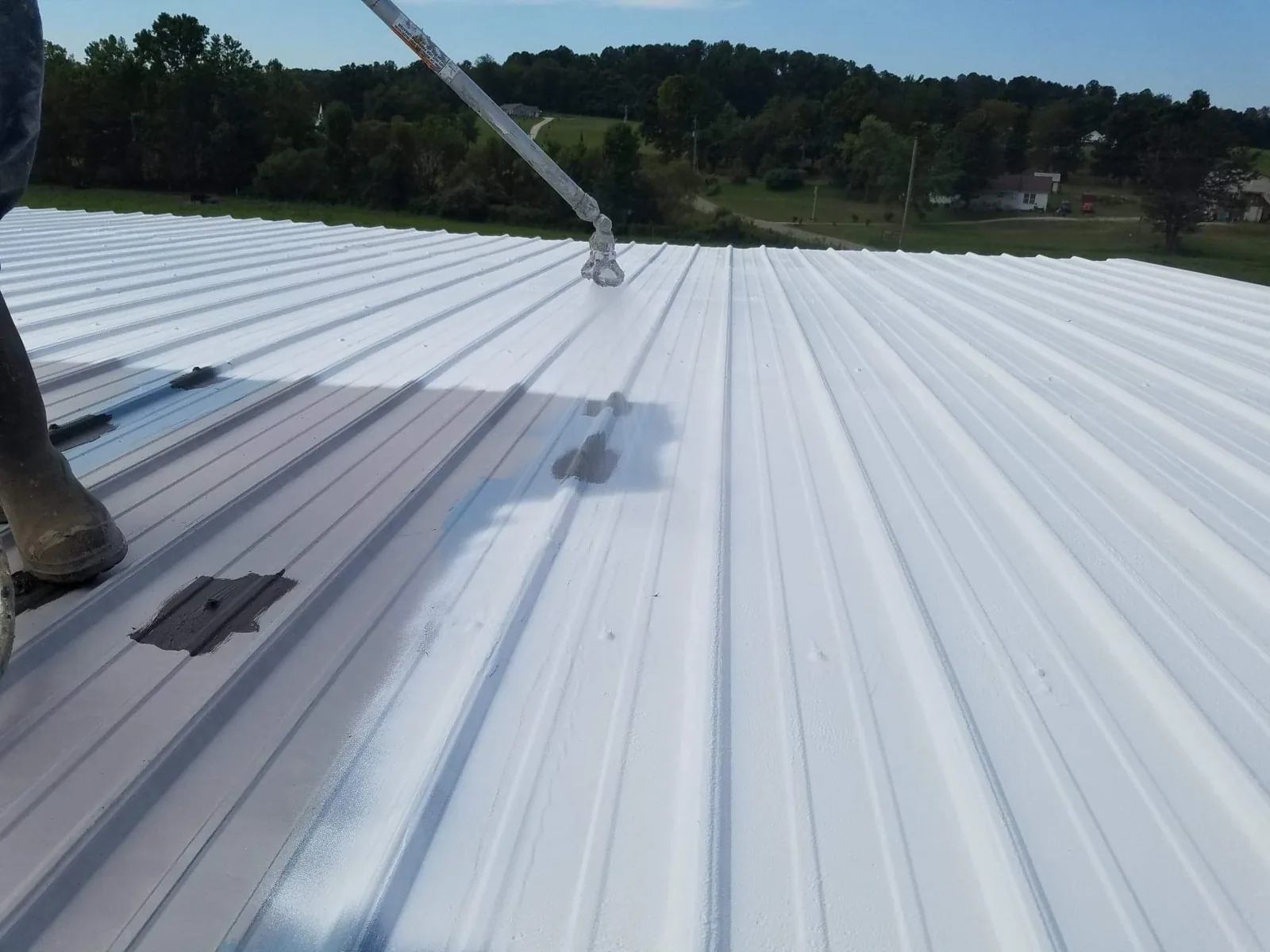
Restore a suitable commercial roof in Rock Hill with a coating assessment, surface preparation, detail repairs, and a defined application boundary.
A coating can renew a roof surface only when the existing assembly is sound enough to receive it. We begin by checking adhesion, seams, flashings, drainage, and signs of trapped moisture before selecting a restoration system. Loose material, active leaks, or wet insulation need attention before coating work can proceed. Rock Hill's warm, humid Piedmont weather and regular rainfall make surface preparation and dry application conditions part of the work plan. In redevelopment areas such as the Textile Corridor and at employment locations including Palmetto Research Park, each building still needs an assembly-specific assessment. The coating choice follows the roof condition and the owner's goal, not the district or building use alone.
Confirm the Roof Can Receive a Coating
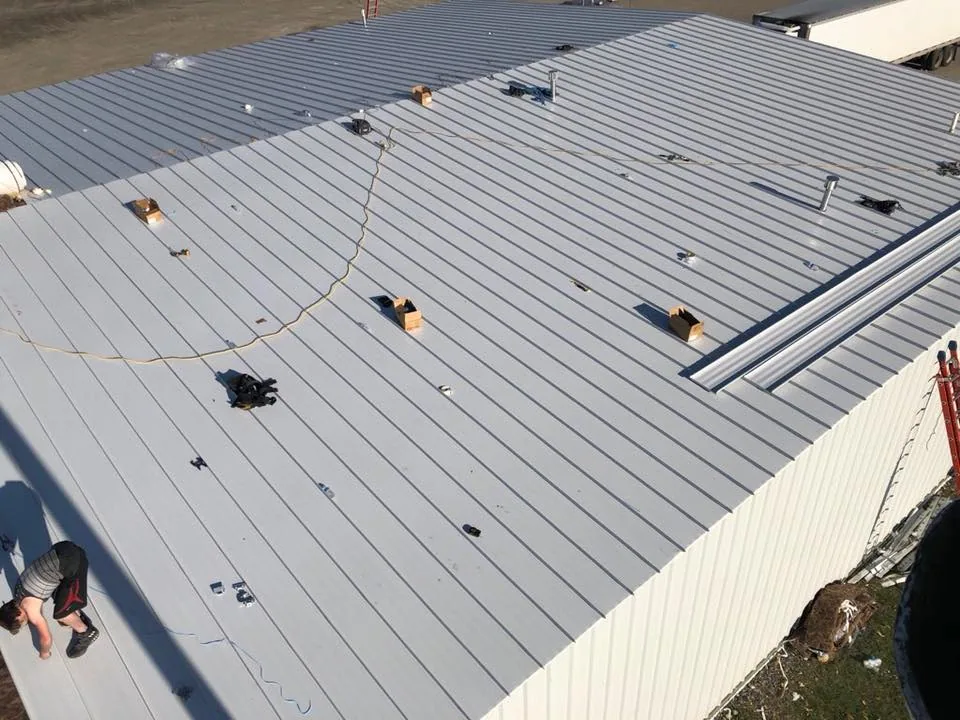
We inspect the roof surface for adhesion, movement, open seams, punctures, prior patches, deteriorated flashing, and standing water. The assembly must be stable enough for a coating to bond and remain continuous at transitions. We also check drains, curbs, penetrations, and roof edges, because a coating field cannot correct a failed detail by itself. If soft areas or suspected moisture appear, we identify where additional testing is needed before covering the surface.
Records from earlier repairs or coating work can help identify materials and application limits, but the visible roof remains the basis for the current recommendation. If layers are unknown, we mark that uncertainty and may propose a test opening or adhesion test at an agreed location. The assessment also shapes the work sequence and cost drivers. Extensive cleaning, repair of multiple transitions, reinforcing fabric, access requirements, and protection around equipment can add preparation steps. If several roof zones need different treatment, we separate them in the scope instead of pricing a uniform coat over mixed conditions. The owner can then compare restoration with other options using the observed substrate and repair boundary. Rock Hill's climate includes long warm periods and regular rainfall. That context informs planning, while the specific surface temperature and weather during application determine whether the work can proceed. A hands-on roof inspection can establish the visible condition and record areas that need repair before coating is considered.
Match the Coating to the Existing Surface
Silicone and acrylic coatings have different characteristics, so selection depends on the substrate, drainage, exposure, and project requirements. We confirm product compatibility with the existing roof and review any required primer, reinforcement, and application steps. The planned assembly includes a continuous field layer as well as details at seams, penetrations, curbs, and edges. The coating cannot make an unstable substrate suitable or replace missing insulation.
Silicone can be considered where ponding and exposure conditions suit the selected system. Acrylic may fit a different surface and drainage profile. These are not interchangeable labels: the existing material, preparation, and water movement affect the specification. Product selection and application follow the manufacturer's instructions for the chosen system. The proposed scope should also identify the surface preparation standard and the weather limits that govern each work stage. If test results or field conditions differ from the assessment, we pause at the affected zone and confirm the revised sequence with the owner. We can compare silicone coating and acrylic coating options after identifying the substrate and repair needs. If the assembly does not support a restoration, we explain why another scope may better address the observed condition.
Prepare the Surface and Repair Details
Preparation begins with removing dirt, loose coating, and debris that can interfere with adhesion. We clean the agreed work area, allow it to dry as required, and repair defects that would remain active beneath a new coating. Seams and fasteners may need reinforcement; penetrations and transitions need compatible flashing work. We define the repair boundary before applying the field coating so the owner can see which details are included.
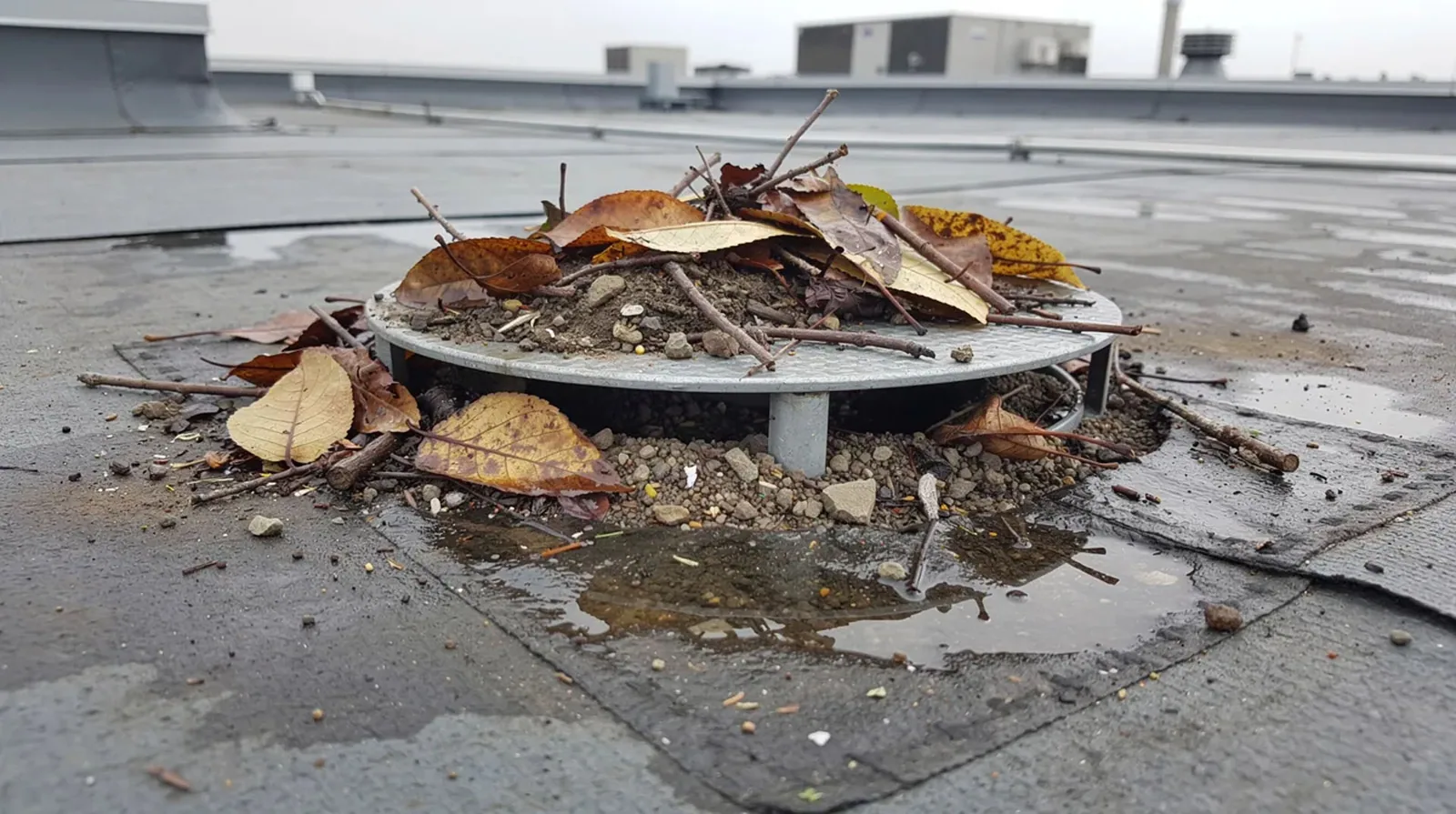
Where water pools, we inspect the drain bowl, scuppers, and low areas before application. Adding coating over a blocked drain or poor discharge path does not correct the source of ponding. Rock Hill's rainfall makes that distinction practical: water must be able to reach and pass through the intended drainage route. We can address a separate drain condition through drain and scupper work, or scope a documented defect as commercial roof repair. Each repair is allowed to cure or dry according to the system requirements before the coating proceeds.
Apply Within the Agreed Work Zone
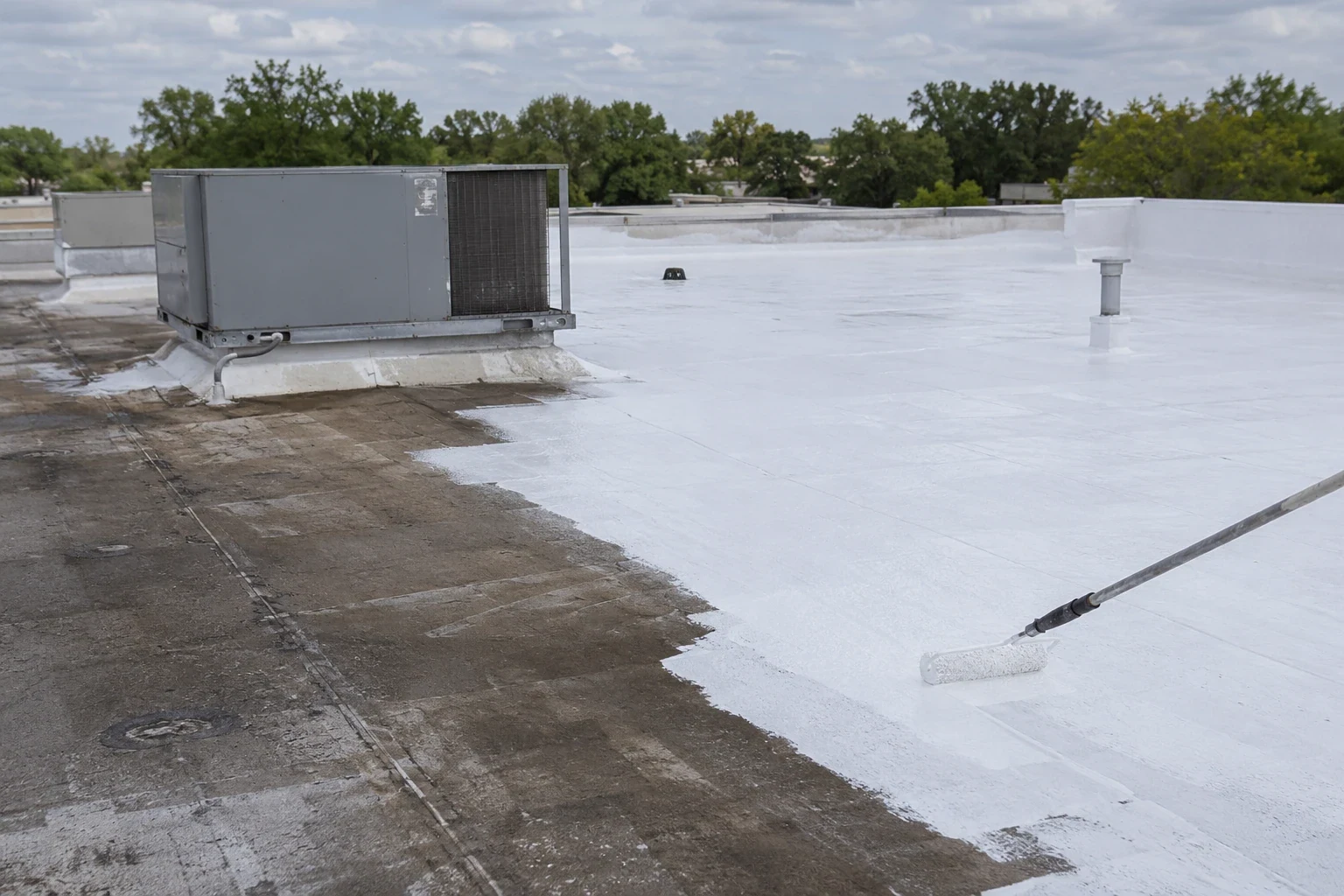
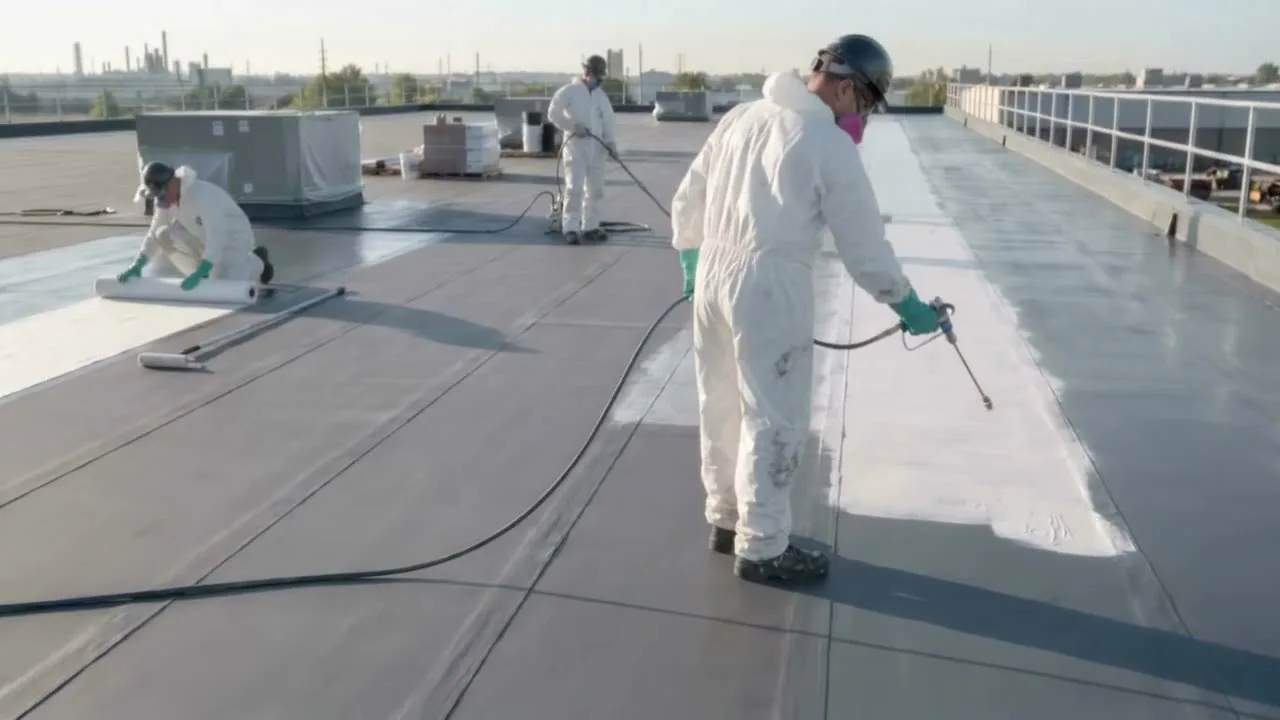
Before application, we confirm the roof zones, staging location, protection needs, and current conditions. Coating is applied at the specified coverage and thickness for the selected system, with reinforcement at designated details where required. We maintain a clean transition between completed and uncompleted areas and close the work zone as the manufacturer's instructions require. If weather or surface conditions change, the sequence may need to pause so material can cure correctly.
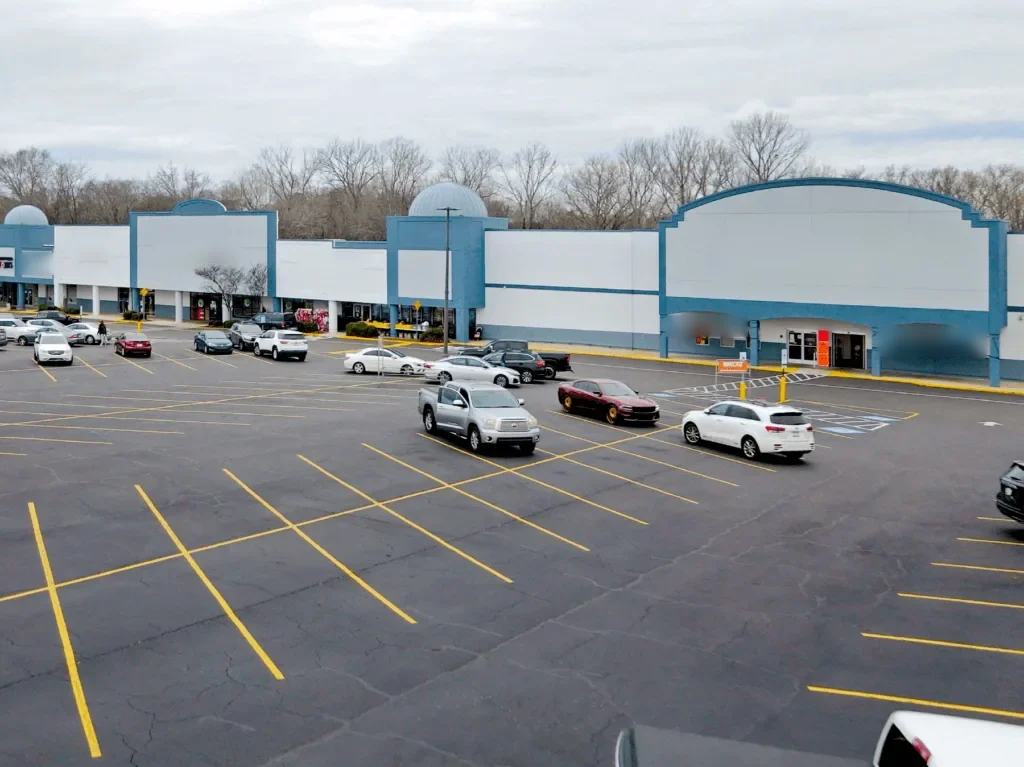
Rock Hill's commercial activity includes industrial parks, institutional campuses, retail areas, and mixed-use redevelopment. On an occupied property, we coordinate rooftop access, nearby equipment service, and any route where coating work overlaps with facility operations. Before coating, we confirm the building's surface, drainage, and access at the site. A clearly marked work boundary also helps staff distinguish the restored zones from roof areas that were not part of the coating scope.
Record Coverage and Future Checks
At closeout, we document the prepared surface, repaired details, coating areas, and transitions that were completed. The record identifies excluded sections and any condition left for separate repair. A follow-up inspection can check visible coating condition, open details, and drainage after the system has been in service. Restoration can extend the useful service of a roof when the assembly is suitable and the work is installed as specified, but it does not remove the need for later maintenance.
Textile Corridor is a Rock Hill redevelopment district, and Palmetto Research Park targets life-sciences and manufacturing uses. At each property, coating suitability follows the roof inspection and compatibility checks. For each building, the coating decision should stay tied to the inspection findings, compatibility checks, and repair limits. Share the known roof system, previous coating or repair history, leak reports, and access constraints with us. We will assess the surface and explain whether restoration fits the conditions observed. A continuing maintenance program can keep drainage and coating details in the inspection record.

Questions About Commercial Roof Coating
Active leaks and failed details need to be identified and repaired before a coating can be considered. We inspect the surface and transitions, then check whether moisture or weak attachment limits restoration. A coating is not a substitute for correcting an open seam, failed flashing, or wet assembly.
We first identify the existing roof surface, drainage pattern, and repair needs. Silicone and acrylic systems have different compatibility and application requirements. We select a system only after confirming that it suits the substrate and project conditions, and we document the preparation and details included.
A coating does not change roof slope or clear a blocked drain. We check bowls, scuppers, discharge paths, and low areas before setting the scope. If ponding reflects a drainage or slope condition, that work must be addressed separately or included in an approved plan.
Surface and air conditions, moisture, and forecast rain can affect preparation, application, and cure. We follow the selected system's requirements and adjust the work sequence when conditions are unsuitable. The schedule and completed work zone are recorded for the facility contact.
Assess the Roof Before Restoration
Share the roof system, past coating or repair work, leak history, building use, and access limits. We will check surface suitability, identify detail repairs, and define the zones a coating can address.
