
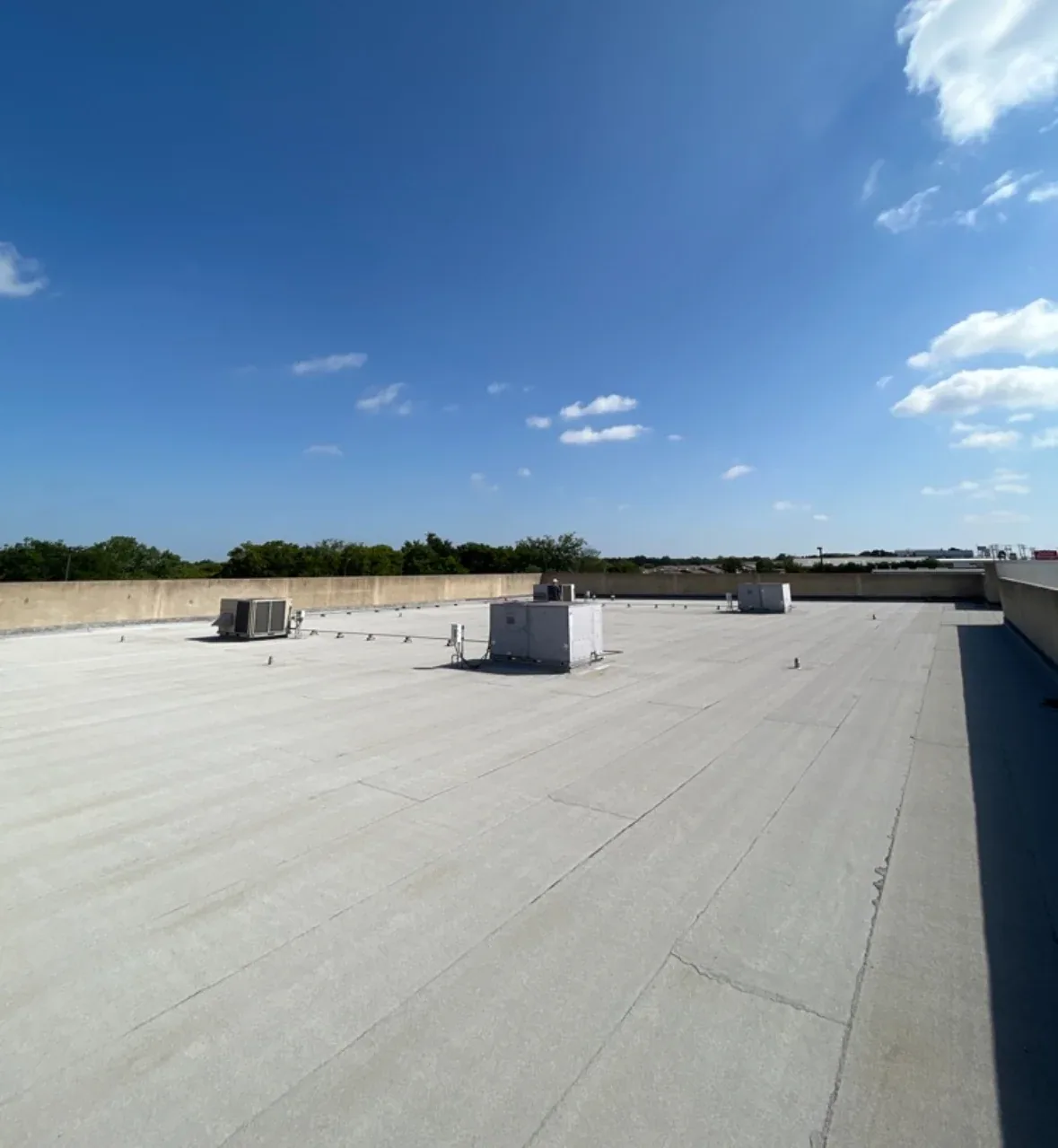
Repair or replace modified-bitumen roofing in Rock Hill with ply-lap, flashing, surfacing, and drainage checks matched to the existing assembly.
A modified-bitumen roof is built in layers, and a leak can travel through a lap, flashing, or damaged surface before showing inside. We inspect the plies, seams, surfacing, attachment, and drainage, then mark the roof zone that supports a repair. The Carolina Piedmont around Rock Hill stays humid through its long warm season, and recurring rain makes lap direction and surface wear worth tracing before a repair is selected. Warehouse and distribution development is growing along I-77 South, while Riverwalk Business Park serves manufacturing, distribution, and office uses. We confirm the existing bitumen assembly before setting a repair or renewal scope near Riverwalk Business Park or Legacy Park.
Inspect the Plies and Lap Lines
We examine side and end laps for separation, wrinkles, open edges, and movement. At a blister or raised area, we check the surrounding surface to understand whether the condition is isolated or tied to trapped moisture or a failing bond. Granule loss, exposed reinforcement, cracking, and previous patches can show wear, but the visible surface alone may not confirm the condition of every ply. A test opening can expose the layers at an agreed point when that answer affects the repair.
Bitumen sheets may use different reinforcement and surface treatments. SBS and APP products have distinct formulations and application requirements, so we identify the assembly where records and visible details allow. A repair method that suits one product may not suit another. We document the observed layers, lap condition, and any material that remains unconfirmed. The field mark identifies the seam segment checked, not a blanket conclusion about all roof areas. The number of plies and their bond method affect how far material must be removed to reach sound layers. At an edge or wall, the repair may require lifting a termination or resetting metal so the new surface connects correctly. We identify those transitions before the repair starts and record any change if removal exposes a different assembly than expected.
Read the Surface and Exposure
Granule loss, coating wear, cracks, punctures, and exposed bitumen change the repair decision. We look at whether the surface remains stable and whether a patch can tie into sound material. At walkways, equipment routes, and penetrations, foot traffic or service work may have damaged the cap sheet. We check for loose repair edges and identify where water can reach the underlying ply.
Rock Hill's regular rainfall can reveal an open lap or weak flashing, but the roof must be inspected to identify the actual opening. After a reported storm, we inspect modified-bitumen laps, cap-sheet surfacing, flashing, and edges for punctures, displaced granules, or open seams. We photograph the surface condition and connect a storm report only to visible property-specific evidence. If the roof shows impact marks or displaced metal nearby, a focused roof inspection can record related findings without extending the conclusion beyond the checked area.
Check Curbs, Drains, and Flashing Turns
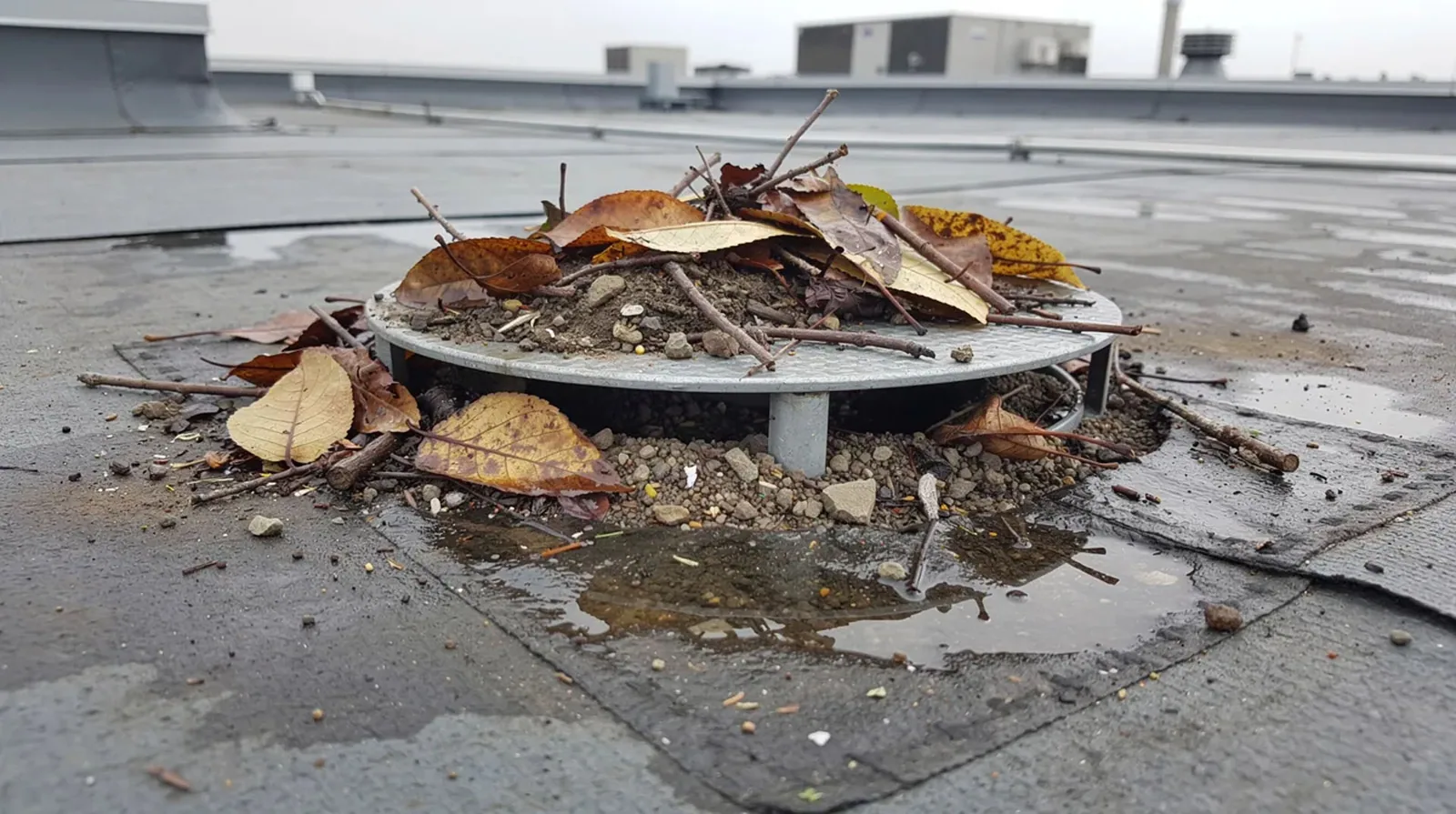
At a curb, wall, or pipe, the membrane rises from the field and closes around a change in surface. We inspect flashing height, lap direction, attachment, corners, and termination. At drains and scuppers, we check how the bitumen ties to the bowl or opening and whether water can reach the discharge path. A patch that leaves a raised edge near a drain can catch water and shorten the repair boundary's useful reach.
Where an interior leak sits below a parapet or equipment base, we inspect nearby field seams and adjacent details before identifying the source. A leak investigation can follow the water route across roof zones. For outlet defects, drain and scupper repair can address the drainage connection. We record what was checked and whether the curb, wall, or drain transition needs separate work.
Select the Repair Method
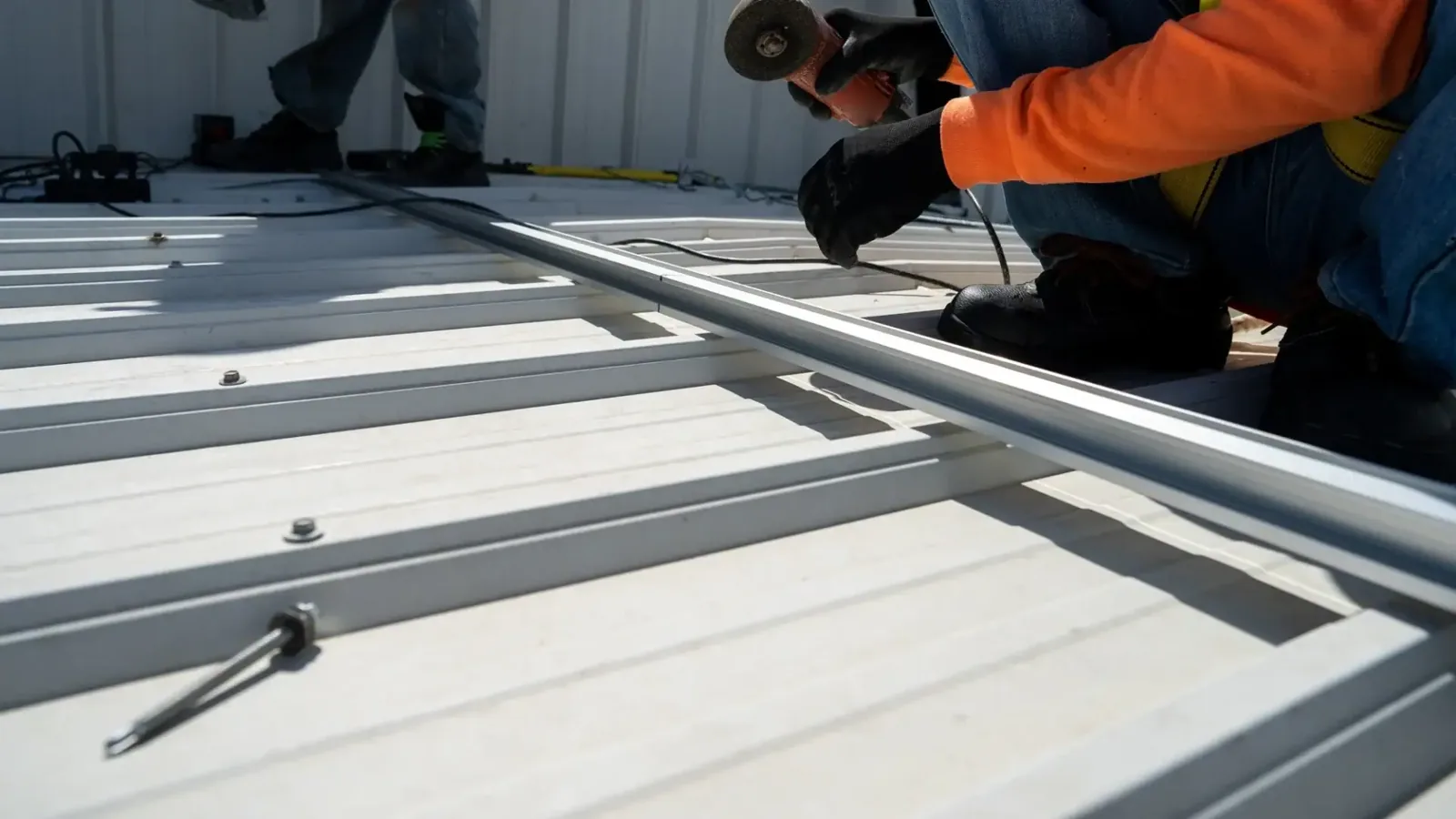
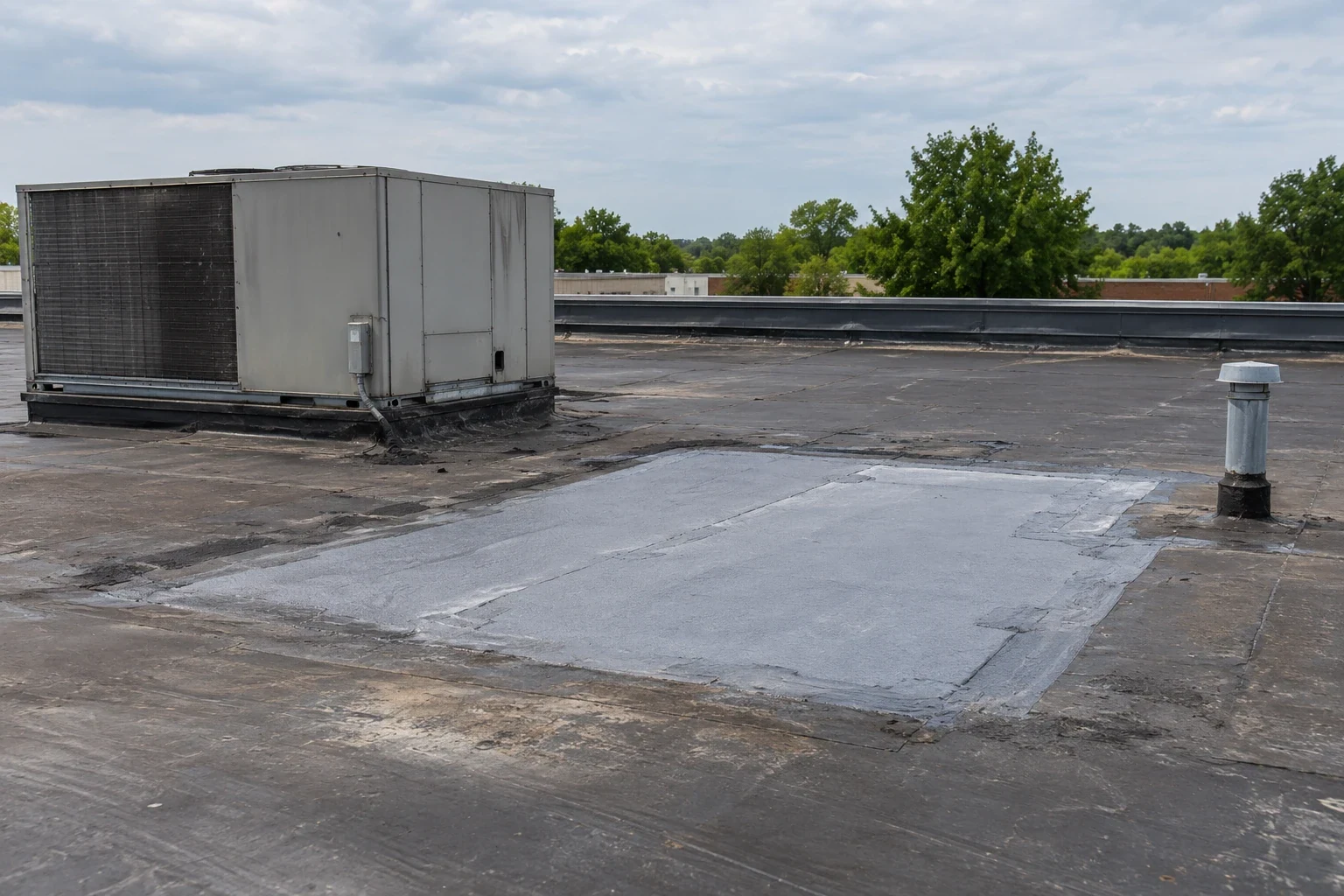
A repair starts by removing loose surface material within the agreed area and preparing sound bitumen for a compatible patch. Depending on the assembly and project conditions, the system may use a bonded, adhered, or heat-applied detail. The chosen method follows product requirements and site safety controls. We reinforce laps and corners where specified, then check that the patch closes to sound material without leaving an open edge or water pocket.
Installation method also changes the work sequence. Torch-applied, hot-asphalt, and cold-applied systems each require material-specific preparation and controls for nearby equipment, openings, and occupied areas. We confirm the approved method before mobilization and protect the surrounding roof as the repair is prepared. If current conditions do not support the specified process, the work sequence must change before material is applied. A repair should not be closed over a surface that has not reached the condition required for the selected system.
Repair length, number of layers, access, surface preparation, and concealed moisture affect the work sequence and cost. If an opening exposes wet insulation or a damaged deck, we photograph it and confirm the added scope before extending the repair. A commercial repair plan can coordinate multiple details across a bitumen roof. If the plies or surfacing have deteriorated broadly, compare a recover evaluation with replacement planning after attachment, moisture, and edge conditions are reviewed.
Keep the Assembly in the Inspection Route
Maintenance checks should return to laps, flashings, drains, and previous repairs. We remove accessible debris, look for lifted edges, and photograph new surface changes against the prior field mark. A bitumen roof that has been patched in several stages may need closer attention at old-to-new interfaces. We identify each repair date and location so a later inspection can see whether the seam or patch changed.
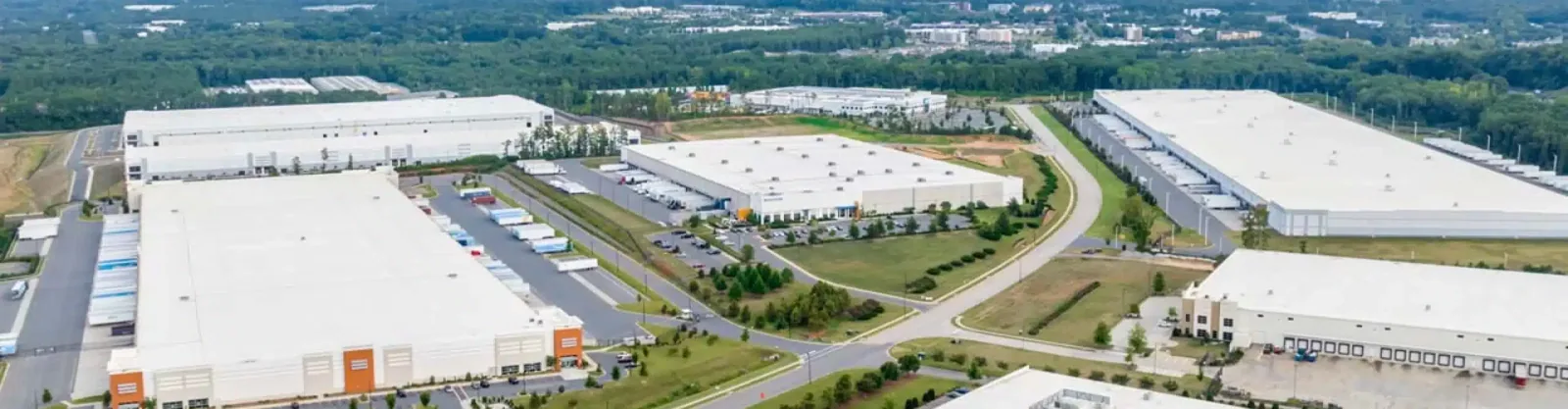
Rock Hill's employment parks and I-77 South corridor include distribution, industrial, and office activity, but site operation and roof condition differ by property. We coordinate access and service routes with the facility contact and identify areas that cannot be reached. A maintenance program can keep recurring observations together. For comparison, built-up roofing also uses multiple layers but has a different surfacing and repair detail; EPDM roofing uses a single-ply sheet and a different seam method. The report stays specific to the modified-bitumen roof inspected. A maintenance record also helps distinguish routine surface wear from a new opening at a later visit, especially when several repair layers are present.
Questions About Modified Bitumen Commercial Roofing
We inspect the lap for separation, wrinkles, exposed reinforcement, and loose edges, then mark the segment. A test opening may be needed if the layers or bond cannot be confirmed from the surface. The result applies to the area checked and does not describe the entire roof.
They have different formulations and application requirements. We identify the existing product and follow the compatible repair method for its assembly. If records and visible conditions do not establish the type, we document that uncertainty before selecting materials.
A localized blister may be repairable if surrounding material and layers remain suitable. We inspect the area, look for moisture or bond failure, and determine whether the repair can tie into sound membrane. Repeated or widespread blisters may call for broader evaluation.
Broad ply deterioration, repeated open laps, wet insulation, or widespread failed flashing can exceed a spot repair. We document the affected zones and compare repair, recover, or replacement based on the assembly and project requirements. Concealed layers remain unknown unless opened or tested.
Inspect a Modified-Bitumen Roof
Share roof plans, leak locations, prior repairs, building use, and access limits. We will identify the bitumen assembly, inspect laps and transitions, and document a compatible repair or renewal boundary.
