Get urgent commercial roof damage assessed in Rock Hill. We document active water entry, discuss temporary protection, and define repair scope and terms.
Active water entry at a commercial building makes protection of people, equipment, and operations the first priority while the roof condition is assessed. We can arrange emergency roofing response for urgent conditions under confirmed service terms. At the property, we identify active entry, document visible damage, and separate temporary protection from permanent repair. The sequence depends on roof access, weather, site safety, and the materials available for the assembly. In Rock Hill, SC, severe storms are part of the regional record: a 2011 tornado crossed Chester and York counties, After a storm report, we inspect the specific roof and document its visible condition. For buildings near Riverwalk Business Park or the downtown Rock Hill area, facility contacts can share the affected zone, current conditions, and access requirements before a response is arranged.
First Steps at the Property
Start by keeping people clear of wet ceilings, loose materials, and any area where water may contact electrical equipment. Follow the facility's own safety procedures and contact the person responsible for building operations. If there is a risk to occupants, equipment, or stored materials, identify the affected rooms and isolate them as the site team directs. Do not climb onto a wet or damaged roof to investigate. The roof may be slippery, concealed damage may be present, and a storm can leave edges or rooftop equipment unstable.
When you contact us, describe what is happening now, what changed, and whether water is still entering. A photo from a safe interior location can help orient the initial discussion. Share roof access limits, site check-in procedures, known hazards, and any prior repair notes. We will confirm whether the work can be arranged within the service terms, travel conditions, and scope available for the request. Before a response is arranged, we confirm the service terms, travel conditions, and expected work scope for that request. For ongoing water entry, we can discuss temporary protection while planning an inspection and a permanent repair.
Find the Active Roof Condition
At the roof, the inspection begins with the reported leak area and the safest route to it. We check the membrane or panels, seams, edge metal, penetrations, curbs, drains, and rooftop equipment near the affected zone. We also look for storm-related movement, impact marks, openings, and loose material. Water can travel along a roof assembly before appearing indoors, so the stain or drip may not sit directly below the entry point. Each observation is tied to a visible roof location instead of being treated as a conclusion about the whole building.
York County has a history of tornado and hail activity. After a reported storm, we inspect the roof for displaced metal, punctures, split seams, debris, or no visible opening. We record the roof conditions found, including displaced metal, punctures, split seams, debris, or no visible storm-related opening. If we cannot reach a zone safely or the cause remains unclear, the limitation goes into the findings. A broader commercial roof inspection can be considered when the urgent area is stabilized and the owner wants a condition review beyond the immediate damage.
Temporary Tarping and Dry-In
Temporary protection aims to limit additional water entry until a durable repair can be completed. Depending on the roof and conditions, this may involve a secured cover, temporary sealing, or a dry-in at the exposed area. The method must suit the surface, wind exposure, roof layout, and safe attachment points. A cover that is not secured for the conditions can move or create another hazard, so we determine the practical boundary before placing it. Existing rooftop equipment, drains, access paths, and edge conditions remain part of that decision.
We explain what the temporary measure covers, where it ends, and what remains exposed or was not reached. Tarping can limit entry at a defined opening, but it cannot repair a failed seam or replace damaged insulation. We inspect connected roof zones for additional moisture before widening the permanent repair. If interior materials are wet, the facility team may need its own drying or remediation process. We can identify the roof-side opening and coordinate the roofing work area, while the owner handles interior response under applicable building procedures. When a roof detail needs a permanent correction, commercial roof repair sets out the scope process. A documented opening at a seam or flashing can lead to seam failure repair when inspection confirms that detail as the cause.
Permanent Repair and Work Boundaries
After the active condition is understood, we define permanent work around the observed damage. A repair may require preparing and patching a membrane, restoring a seam, replacing a flashing section, resetting edge metal, or correcting a drain tie-in. The specific approach depends on the existing roof system and the materials found at the work area. We do not assume that a product or detail is present before seeing it. If removal reveals wet or deteriorated layers below the surface, we document the condition and discuss the additional scope before extending the work.
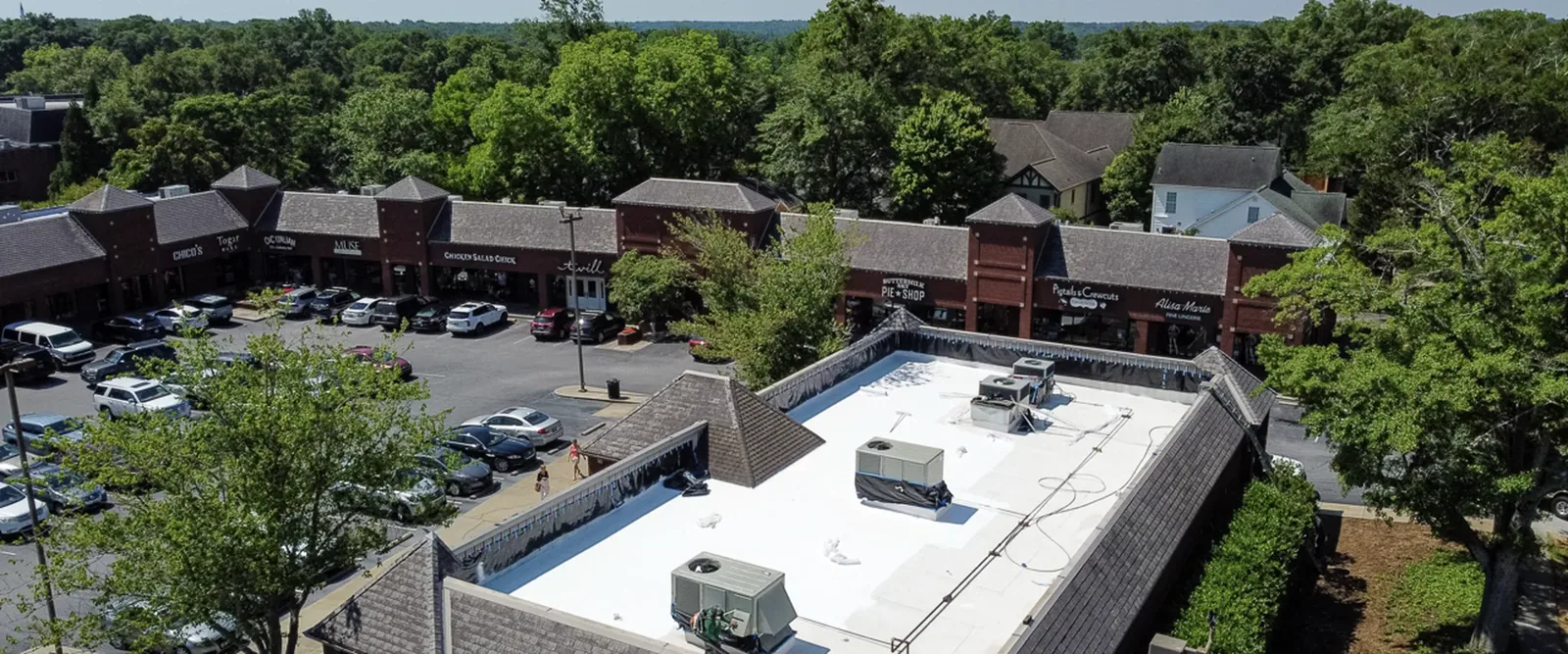
Rock Hill's building mix includes industrial parks, retail centers, recreation facilities, institutional campuses, and mixed-use redevelopment. Riverwalk serves manufacturing, distribution, and office uses, while Knowledge Park links downtown and Winthrop University. These settings can have different access plans and operating constraints, so we confirm the roof assembly at the building before selecting a repair method. We coordinate work boundaries with the facility contact, account for rooftop equipment and pedestrian routes, and clarify how materials will be staged. In business parks and occupied properties, a marked work zone helps separate the roof repair from other site activity. The written scope identifies the affected roof zone, included repair, temporary measure if any, and conditions that would require a new decision.
Closeout and Next Inspection
At closeout, we record the location of the opening, the work completed, and the condition of adjacent details that were visible during the visit. Photos can show the temporary protection or final repair and its boundary. We note any area that could not be accessed, any concealed layer that remains unknown, and whether follow-up observation is appropriate. If temporary protection remains in place, the record should make that status clear so the facility knows a permanent repair may still be needed.
Owners may want to review the roof after the immediate event, especially when several zones show impact, displaced materials, or recurring leaks. A photo-backed roof condition report can organize observations for maintenance planning, and a commercial roof replacement assessment can help evaluate broader renewal when repair boundaries no longer address the building's needs. Emergency work follows the confirmed request, service terms, and roof conditions we can inspect. Share any new leak location or change in temporary protection so the next visit can compare the same marked zone.

Questions About Emergency Commercial Roof Repair
Response timing and availability depend on the confirmed service terms for the request, conditions, and access. We do not promise a particular hour or arrival time before confirming those details. When a response is arranged, we can assess active entry and discuss temporary protection and next steps.
Keep people away from wet ceilings and any area where water may reach electrical equipment. Follow the facility's safety plan and notify the building contact. Avoid roof access during unsafe conditions. Share the affected room, whether water is active, and any access restrictions so the roofing response can be coordinated.
Tarping or dry-in is temporary protection intended to limit additional entry at a defined area. We document where the protection ends, inspect connected zones for concealed moisture, and explain any permanent repair that remains.
No. York County's storm history describes regional exposure, not the condition of an individual roof. We inspect for visible openings, displaced materials, impact marks, and related conditions, then list what was reached and what needs another check.
Discuss an Urgent Roof Condition
Tell us whether water is entering, which areas are affected, and what roof access or safety limits apply. We will confirm service terms, document the visible roof condition, and explain temporary protection and repair options.