
Commercial roof inspection and repair in Lake Wylie, with each scope tied to the property, roof system, drainage path, and access needs.
A commercial repair in Lake Wylie starts with a route to the affected roof and a clear boundary for the work. York County includes the community in its eastern Charlotte-area growth pattern and connects its commercial centers with Fort Mill, Tega Cay, and Fort Mill through the regional highway network. We inspect the specific property before choosing a repair method.
Locate the Roof Condition Before Pricing Work
We begin with the reported issue, current roof plan, and safe access point. The field walk checks visible membrane or metal, seams, drains, flashing, penetrations, equipment bases, and previous repairs. A commercial roof inspection can identify what was reached and where a section needs added access, a test opening, or another survey. The report places each observation within the property rather than extending it to nearby buildings.
Lake Wylie sits in eastern York County within the broader Charlotte metropolitan area, with residential growth and commercial services along SC 160 and Gold Hill Road. Each property has its own roof type and condition, which we inspect before setting a tie-in, coating, or renewal recommendation. We confirm the current use with the owner and inspect the actual roof before setting a tie-in, coating, or renewal recommendation.
A leak report should note where water appeared, when it started, and whether work on equipment or a penetration took place. We compare that information with the roof geometry, seams, outlets, and wall lines. A leak investigation documents the route examined and whether the entry is confirmed. If several paths remain possible, we identify the access or test needed to separate them.
At a roof edge or addition, an older repair may hide the transition between materials. We check exposed laps, attachment, flashing, and the direction water should move. If the original layer cannot be identified from the surface, the report states whether a test could change the proposed material or method. A defined sample is useful only for the point where it was taken.
Check Outlets and Water Movement
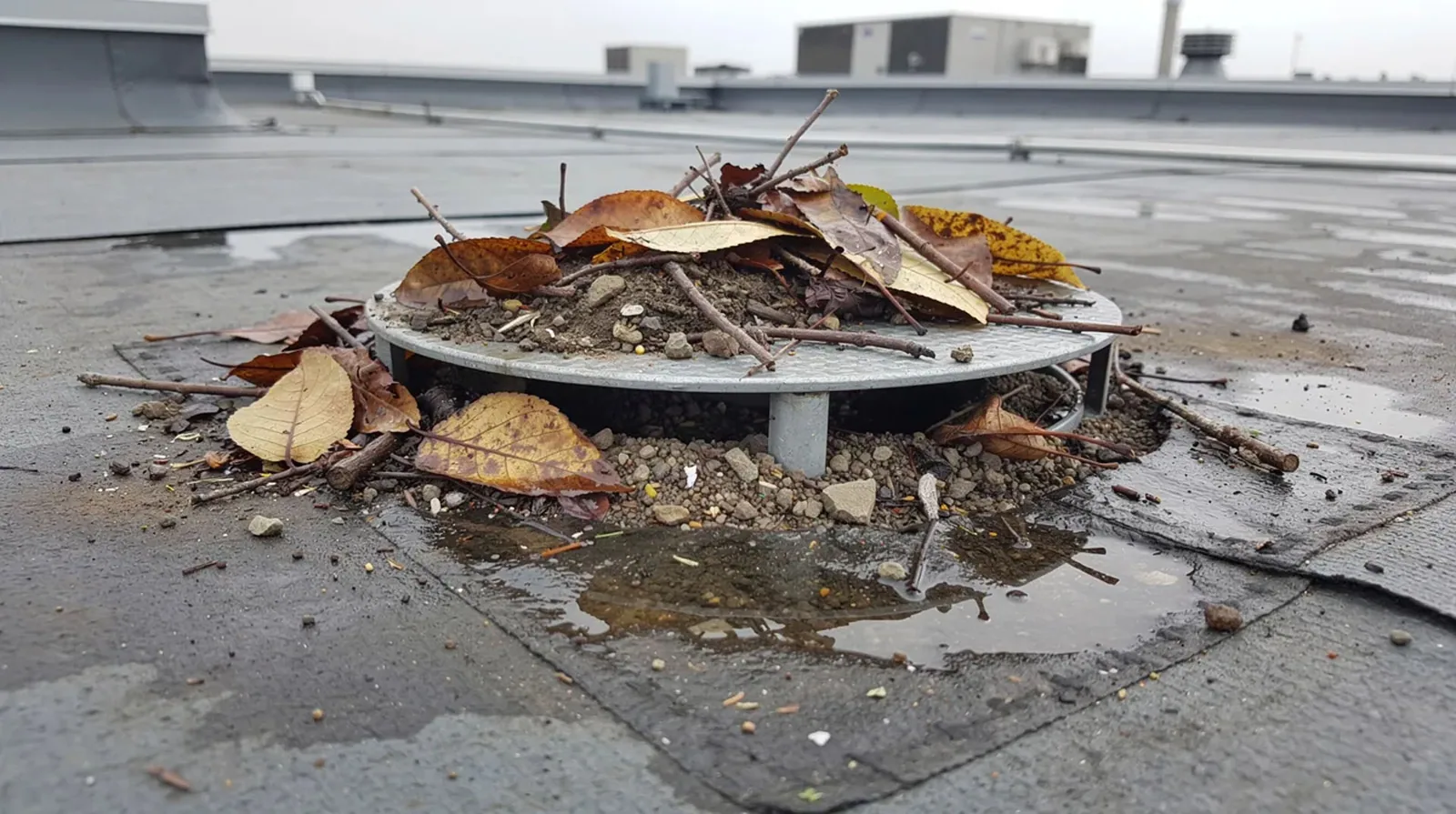
We trace drainage from the roof surface through the drain, scupper, gutter, or overflow to the visible discharge point. Debris at an inlet is different from a separated membrane tie-in or a low area that retains water. A drain and scupper repair can correct an observed roofing connection. If a pipe continues out of sight, we note what another trade would need to inspect.
Water at a wall can come through a parapet, roof edge, equipment curb, or another part of the assembly. We compare the inside symptom with the visible laps, coping, fasteners, and sealant rather than assigning cause by proximity. If the roof detail looks sound but water continues, a moisture survey or controlled test may add useful evidence before a broad repair is selected.
Rock Hill's warm, humid Carolina Piedmont climate brings recurring rainfall across a long warm season. For a Lake Wylie property, we check the actual slope, outlet, and discharge route and define how exposed material will be covered if work pauses. We check the actual slope, outlet, and discharge route, then define how the exposed area will be covered if work pauses.
If another contractor is servicing a unit or line, the roofing tie-in needs a clear handoff. We document the flashing and membrane connection that falls within the agreed work. Mechanical, plumbing, and electrical service remain separate unless the written scope assigns them to the same crew. A curb and support repair can address the roof-side transition after the equipment sequence is settled.
Set Access and Protection Before Mobilizing
Before moving materials, we confirm the property contact, roof hatch or ladder, escort rules, staging area, and any route that must remain open. SC 160 and Gold Hill Road carry commercial services through the north-county area, while each site sets its own entry and delivery conditions. The work plan identifies lift placement, overhead clearance, and where material can be stored.
Where a commercial service area is occupied, we coordinate the work zone and protection below before removal begins. The owner or manager identifies access limits and who can approve a scope change. A phased sequence may reduce the open area at one time, but weather, material preparation, and hidden conditions can change progress. We state the closure method for any roof opening if work must pause.
When an assembly is opened, the crew checks the exposed layers and deck before continuing. Unexpected moisture or material damage is photographed and kept within a defined boundary until the authorized contact decides what to do. Structural work, interior finish repair, and equipment service remain separate unless included in the agreement. That decision point helps keep a localized roofing repair from expanding without review.
Regional routes connect Lake Wylie-area commercial centers with Fort Mill, Tega Cay, and Rock Hill. Those links help place the service area within the county network, but they do not indicate how a particular site is accessed. We confirm property-specific routes and restrictions before scheduling labor, lifting equipment, or deliveries.
Compare a Focused Repair With Renewal
A patch may fit a confirmed opening if material around it is sound and the selected connection is compatible. Recurring leaks, seam separation, broad moisture, or edge movement can support further testing or a wider renewal comparison. A commercial repair scope identifies the roof area, preparation, material, access, protection, and work limits. The report can also state which adjacent zones were not inspected.
Cost and schedule depend on system type, repair extent, detail count, access, staging, disposal, interior protection, and conditions concealed beneath the surface. Recovery or replacement also requires assumptions about existing layers, drainage, attachment, and penetrations. If a moisture survey or sample could change the method, we explain its purpose before adding it to the project.
Lake Wylie pairs residential growth with nearby commercial services. A service building can vary in use, roof layout, and operating schedule, so we scope the work from the owner's records and field evidence.
If the owner has several findings, we can list each with its own priority and boundary. Active water entry may call for a different sequence than maintenance or an unconfirmed condition. A clear proposal separates immediate work, optional testing, and broader renewal so the property team can choose what to authorize.
Keep the Next Roof Check Grounded
Closeout lists the roof zone, condition, materials, photographs, completed work, and any access or testing limit. Owner plans can help identify the exact section or outlet reviewed. A later manager can compare new symptoms with the earlier field record instead of relying on an unlocated repair note.
A maintenance visit can return to the outlets, seams, edges, penetrations, and patched areas recorded at inspection. Share the roof plan, repair history, leak reports, equipment changes, and site rules before setting the next route. Any area not reached stays identified as uninspected.
Lake Wylie, Fort Mill, and Tega Cay are connected within York County's eastern regional road network, but each property has a separate roof and access plan. We keep recommendations tied to the building inspected and name any follow-up survey that remains open. That record helps coordinate service if an owner manages more than one location.
For a request, send the commercial property's use, the symptom, an available roof drawing, and access restrictions. We will define what the first visit can establish and whether testing or another trade should follow. The repair boundary stays clear in the proposal and the closeout.
Questions About Lake Wylie
No. Regional development does not reveal an individual roof assembly. We confirm the material and condition from property records and a field inspection.
We compare the interior symptom with roof edges, penetrations, seams, and the drainage route. The report separates observed evidence from any path that remains unconfirmed.
Yes. Each property receives its own access plan, findings, and work boundary even when visits are coordinated.
Access, material preparation, weather, protection below, equipment coordination, and concealed conditions all affect sequence. The proposal states how an open section will be secured at a pause.
Plan a Lake Wylie Roof Inspection
Share the building use, reported symptom, roof plan, and access limits. We will inspect the defined area and outline the repair or testing step supported by the roof conditions.
