
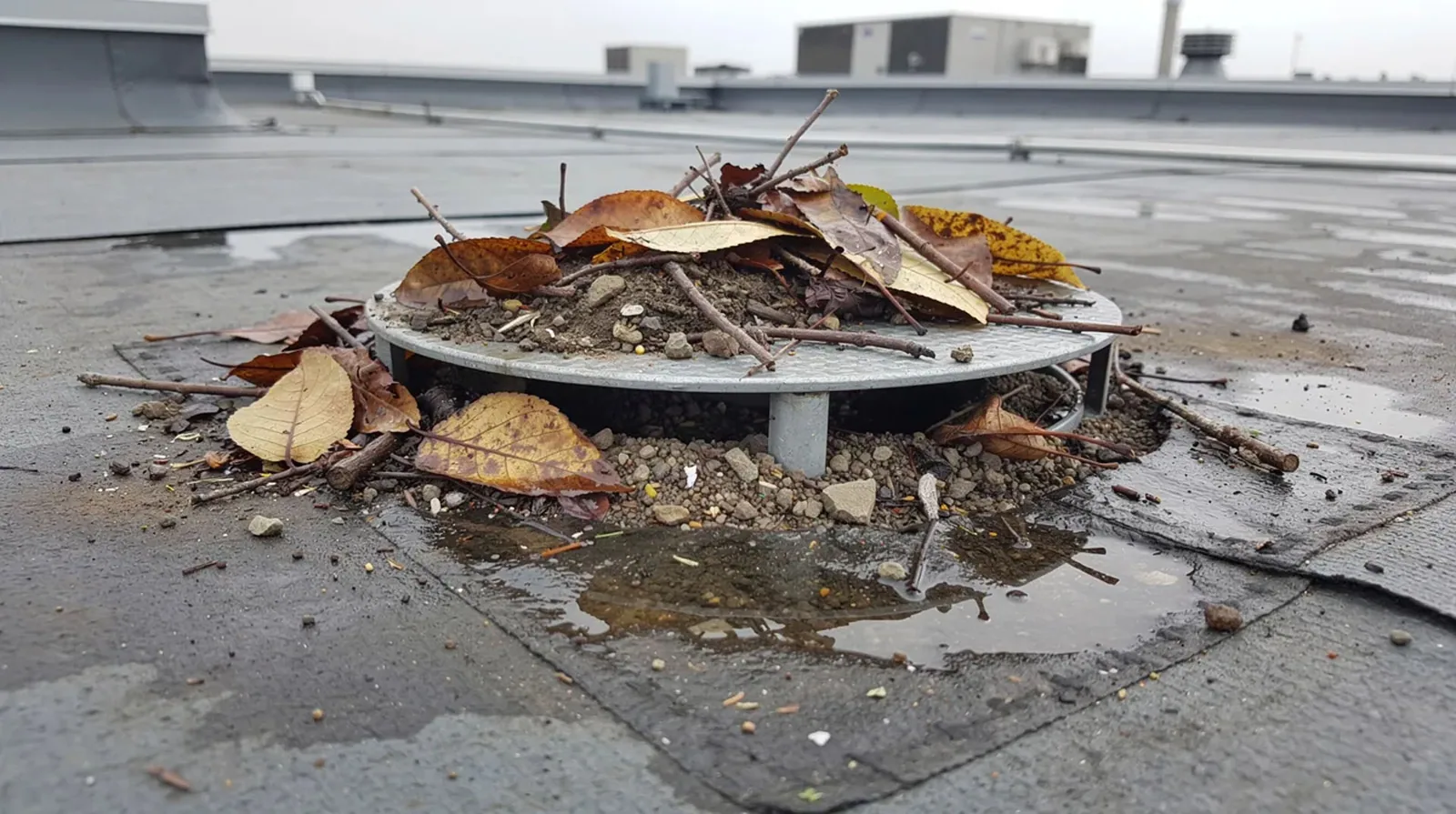
Repair commercial roof drains, scuppers, and ponding conditions in Rock Hill with a documented water path, discharge check, and defined work boundary.
A roof drain is a sequence: water reaches the bowl, passes through the outlet, and leaves at a discharge point. A blockage or failed membrane tie-in at any part can leave water on the roof or move it into the building. We inspect the drain bowl, surrounding field, scuppers, leaders, and visible discharge route, then mark where the path stops working. Rock Hill's warm, humid Piedmont climate brings regular rainfall, which makes drainage details worth checking before water backs up at a seam or curb. Properties in Riverwalk Business Park and along the Dave Lyle Boulevard corridor still need building-specific drainage inspection. The work follows the roof's actual slope and outlet layout, not a general assumption about the district.
Trace the Drainage Route
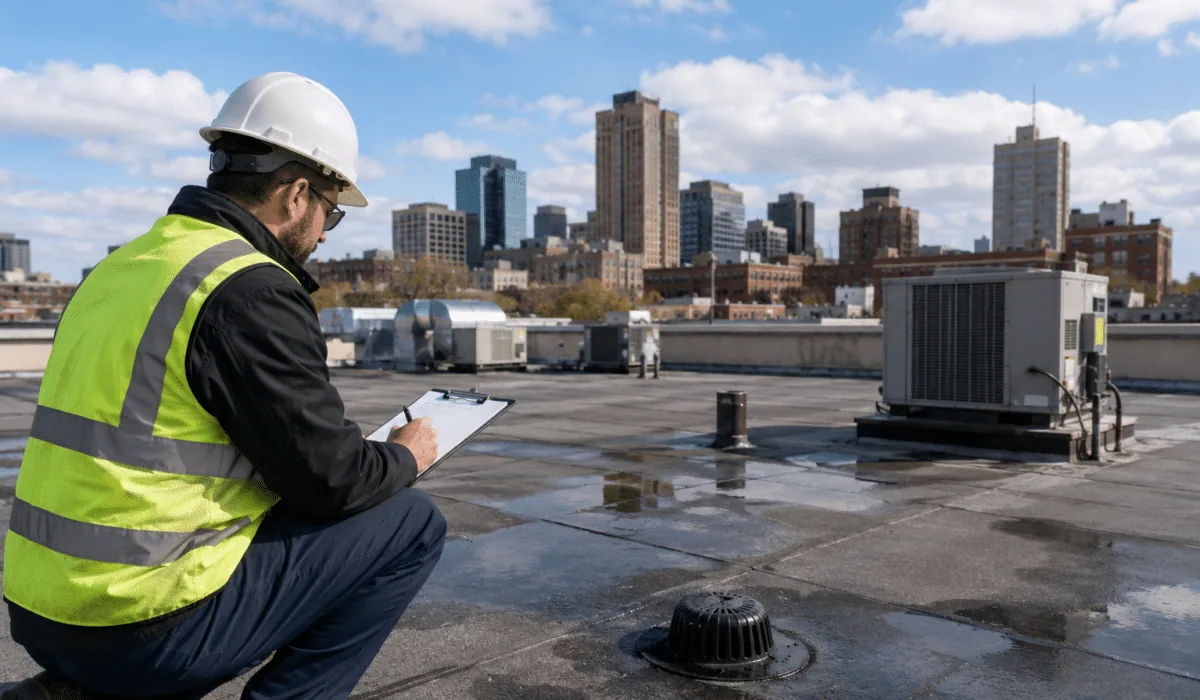
We start at the low area and follow water toward the bowl or scupper. The inspection checks for leaves, sediment, loose strainers, damaged bowls, open seams, membrane separation, and signs of recurring ponding. At a scupper, we examine the opening, metal condition, flashing, and exterior discharge. At a downspout, we check the visible transition to the lower outlet. After clearing a bowl, we check the visible discharge route and low areas for remaining obstruction or trapped water.
Roof plans or prior maintenance notes can help locate hidden outlets and explain how drainage was intended to work. On site, we verify visible conditions and flag uncertain or concealed connections. If water collects far from the drain, we map the low area and compare it with nearby seams, curbs, and penetrations. Rock Hill records regular rainfall in its warm, humid Piedmont setting. A heavy rain can expose a restricted route, but the amount of water alone does not identify the obstruction. We use the roof's physical evidence to decide whether clearing, repair, or a broader drainage correction is needed.
Repair the Bowl and Membrane Tie-In
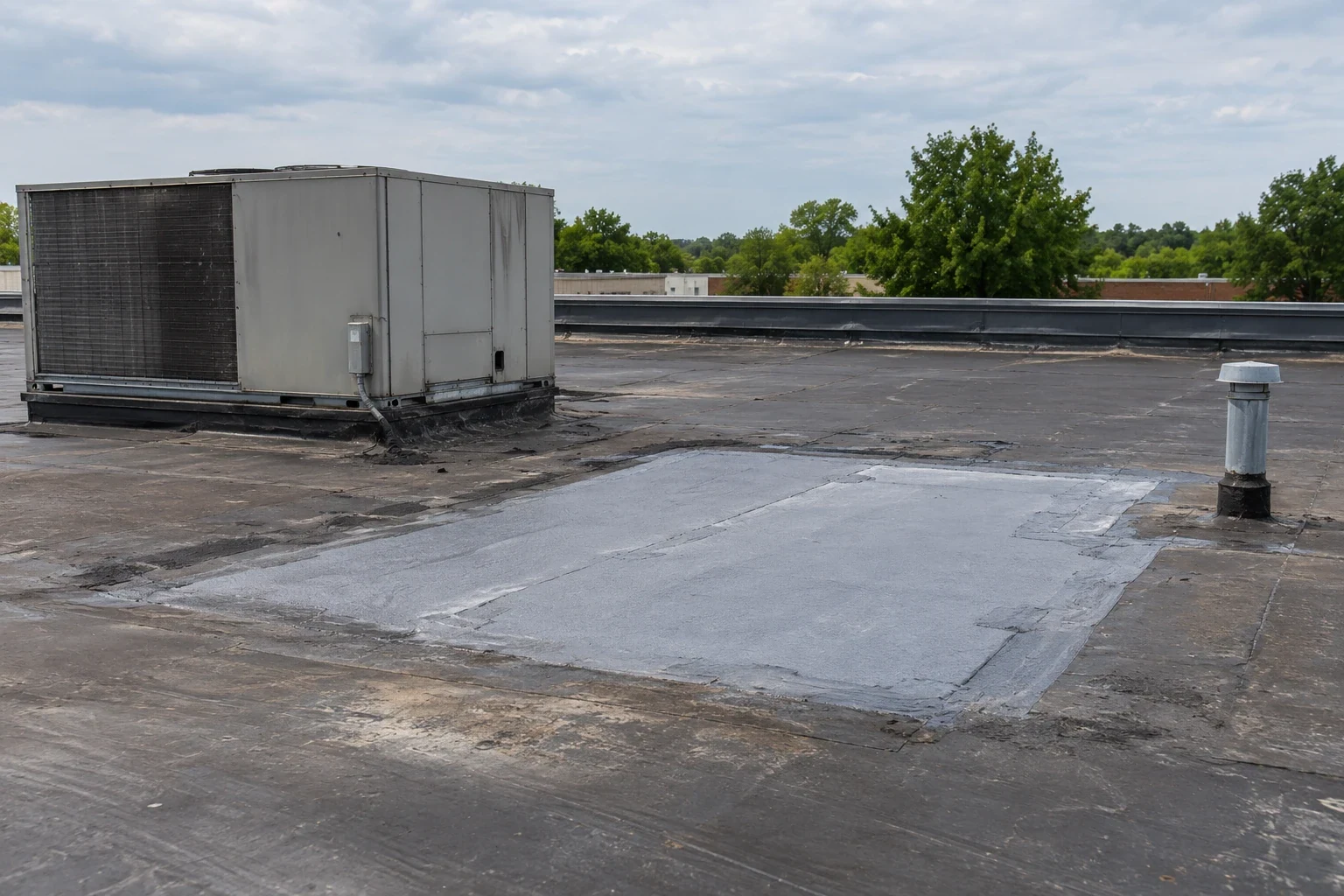
At the drain bowl, we inspect how the membrane connects to the flange and whether the surrounding surface is sound. A split, loose tie-in, deteriorated seal, or raised patch can create a path for water beneath the roof. The repair method depends on the system: a compatible membrane detail may be welded, bonded, or mechanically secured according to its construction. We clean and prepare the approved area, repair the connection, and check for an open edge that could hold water.
If the bowl is damaged, the flange has moved, or the drain body needs replacement, we confirm the scope and building connection before proceeding. A repair at the roof surface does not correct a concealed pipe defect. We note what portion of the drain route was visible and where access ended. On occupied properties, we coordinate the work area with the facility contact and keep debris or material from entering the drain. When a membrane defect extends beyond the bowl, commercial roof repair can define the wider seam or flashing boundary rather than stopping at the drain rim.
Check Scuppers and Discharge Points
A scupper has to pass water through the parapet and discharge away from the wall. We check the throat for debris, inspect the metal and membrane transitions, and look for staining or deterioration below the outlet. If a conductor head or downspout is visible, we note its condition and whether it is carrying water away from the building. A scupper that is blocked by debris can overflow at the roof edge; a separated flashing may allow water behind the parapet.
Repair can include clearing the opening, resetting or replacing a damaged component, restoring flashing, or tying membrane back into a sound drain detail. We separate those tasks from exterior drainage or piping work beyond the roof boundary. If a low area appears to be the main issue, we document how it relates to the outlet and whether the planned repair changes the flow path. A ponding-water assessment can address slope or recurring water accumulation when clearing the outlet alone will not solve the condition. The roof record notes the bowl, scupper, and discharge point checked so later maintenance returns to the same path.
Correct Ponding Without Hiding the Cause
Water left after rain can point to a blocked outlet, a sagging area, a drainage detail that no longer fits the roof, or a surface irregularity. We distinguish standing water from dampness after recent weather and note how long the condition has been reported. If the drain works but the roof still holds water, additional evaluation may be needed before choosing a correction. Filling a low point with sealant or coating can shift the problem and create a new obstruction.
We inspect the surrounding roof for soft material, open seams, and membrane wear that may be exposed to prolonged water. If moisture is suspected below the surface, a targeted test may help define the affected zone before repair. The scope should say whether it includes outlet cleaning, bowl repair, membrane tie-in, or slope correction, and what remains excluded. Where a broader maintenance cycle is appropriate, scheduled roof maintenance can keep the drain route and nearby details in view between repairs. A roof inspection can also record the larger drainage layout and related roof conditions.
Confirm Flow and Record the Boundary
After the repair, we inspect the completed tie-in and confirm that the bowl or scupper is clear within the work area. A controlled water check may be used when the roof design, weather, and outlet conditions make it appropriate. We photograph the repaired connection, mark the roof zone, and describe any downstream route that was outside the scope. If flow cannot be checked during the visit, the record states what was inspected and what remains to be observed after rainfall.
Water management at a commercial roof is a system, so a single repair should not be presented as proof that every low area drains properly. The report identifies the outlet and nearby surface conditions covered by the work. Share leak locations, past drain service, roof plans, and any interior staining with us before a visit. We will follow the water path, explain what the outlet and surrounding roof show, and define the repair or maintenance boundary. If water still appears after the work, the marked locations give the next inspection a clear starting point.
Questions About Commercial Roof Drain and Scupper Repair
We inspect the bowl, strainer, membrane tie-in, nearby low areas, and visible discharge route. Debris may be the only obstruction, but a loose flange, damaged flashing, sagging surface, or downstream restriction can also affect flow. The report identifies the portion checked and what remains inaccessible.
Clearing can restore flow when debris blocks the outlet. It will not correct a low area, poor slope, damaged tie-in, or downstream issue. We trace the route and document the surface condition before deciding whether a separate drainage correction is needed.
At a scupper, we check the opening, metal, parapet transition, membrane flashing, and visible discharge. The repair may involve clearing debris or restoring a damaged connection with compatible materials. If water has reached concealed wall or interior layers, that condition requires separate evaluation beyond the roof-side repair boundary.
A controlled water check may be appropriate when the roof and outlet design allow it. If conditions do not support a test during the visit, we record the completed work and identify what should be observed after rainfall. The record does not extend the check to outlets outside the repair area.
Trace a Drainage Problem
Tell us where water collects, which outlets are affected, and what prior service or roof plans are available. We will inspect the bowl, tie-in, scupper, and visible discharge path, then define the repair boundary.
