Inspect or repair a KEE commercial roof in Rock Hill with alloy membrane identification, seam and flashing checks, and compatible repair details.
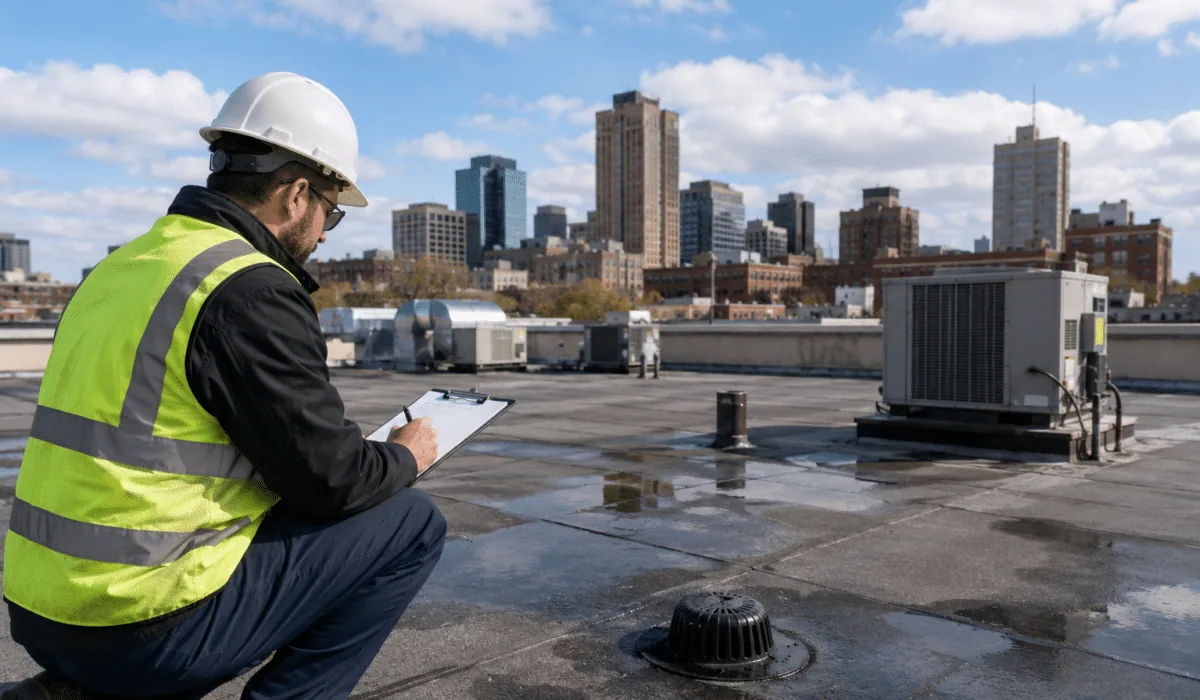
A KEE membrane looks similar to PVC, but repair work starts by confirming the product and its assembly before choosing a material. We inspect the field, seams, flashing, attachment, and drainage, then document what the roof shows. Rock Hill's humid Piedmont brings regular rainfall, so we pay close attention to water paths at seams, penetrations, and roof edges. In the regional market, Fort Mill's employers include healthcare, manufacturing, finance, and corporate services, while Knowledge Park links downtown Rock Hill with Winthrop University. We identify whether the building has KEE before setting its repair or renewal boundary.
Identify the KEE Sheet and Repair History
We review roof records, product markings where visible, and previous repair notes to distinguish KEE from other PVC-based membranes. Similar color or texture alone may not establish the product. If identification matters to the repair and records are incomplete, a test or manufacturer guidance may be needed before selecting materials. A different membrane, such as PVC roofing or TPO roofing, has its own repair products and seam method. The report states how the membrane was identified and where that conclusion applies.
Earlier patches, coatings, or replacement sections can create mixed assemblies on one roof. We inspect each relevant zone and note whether the same sheet continues across the field or changes at a transition. Compatibility at an old repair is particularly important, because a new patch must bond to the material beneath it. The owner should share available submittals and project records before a large repair area is opened. We do not extend one material assumption from a single tested spot to uninspected sections.
Inspect Seams and Field Transitions
We examine KEE seams for open edges, poor welds, wrinkles, contamination, or a patch that has separated. At corners, T-joints, and changes in sheet direction, we look for stress or water entry at the detail. A probe check may help locate a weak edge along a tested seam, but it does not verify every weld on the roof. We mark the checked segment and inspect nearby transitions before deciding how far the repair should run.
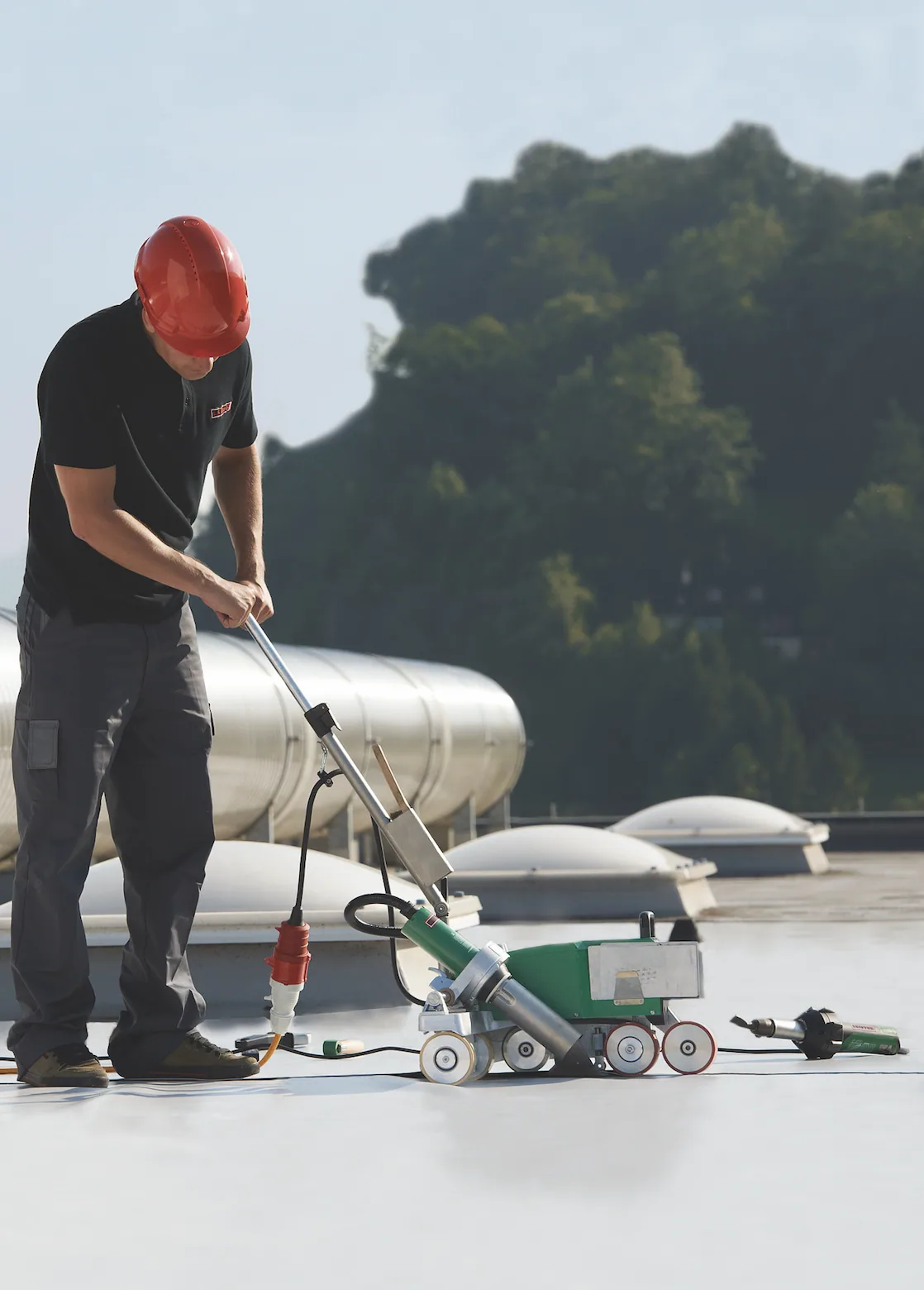
Surface preparation and welding conditions affect the repair. Dirt, moisture, and aging can change how the existing sheet responds, so we clean and prepare the approved area and make a test weld if the conditions call for it. A compatible KEE or PVC-alloy patch is selected only after identifying the product and following applicable repair instructions. If the membrane is brittle or attachment is failing, a local weld may not address the wider condition. We record that distinction for the owner.
Review Surface Exposure and Drainage
Exhaust, grease, or process materials near a membrane can affect repair choices. We ask about equipment and maintenance practices, then inspect the affected surface for discoloration, softening, cracks, or loss of bond. The proposed repair material must suit the roof and the actual conditions observed. If a chemical or process exposure is uncertain, the owner can provide product information for review before work proceeds.
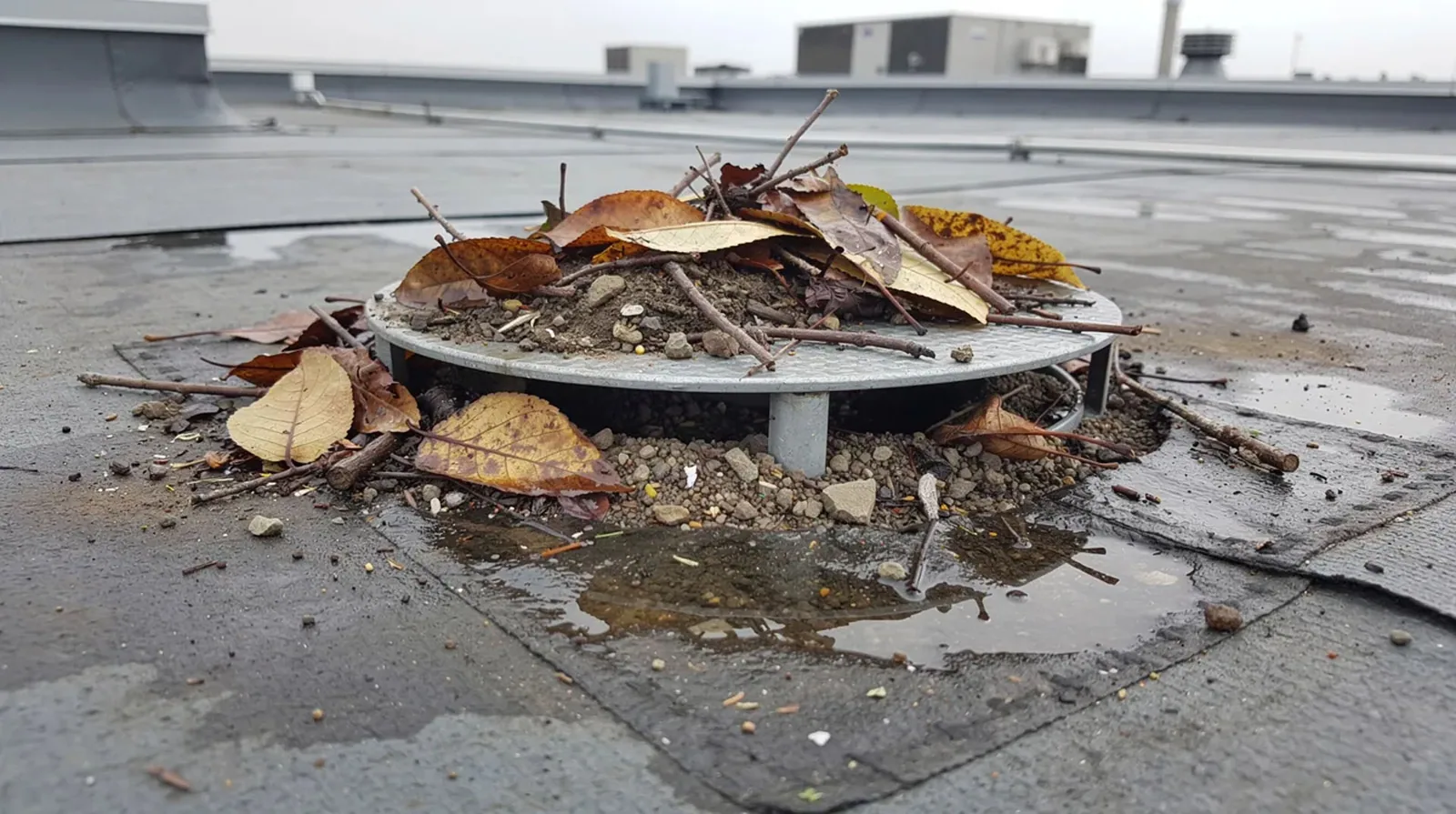
Rock Hill's regular rainfall makes drainage part of the membrane assessment. We inspect drain bowls, scuppers, low areas, and the KEE tie-in around each outlet. Water that remains on a roof may be related to blockage, slope, or a failed transition, so a seam patch alone may not change the flow path. A drain and scupper repair can address a damaged outlet detail. If water entry is active, a leak investigation follows the route to the supported opening.
Inspect Curbs, Penetrations, and Edges
At curbs and pipes, the KEE sheet turns up and connects to a different surface. We check the flashing base, corners, terminations, attachment, and any exposed sealant. At the roof perimeter, we inspect how the membrane is held and whether metal or coping has moved. A failed bead may show that an underlying connection is loose. The repair must restore the transition to sound material instead of closing only its visible opening.
Fort Mill and Rock Hill form a connected employment area along I-77, with offices, healthcare, manufacturing, and commercial uses. Work access and rooftop equipment can vary from property to property. We confirm the roof path, staging, and service restrictions with the facility contact, then identify where another trade may need to move equipment or approve access. For curb transitions, equipment support work can coordinate the roof and mechanical boundary. A perimeter metal repair may be included when the membrane terminates at a damaged edge.
Set the KEE Repair Boundary
A repair begins with a confirmed material, clean surface, and sound membrane around the defect. We remove loose or failed material only within the approved limit, prepare the sheet, and weld a compatible patch or flashing. The finished edge is checked after cooling and recorded with a photograph. If removal exposes wet insulation or a different layer, we stop and confirm the next scope before closing the roof.
Repair length, roof access, substrate condition, and number of transitions affect work sequence and cost. If failures repeat across several zones, the owner may need to compare repair with recover or replacement. A commercial repair scope can include related membrane and flashing details, while replacement planning addresses a broader assembly when repairs no longer fit. The project record states what was inspected, repaired, and left outside the work boundary.
Preserve the Roof Record
At closeout, we record membrane identification, seam work, flashing, drains, and any test weld or opening. Photos show the repaired roof zone and adjacent details that were visible. The report also identifies areas that could not be accessed and material questions that remain unresolved. A later inspection can compare the same seam or curb without treating the full roof as checked. The closeout should identify the tested seam, repair material, and any adjacent section that still needs separate evaluation. Record open questions by roof zone so the next visit can begin at the right detail.
Share the building use, roof plans, repair history, leak location, and access limitations before a visit. We will inspect the KEE sheet and transitions, then set a compatible repair, recover, or replacement scope based on the evidence. A maintenance visit can keep seams, drainage, and flashing in the future inspection route. The record dates accessible roof conditions and lists any concealed layers that would need testing.
Questions About KEE Commercial Roofing
KEE is a PVC alloy formulation, but products and repair instructions can differ. We identify the existing membrane from records or other reliable indicators before selecting materials. A similar appearance is not enough to assume that every PVC patch or product will suit the roof.
Many KEE systems use heat-welded seams, but the surface and product must be suitable for that method. We inspect the sheet, prepare the area, and test the weld when conditions call for it. The repaired segment is recorded separately from untested seams.
Material performance depends on the product and actual exposure. We ask what reaches the roof and inspect the affected area rather than infer conditions from the building's industry. If compatibility is uncertain, product details should be reviewed before a repair material is selected.
Repeated seam failures, brittle sheet, wet insulation, or attachment problems can point to broader deterioration. We inspect affected zones and state which findings support a repair, recover, or replacement discussion. Concealed layers remain unknown unless they are tested.
Confirm the KEE Assembly
Share roof records, prior repairs, leak locations, possible surface exposures, building use, and access limits. We will identify the membrane, inspect seams and transitions, and document a compatible scope.