

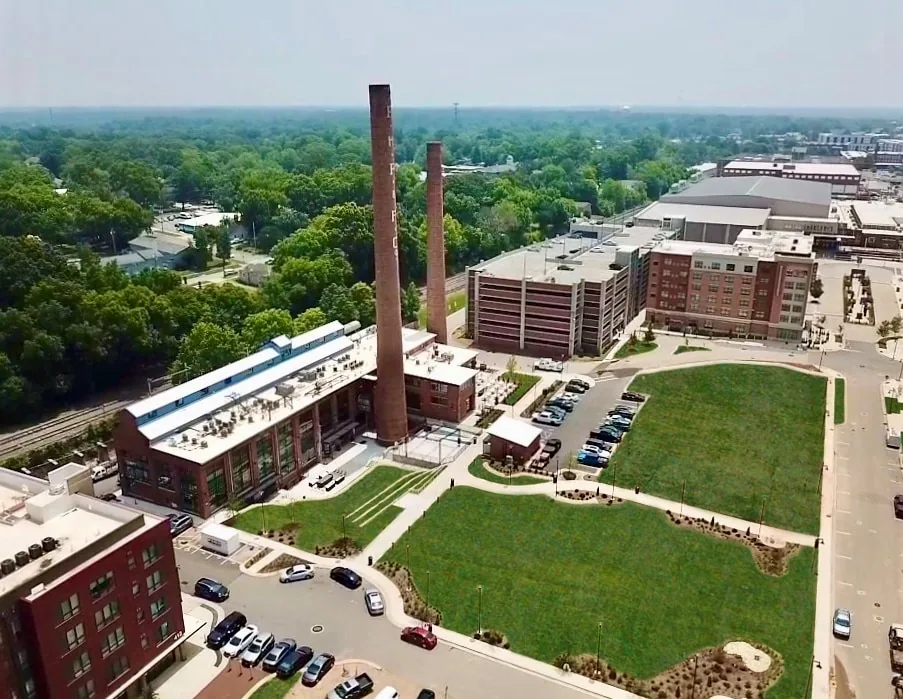
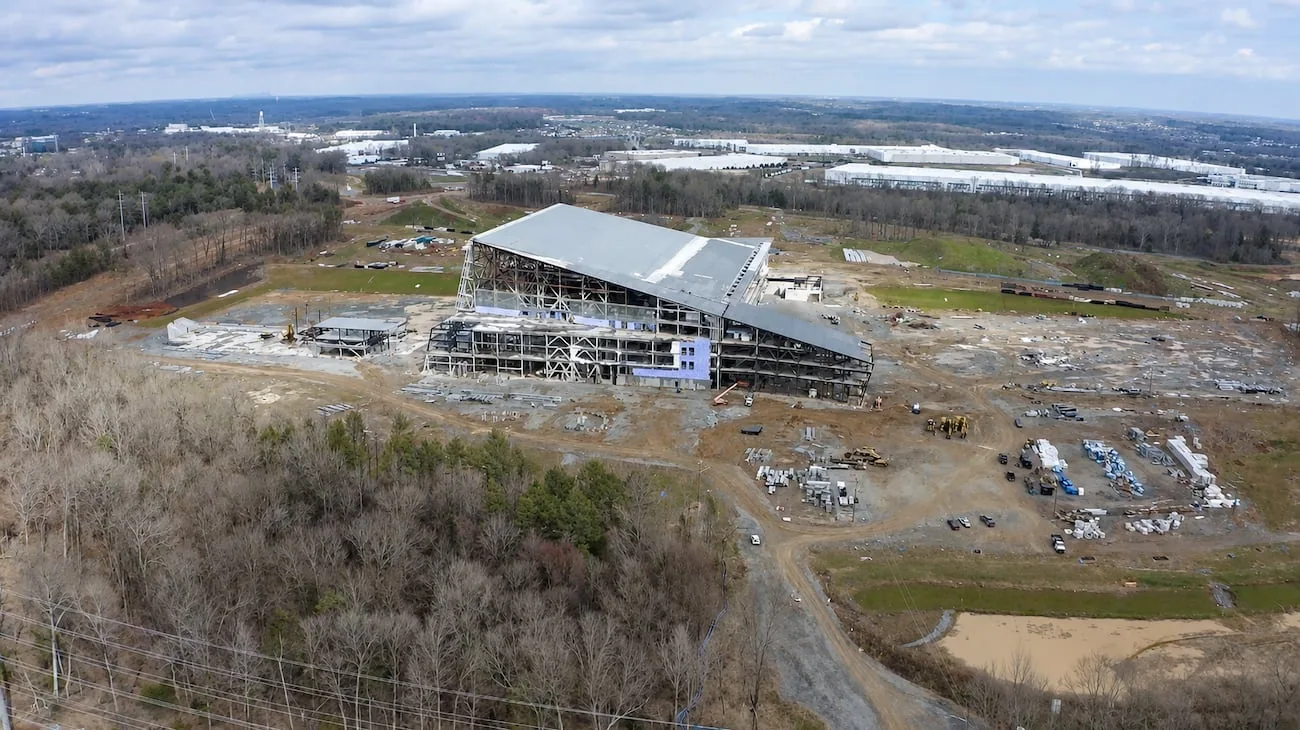
Plan commercial roofing in Legacy Park around the building's system, access, drainage, equipment, and the work boundary approved by the owner.
Roof work in Legacy Park begins with the specific facility, not an assumed system for the district. Rock Hill lists the park among its principal business and industrial areas, with I-77 access. County planning includes a Legacy employment center with more than three million square feet of industrial or light-industrial capacity. That scale makes clear work boundaries, roof access, and logistics coordination important to discuss for each property. We also serve Riverwalk Business Park and Waterford Business Park.
Start With a Zone-by-Zone Roof Walk
We confirm the roof plan, access point, facility contact, and areas included before inspecting. The walk checks visible membrane or metal, seams, edge conditions, curbs, drains, penetrations, and previous repairs. A commercial roof inspection can document accessible sections and identify where testing or design input may be needed.
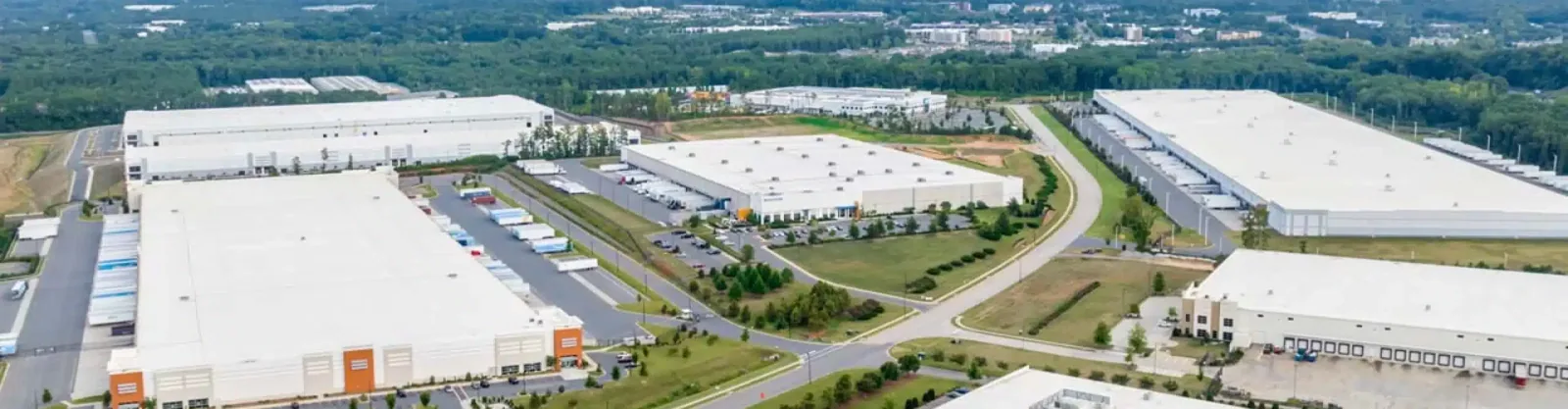
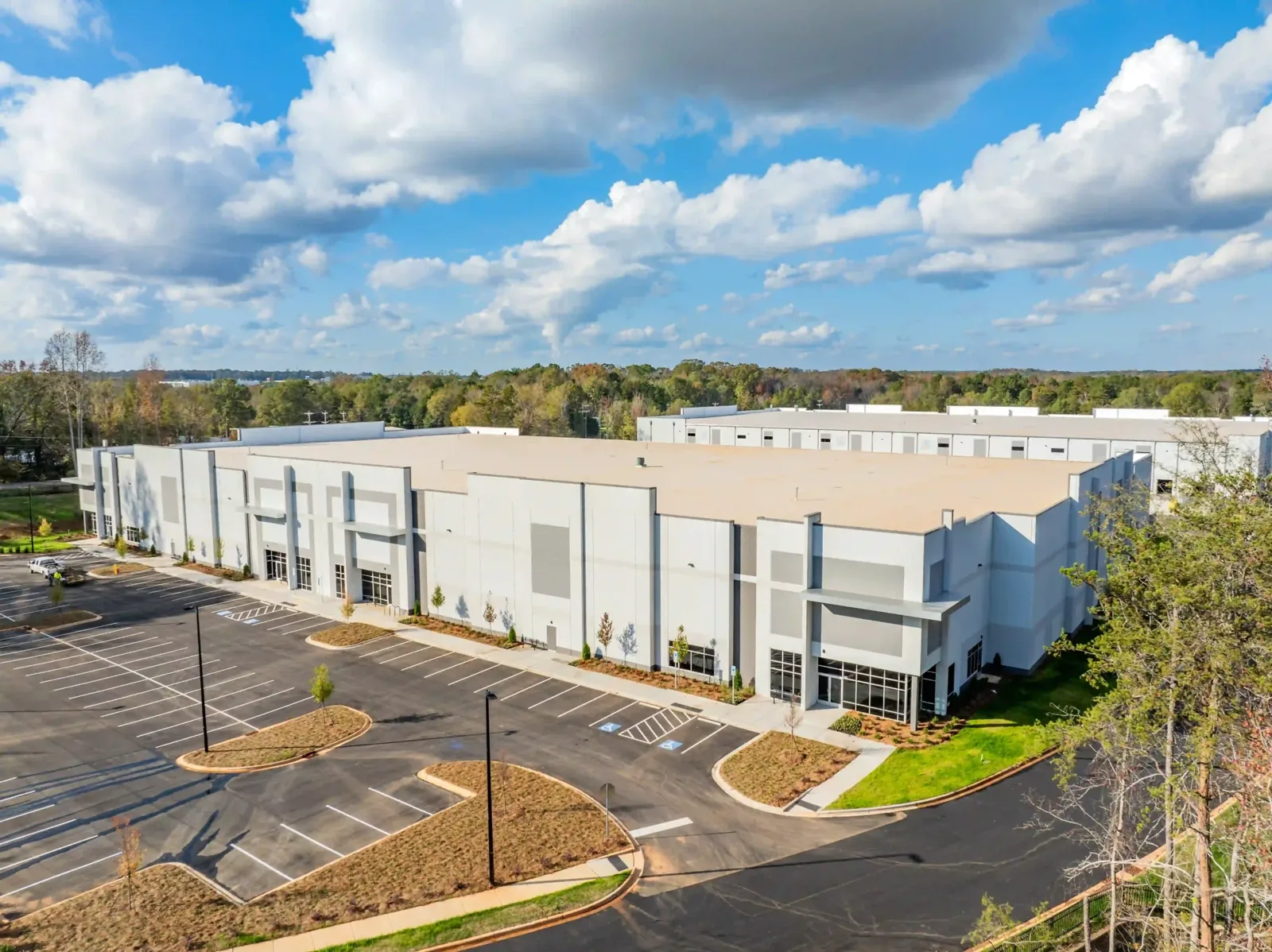
The county plan describes completed speculative Legacy buildings of roughly 460,000 and 193,000 square feet, sized for logistics, manufacturing, and smaller firms. Those figures describe development in the district; they do not establish the roof area, system, or layout at a particular site. We use owner-provided plans and field observations to identify each actual section.
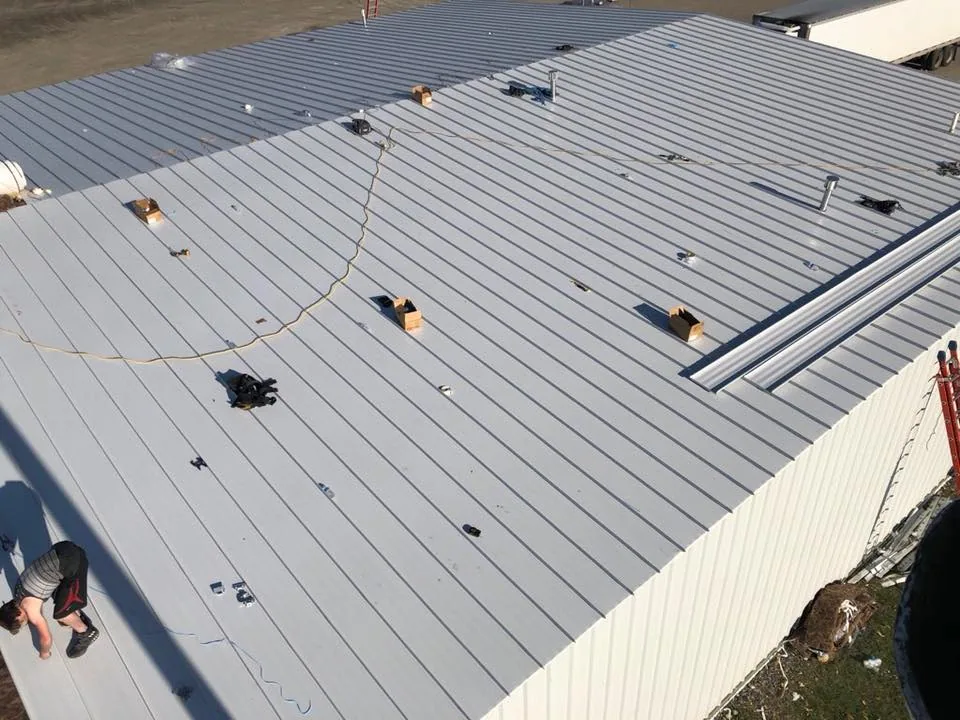
If a building has several additions or a change in roof height, we note each transition and the system visible on either side. A large footprint can include separate drainage routes, equipment zones, and access limitations. The report identifies which parts were reached rather than implying one sample applies across the property.
If field access covers only a sample of the roof, we record the sections selected and the reason for the route. A broader evaluation may be needed when the owner needs a whole-building capital view. We do not extend observations from an accessible area to roof sections that have not been seen or tested.
A leak report adds an interior location and timeline to the inspection route. We compare that symptom with drains, seams, parapets, and mechanical curbs. A leak investigation can establish whether an opening is confirmed or whether water may be traveling from another roof area.
Check Drainage and Roof-to-Wall Transitions
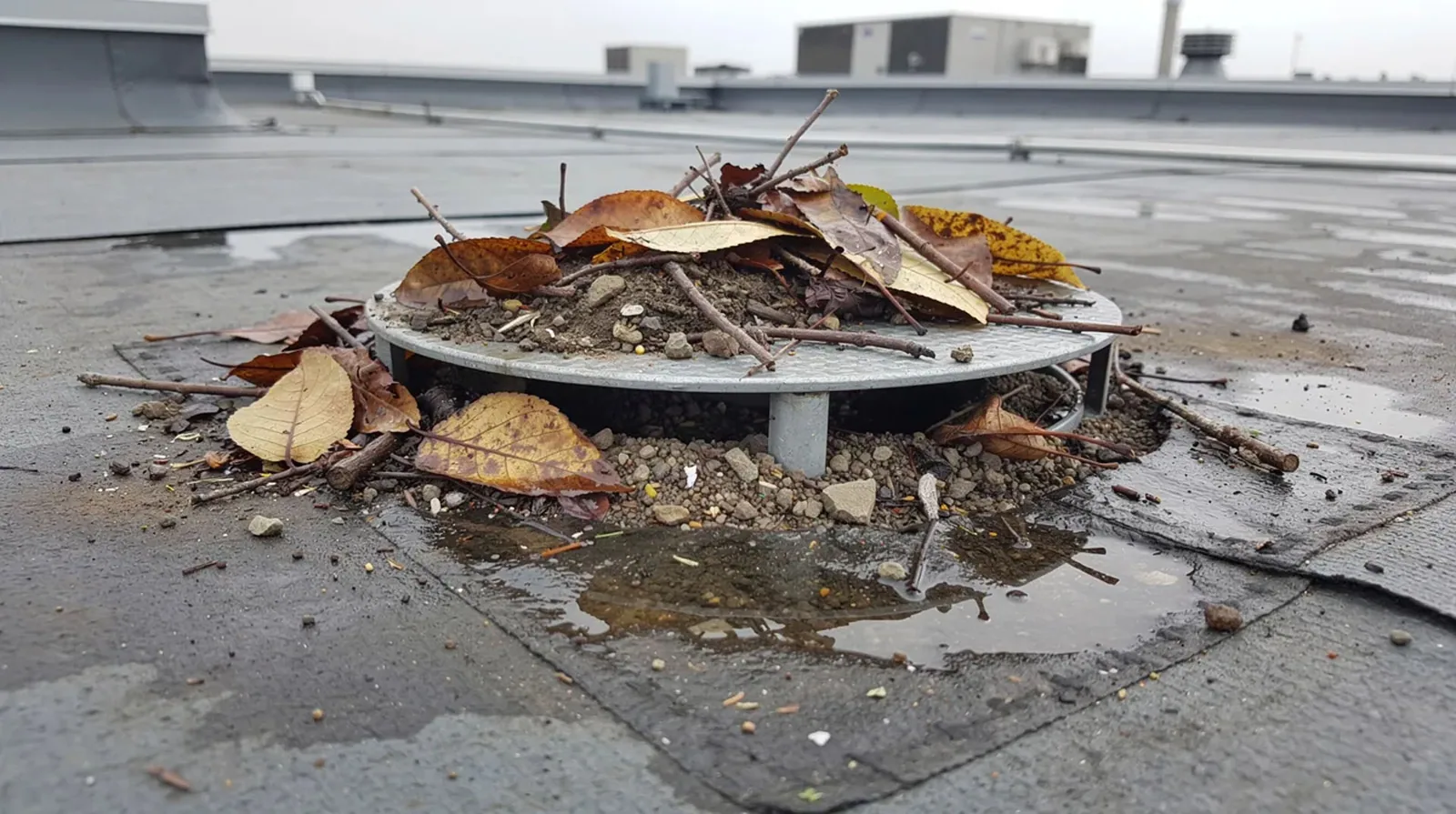
Large roof areas may use internal drains, scuppers, gutters, and overflow paths. We check the outlet, membrane tie-in, and visible discharge route for blockage or separation. A blocked outlet, a damaged flashing connection, and a low area are different conditions. A drain and scupper repair can address the specific detail found.
At parapets and edges, we inspect coping, edge metal, attachment, sealant, and membrane termination. If water appears at a wall or loading area, we trace the route rather than assume the nearest edge is the opening. If a discharge pipe or internal drain connection is hidden, we identify what cannot be verified and whether another trade should be involved.
Rock Hill's humid Piedmont climate brings recurring rainfall and a long warm season. We plan secure closure for any roof opening and inspect the drainage details tied to the work, but climate does not diagnose an individual leak. A dry-day inspection may need comparison with the reported event or additional testing to confirm the water path.
If a roof includes previous layers, coating, or repairs, surface appearance may not reveal the original membrane. We identify what is visible and whether material testing would change the patch or restoration method. That step is important before specifying attachment, primer, or flashing products.
Coordinate Rooftop Equipment and Site Logistics
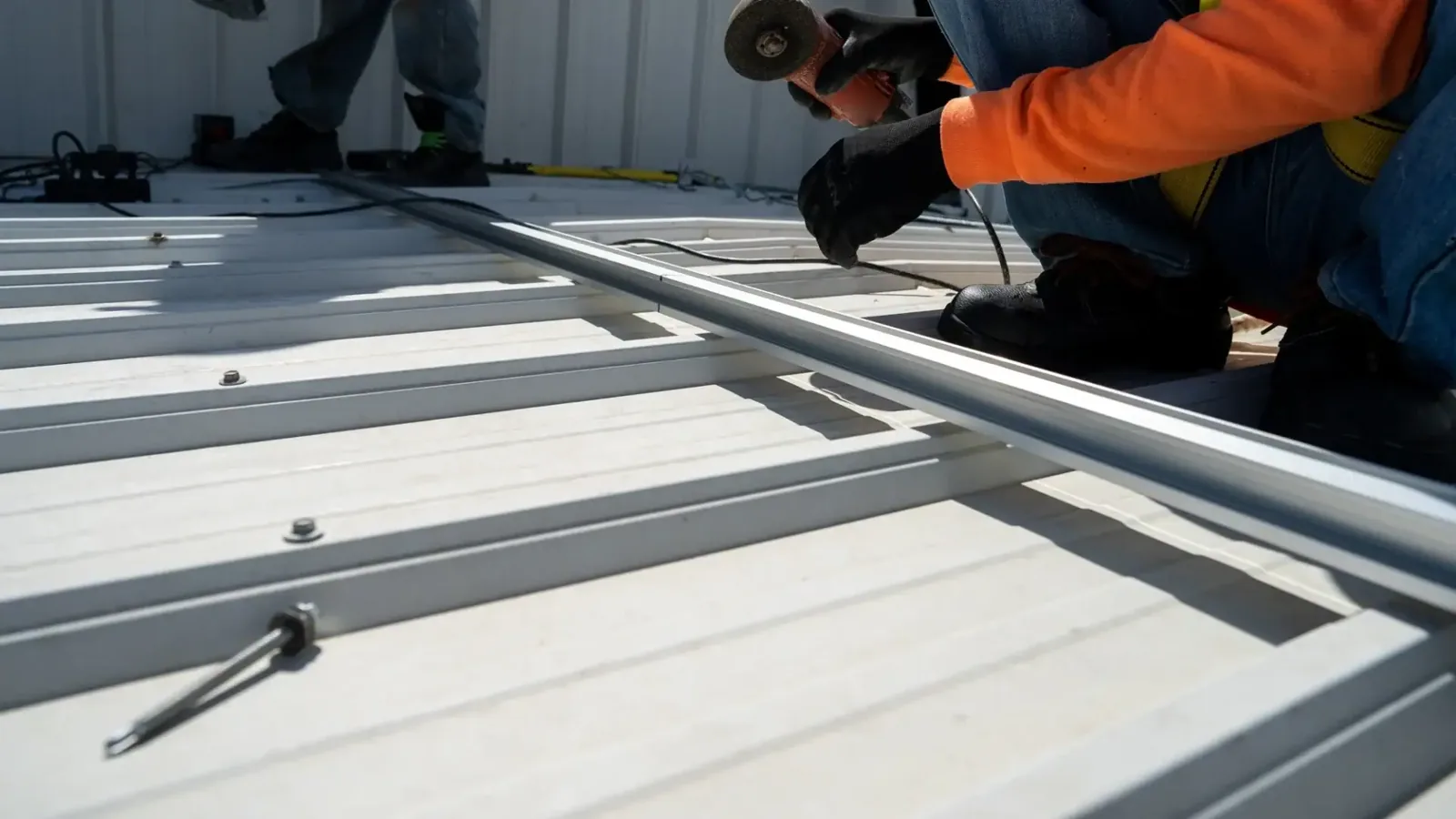
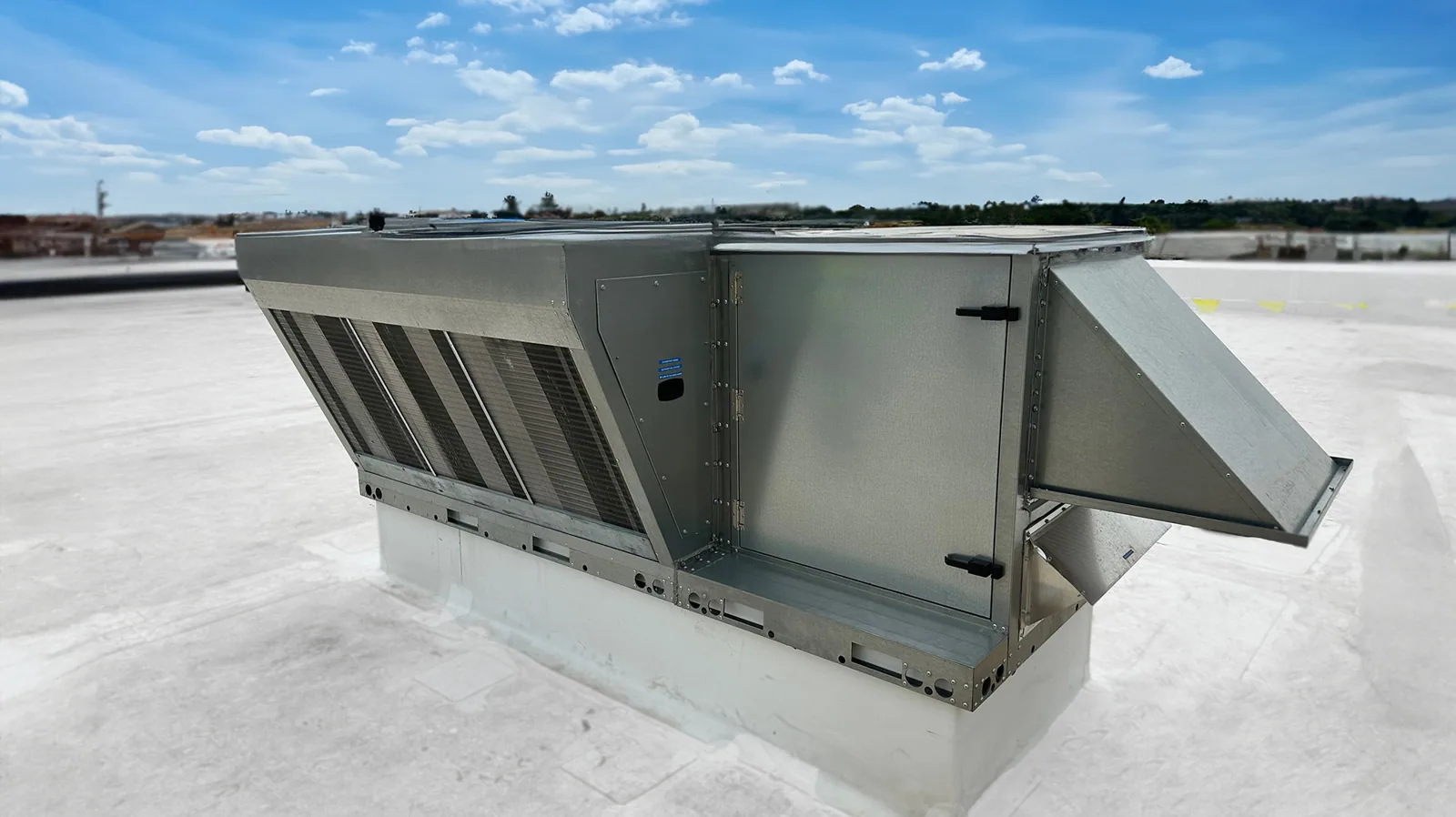
Distribution and light-industrial buildings can involve rooftop HVAC, exhaust, vents, piping, and service access. We inspect the curb, flashing, fasteners, and adjacent membrane where those details fall in scope. A curb and support repair can address the roof connection after the equipment base and vendor sequence are confirmed.
Before staging materials, we confirm gate rules, delivery windows, truck paths, lift locations, overhead clearance, roof hatches, and areas that cannot be blocked. The site contact identifies emergency routes, loading activity, and tenant or production restrictions. We state where the crew will work and how the building will be protected while a roof section is open.
Equipment removal and mechanical service stay with the responsible contractor unless written scope assigns them to roofing. If another trade changes a penetration, the team should identify who restores the membrane connection. We record any area where safe access depends on an escort, shutdown, or separate lift plan.
If hidden moisture or deck damage appears after removal, we secure the opening and document its size. The owner reviews the added work before the repair extends into another zone. That approval keeps roofing scope, equipment work, and any structural evaluation distinct.
Choose a Repair or Broader Project Scope
A repair may address a localized opening when nearby membrane and attachment remain sound. Recurring seam failure, widespread moisture, or deteriorated edge details can support a broader review. We explain the evidence, identify areas not inspected, and define any test that could change the recommendation. A commercial repair scope names materials, preparation, access, protection, and limits.
Cost and timing depend on system, roof area, number of details, equipment, access, material, disposal, and concealed conditions. A renewal plan should include existing layers, drainage, penetrations, perimeter transitions, staging, and work zones. If a recover option is considered, the roof's layers, moisture, attachment, and load need evaluation by the responsible professionals.
Rock Hill's city business-park overview notes access to I-77 and nearby hotels, restaurants, and conference facilities for its parks. This may help situate the work area, but does not decide how a specific project should be staged. The owner or general contractor sets traffic and delivery controls for the site.
If work must proceed while the building remains active, we can sequence defined areas and identify temporary protection. Weather, cure conditions, and site access influence the order. We do not treat a large building as one uninterrupted work zone.
Keep the Repair History Tied to Its Roof Zone
Closeout should identify what was inspected, what was repaired, material installed, photos, test points, and any area not reached. If the property has a roof map, the record can use its zone names. Later staff can compare new leak calls with the same detail rather than relying on an unlocated work order.
A maintenance visit can revisit drains, seams, equipment curbs, and prior patches. The owner can share previous proposals, warranty information, equipment changes, access constraints, and leak history to set the route. The report distinguishes routine observation from an item needing repair approval.
Legacy Park is part of Rock Hill's employment-area planning alongside other city business parks. Its planned development and the park's existing properties do not imply uniform roof construction. We identify the actual assembly and operating requirements before recommending a repair or renewal.
Questions About Legacy Park
No. The park includes industrial and light-industrial development, but roof systems and building layouts vary. We verify the material, drainage, access, and repair history at the property.
Yes. We can define roof zones and document each area reached, including limits caused by access, equipment, or safety. A partial inspection is labeled as such in the report.
Provide roof plans, leak reports, system records, equipment schedules, access rules, and delivery or production restrictions. These details help identify the work boundary and site logistics.
If removal exposes wet insulation or damaged deck, we secure the roof, photograph the finding, and review added scope with the authorized contact before continuing.
Coordinate Commercial Roofing in Legacy Park
Share the roof plan, operating schedule, leak history, equipment work, access and delivery rules, and any prior repairs. We will inspect the defined zone and prepare a scope based on the conditions found.
