
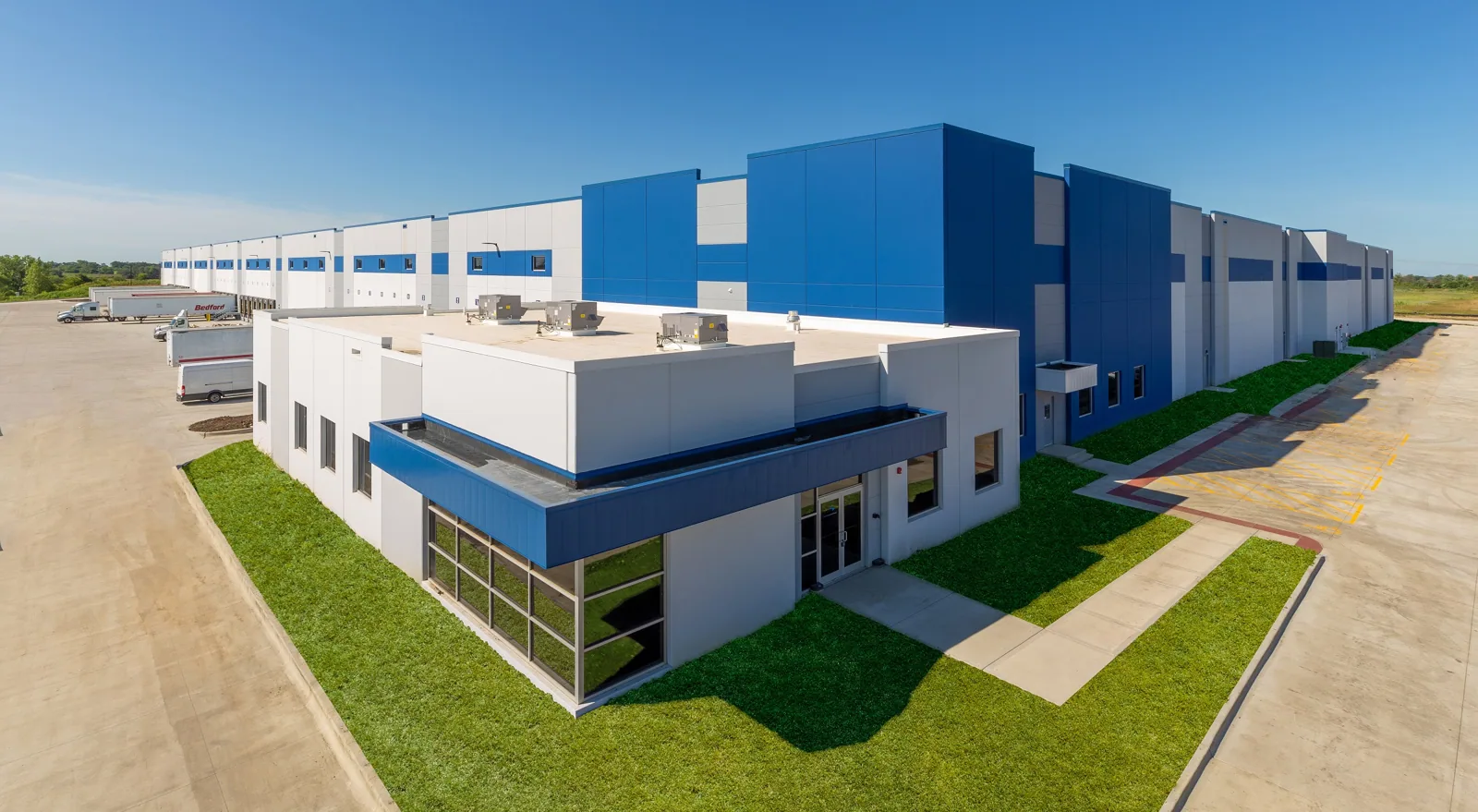
Inspect, repair, coat, or replace warehouse roofs in Rock Hill with drainage, seam, edge, and access planning tied to the building's operation.
A roof leak over storage can reach inventory, racking, and active work aisles before the opening is easy to locate. We map the reported area, inspect the roof zone above it, and trace seams, curbs, drains, and the route water could follow. Warehouse and distribution demand is rising along I-77 South, alongside recent light-industrial construction in Rock Hill. Riverwalk Business Park serves manufacturing, distribution, and office uses, while Legacy is planned as an employment center with industrial development. Each warehouse needs an assembly-specific inspection before a repair method is selected. We confirm the assembly and access plan before setting a repair near Riverwalk Business Park or Legacy Park.
Trace Water Across the Warehouse Roof
A ceiling stain does not identify the roof opening above it. Water can move along a deck flute, insulation joint, beam, or rooftop transition before reaching stored goods. We compare the reported interior area with the roof plan, then inspect the nearest seams, drains, penetrations, and perimeter details. The field mark records what was checked and keeps a suspected route separate from a confirmed opening.
Warehouses may contain broad roof fields with many mechanical curbs, skylights, vents, and service paths. We inspect those details in planned zones and note whether an interruption continues into adjacent membrane or insulation. A commercial leak investigation can follow an unclear water path. If a moisture pattern needs further review, infrared readings can identify areas for verification, and we use the reading to select specific locations for closer inspection.
Rock Hill receives regular rainfall in a humid Piedmont climate. After a storm, we check drains, exposed seams, metal, roof edges, and reported interior areas for visible changes, then document each observation by roof zone. A broader condition record may be useful when repair history is incomplete.
Keep Drainage and Edges in the Work Plan
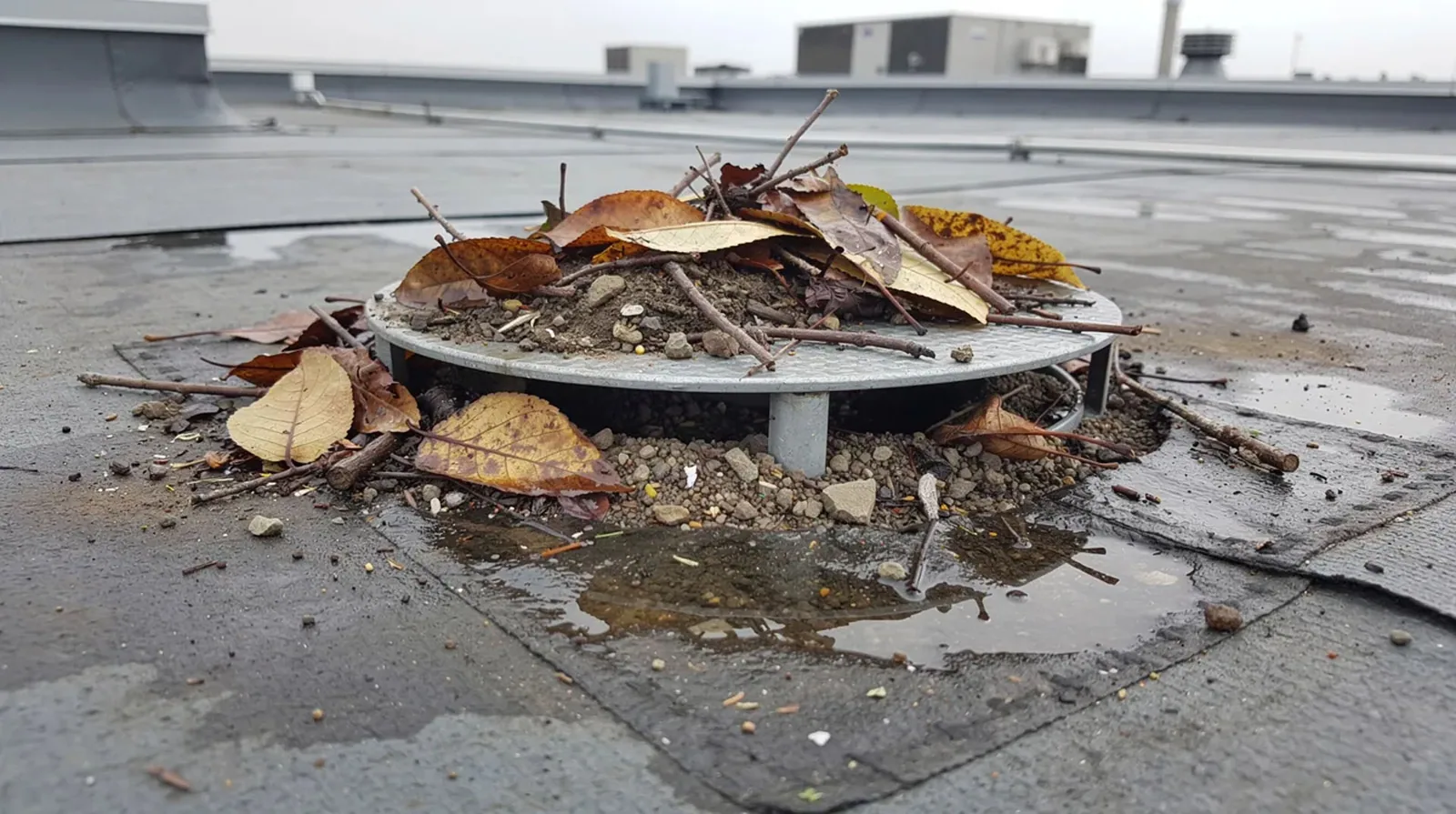
Warehouse drainage depends on the roof slope, drain bowls, scuppers, and discharge points working together. We clear accessible debris within the approved scope and check whether the membrane or flashing remains sound around each outlet. Standing water that returns after cleaning may point to a low area, failed drain connection, or another condition that needs separate review. The repair boundary should address the observed cause instead of coating over a symptom.
Wind exposure also makes edge attachment and perimeter metal important inspection points. We look for loose coping, open terminations, lifted membrane, and stress at corners where the roof changes direction. Hail and tornado activity has occurred in York County, while hail and wind observations remain incomplete and localized. A weather alert can prompt an inspection, but only the roof itself can show whether damage occurred. If sheet metal or membrane is displaced, photos tie the finding to the location and date.
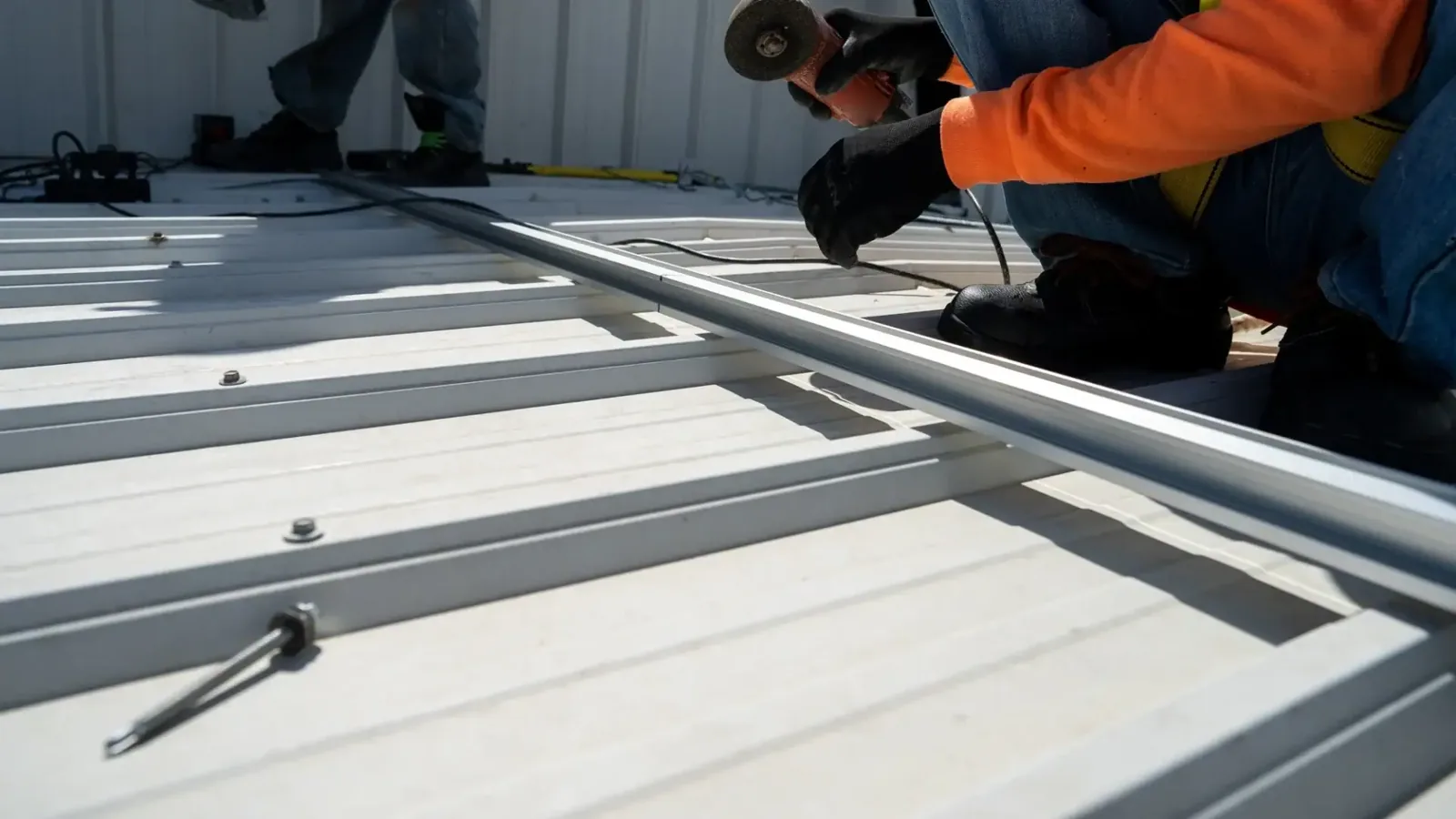
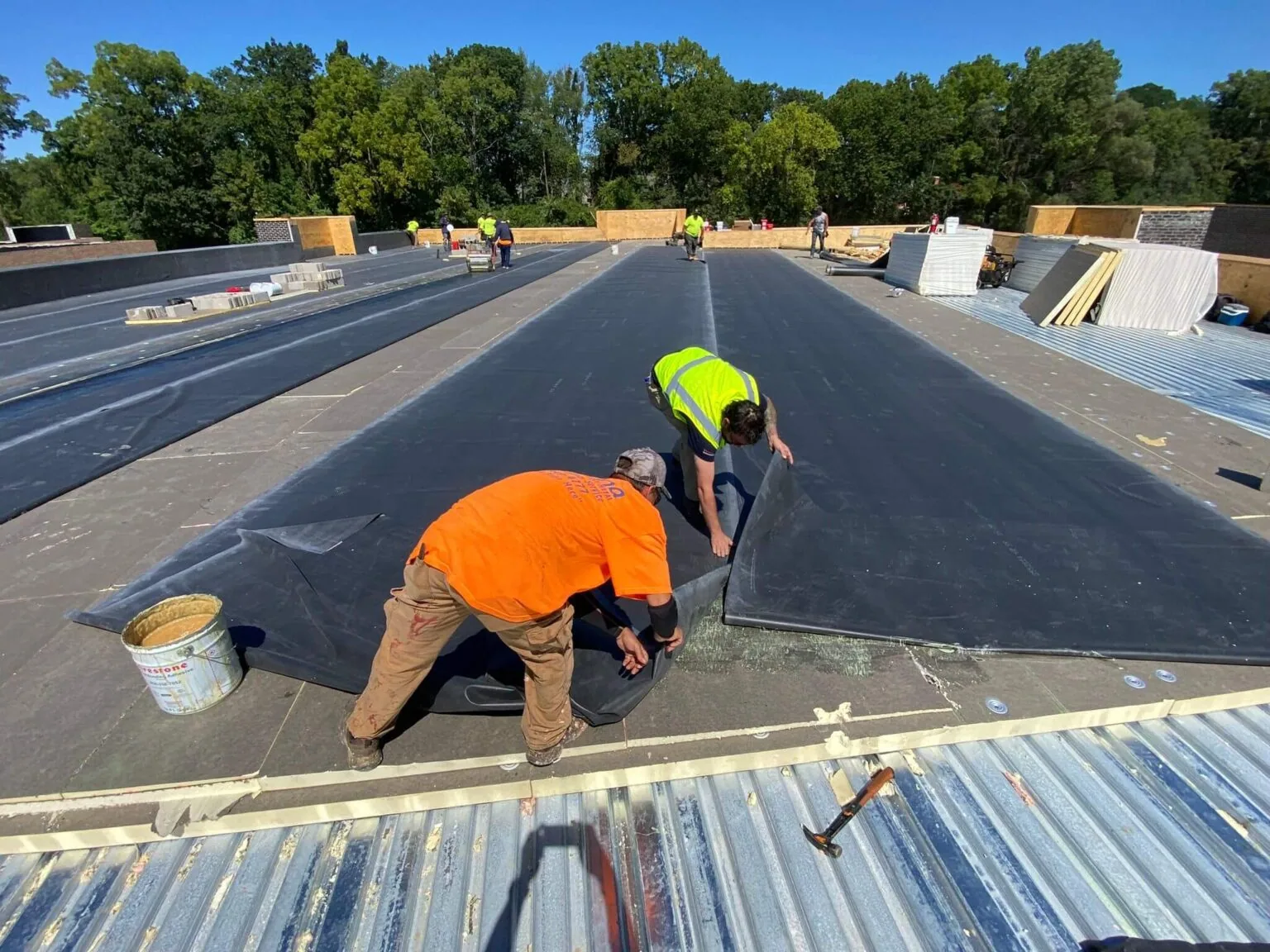
For outlet work, drain and scupper repair can coordinate the bowl, flashing, and discharge connection. Single-ply sheets and standing-seam metal use different joints and edge details, so we identify the actual warehouse system before choosing materials. We also check whether roof access equipment or stored material blocks a safe route to the drain being evaluated.
Set a Repair Boundary Around Operations
Repair planning starts with the defect and the building activity below it. We identify aisles, inventory, operating equipment, and access constraints with the facility contact, then set a work zone and temporary protection plan. If the repair requires opening membrane or insulation, the scope states the area to be exposed and how the roof will be closed if conditions change. A newly found wet layer or damaged deck is documented before the approved area grows.
Repair length, number of roof details, material compatibility, access, and concealed conditions affect labor and schedule. Work near loading and service routes may need sequencing that keeps the roof crew and building activity separated. We coordinate equipment movement and material staging with the site contact and identify any areas that cannot be reached safely. The inspection report distinguishes work completed from findings that still need authorization or testing.
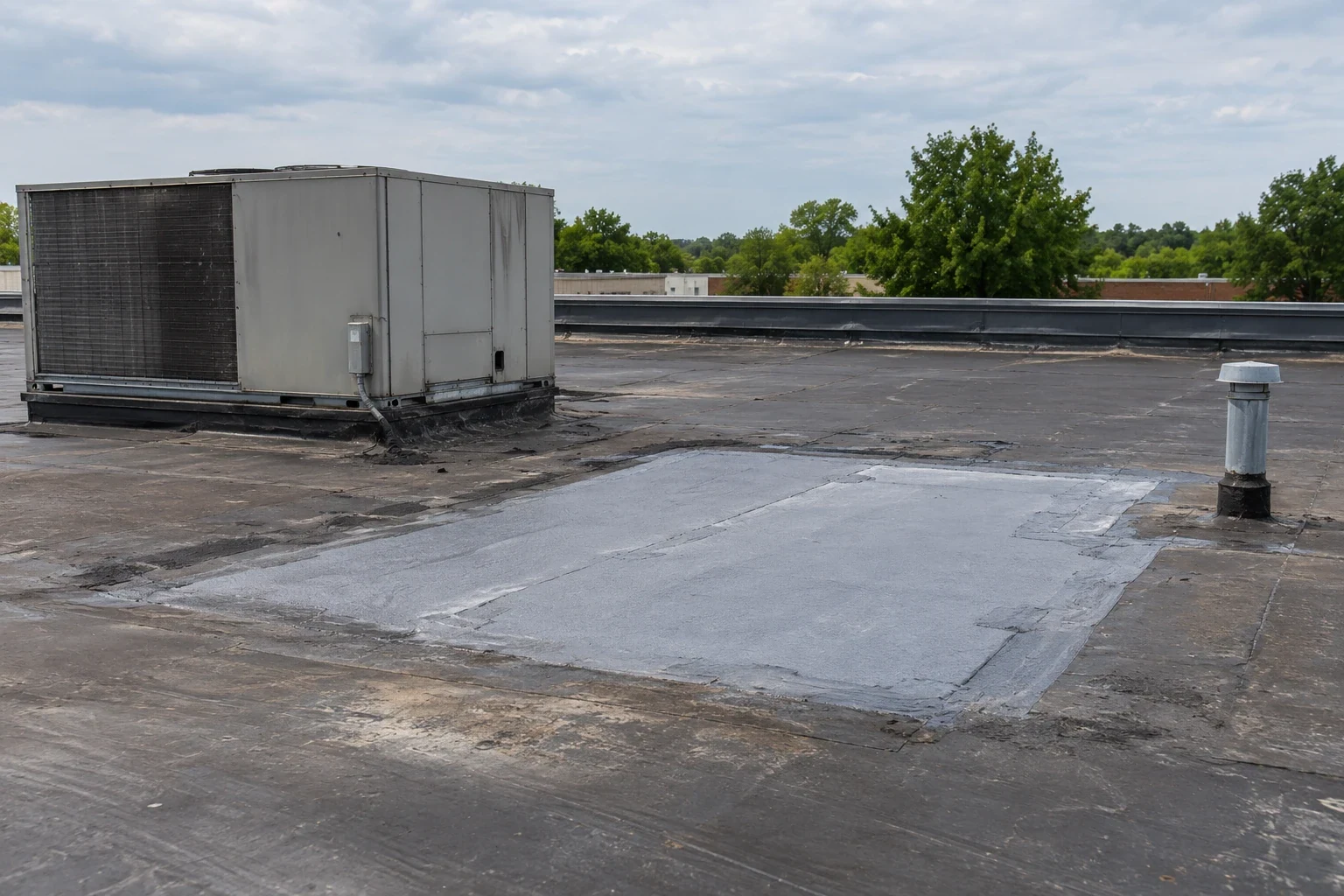
A small, isolated defect may support a localized repair. Repeated seam failures, broad moisture, or deteriorated attachment can point toward a larger scope. A commercial repair plan can group related details; replacement may be appropriate when the existing layers cannot remain. Distribution centers may add dock and conveyor interfaces; a manufacturing plant can have process equipment and exhaust. Each use changes coordination, not the need to inspect the actual assembly.
Track Roof Zones and Future Work
Maintenance notes are most useful when they return to the same drain, seam, curb, or repaired area. We photograph the condition, identify the roof zone, and list any access limit so a later visit can compare like areas. At a warehouse, roof traffic from HVAC or other service trades can create new cuts or loosen an earlier detail. The facility team can include a post-work roof check when equipment is serviced.
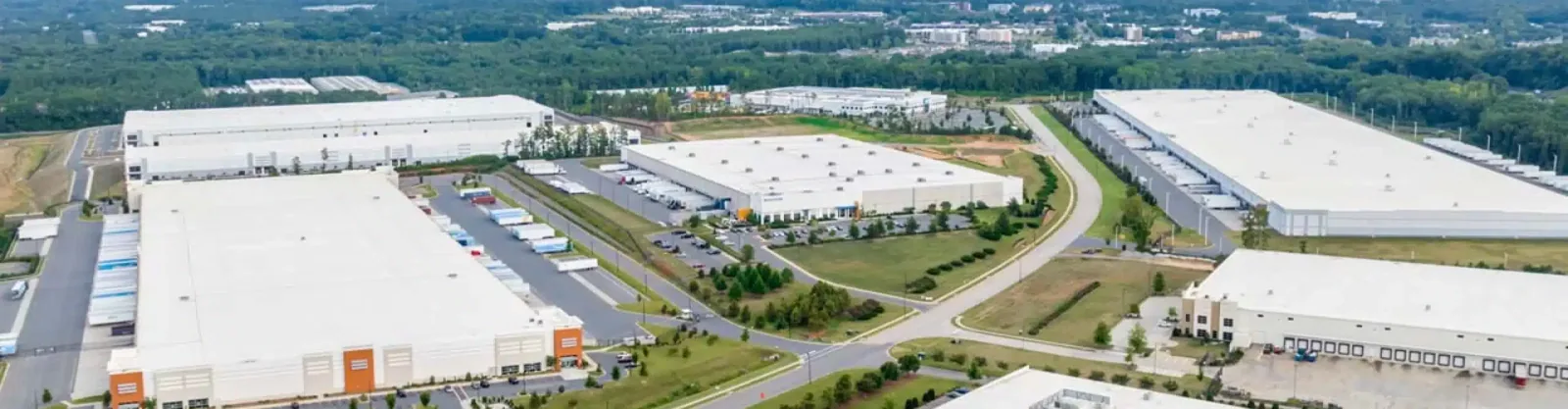
Rock Hill's employment area includes Riverwalk and Legacy, with regional industrial growth following I-77. A warehouse's individual loading schedule, roof access, and stored materials still determine how a maintenance route proceeds. We inspect each building's roof assembly rather than carrying assumptions from another property in the park. We can prioritize active leakage, exposed deck, and blocked drainage while separating maintenance tasks from repair work that requires a separate scope. A preventive maintenance visit can revisit accessible seams, edges, drains, and patches before a small defect expands.
Share the roof plan, leak reports, prior repairs, building use, operating schedule, and access limits before a visit. We will set the inspection path around the symptom, document what the roof supports, and define the repair or renewal area in terms the facility can use for its next decision.
A warehouse roof also has to function while receiving, storage, and dispatch continue below. We plan overhead protection around the reported area and note whether interior access is required for observation. If a leak reaches a rack or electrical zone, the facility contact can identify restrictions before inspection begins. Those boundaries help protect people and inventory while keeping roof findings tied to the areas actually examined.
Questions About Warehouse Roofing
Yes. Water can move along roof layers or structural members before it becomes visible inside. We compare the stain with the roof details above and trace a plausible route. The report separates the confirmed opening from any area that remains only a suspect.
We coordinate the work zone with the facility contact, identify the affected aisle or inventory area, and plan temporary protection before opening the roof. The exact setup depends on access and repair scope. If concealed damage expands the work, we document the condition and agree on the added boundary first.
We check the drain bowl, membrane tie-in, visible discharge path, and roof slope around the low area. Clearing debris may help when the outlet is blocked, but recurring water can call for further assessment. We record the cause we can confirm and any condition that needs testing.
Repeated seam failures, wet insulation across several zones, or weak attachment may make isolated patches a poor fit. We inspect affected areas and state what was tested. A recover or replacement scope needs review of layers, moisture, deck, drainage, and edge height before a direction is selected.
Inspect a Warehouse Roof
Share the affected aisle or area, roof plan, known membrane, leak and repair history, operating schedule, and access restrictions. We will trace the water path, record inspected zones, and outline a repair or renewal scope supported by the conditions found.
