
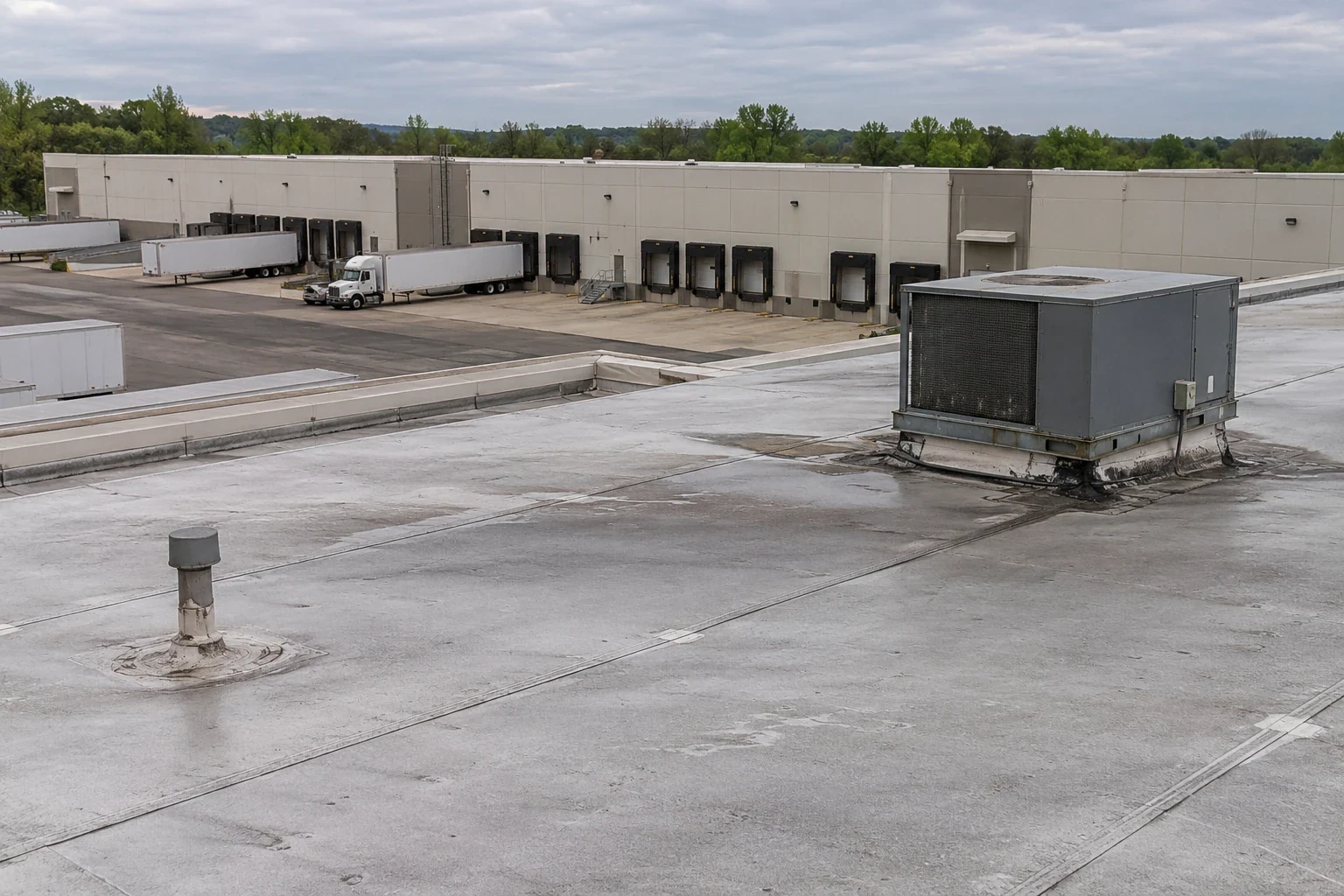
Coordinate warehouse and distribution roof repairs around dock traffic, active fulfillment, rooftop equipment, and weather-ready closures.
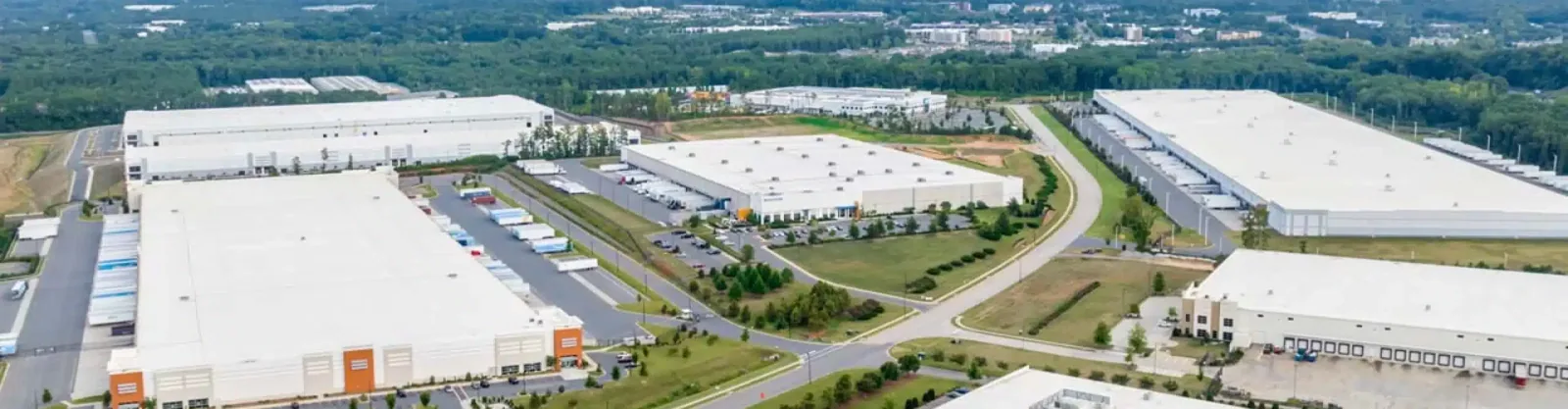
A roof leak over a dock, conveyor, or pick area can interrupt a logistics operation well beyond the wet spot. We inspect the roof route, define the affected zone, and coordinate access around freight movement and facility procedures. York County describes rising warehouse and distribution demand along I-77 South, while Rock Hill's Riverwalk Business Park is positioned for manufacturing, distribution, and office uses. We plan work around Riverwalk Business Park or Legacy Park with the operating contact, not from assumptions about a generic warehouse.
Trace Leaks Across Large Roof Zones
On a broad roof, water can travel along a deck flute, insulation seam, or framing member before reaching inventory or equipment. We compare the interior report with roof plans, drains, penetrations, skylights, curbs, and perimeter transitions. A commercial leak investigation documents which routes were checked and whether an entry point was confirmed or remains uncertain. The report identifies accessible and inaccessible zones separately.
Facility staff can mark affected bays, aisle ranges, dock doors, and the time the condition appeared. A recurring leak after rainfall may point to one roof detail, while a symptom tied to equipment work may require a different inspection route. We do not infer the source from the room below alone. If opening the roof is necessary, we agree on location, product protection, temporary cover, and a safe end-of-shift closure before removing material.
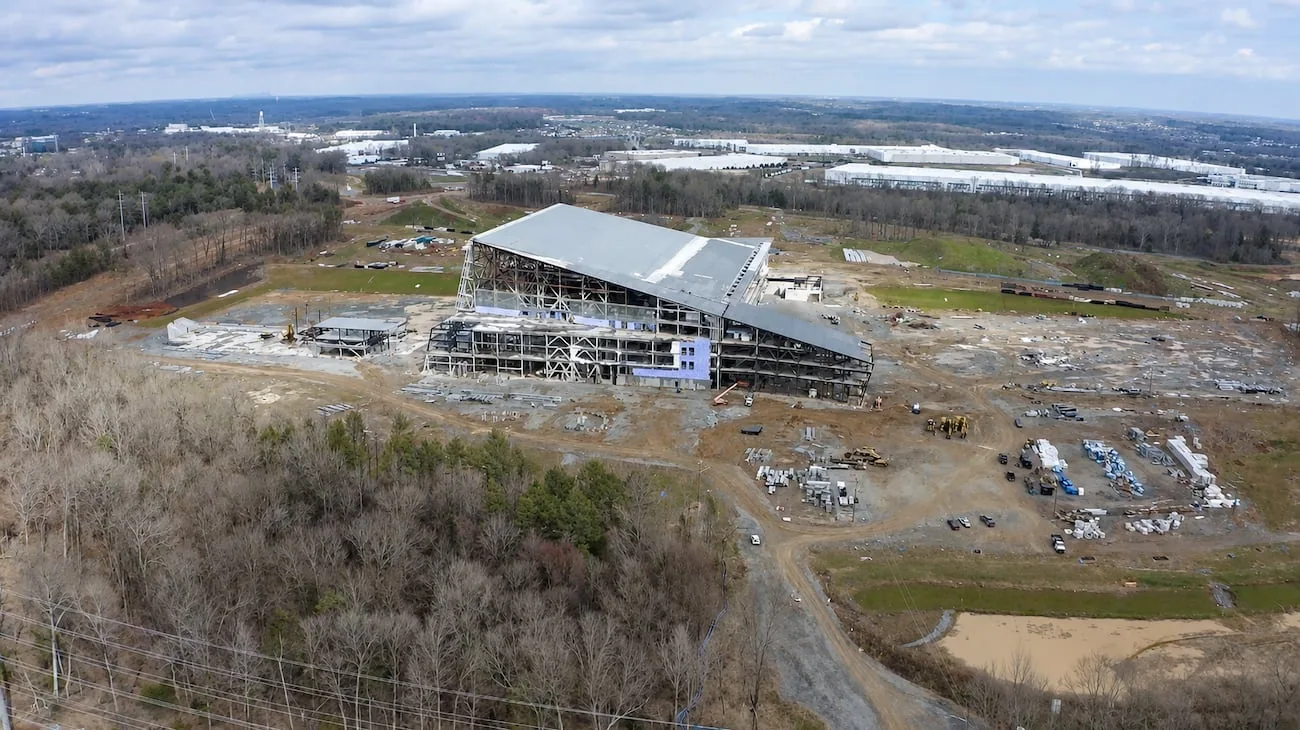
York County's I-77 South plan describes significant recent construction and growing demand for distribution buildings. Measure each building, identify its membrane and map the drains before setting a maintenance or replacement sequence. We use the facility's roof plan and observed assembly to divide the survey into zones that operations staff can reference later.
Keep Dock and Yard Routes in the Work Plan
Roof staging can affect truck courts, trailer positions, loading doors, fire lanes, and pedestrian paths. Before mobilizing, we confirm gate and escort rules, lift or crane locations, overhead clearance, delivery windows, roof hatch access, and areas where materials cannot be stored. The facility identifies the traffic routes that must stay open and who can approve a temporary restriction. Those details belong in the work boundary rather than an informal day-of arrangement.
A phased work sequence can split a large project into roof areas and coordinate closures around operating needs. Dock availability depends on weather, material preparation, access, and conditions found during work. We identify which lanes or doors may be affected and how each open section will be protected when the crew moves to another area.
If removal shows wet insulation or a deteriorated deck, we record the finding and secure the opening. The authorized contact reviews the additional work area before the crew continues. This process protects inventory and clarifies whether a delay, separate price, or alternate repair is needed. We do not extend into another roof zone simply because it is adjacent to the original leak.
Inspect Drainage Before Water Reaches the Floor
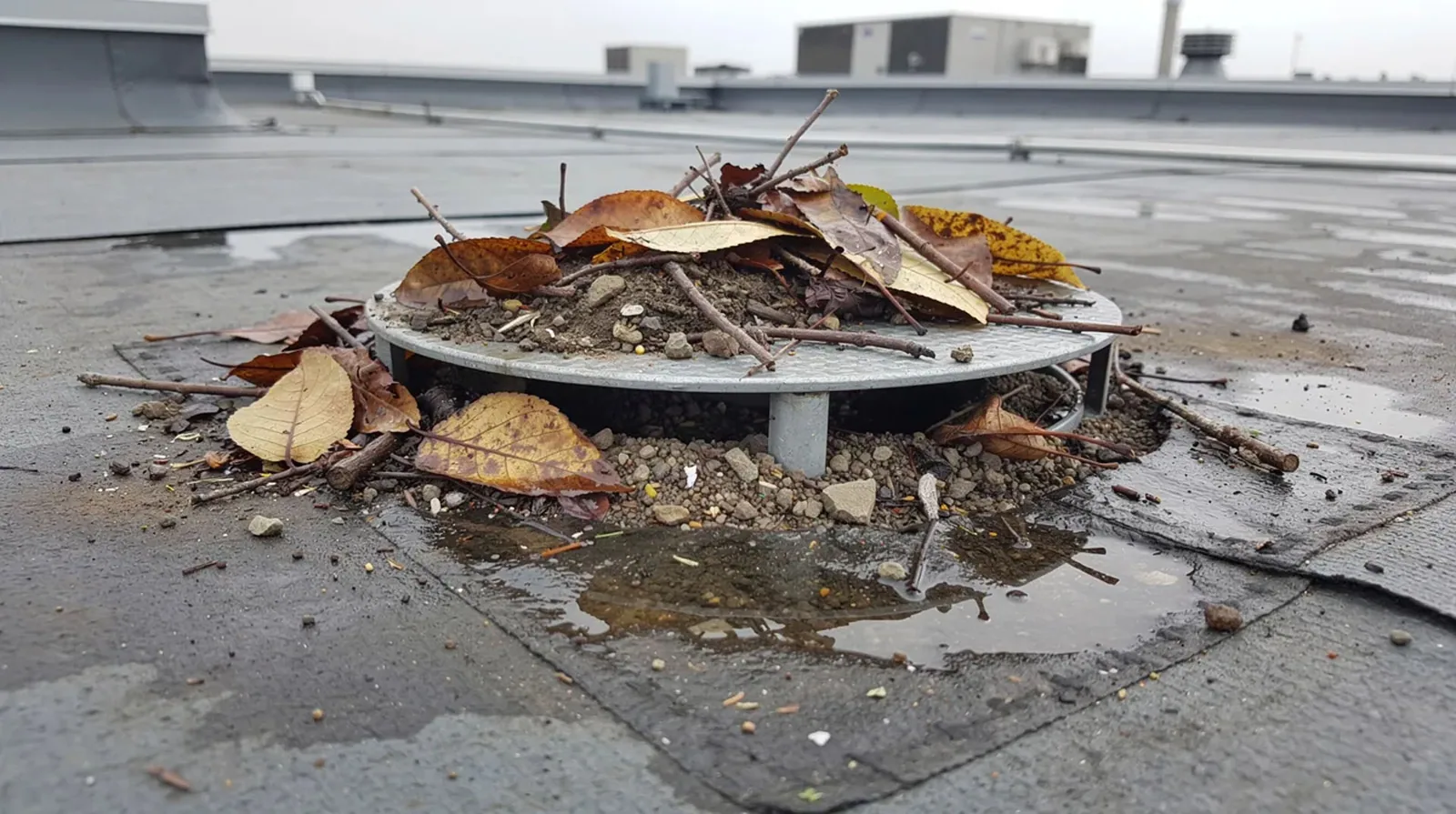
Warehouse roofs may have internal drains, scuppers, gutters, overflow routes, and long runs that are not visible from a single access point. We inspect each outlet in the approved zone, check its connection to the membrane, and follow the visible discharge route. A blocked basket, separated flashing, and low roof area are different findings. A drain or scupper repair can address the roof-to-outlet detail when the connection is damaged.
We record routine debris removal separately from repairs to membrane, slope, or drainage components. If discharge reaches a loading area or service road, the report notes where water goes and whether the outlet was visible. Standing water alone does not show why the roof holds water. We assess the area and recommend additional evaluation if the geometry or hidden piping cannot be confirmed.
Rock Hill's warm, humid Piedmont climate includes regular rainfall, so a weather-ready closeout is important whenever the membrane is open. A documented November 2011 tornado track crossed Chester and York counties; after a reported event, inspect the roof and photograph conditions in the areas reached. When a site requests a post-event check, we document visible edge displacement, punctures, or open seams in the areas reached.
Check Rooftop Equipment and Roof Transitions
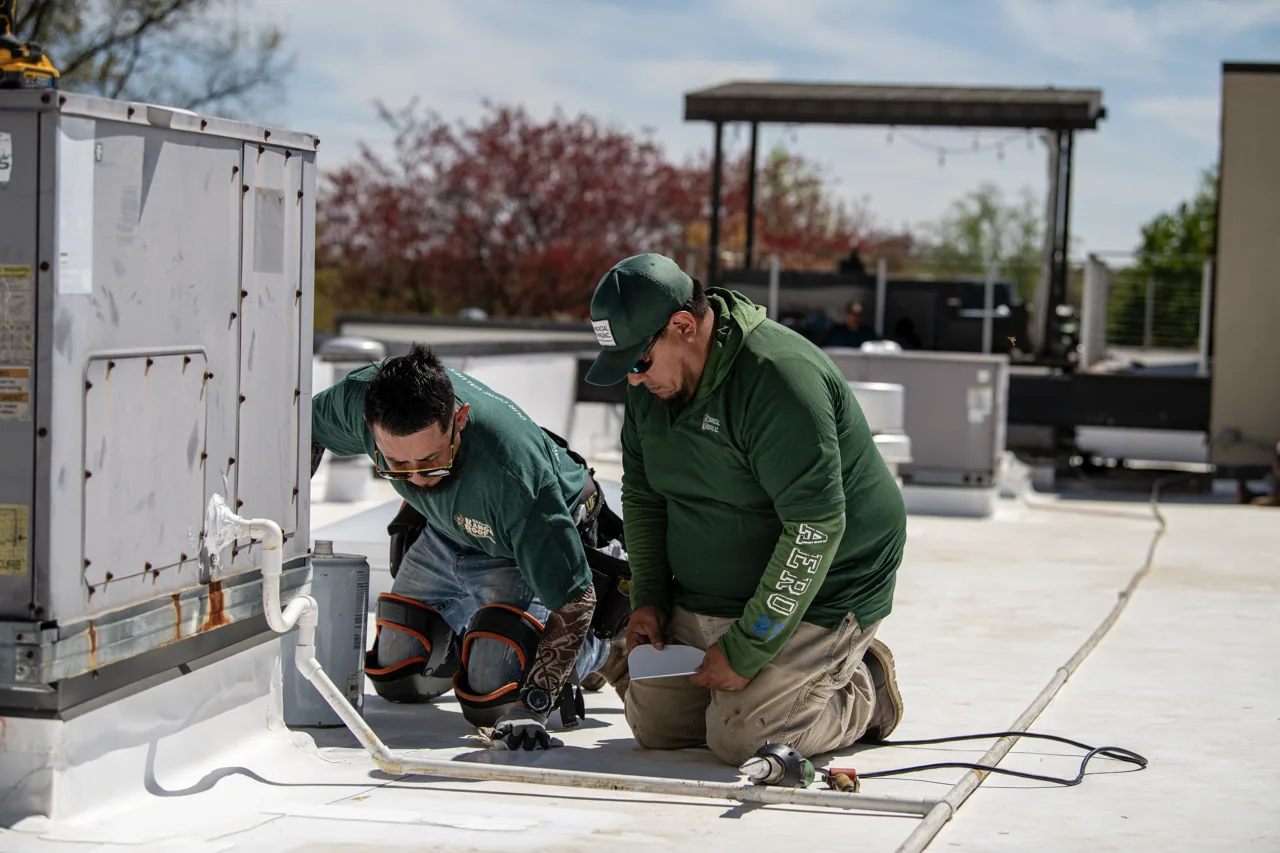
Exhaust, HVAC, vents, skylights, and conduit create transitions in the roof surface. We inspect curbs, flashing corners, fasteners, seams, and nearby membrane for movement or separation. A unit replacement may leave an old curb, unused opening, or disturbed patch that needs closure. The facility should identify recent vendor activity so the inspection can check the right details without assuming that every penetration is defective.
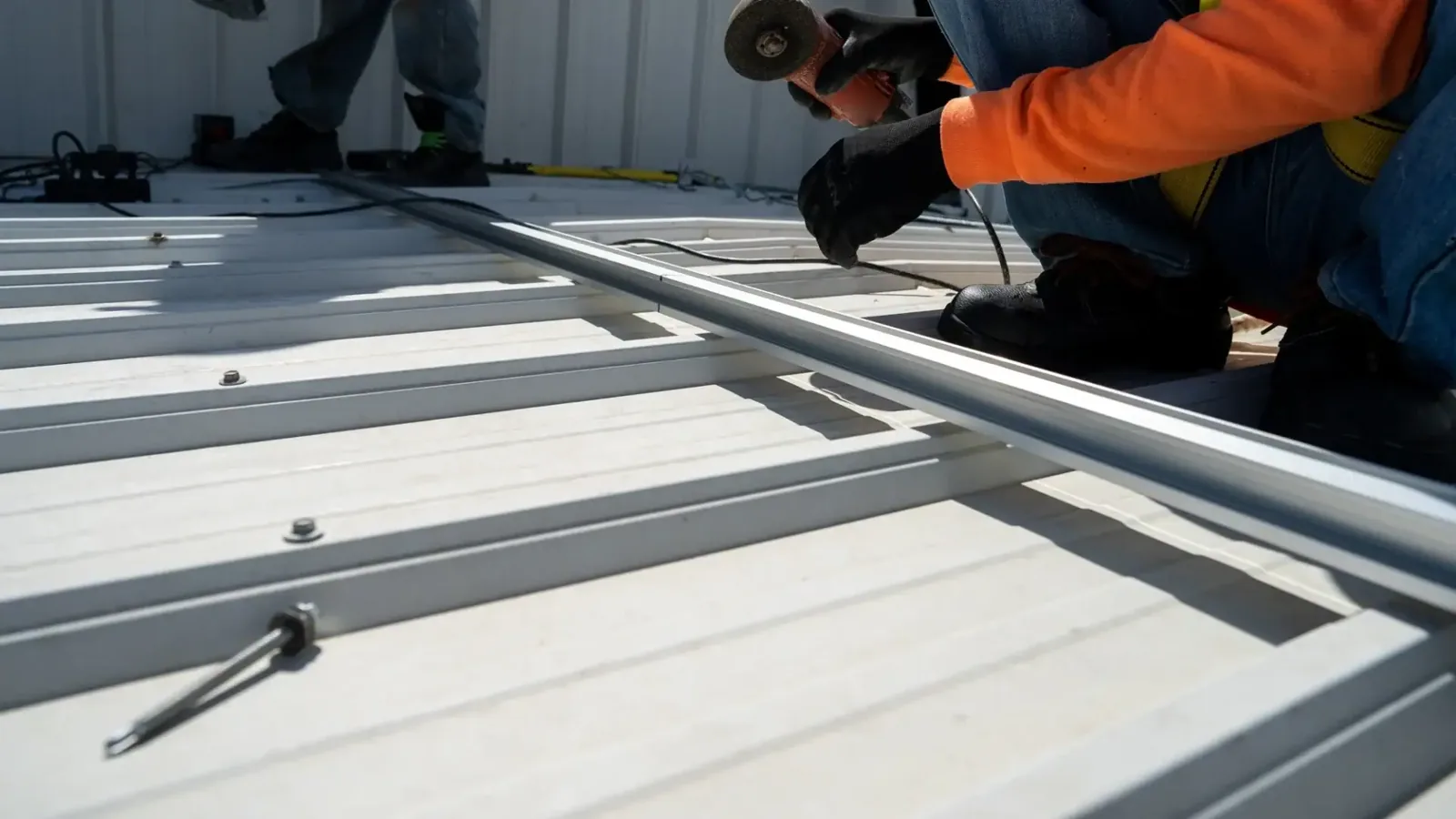
We verify whether the system is single-ply, bitumen, metal, or another assembly before selecting a repair method. A weld, adhesive, coating, or panel detail must match the roof material and preparation. If an older overlay hides the original layer, we identify the uncertainty and whether a test would change the proposed repair. A patch that does not connect with sound material can leave the opening unresolved.
Coordinate equipment movement with the vendor responsible for lifting, disconnecting, or restarting units. The roofing scope can repair the membrane connection, but mechanical shutdowns and electrical work stay with the responsible provider unless written scope says otherwise. We identify when a curb will be open, who covers it during a pause, and what evidence confirms the roof tie-in at closeout.
Compare Focused Repair With Distribution-Roof Renewal
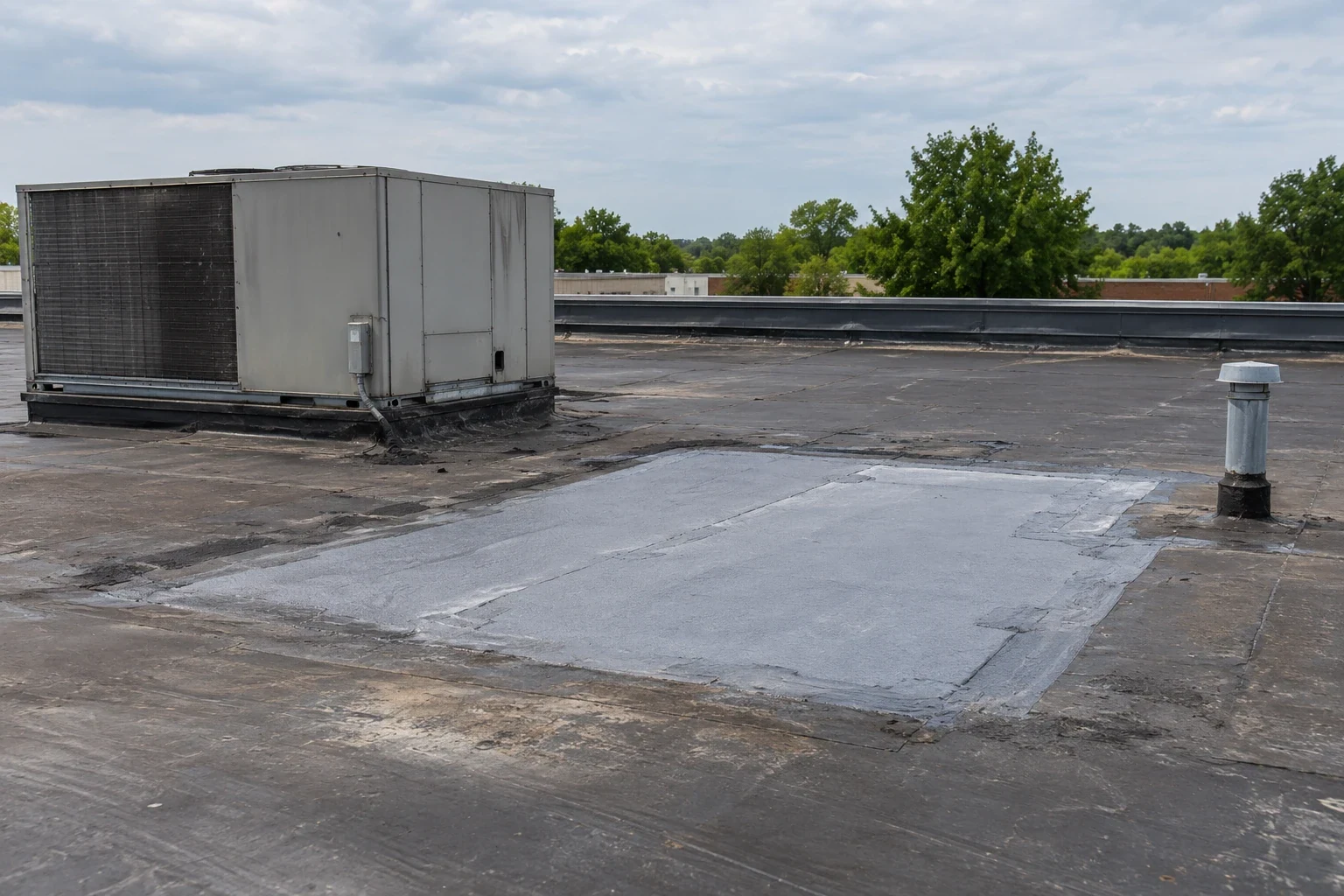
A localized repair fits when the defect is clear and nearby material can accept a compatible patch. Repeated seam failures, widespread wet insulation, or deteriorated attachment may support comparing a broader project. We explain the evidence for each option and list areas not inspected. A repair proposal defines the roof zone, preparation, materials, access, and closure steps without presenting the fix as a whole-roof correction.
Replacement or recovery planning needs to identify the existing layers, roof area, drainage, penetrations, edge details, staging, protection, and business constraints. Cost and duration depend on material, geometry, equipment count, access, disposal, and concealed conditions. If an opening exposes a different assembly or damaged deck, we secure it and review the added scope before proceeding beyond the approved area.
A manufacturing facility may prioritize equipment protection and production access, while a property manager may need tenant-by-tenant coordination. Logistics sites have their own dock and inventory risks. We can divide the proposal by building zone so operations and ownership can evaluate impacts and alternatives separately.
Provide a Roof Record Operations Can Use
At closeout, we identify zones inspected, outlets and transitions checked, repairs completed, materials, photos, and any access limit. A roof map can relate work to dock or bay labels supplied by the facility without implying that uninspected space was cleared. If the source remains uncertain or a test is pending, that is visible in the record. Operations can then compare a future leak with earlier work and equipment service.
A maintenance inspection can return to drains, seams, curb bases, edges, and previous repairs. Share receiving windows, roof plans, spill or leak reports, vendor schedules, and yard rules before the visit. We will set an access route and identify any area that requires an escort or separate operating window.
Rock Hill's industrial parks and York County's I-77 South corridor support varied commercial uses. The repair decision for a logistics building still follows its actual roof, drainage, traffic plan, and evidence. We explain what the inspection supports and what further access is needed.
Questions About Logistics and 3PL Facilities
Some roof areas may be worked while other operations continue, but truck access, weather, protection, and the repair boundary determine what is practical. We coordinate affected zones and closure steps with the facility contact.
Before opening the roof, we define the interior area, temporary covering, and end-of-shift condition with facility staff. If hidden damage expands the opening, we secure it and confirm the additional boundary before continuing.
We inspect the accessible outlets and visible discharge route included in the scope, including the membrane connection. If piping or an outlet is hidden, the report identifies that limit and any follow-up needed.
Share roof plans, affected bays or dock doors, leak history, equipment work, gate rules, truck routes, and staging restrictions. Those details help set the inspection route and any interior protection plan.
Schedule a Logistics Roof Assessment
Send roof plans, leak locations, operating windows, dock and yard rules, equipment schedules, and access instructions. We will document the roof zones reached and outline a repair or renewal scope around facility operations.
