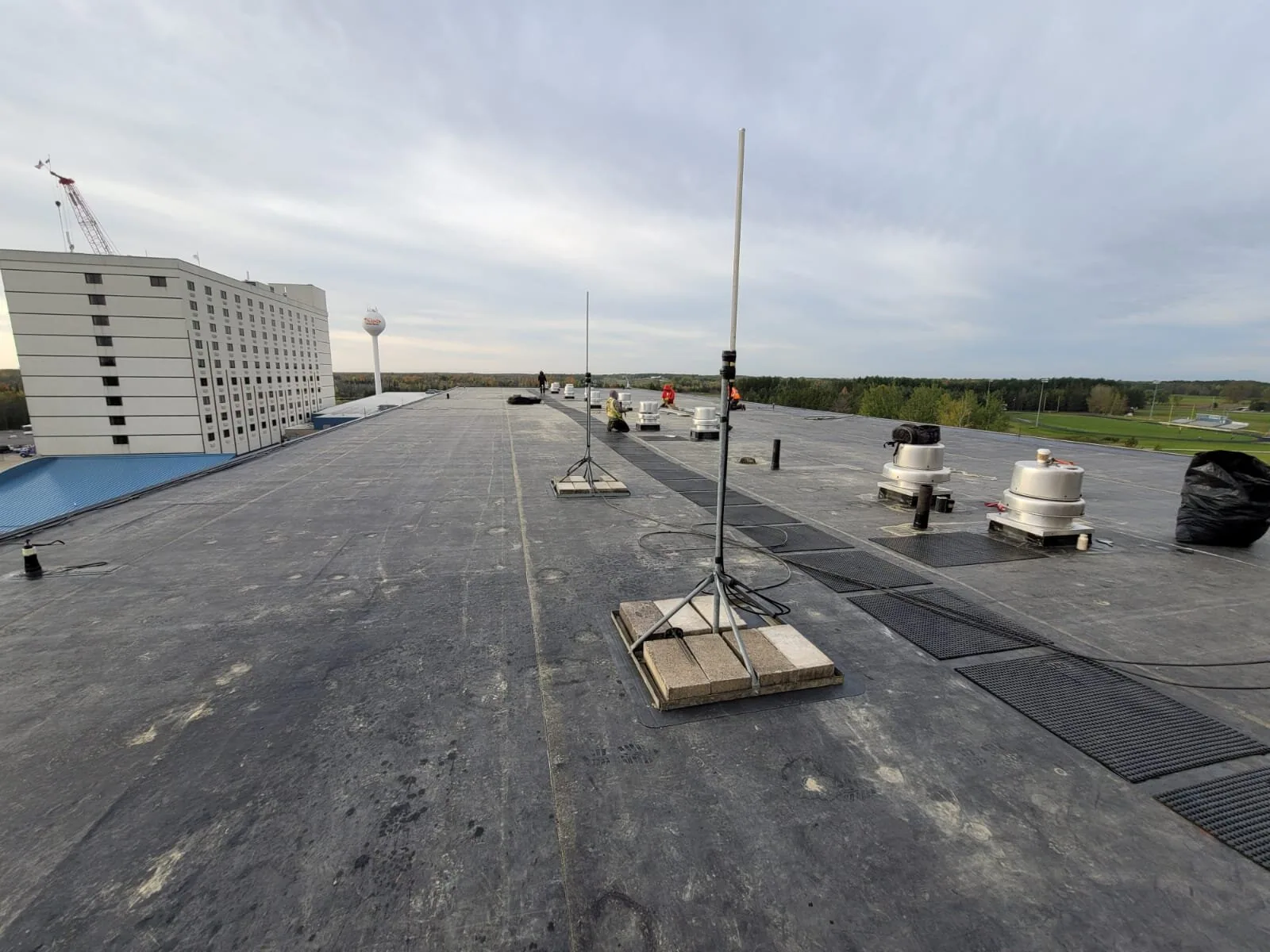
Repair or replace an EPDM commercial roof in Rock Hill with seam, flashing, attachment, and drainage checks matched to the existing rubber membrane.
An EPDM seam relies on a clean, prepared surface and a compatible seam tape or adhesive, so the repair starts by identifying the sheet and the joint. We inspect laps, flashing, attachment, penetrations, and drainage before selecting a patch method. Rock Hill's warm, humid Piedmont climate brings regular rainfall and a long warm season, which makes water movement and surface condition relevant to the review. Waterford Business Park and Fort Mill are part of a wider commercial area with business, industrial, office, and healthcare activity. We identify the membrane at the property before choosing EPDM repair materials. We verify EPDM at the building and trace each concern to its roof zone.
Inspect EPDM Laps and Seams
We check field laps for separation, wrinkles, dirt at the bond, exposed tape edges, and signs of previous repair. EPDM seams are not repaired by heat welding; the selected method depends on the membrane, seam construction, and product instructions. We lift or probe only as appropriate to identify where a seam has released, then mark the limit of the defect. If the separation continues beneath a patch or through a transition, the repair boundary should include the unsound portion. A seam repair follows the specified tape width, primer, and edge treatment for that assembly. General-purpose sealant does not replace compatible seam materials.
Surface preparation matters because dust, moisture, and residue can interfere with primer or adhesive. We clean the area, allow it to dry, and place compatible seam materials according to the assembly requirements. A new strip over a contaminated or moving lap may not correct the underlying cause. If the sheet is brittle, shrinking, or pulling away from the perimeter, we record the broader condition rather than presenting an isolated lap repair as sufficient. Each tested seam is noted by location so follow-up checks return to the same roof zone.
Follow Flashing at Curbs and Edges
At pipes, equipment curbs, skylights, and parapets, the EPDM sheet transitions to a vertical surface or another material. We check flashing height, attachment, corners, termination bars, and exposed sealant. A loose termination or open corner can let water travel below the membrane. Around roof edges, we inspect how the sheet is secured and whether perimeter metal has moved. The repair must reconnect to sound EPDM and keep the transition continuous.
A roof stain below a unit may come from a seam elsewhere, so we trace the reported water path instead of assuming the nearest penetration is responsible. A commercial leak investigation can inspect the roof route when the entry point is unclear. Where equipment movement affects the flashing, curb and support repair can coordinate the base with the membrane. The record separates EPDM work from repairs to equipment, walls, or interior finishes.
Check Sheet Movement and Attachment
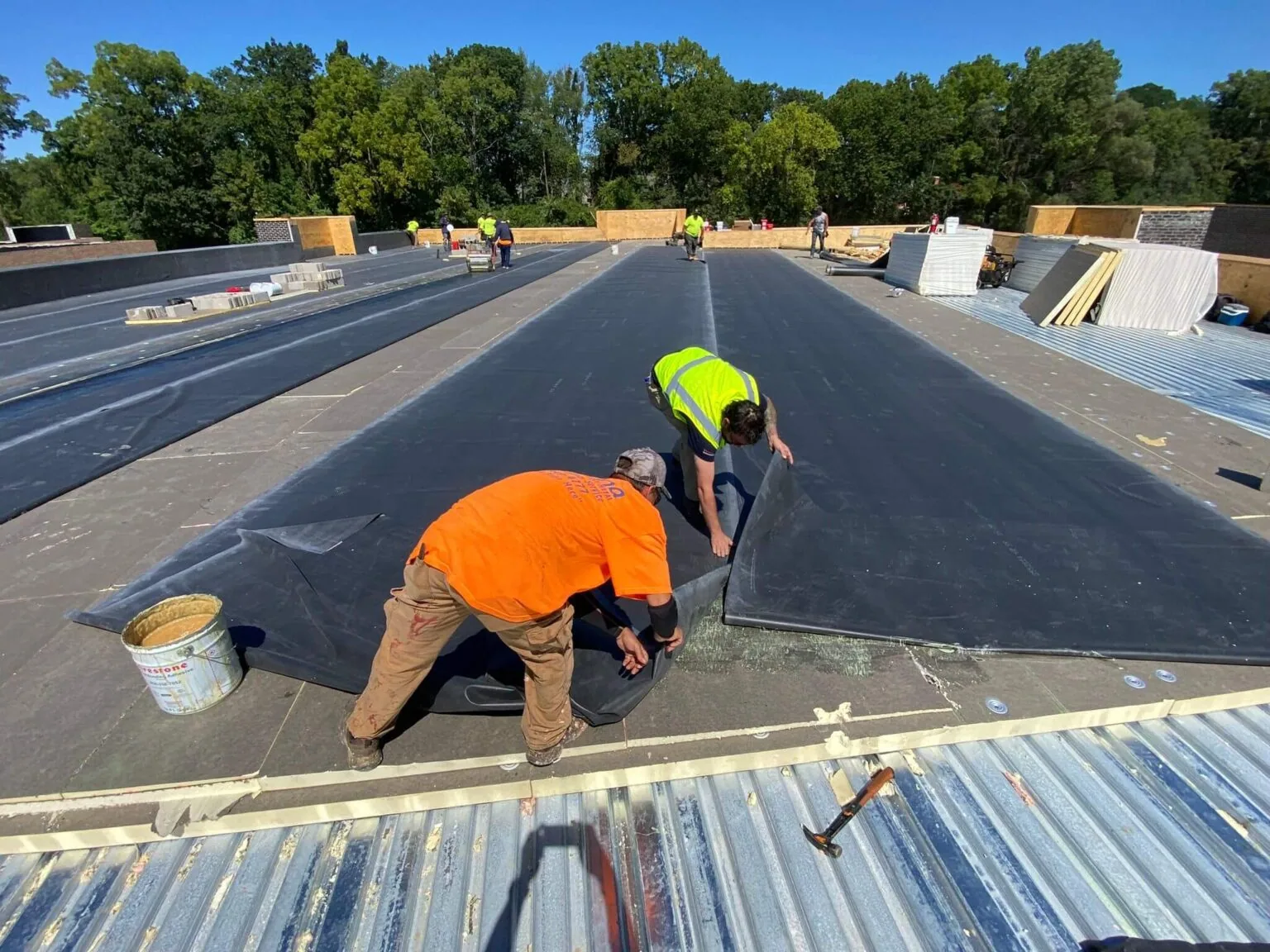
EPDM can be adhered, mechanically attached, or ballasted as part of an approved assembly. We look for visible sheet movement, pulled fasteners, adhesive release, displaced ballast, and stress at corners. The attachment method changes the repair detail and how the sheet responds to wind. York County has tornado and hail history. After a current report, we inspect the EPDM field and perimeter for punctures, lifted edges, and displaced flashing, then record the roof zones reached.
Waterford is one of Rock Hill's business and industrial parks, while Fort Mill employers span healthcare, manufacturing, finance, and corporate services. The facility contact sets access arrangements; visible details and records help identify how the roof is assembled. We review the roof itself and consult plans or test openings when the layers cannot be confirmed from the surface. If water or weak attachment is found below the sheet, we document the test location and ask the owner to approve any added scope before closing it.
Where ballast is present, we check whether it remains distributed across the area included in the walk and whether membrane edges or penetrations are exposed. A displaced area may point to movement or prior service work, but the reason still needs inspection. We do not move ballast or equipment outside the agreed scope. Any section that cannot be checked safely remains listed as an access limit, and a larger review may be needed before repair materials are selected.
Make a Compatible EPDM Repair
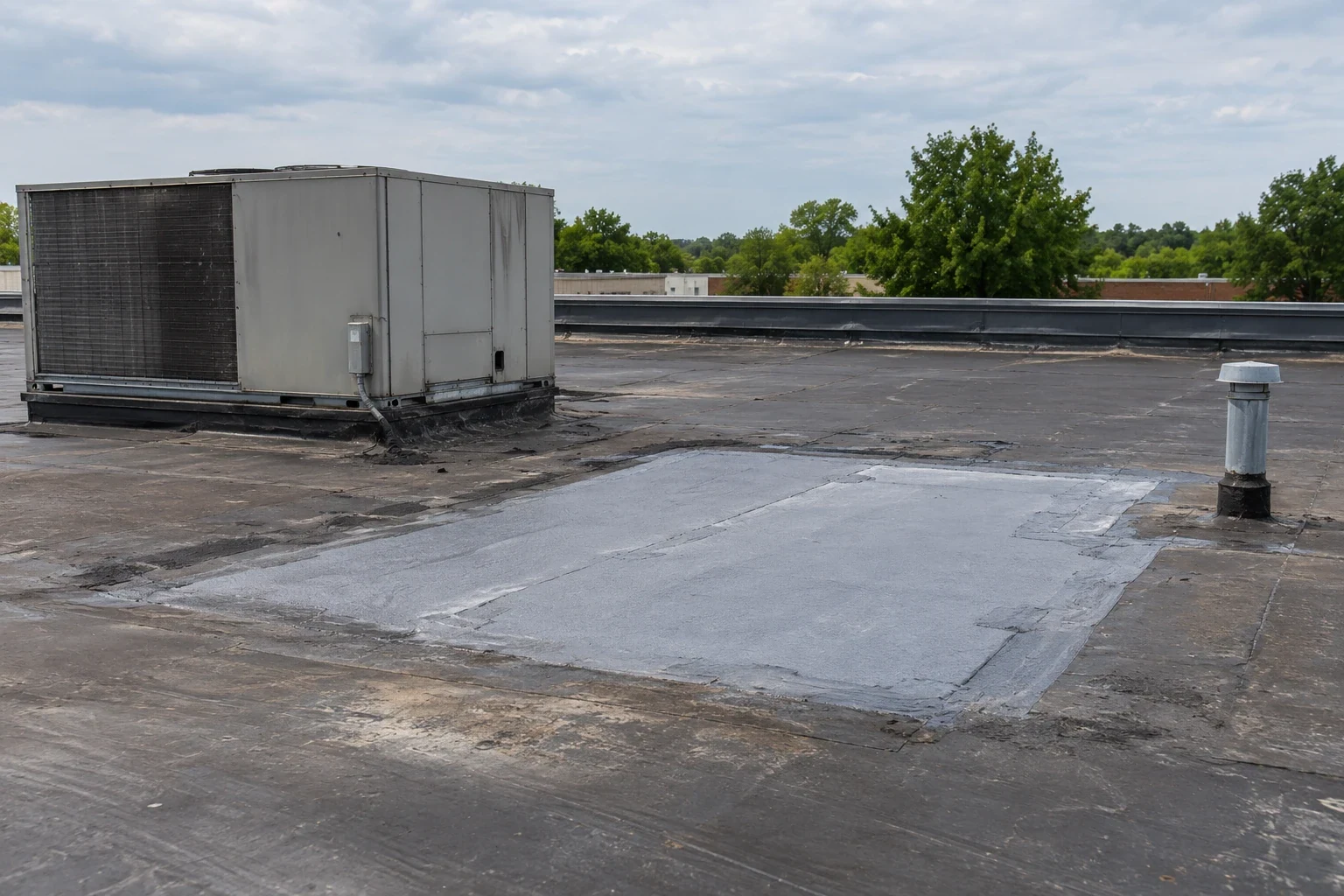
A patch starts with clean, sound membrane beyond the defect. We prepare the surface, apply the specified primer, and install compatible EPDM patch or seam tape with the required pressure and edge treatment. At a pipe or curb, a formed flashing or cover patch may be needed to match the geometry. We check the finished edge for wrinkles, fishmouths, or exposed adhesive and photograph the repair boundary.
Repair length, number of details, membrane condition, access, and moisture beneath the sheet affect scope and timing. Recent rain can require more surface drying before primer and adhesive are applied. We document drying conditions and any change to the work sequence. If a repair exposes wet insulation or damaged deck, we stop and document that condition. Multiple failures across separate zones may call for a larger repair plan or evaluation of the existing assembly. A roof repair scope can coordinate EPDM work with adjacent flashing and drainage. If the membrane is broadly deteriorated, replacement planning can compare removal with a localized patch program without assuming every area is alike.
Compare Maintenance and Renewal
EPDM can remain serviceable when seams, attachment, flashing, and drainage are maintained and localized defects are addressed. A recover or replacement decision requires review of the existing layers, moisture, deck, edge height, and project requirements. We identify which areas were inspected and what remains unknown before recommending another layer. A TPO assembly or PVC system has different materials and seam methods; changing systems requires a new detail design, not a direct sheet substitution.
Photographs and field marks help preserve the condition of the repaired seams and transitions. For ongoing care near Waterford or across Fort Mill properties, a scheduled maintenance visit can check accessible laps, drains, penetrations, and edges. The closeout identifies the EPDM visible on the inspection date and lists concealed layers that would need an approved test opening for identification. Share roof plans, prior repairs, leak history, building use, and access limits so we can set a clear inspection route and repair boundary.


Questions About EPDM Commercial Roofing
We identify the seam construction, clean and prepare the sheet, apply compatible primer, and install the specified tape or adhesive detail. The repaired lap is checked at its edge and photographed. If the sheet is contaminated, wet, or moving, additional preparation or a larger repair may be needed.
EPDM seam work generally uses compatible adhesives, primer, or tape rather than heat welding. We confirm the membrane and repair materials before work begins. A roof that only looks like EPDM still needs identification because repair products must match the actual system.
Movement can place stress on seams, perimeter attachment, and flashing. We inspect the affected field and edges to see whether the condition is localized or continues across multiple zones. The repair scope addresses the observed movement and does not assume concealed attachment is sound unless checked.
A recover requires review of moisture, attachment, existing layers, drainage, and added height at edges and drains. We inspect or test the assembly before recommending another layer. If wet insulation or broad deterioration is found, removal may be the more appropriate scope.
Inspect an EPDM Roof
Share the known roof layers, seam or leak locations, prior repairs, property use, and access limits. We will inspect the EPDM field, attachment, and transitions, then define a compatible repair or renewal scope.