Inspect and repair big-box retail roofs in Rock Hill with leak tracing, rooftop-equipment checks, drainage review, and work planned around store operations.
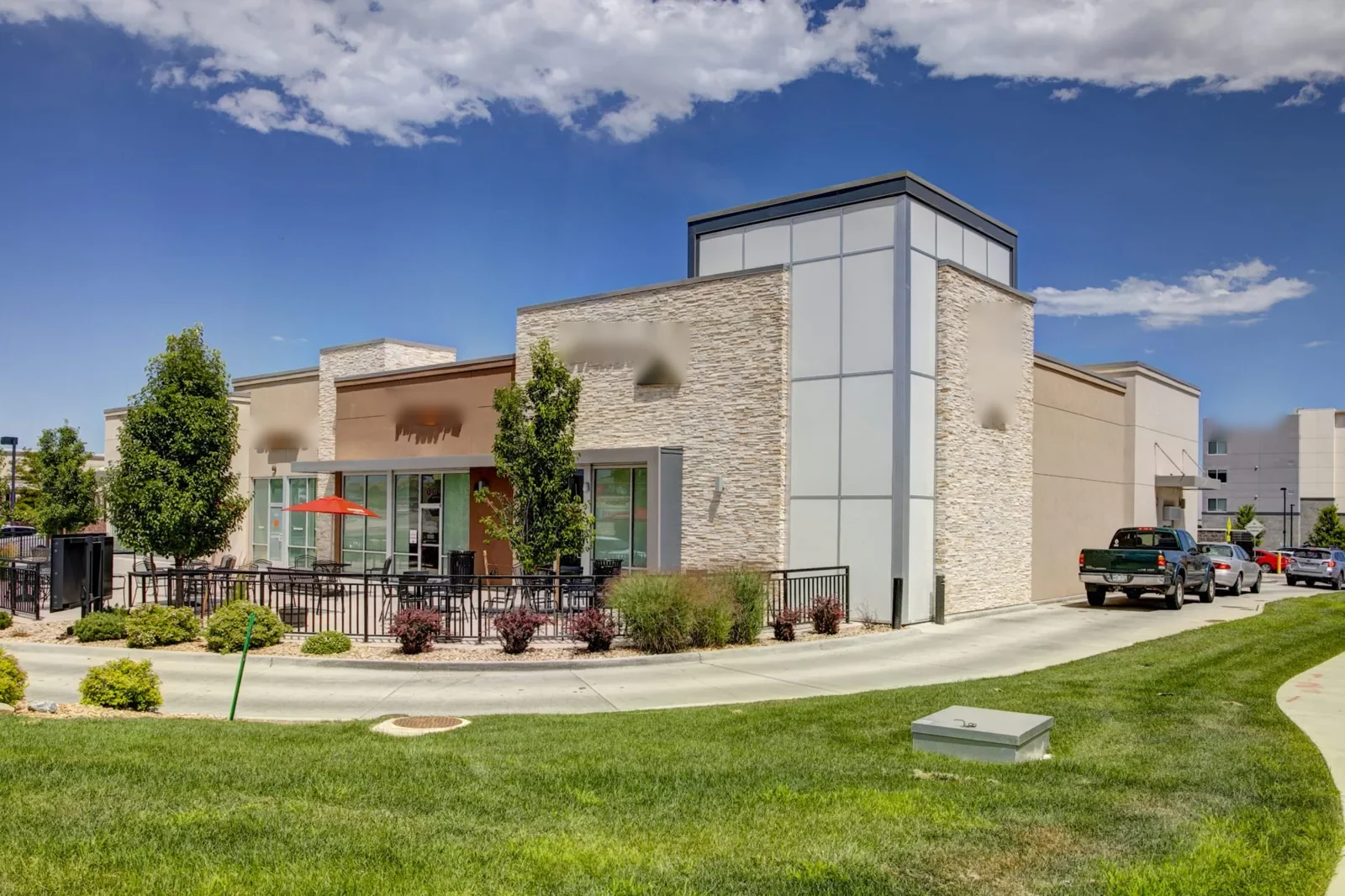
A leak above a broad sales floor can reach shelving, stock, checkout equipment, or a service corridor before the opening is obvious. We map the reported area, compare it with the roof plan, and inspect nearby seams, curbs, drains, skylights, and edges. Rock Hill's retail and commercial improvements include Dave Lyle Boulevard and the Cherry Road corridor, while I-77 connects the city's business areas with the wider region. Retail properties along these corridors can have different delivery, staging, and occupancy constraints. We confirm the assembly and coordinate access near Dave Lyle Boulevard or Old York Road.
Trace the Water Path Over the Sales Floor
A ceiling drip near a display or aisle may sit beneath a roof opening several bays away. Water can follow a deck flute, insulation joint, truss, pipe, or curb before it reaches the occupied floor. We compare the interior report with rooftop details and follow the likely route. Photos and field marks identify where the inspection stops and where a confirmed opening sits.
Large retail roofs may contain multiple equipment curbs, skylights, exhaust points, and service paths. We inspect each accessible transition in a defined zone and note whether a seam or flashing defect continues toward the perimeter. A leak investigation can document the path tested and distinguish an observed opening from a suspected route. If the stain is far from the roof entry, we note the intervening route rather than patching the nearest detail by assumption.
Warm months and recurring precipitation shape inspection planning around Rock Hill. We check outlets and transitions that could admit water, while the weather itself cannot establish where a particular store's roof failed. A broader hands-on review can compare the affected bay with nearby roof zones and past repairs.
Inspect Units, Penetrations, and Roof Traffic
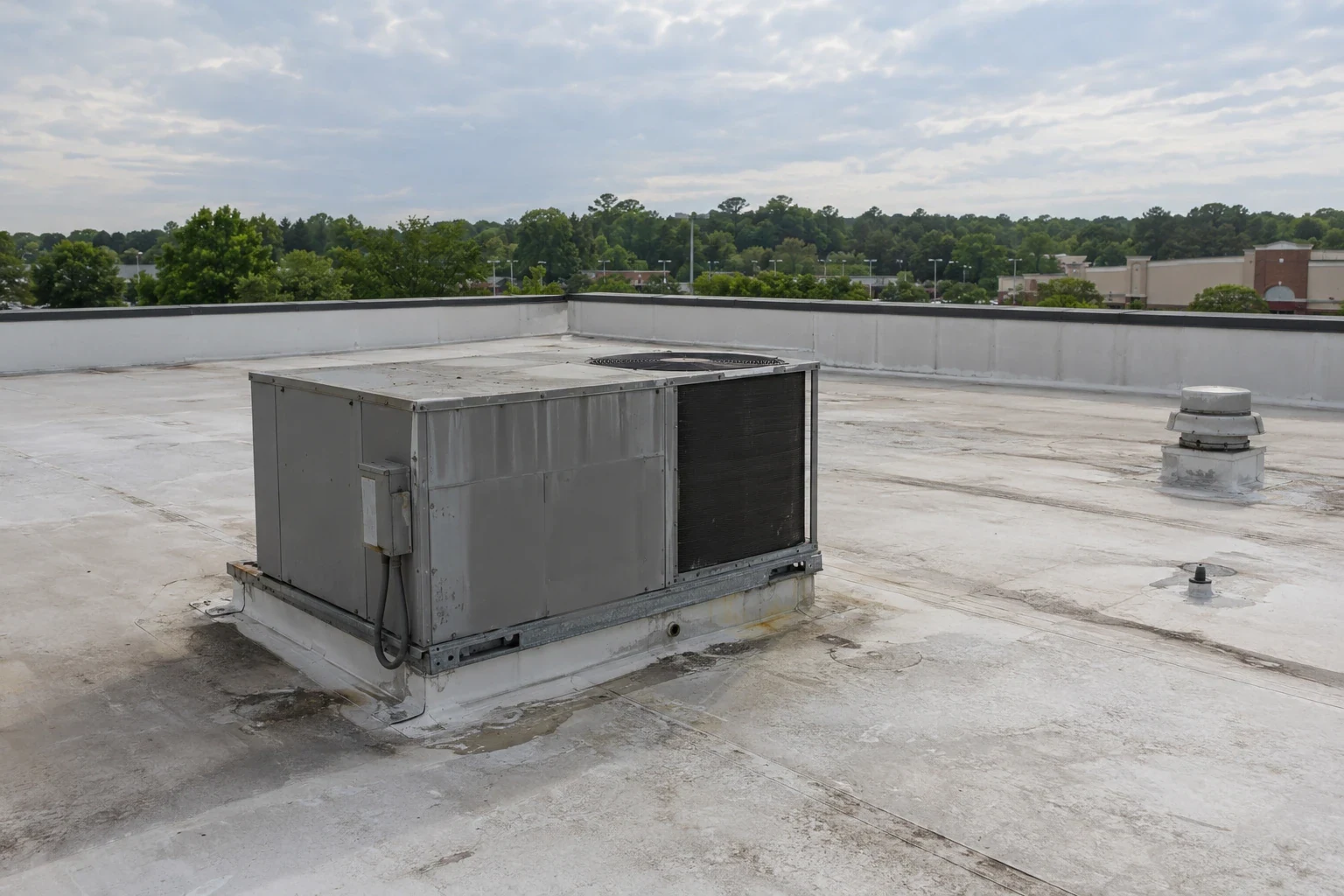
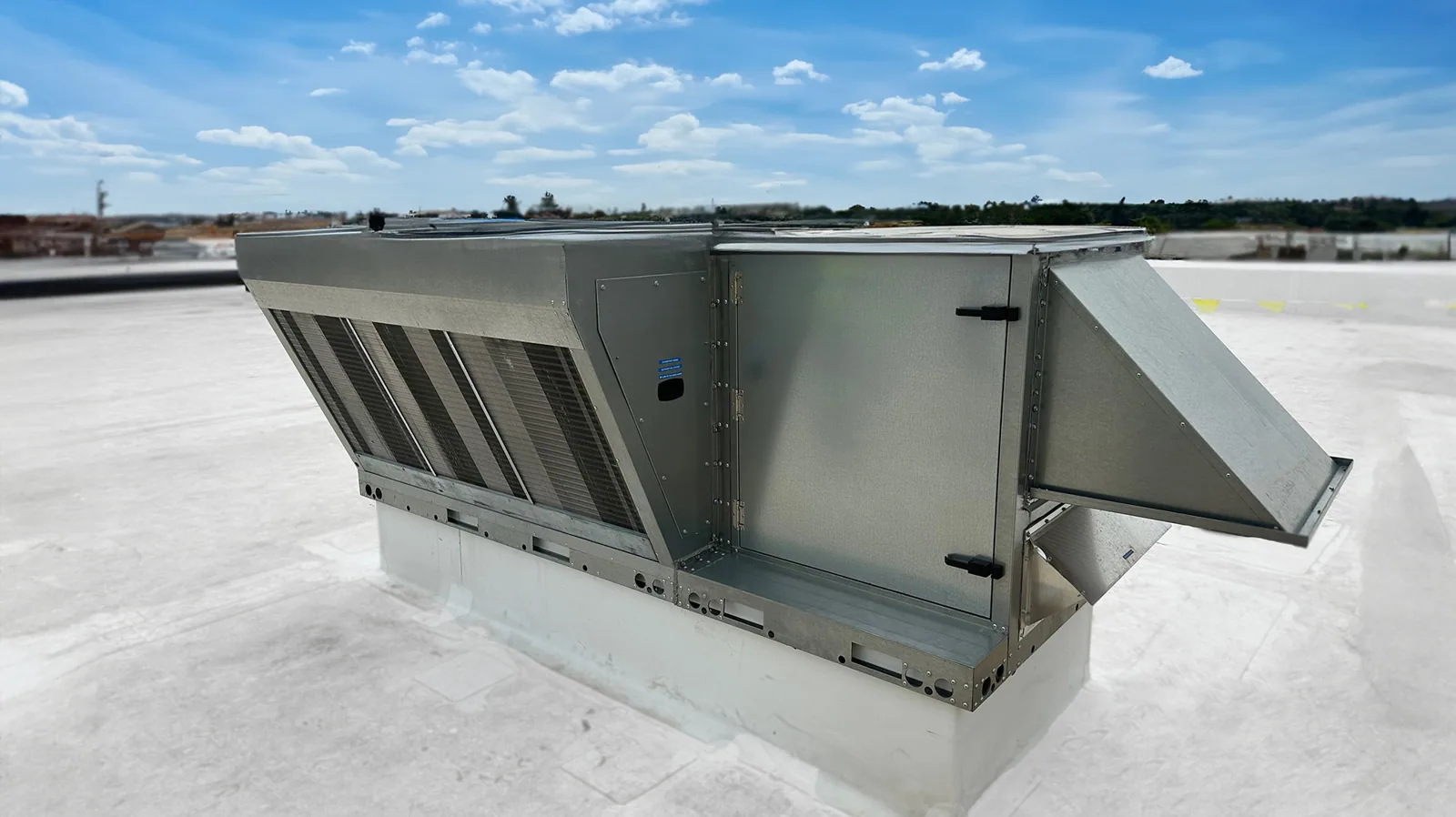
Big retail buildings often rely on rooftop HVAC and exhaust equipment. We inspect curb flashing, attachment, corners, penetrations, abandoned bases, and nearby membrane for movement or separation. Service work can damage a seam or leave an unused opening if the roof is not restored after equipment changes. We identify the roofing detail separately from mechanical work and coordinate any unit movement with the facility contact.
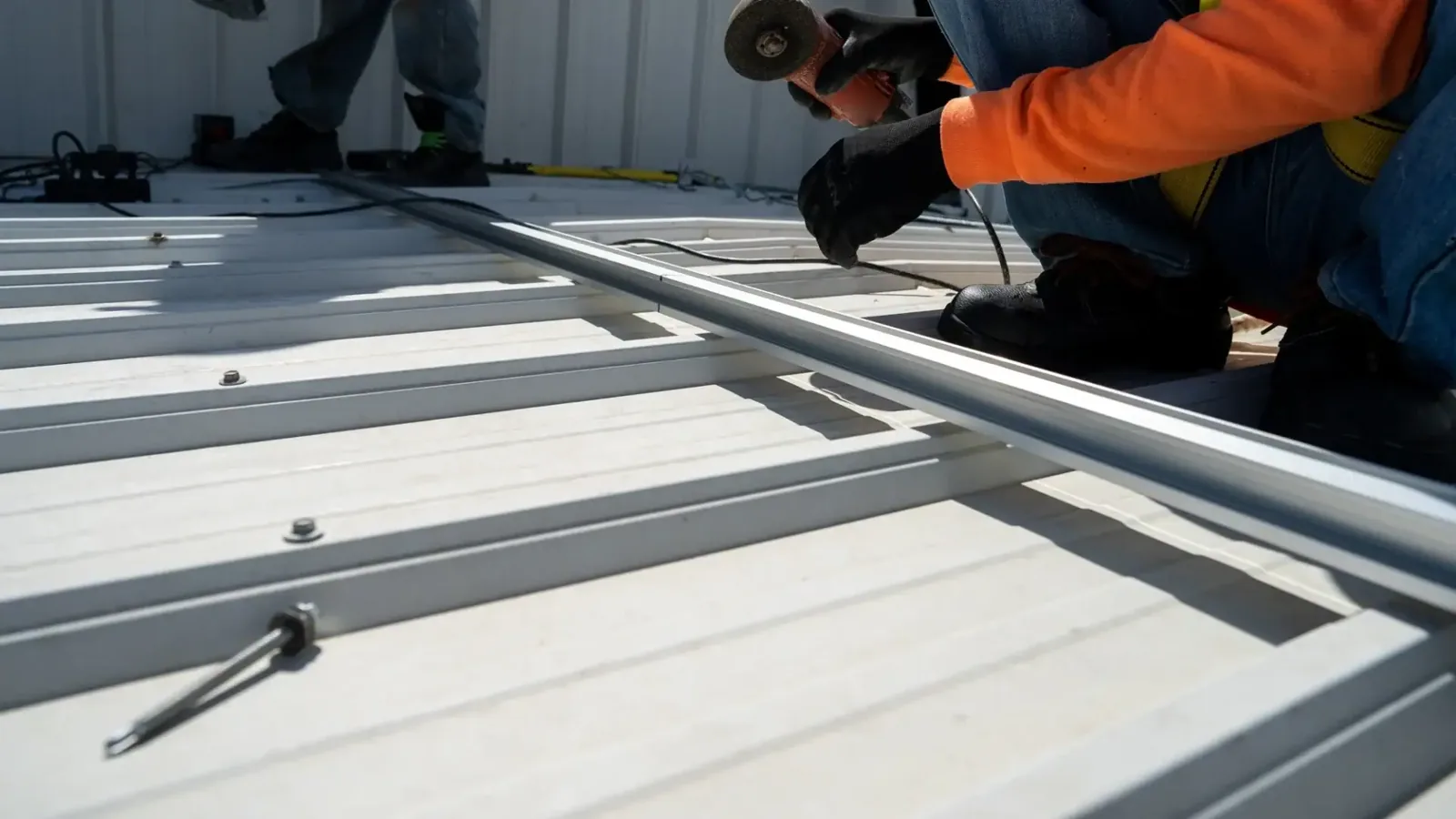
Foot traffic around equipment can wear coatings, displace ballast, or loosen a patch edge. We follow established walk paths and check any location named in a service report. If access requires a lift, hatch key, or escort, the site contact can set that route before inspection. A curb and support repair can coordinate the roof transition with the equipment base.
Commercial retail work also needs interior protection where stock or equipment could be exposed. Before removing a section, we agree on the affected floor area, temporary covering, and how the roof will be closed if weather interrupts. This boundary matters when sales activity continues below the work zone.
Check Drains and Storefront Perimeters
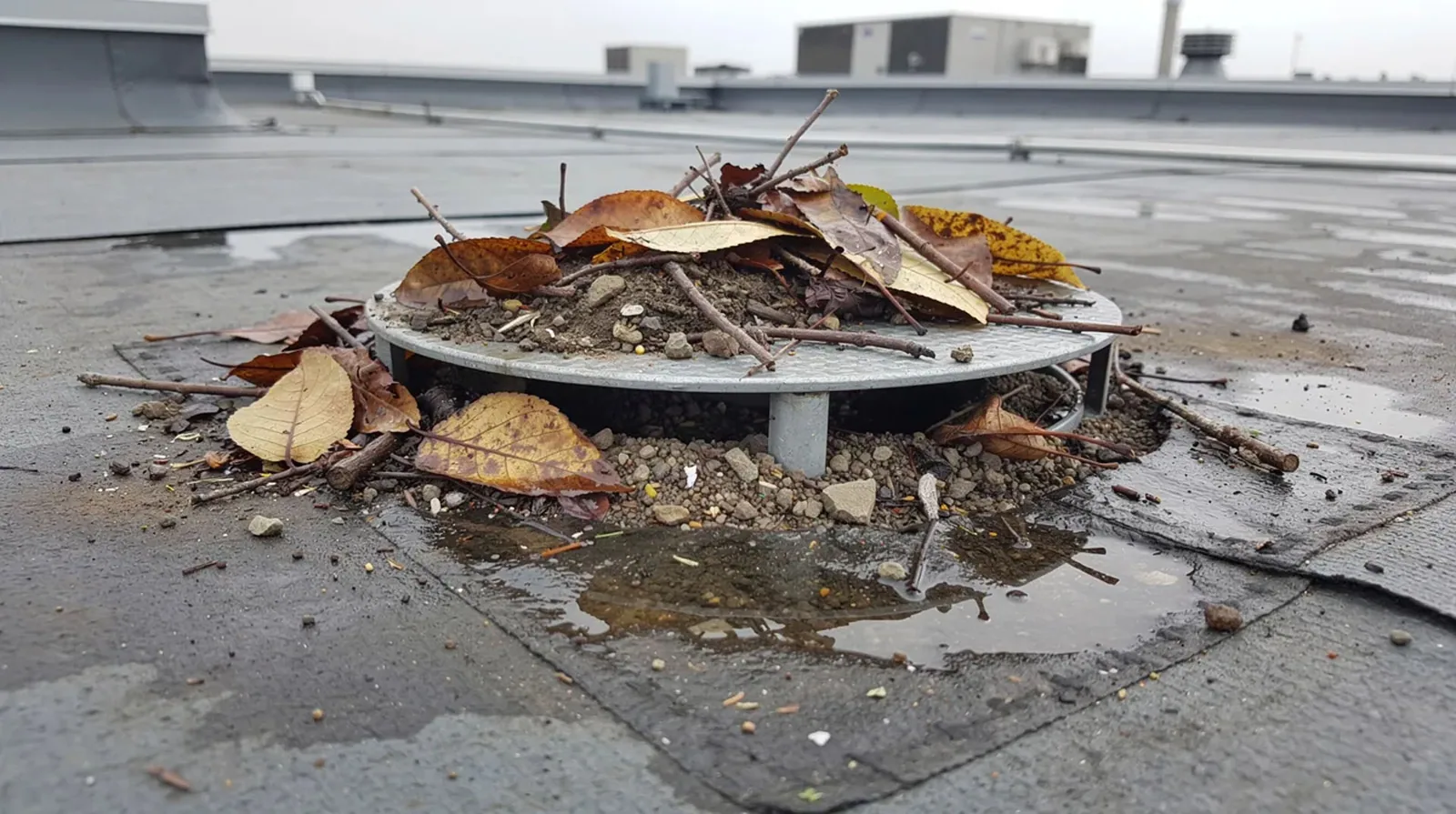
We inspect drain bowls, scuppers, gutters, and overflow paths included in the scope. We inspect the bowl, surrounding membrane tie-in, and visible discharge route separately; clearing debris alone does not complete that check. We look for water marks, recurring low spots, open seams, and overflow signs, then separate routine debris removal from repairs to slope, flashing, or the outlet itself.
At parapets and storefront edges, coping, edge metal, and wall transitions can affect both runoff and water entry. We look for loose joints, lifted terminations, and visible movement near corners. York County has a tornado history, and the western Carolinas see hail activity. After severe weather, we inspect for visible punctures, displaced metal, and opened flashing at the property and document the areas reached.
A drain and scupper repair can address a failed outlet detail. Perimeter metal work can correct a loose edge or coping connection. Cost and timing depend on roof material, number of outlets, repair length, access, and whether concealed moisture appears after removal.
Plan Repairs Around Store Activity
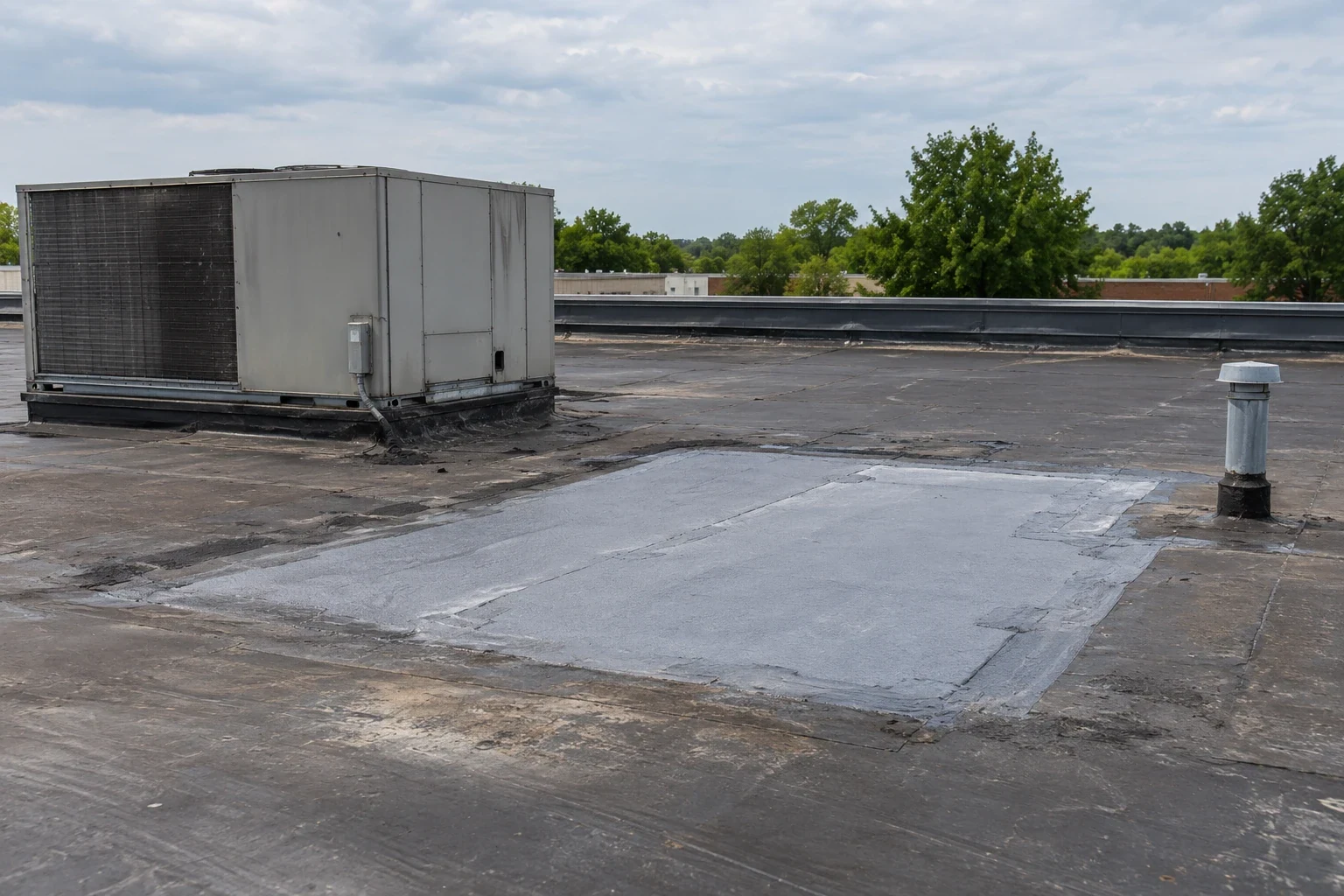
We confirm the roof material before preparing a patch. TPO, PVC, EPDM, bitumen, metal, and coating systems use different preparation and tie-in details. Previous overlays or repairs can create another layer at the edge of the defect, so we verify the surface before selecting materials. The work limit follows sound material and includes flashing or drainage corrections when those details connect to the leak.
Work can be sequenced around deliveries, customer traffic, maintenance access, and store hours. We coordinate roof staging and any interior protection with the facility contact. If removal exposes a wet layer or damaged deck, we photograph the condition and confirm the expanded area before proceeding. Repair length, test requirements, material, protection, and access affect cost and schedule.
A work sequence for an active store can coordinate access and closure checks. A commercial repair scope can group nearby defects. If deterioration spans multiple roof areas, a recover or replacement planning can compare broader renewal. A shopping-center roof may have shared tenant zones, while a grocery roof can add refrigerated equipment and delivery constraints.
Record the Store Roof by Zone
At closeout, we record the store roof zones inspected, materials repaired, photos, tests, and access limits. The facility team can connect a later leak or equipment service to the same area. The record distinguishes what was completed from an untested section or a follow-up item that still needs approval.
Some stores include an older roof area beside a later addition. The materials, slopes, and drainage can differ where they meet. We identify the seam or edge at each transition and avoid extending a repair across the junction until the substrates are confirmed. A roof map can show which zones share an outlet and where separate work limits begin.
A maintenance visit can revisit drains, equipment curbs, seams, perimeter metal, and previous patches. Share the roof plan, leak reports, equipment schedule, store hours, prior repairs, and any access controls before the visit. We will set the route around active operations and note which areas could not be reached.
Rock Hill's retail corridors include ongoing commercial work, but each store's roof condition depends on its own assembly and maintenance history. We will explain whether a localized repair, further testing, or broader renewal is supported by what was inspected. A separate zone record helps the manager coordinate later work without disrupting unrelated aisles.

Questions About Big-Box Retail Roofing
Yes. Water can travel from a curb or seam along the deck before appearing indoors. We compare the interior mark with nearby equipment bases and roof transitions, then identify the path tested. We compare the drip location with the curb, seam, and nearby transitions to determine which detail the inspection supports.
We coordinate the work zone and temporary covering with the facility contact before opening the roof. The protection plan depends on the stock and floor area below. If removal reveals a larger wet section, we secure the opening and confirm the added work before the scope expands.
We inspect the curb, flashing, nearby membrane, and any abandoned penetrations. The repair scope identifies roofing work and any coordination needed with the equipment provider. The condition is recorded by roof zone so future service can avoid the repaired detail.
Work can be scheduled beyond customer hours when material cure, access, weather, and roof closure allow it. We set the window with the facility and include delivery or interior restrictions before opening the roof.
Plan Big-Box Retail Roof Work
Share the affected store area, roof plans, leak history, equipment schedule, delivery limits, and store-hour restrictions. We will inspect the roof zone and transitions, coordinate interior protection, and document the repair or renewal boundary.