Roof repair, inspection, maintenance, and renewal for Textile Corridor properties in Rock Hill, scoped to the assembly and visible conditions.
The district's redevelopment focus does not set the membrane or repair method; we inspect the roof surface and details at the property. Textile Corridor is a Rock Hill tax-increment-finance district, monitored through assessed property value and public infrastructure investment. For a commercial roof in this urban-core area, we begin with the surface, drainage, and transitions that can be inspected, then set the repair boundary from field evidence. We also serve downtown Rock Hill and the Dave Lyle Boulevard corridor.
Read the Roof Before Choosing Work
The first walk follows the accessible roof zone from its edges to its drainage points. We look at the membrane or metal, seams, penetrations, equipment bases, parapets, prior patches, and any change in elevation. A commercial roof inspection can record the material we can identify and separate visible findings from layers that remain concealed. If a roof plan is available, we can map the route and show which portions were not reached.
Rock Hill uses assessed value and public infrastructure investment to track redevelopment districts. For a roof in Textile Corridor, we confirm the building's use and inspect its assembly instead of relying on the district label. Instead, we compare current details with owner records and ask whether a past renovation, coating, or equipment change could affect a proposed tie-in.
A stain, drip, or interior odor can help select a roof zone for closer review. We compare its location and timing with drains, seams, wall transitions, and rooftop equipment. With a commercial leak investigation, we compare the symptom with the details in that roof zone and document what evidence confirms the entry. If a test opening is appropriate, we agree on the sample location, interior protection, and closure plan before removing material.
Follow the Water Path at Outlets and Edges
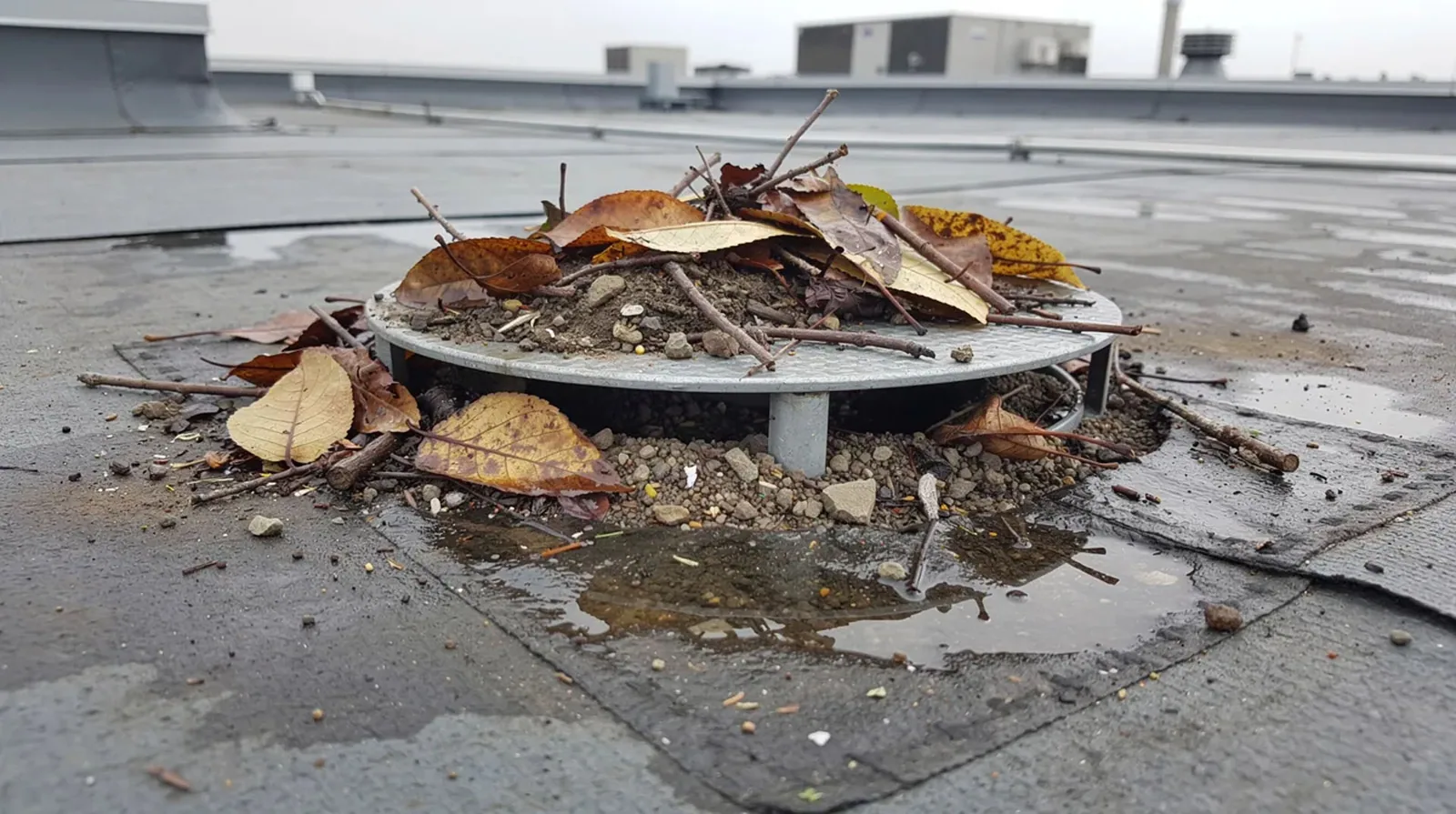
At each drain bowl, we check the strainer, surrounding membrane, clamping area, and visible outlet. Scuppers and gutters need a clear route to discharge; a blocked opening differs from a loose membrane connection or a low area. The drain and scupper crew can restore the membrane interface after we verify where the outlet separates from the surrounding roof. If the piping continues out of sight, we record that limit so the roof scope does not assume the condition of concealed plumbing.
Roof edges deserve a separate pass. Coping, edge metal, fasteners, sealant, and membrane termination all affect how water stays outside the assembly. A separated wall detail may admit water even when the field membrane looks intact. We compare any interior symptom with the edge geometry and other roof features, then note whether the evidence supports a repair or another check.
Regular Piedmont rainfall and a long warm period shape Rock Hill's maintenance calendar. We inspect runoff at roof edges and protect open sections before the next work pause. We assess slope, outlet condition, and material at the building, then specify temporary protection for the opening that the repair creates.
Where water crosses a roof-to-wall transition or passes an equipment base, we inspect the flashing and connection on all sides that are accessible. If another trade has worked at the unit or wall, that history may help identify when the condition changed. We document the roof detail and keep any equipment, plumbing, or façade work outside our scope unless the agreement assigns it to the roofing crew.
Keep the Work Sequence Defined
Commercial properties may have different entrances, shared access, or operating schedules. Before staging, we confirm who can open the building, where materials can be unloaded, whether a lift is required, and what paths must remain available. If nearby infrastructure work affects entry or a delivery route, the property contact identifies the restriction and the crew records it in the plan.
When a roof is above occupied space, we identify interior protection before a test opening or removal. The daily closure plan states how exposed material will be covered if weather or a concealed condition interrupts progress. The owner or manager coordinates occupant notices unless the written scope gives our team that task. A sequence can separate roof areas, though access, cure conditions, and material preparation influence how much can be completed in each work period.
If removal reveals moisture or damaged decking, we secure the opening and photograph the finding. The authorized contact reviews the additional area before the repair boundary expands. A field change should identify material, location, and the work needed to close the roof, while structural evaluation or interior finishes stay distinct unless specifically included. This leaves the property team with a clear decision instead of an undocumented extension.
Compare Repair, Restoration, and Renewal
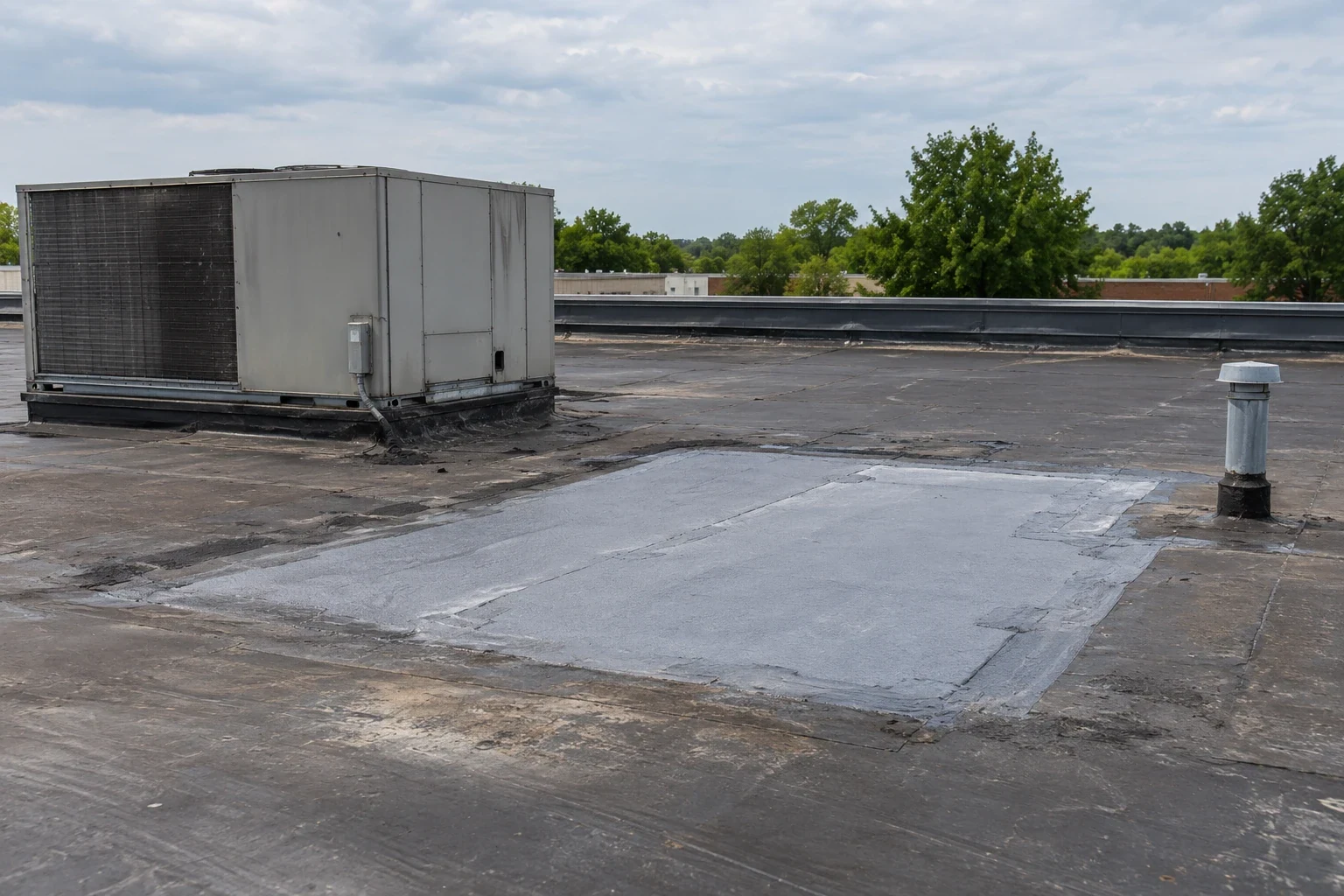
A focused repair can suit an isolated opening when the surrounding material is stable and the patch can make a compatible connection. Multiple leak paths, broad moisture, weak attachment, or recurring seam movement may call for testing or a larger renewal comparison. We state what the visit confirmed and identify any uninspected zone. A commercial repair scope describes the affected area, preparation, material, flashing, protection, access, and closeout.
Cost and schedule depend on the system, repair length, number of details, access, staging, disposal, interior protection, and concealed conditions. For coating or recovery, existing layers and moisture condition affect suitability. If those questions remain open, we identify whether a moisture survey or sample could change the recommendation. We do not treat a new surface layer as a substitute for correcting a verified drainage or attachment problem.
A comparison is useful only when the options share a clear boundary. We list included roof sections, perimeter work, penetrations, tear-off assumptions, and any exclusions. If the inspection supports only a repair in one zone, we say so. If broader testing is needed before pricing a renewal, that becomes a separate defined step for the property team to consider.
Carry the Findings Into Maintenance
The closeout record identifies the roof section, condition found, material used, photos, and work completed. It also names any question left open, such as an inaccessible drain line or an untested area beneath a coating. If owner drawings have zone labels, the report can use them. A later visit then has a point of comparison instead of a vague note that repair work occurred somewhere on the roof.
A maintenance visit can return to the specific drains, transitions, seams, and patches that matter to the assembly. Share prior work orders, leak history, warranty papers, equipment changes, and access rules before scheduling. A useful route follows the condition and service history, then records any section that could not be reached. It should not imply a full survey if only selected details were inspected.
For an estimate, share the building use, reported symptom, roof plan, and access limits. We can inspect the defined area and explain what the visible condition supports. A repair, a test, or a renewal comparison should each state its own limits so the property decision rests on evidence from the roof rather than on the district's redevelopment status.

Questions About Textile Corridor
No. The district is tracked as a redevelopment area, but the designation does not identify work at an individual property. We base a roofing scope on the owner's project and the roof conditions inspected.
We inspect adhesion, surface condition, drainage, and visible transitions. Moisture or concealed layers may require a survey or sample before a restoration option is defined.
We compare the room and timing with the roof edge, parapet, outlet, and nearby penetrations. Water can travel before appearing inside, so the suspected route is recorded until evidence confirms it.
A useful comparison names the roof zones, existing-layer assumptions, drainage, penetrations, perimeter details, access, and any work excluded from the roofing scope.
Define the Roof Work in Textile Corridor
Share the building use, symptom, roof plan, prior repairs, and access requirements. We will inspect the identified roof zone and set out the repair or renewal options supported by the findings.