
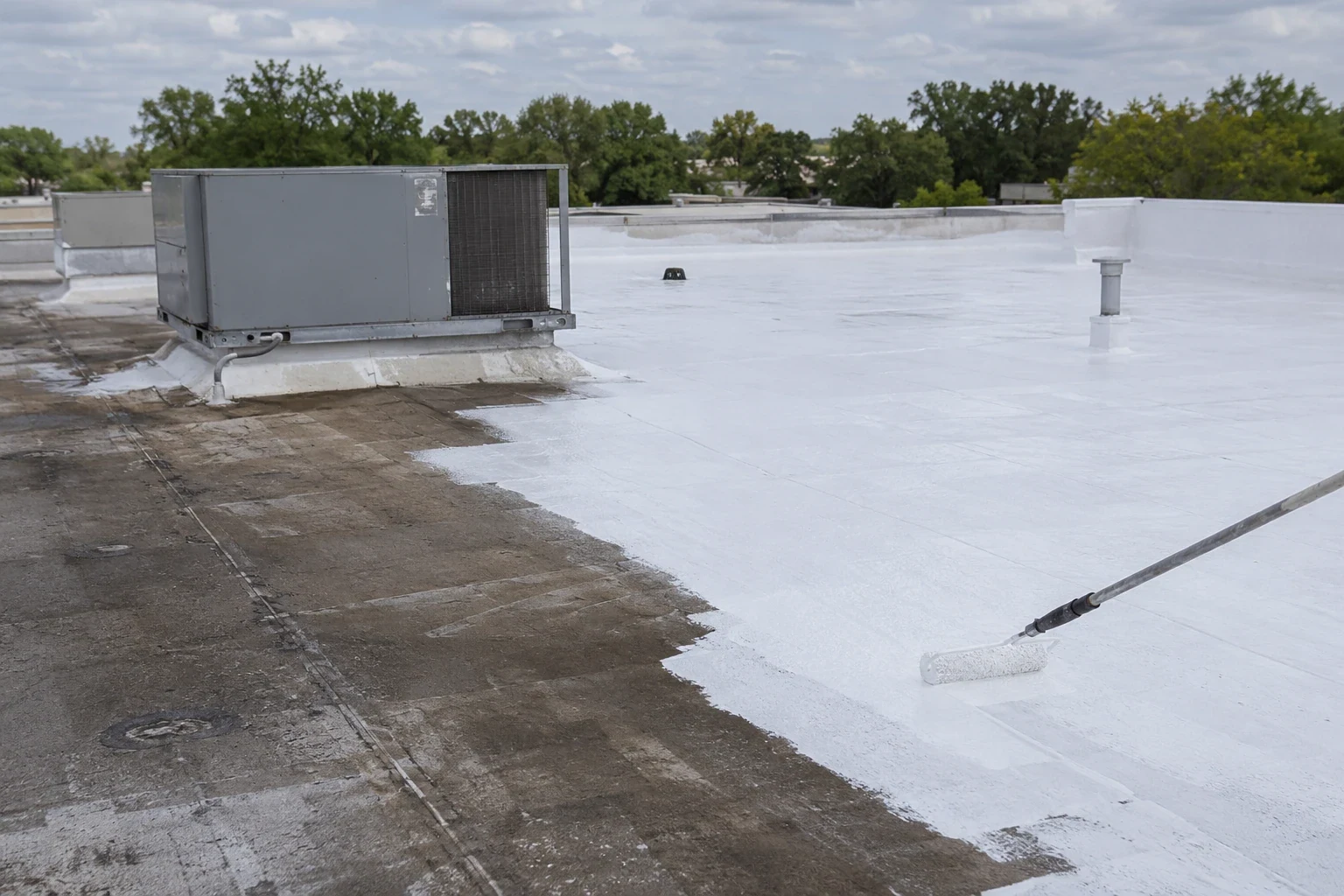
Restore an eligible commercial roof in Rock Hill with silicone coating after checking adhesion, seams, drains, flashing, and the existing assembly.
A silicone coating belongs on a roof that can hold it, not over a surface whose failures remain hidden. We inspect the membrane or existing coating, check seams and transitions, and map wet or unstable areas before setting a restoration boundary. Rock Hill's warm, humid Piedmont climate brings recurring rainfall, so drainage details and standing water matter when a coating plan is considered. The city's industrial parks include Riverwalk and TechPark, while Knowledge Park connects downtown with Winthrop University in a mixed-use district. Those uses describe the local building mix, not the roof at any one property. We confirm the existing assembly and surface condition before recommending silicone work near TechPark or Knowledge Park.
Test the Surface Before Coating
We begin by identifying the roof layers, previous coatings, and visible repairs. A coating needs a clean, sound surface with enough adhesion to remain attached as the roof moves and weathers. We look for loose material, chalking, dirt, trapped moisture, blisters, open seams, and areas where the existing finish has separated. If the product history is unclear, we may recommend a test area to confirm preparation and adhesion before a larger scope is priced.
A test patch applies only to the product and surface checked. Check coating type, moisture and adhesion by roof zone, especially where drainage, sun exposure or previous repairs differ. We mark the test location, document the preparation, and allow the specified cure interval before checking the result. If the coating releases or the substrate is soft, we investigate the cause rather than applying more material over it. An inspection of the commercial roof can also record conditions beyond the proposed restoration area.
Rock Hill's commercial improvements span retail and institutional settings as well as employment parks. We distinguish a stable substrate from a surface that only looks uniform from the access point. Drainage, edge attachment, and flashing details remain part of the coating decision because a continuous field application cannot correct a loose transition or an outlet defect by itself.
Map Ponding and Discharge
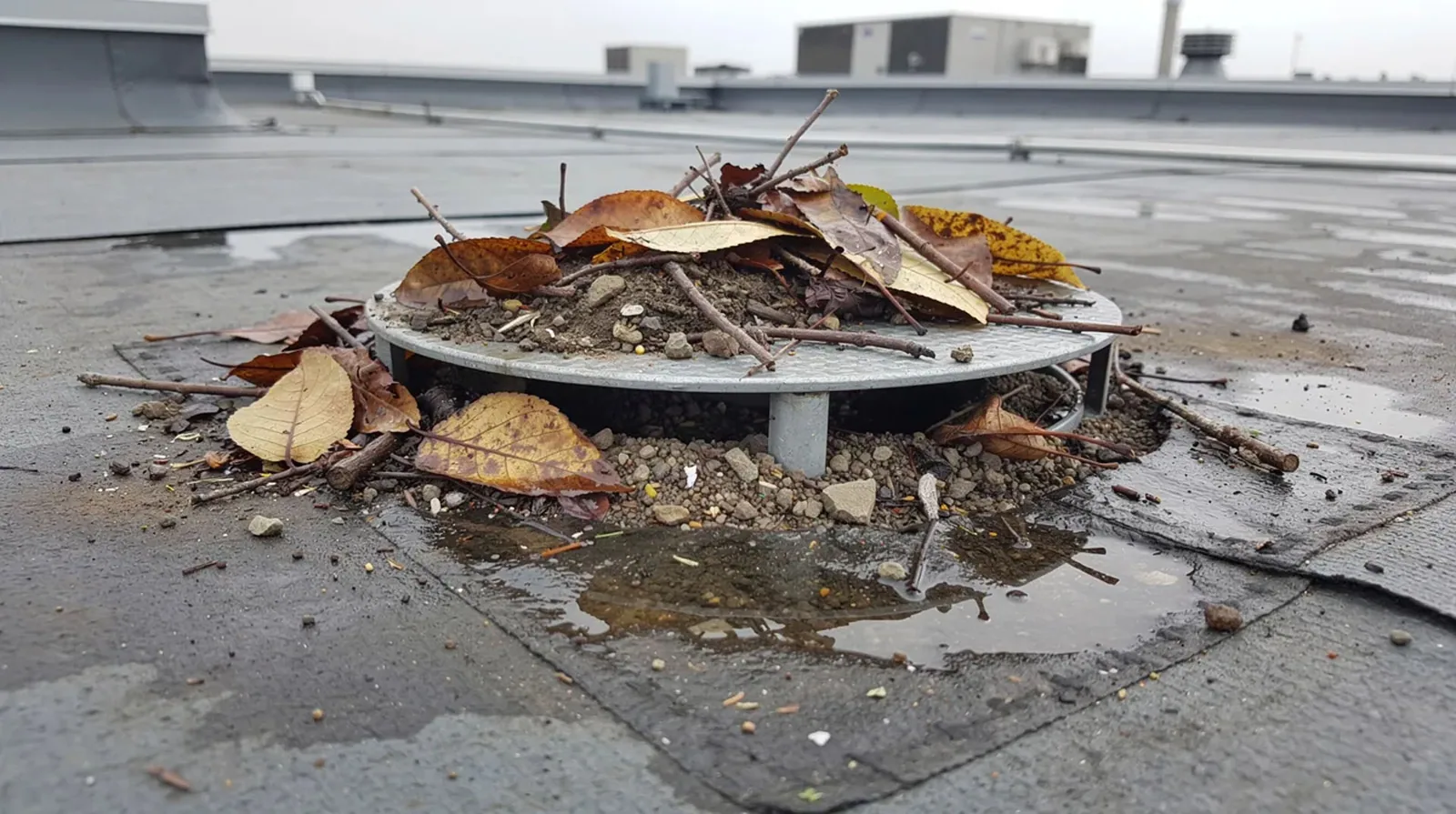
Silicone coating is often considered where water may remain on a low-slope roof, but the roof still needs a working drainage route. We inspect drain bowls, scuppers, low areas, and visible discharge points, then note whether water appears to collect because of blockage, settlement, or roof geometry. Coating thickness cannot be used to fill a deep depression or correct a failed drain connection. The plan must separate surface renewal from drainage repair.
Rock Hill's regular rain makes those checks practical, particularly where debris or a damaged outlet changes the water path. We record ponding locations after conditions allow a useful observation and do not treat one dry visit as proof that an area drains well. A drain and scupper repair can address an outlet defect, while a drainage assessment can review a persistent low area. The coating scope should identify which related correction is included and which remains separate.
At curbs, parapets, and penetrations, we check whether the existing flashing is attached and compatible with the coating detail. A coating can reinforce a sound transition when the specified system allows it, but it cannot bond a moving metal edge or close a gap beneath loose flashing. We clean and prepare each detail according to product instructions, then record the repair limit. Where a leak has an unclear source, a commercial leak investigation can trace the water path before restoration begins.
Prepare the Existing Roof
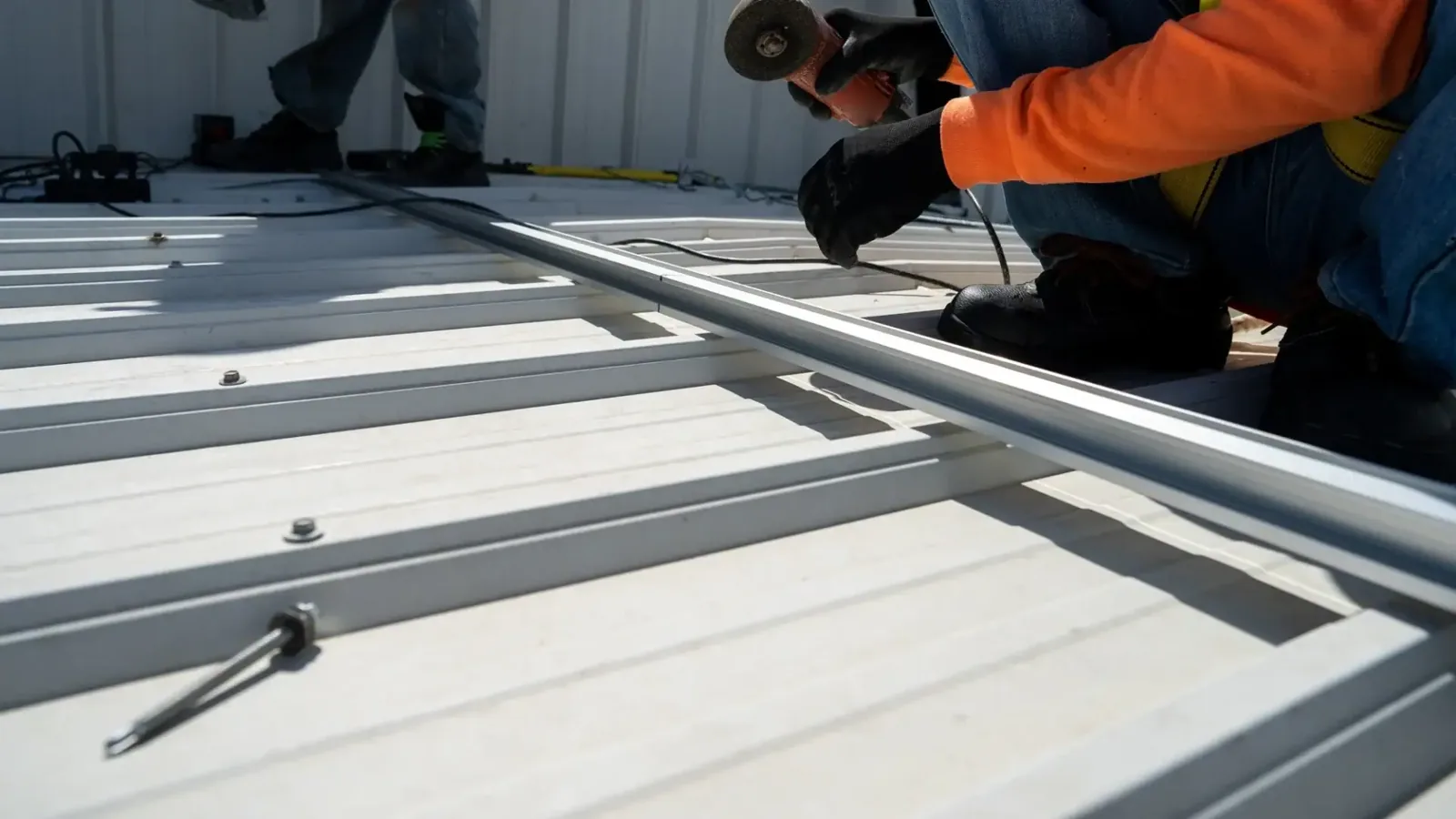
Preparation often determines whether a coating can bond to the roof. We remove dirt and loose material, treat rust or exposed substrate where the product calls for it, and repair open seams or flashing before application. The surface must be dry and within the application conditions required by the selected system. If rain interrupts the sequence, the prepared area needs protection and another condition check before coating continues.
Existing silicone, acrylic, asphaltic material, and single-ply membranes do not all accept the same primer or coating. We identify the known materials and confirm compatibility rather than selecting a product based on color. Where attachment, moisture, or concealed layers remain uncertain, a moisture survey or limited test opening may help define what can remain. The written scope states the preparation area, repairs, and surface that will receive new material.
We coordinate roof access, equipment routes, and opening protection with the facility contact. Riverwalk Business Park serves manufacturing, distribution, and office uses, so staging should follow the active property and not the district label. We plan around equipment and other work.
Apply and Inspect the Coating
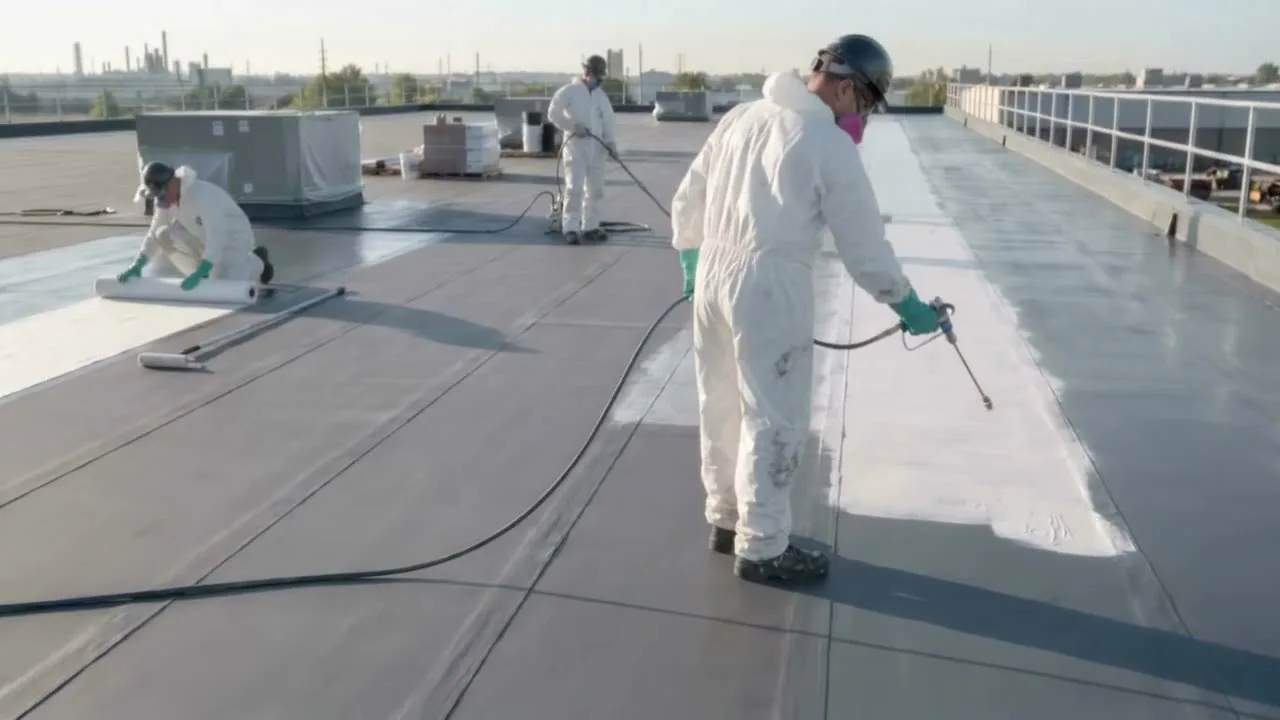
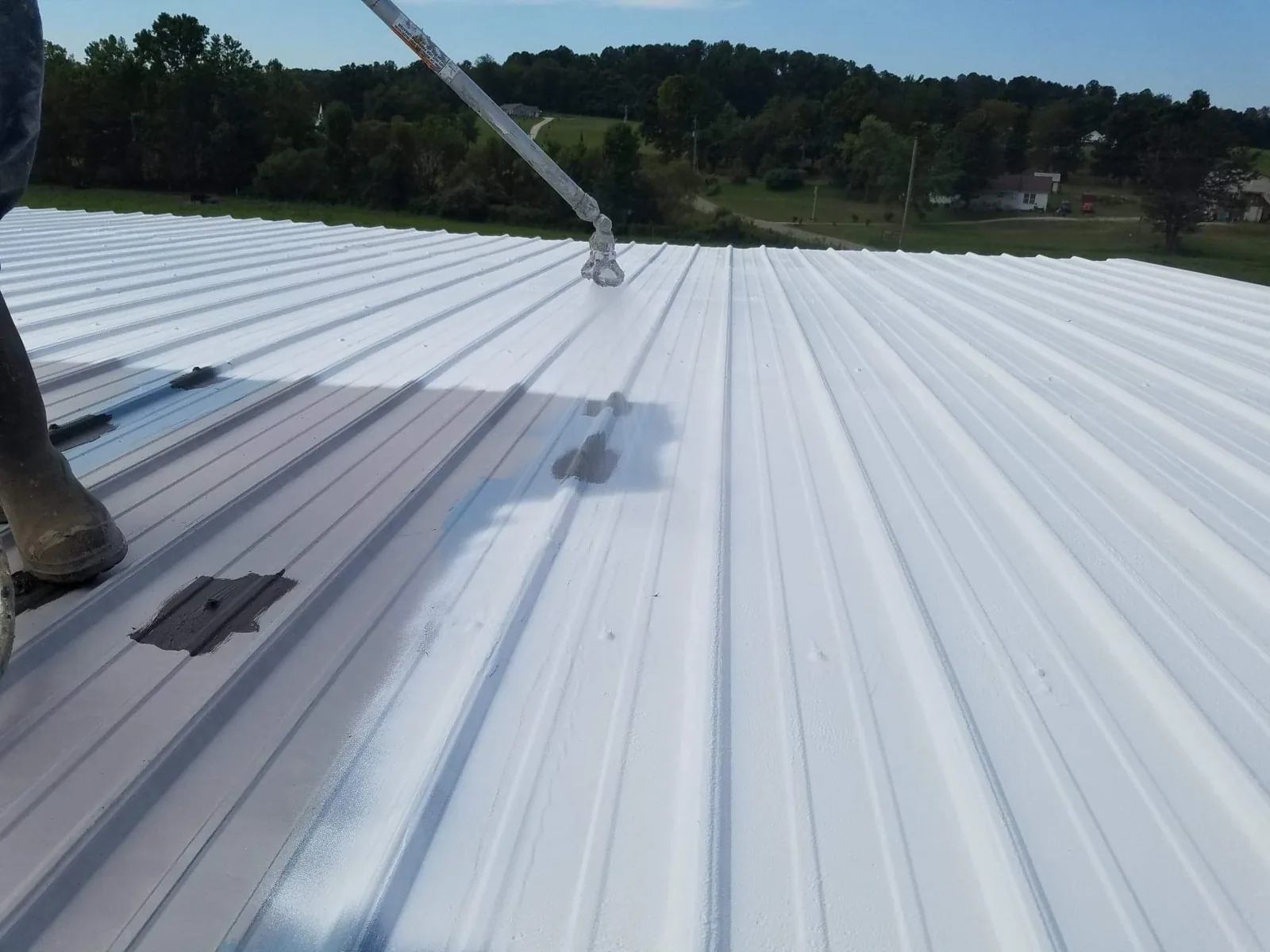
We apply silicone at the specified rate and reinforce seams, penetrations, and other details as required by the selected system. Coverage, surface texture, and material use are checked as the work advances. The final application needs consistent coverage without pinholes, skips, or a thin edge where water can work beneath the film. Product requirements set the cure conditions and the point at which the roof can return to normal access.
Silicone can be compatible with some existing roofs and unsuitable for others. A coating should not cover wet insulation, deteriorated membrane, or an attachment problem that needs a different repair. If opening a defect reveals a soft deck or moisture, we document the condition and confirm the expanded repair boundary before proceeding. Cost and timing depend on preparation, existing layers, repair quantity, access, and the amount of coating required, not a simple roof-area figure alone.
After application, we inspect the treated field and detail transitions, record any area that needs correction, and photograph the finished zones. The closeout notes the system identified, preparation completed, application boundaries, and access limits. A roof coating restoration scope may address broader renewal needs. For a different coating chemistry, acrylic coating systems have distinct water and application considerations; an SPF assembly pairs foam with a protective coating.
Keep the Coated Roof in View
A coated roof still needs inspection at drains, parapets, penetrations, traffic paths, and repaired areas. We look for splits, punctures, thin wear, open edges, and damage from later service work. A coating does not make the roof immune to impact or remove the need to keep discharge points clear. Follow-up checks compare the same zones and note any change in the coating or underlying details.
York County has seen tornadoes and hail. These hazards vary across the region, so we inspect the property after a storm concern rather than infer an individual roof's condition. After a reported event, we inspect the actual roof for coating splits, impact marks, or displaced details. We photograph visible marks and displaced details and keep conclusions limited to areas inspected. A maintenance visit can return to accessible coating, flashing, and drainage zones as part of the roof's care.
Share the known roof system, previous coatings, leak history, ponding locations, and access limits before an evaluation. We will identify the areas suitable for testing, state any preparation or repair needed, and define the coating boundary supported by the conditions found. If the surface cannot accept a compatible product, the record will show why another repair or renewal approach needs consideration.

Questions About Silicone Roof Coatings
Only after we identify the existing material and check adhesion and compatibility. A test area may be needed when the coating history is incomplete. We will note preparation, result, and any zones that need repair before a larger application is considered.
A coating can tolerate some ponding when the selected system allows it, but it does not correct a blocked drain, failed outlet, or deep low area. We inspect the water route and define drainage work separately from surface restoration.
We identify the affected zone and determine whether testing or an opening is needed to confirm the extent. Coating over wet insulation can conceal a condition that requires removal or repair. Any added work is documented and approved before the scope expands.
The substrate, attachment, moisture findings, flashing, and extent of deterioration guide that decision. We explain which areas can accept preparation and coating and which cannot. Where the assembly is unstable or broadly wet, a coating may not be an appropriate renewal method.
Evaluate a Roof for Silicone Coating
Share the existing roof material, prior coatings, leak or ponding areas, repair history, building use, and access limits. We will inspect the surface and details, then define whether preparation, coating, or a different repair scope fits the conditions.