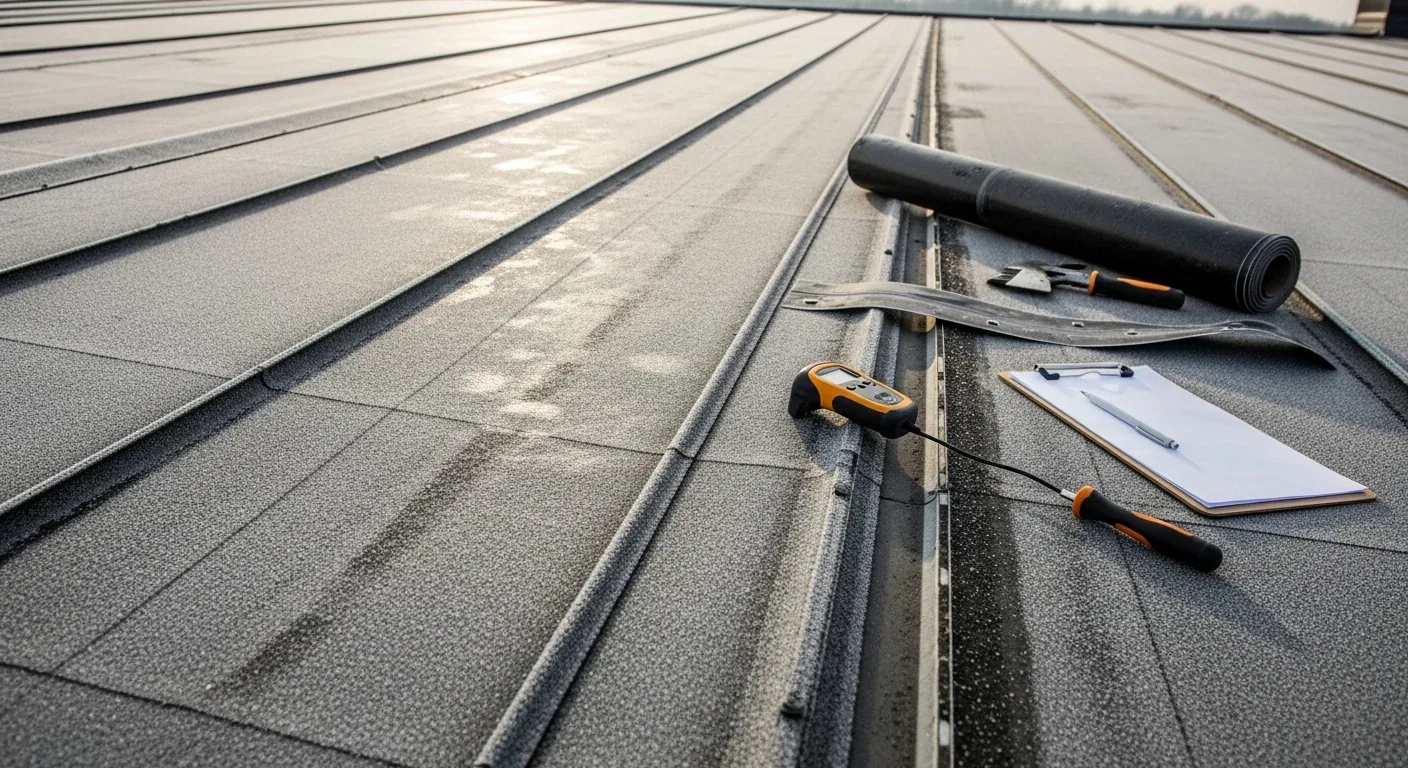
Investigate standing water on commercial roofs, check drainage and membrane details, and define practical repair or further evaluation.
Water that remains on a roof after rainfall calls for a check of the drain path, surface, and assembly before the remedy is selected. We document the affected area, inspect accessible outlets and membrane details, and determine whether the condition is a blockage, a low section, a failed connection, or an unresolved cause. Rock Hill's humid Piedmont climate brings recurring rain across commercial districts such as Dave Lyle Boulevard and Riverwalk Business Park. Different buildings along these commercial routes have different drainage layouts, so we inspect the affected roof before setting a scope.
Find Why Water Remains on the Roof
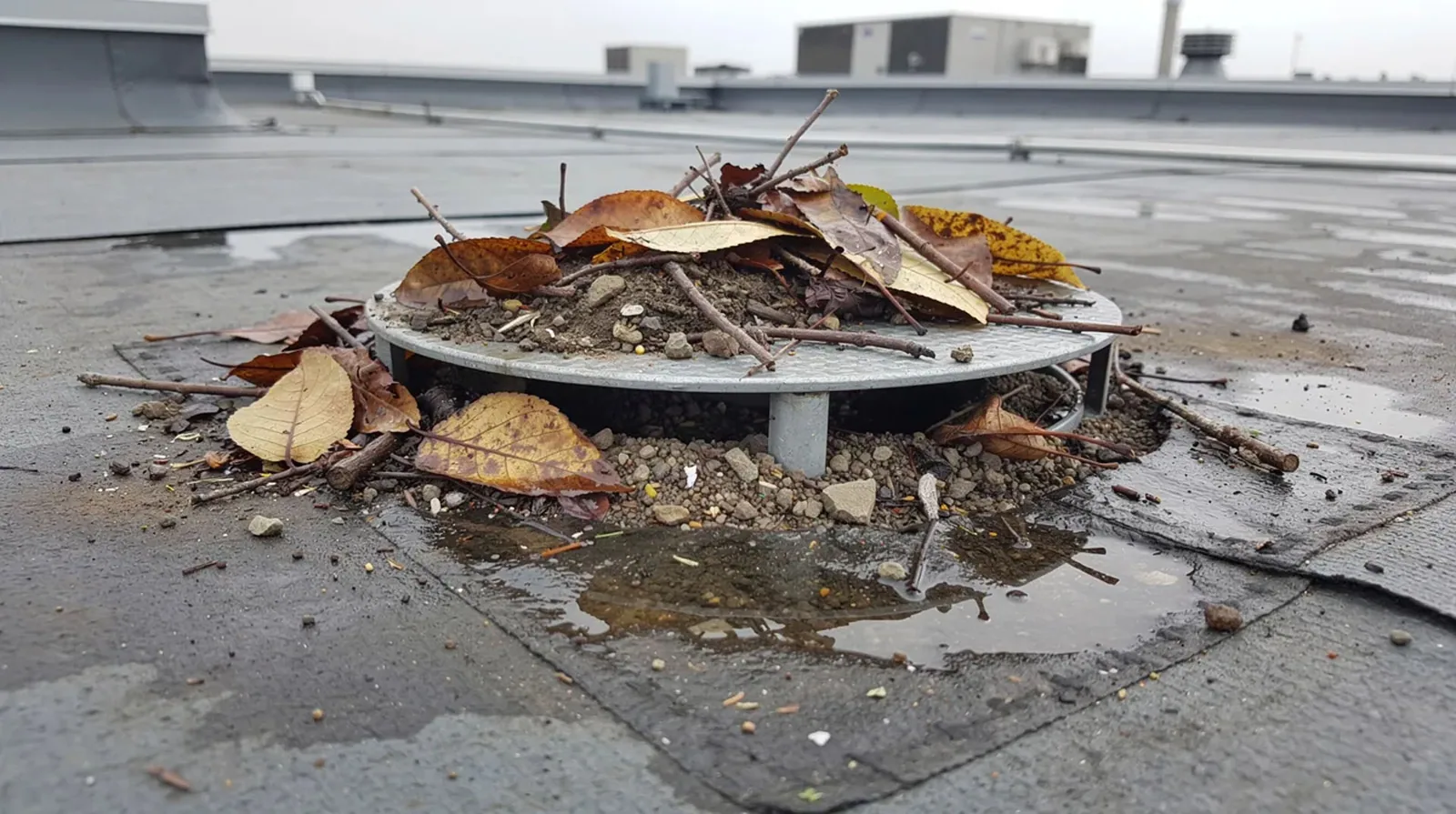
Standing water can result from debris, a restricted outlet, a low area, a deflected deck, or a disconnected drain detail. We inspect the roof surface, strainers, bowls, scuppers, overflow paths, and visible discharge routes within the agreed area. A drain and scupper inspection can help identify whether the outlet connection is open, separated, or blocked. We distinguish debris clearing from repair to the membrane or roof geometry.
Photos taken during or after rainfall can show the pond's location and approximate extent, but a single image may not establish how long water remains. We compare field observations with roof plans, drain locations, previous repairs, and any maintenance records. If the property has an interior leak, we trace that symptom separately rather than assuming that the nearest standing water caused it.
Rock Hill has a long warm season and regular precipitation. Those local conditions make drainage checks relevant but do not show how one roof is built or performing. We identify the areas reached and any sections hidden by equipment, ballast, or access restrictions. If the deck slope or framing movement is suspected, structural review may be needed before changing elevation or adding material.
The report should describe what is visible at the inspection time. A dry inspection-day surface can still have a drainage limitation. Compare water extent at different times after rainfall before calling it persistent ponding. If repeated observations are needed, we identify where and when they would add useful evidence.
Check Drains, Scuppers, and Overflow Routes
A roof outlet works as a connection between the membrane and the drainage system. We inspect the surrounding field, drain bowl or scupper, clamping or flashing detail, and visible pipe or discharge point. A drain repair can restore a confirmed separation or damaged tie-in. If the restriction is downstream or concealed, the roofer may need plumbing or drainage assistance to confirm the cause.
Overflow provisions should remain clear and discharge away from entrances or walls when included in the building design. We note blocked overflow paths, loose strainers, corroded metal, and membrane pulled away from the bowl. Cleaning does not correct a separated drain assembly. Any replacement should preserve the roof system connection and match the existing membrane or metal conditions.
At parapets, we inspect scuppers, metal, coping, and membrane termination near the drainage path. Water can travel at an edge even when the visible puddle is farther inside. We document the route and condition separately so a repair addresses the actual transition rather than a symptom alone.
Protect the Roof System Around Low Areas
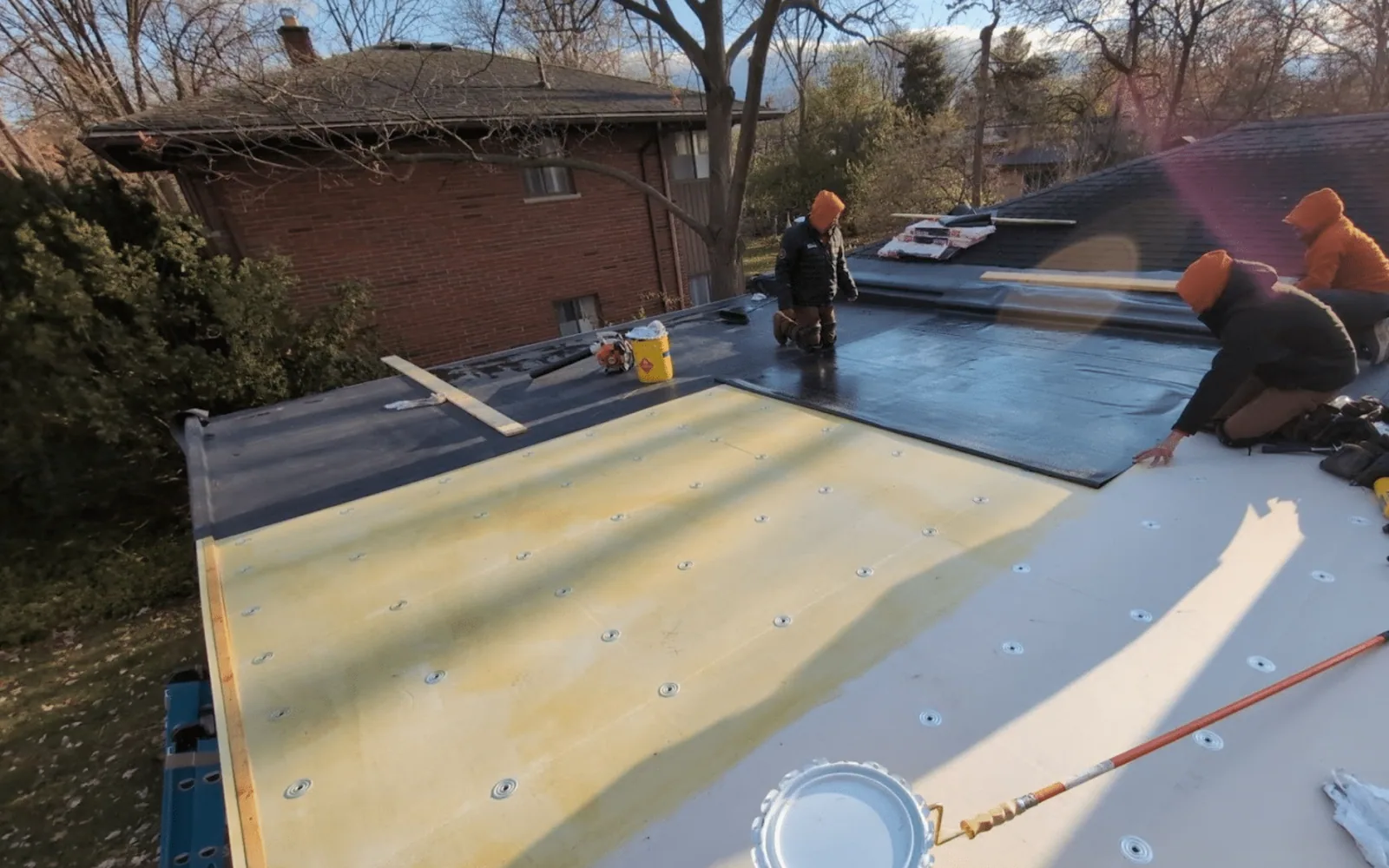
We identify whether the roof is TPO, PVC, EPDM, bitumen, metal, or a coated system before selecting a patch or restoration product. Preparation, adhesion, heat welding, and flashing details differ. An overlay can obscure material, so we note whether sampling would change the recommendation.
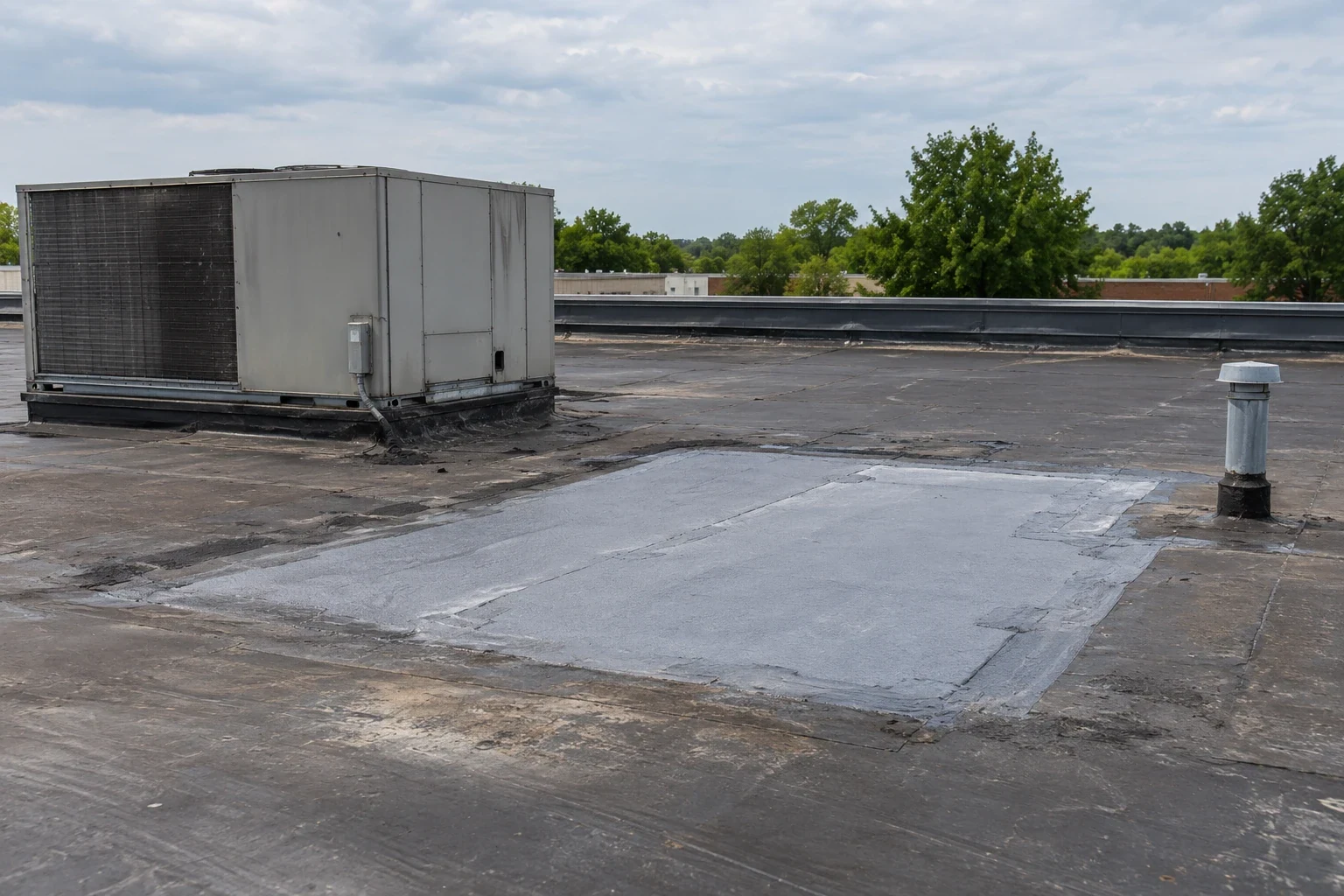
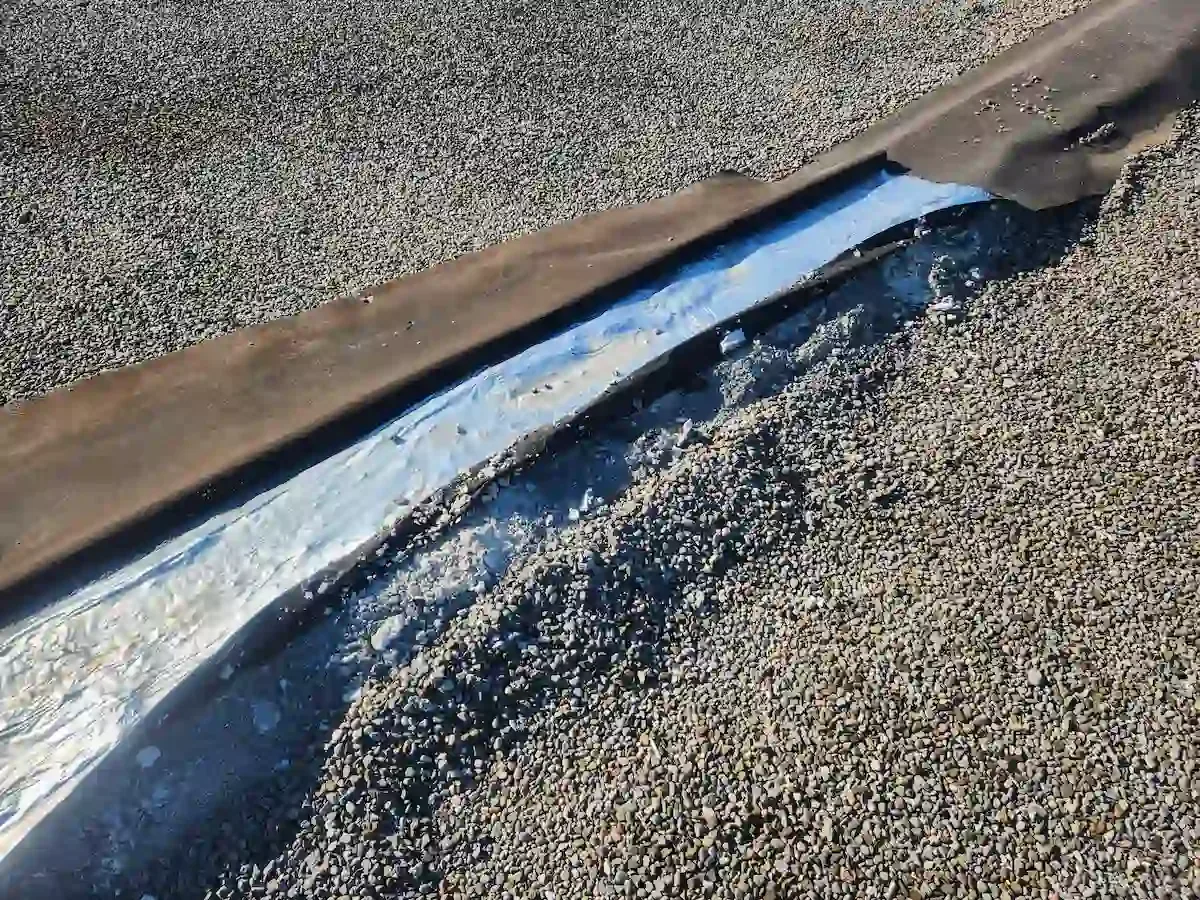
Standing water can expose weak seams or damaged coating, but a patch should connect to compatible and sound material. We inspect seams, penetrations, transitions, and the membrane around the low area. If a surface defect is visible, the scope names the repair length and tie-in. A coating alone does not correct a low spot or a blocked drain unless the relevant cause is separately addressed.
If removal exposes wet insulation or a weak deck, we photograph the condition and protect the opening. The authorized property contact reviews the added area before work extends beyond the agreed limit. Structural movement, deck deterioration, or a slope correction can require engineering or other trade coordination separate from the membrane repair.
A commercial repair scope can address a confirmed leak or failed transition. If seams are open beyond the ponding area, a seam-failure review can focus on that defect; when the membrane is punctured, a puncture repair assessment addresses a different condition. The system and evidence set the method.
Connect Ponding Observations With Interior Leaks
A ceiling stain can be far from the water entry. We compare the interior report with drains, low roof areas, seams, curbs, parapets, and previous repairs. A leak investigation records the route evaluated and what remains unknown. We identify whether water was observed indoors during the visit or only reported earlier.
Before opening a roof or ceiling, we define the test location, protection, and closure plan with the property contact. A test point shows the construction and moisture condition at that opening; compare additional zones when they could change the repair decision. If a moisture survey is proposed, access and environmental conditions determine whether the result can support an opening plan.
Rock Hill's commercial districts contain different buildings and uses. A public entrance, warehouse aisle, office corridor, or equipment room may need a different protection approach. We identify the affected interior zone and coordinate access before materials are removed. If concealed conditions expand the work, the owner receives the finding and proposed boundary before further removal.
Choose Cleaning, Repair, or Drainage Rework
When debris is the confirmed restriction and the outlet is intact, clearing it may restore flow. A separated membrane connection requires a repair. A low roof area with recurring water may need additional evaluation of deck slope, insulation, or structure. The scope states which condition was found and whether the work includes cleaning, membrane repair, outlet replacement, or design review.
Price and duration vary with roof system, outlet count, height, access, extent, protection, and concealed conditions. If roof slope or capacity changes are considered, the owner should confirm structural and code requirements with the design professional and authority having jurisdiction. We describe field observations and roofing work, not an engineering calculation.
Water can remain after rain for several reasons. We avoid promising that a coating, drain cleaning, or patch will eliminate ponding unless the cause and method support that outcome. The proposal identifies the planned work, how the area will be checked, and any condition that would trigger a change in scope.
Record Drainage Work for Future Checks
Closeout notes identify the roof zone, outlet, work performed, photos, materials, and any remaining restriction. If a discharge pipe was concealed or a structural slope issue was not evaluated, that limitation stays in the record. A manager can compare later observations after a rainfall without assuming the roof was fully tested.
A maintenance visit can revisit outlets, strainers, seams, and the area where water collected. Share a roof plan, prior leak reports, drainage records, and photos after rain before the inspection. We will identify accessible areas, work completed, and any further test or design step needed.
Rock Hill's regional rain pattern applies across many property types, but no two roof drainage layouts should be presumed alike. We tie every repair recommendation to the actual outlet, roof surface, material, and field evidence. That record gives the owner a practical basis for the next maintenance or capital decision.

Questions About Commercial Ponding Water Roof Repair
No. The cause could be debris, a drain connection, a low area, or a broader assembly condition. We inspect the relevant zone and explain whether clearing, repair, testing, or a larger review is supported.
A coating may restore a compatible surface but does not by itself correct a blocked outlet, slope issue, or structural movement. We identify the cause and material before recommending a treatment.
We inspect the accessible bowl, membrane connection, and visible discharge. If piping or a downstream restriction is concealed, the report identifies that limit and whether another trade or test is needed.
Share roof plans, photos after rainfall, leak history, maintenance records, drain locations, and access restrictions. Those details help locate the affected zone and identify whether a follow-up observation would help.
Investigate Standing Water on a Commercial Roof
Send roof plans, post-rain photos, drain locations, prior repairs, leak reports, and access rules. We will inspect the affected area and define cleaning, repair, testing, or further review based on the findings.