
Roofing inspection and repair for commercial properties in the Celanese Road corridor, planned around the verified assembly, water path, and access.
A corridor name can locate a service request, but it cannot identify the roof above a property. York County includes Celanese Road among its mapped growth and transportation corridors, while Rock Hill development reporting notes commercial upfit activity in the wider Celanese area. We inspect the actual membrane or metal, follow its drainage route, and set a work boundary from what the roof shows. Nearby service areas include Knowledge Park and Riverwalk Business Park.
Start With the Surface and Its Transitions
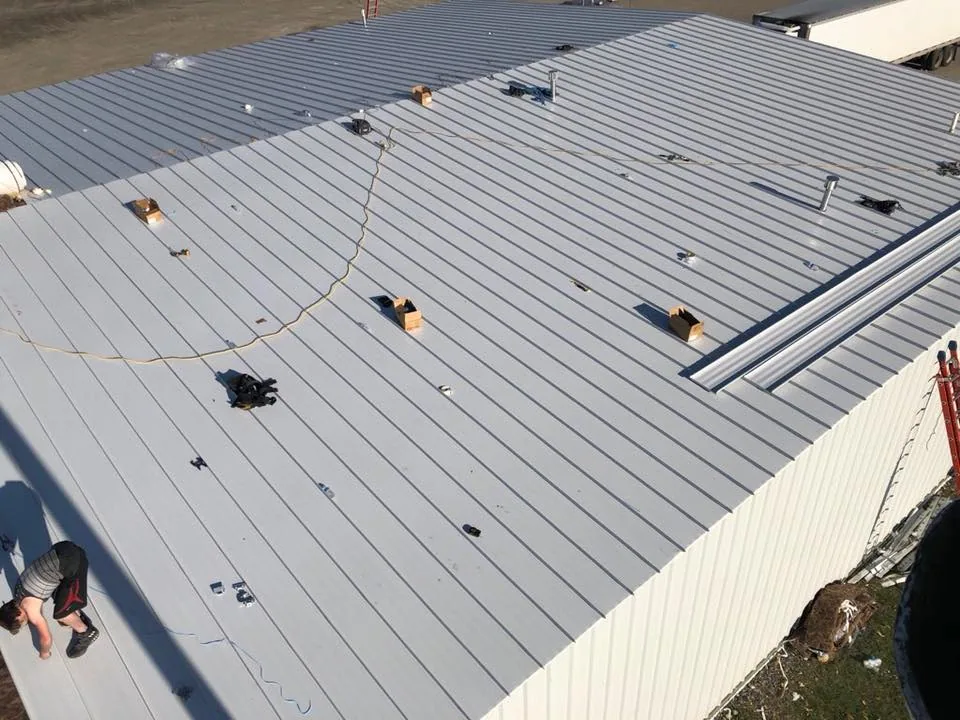
The first inspection records the accessible roof zone, material, seams, edges, penetrations, drains, and prior repair details. A commercial roof inspection can state which areas were reached and list any section that needs a different access plan. If roof plans are available, we mark the route against the owner's zones. A visual walk identifies surface conditions; concealed layers may require testing before a wider recommendation is made.
Rock Hill's development activity report records a commercial upfit in the Cel-River area, part of the broader Celanese commercial belt. The county's future-land-use map also recognizes Celanese Road in its network of transport and growth corridors. These records establish area context, not the age, tenant, roof type, or condition of a specific building. We confirm the property use and roof history with the owner before deciding what to inspect.
A leak report is most useful when it names the affected room, when the symptom appeared, and whether equipment or construction work happened nearby. We compare that information with outlets, seams, wall transitions, curbs, and the roof plan. A commercial leak investigation records the route examined and whether the suspected entry point is confirmed. If evidence remains incomplete, the report identifies what access or test could answer the remaining question.
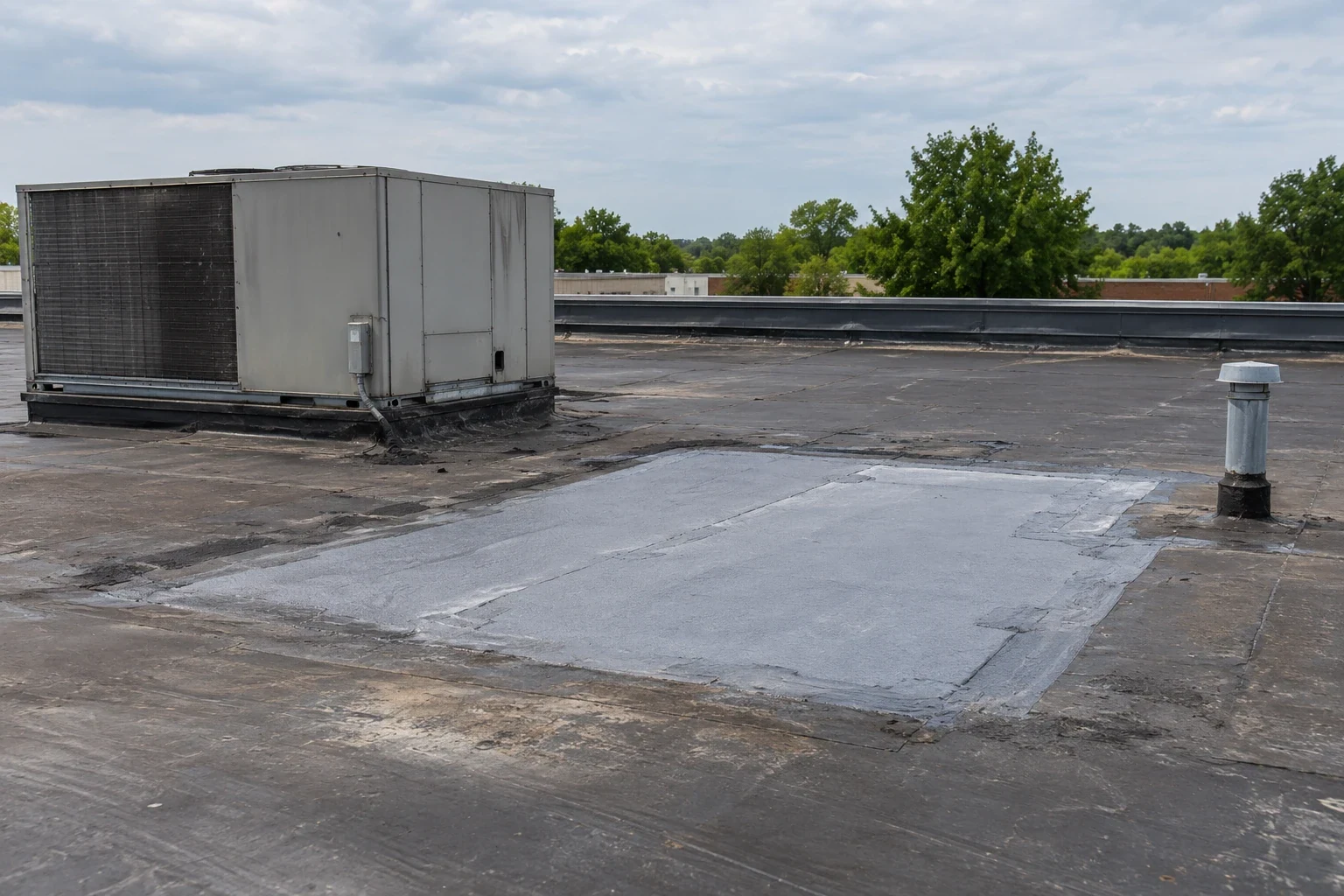
Coatings, repairs, or an overlay may cover earlier layers and change the visible surface. We note where material can be identified, where transitions disappear, and whether the same detail continues into the next zone. A test opening can show the assembly at one point, but its result is limited to that sample. The owner can decide whether more sampling is needed before comparing repair, recovery, or replacement.
Check the Outlet and the Roof Edge
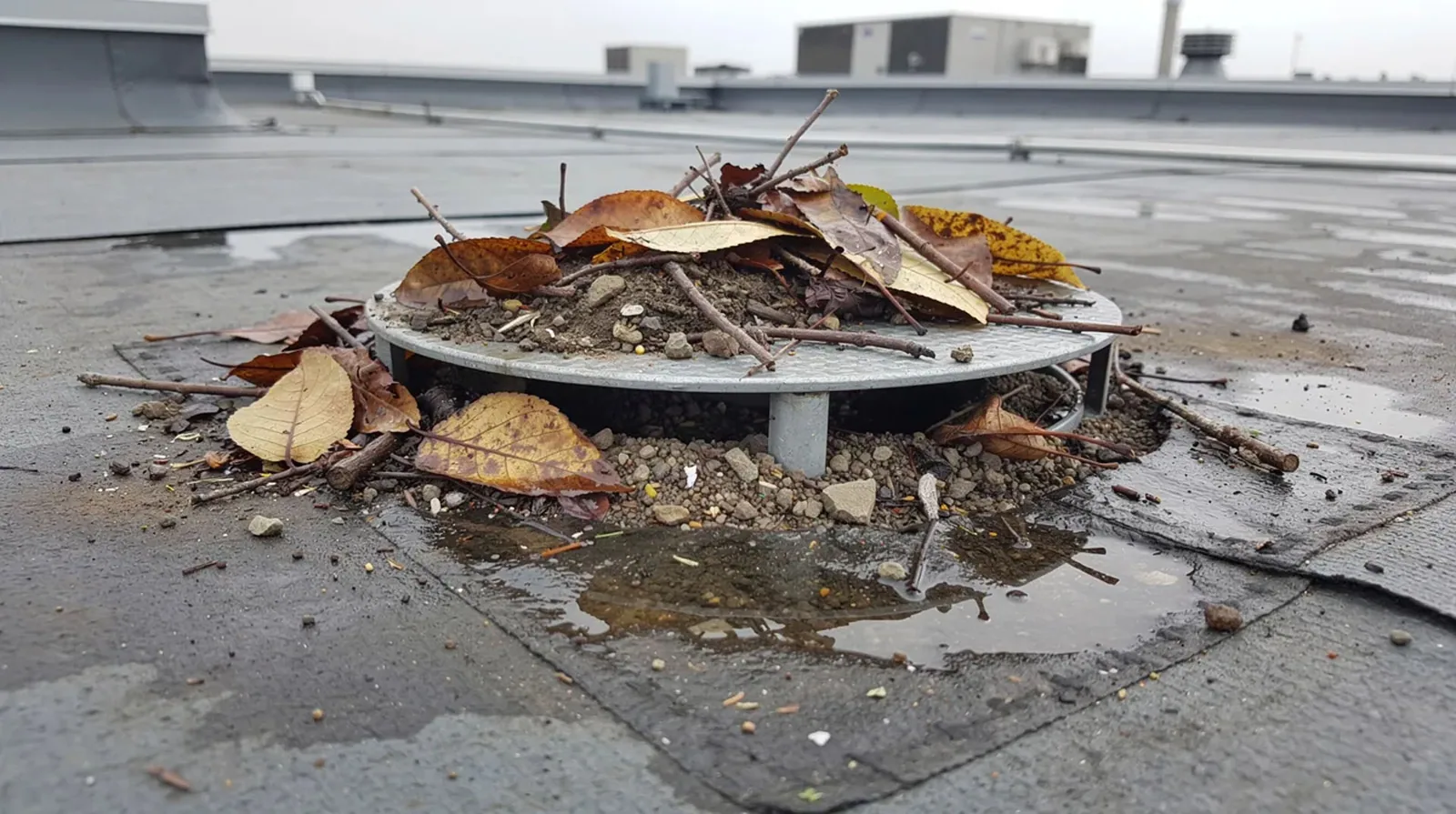
At a drain or scupper, we check the opening, surrounding membrane, connection, and visible path to discharge. A clogged bowl, a separated flashing tie-in, and a low area each call for a different response. A drain and scupper repair can replace a failed membrane tie-in after the outlet's condition is documented; hidden piping remains a separate check. If downstream piping cannot be seen, we note that limit and whether a plumbing evaluation should follow.
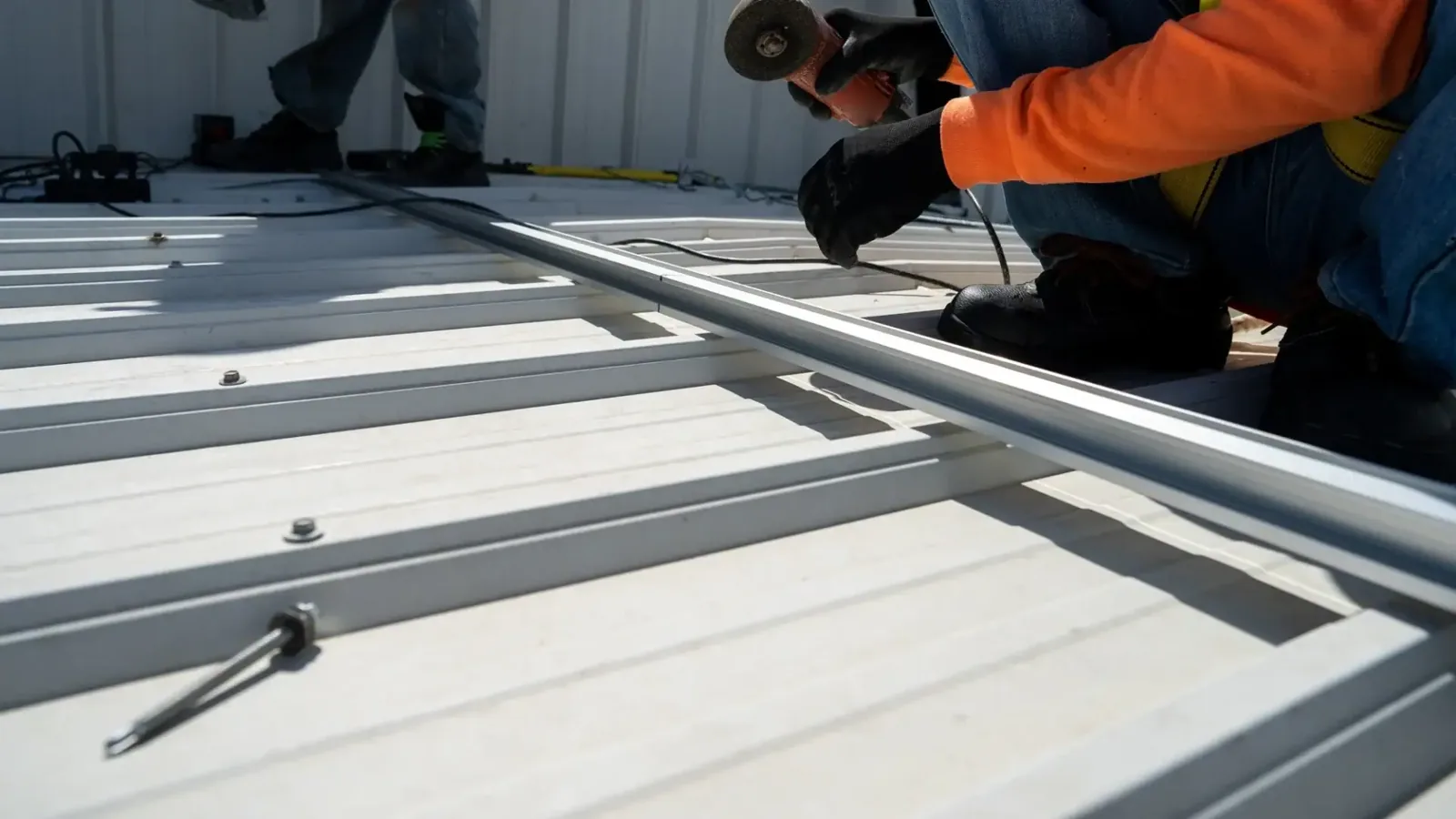
At the perimeter, coping, edge metal, attachment, sealant, and membrane termination keep water from getting behind the assembly. We inspect those transitions where accessible and compare them with the reported symptom. A stain beside a wall may relate to the edge, but water can travel across a deck before showing indoors. The field record distinguishes the observed condition from a suspected route.
Rock Hill is in the warm, humid Carolina Piedmont, and the market has a long warm season with regular rainfall. Those conditions make drainage and protected closure part of practical roof planning. They do not establish that a Celanese Road building has a leak or moisture problem. We use the property's outlet, slope, and exposed material to determine what work is justified and how an opening should be covered during a pause.
When a wall, equipment base, or service penetration is part of the suspected water path, we inspect the roof-side connection and note any work by another trade. The roofing scope can include membrane and flashing restoration when that work is authorized. Plumbing, mechanical, and façade repairs remain separate unless the agreement includes them, with the handoff identified before materials are removed.
Plan the Visit Around Property Access
Before mobilization, we confirm the contact who can provide roof access, any escort or key requirements, where deliveries can stop, and which entrances or service paths must stay open. The county identifies the eastern side, including Rock Hill, as its more developed area in part because of Charlotte and I-77 access. That regional connection does not set the delivery route at an individual site. We confirm site-specific restrictions with the property team.
Work above occupied rooms may require floor protection, a temporary cover, and a defined closure step. The owner identifies rooms or operations that cannot be interrupted and coordinates notices unless the agreement assigns them to the roofing crew. A phased work sequence can reduce simultaneous roof openings, but weather, cure conditions, material preparation, and concealed findings affect how many zones can be completed at a time.
Removal can expose wet insulation, weak decking, or a second layer that changes the repair method. We secure the opening, photograph the finding, and notify the authorized contact. Additional work proceeds after the owner reviews the added boundary. Structural evaluation, electrical changes, interior repairs, or equipment service remain outside the roof scope unless they are specifically included.
Set a Repair Scope That Matches the Finding
A localized repair can address a known opening when nearby material is compatible and remains sound. Repeated leaks, broad moisture, loose edge attachment, or multiple failed seams may call for a survey or larger renewal comparison. The repair proposal records the affected zone, preparation, compatible material, and the endpoint of the authorized work.
Timing and cost depend on roof type, material, detail count, staging, access, disposal, traffic controls, and concealed conditions. A recover or replacement plan should set assumptions for existing layers, insulation, drainage, penetrations, and perimeter work. If those facts are unknown, a test or moisture survey may need to precede the larger proposal. We describe what the additional step would establish before the owner chooses it.
Rock Hill’s business network includes Riverwalk Business Park and Knowledge Park; each Celanese Road property still needs its own roof, drainage and access review. Each property needs its own inspection boundary. We explain whether the observed condition supports a repair, another test, or a broader comparison, then list the assumptions that still need confirmation.
Preserve the Roof History
Closeout records the area inspected, materials used, repairs completed, photographs, and any access or test limits. If a repair stops at a roof transition, the record identifies the endpoint. That helps a later manager compare a new report with the actual work rather than assuming a localized repair covered an adjoining section.
A maintenance visit can return to drains, edges, seams, penetrations, and previous patches based on the roof's condition. Share roof drawings, service records, leak history, and equipment changes before scheduling. The route can then use known areas and identify any open recommendation. If a section could not be reached, it stays noted as uninspected.
Send a roof drawing, describe where the condition appears, and note any limits on site entry. We will set the inspection route and identify whether the visible evidence is enough or a sample should follow.

Questions About Celanese Road Corridor
No. The map identifies a regional route, while roof material and condition come from the property's records and accessible details.
We compare the interior location with outlets, seams, penetrations, and roof transitions. The report identifies the route examined and any remaining test need.
We document what is visible and explain whether a defined sample could affect material selection or the repair boundary.
We identify the roof-side handoff, temporary protection, and which contractor restores each connection before the scope is expanded.
Coordinate Commercial Roofing in the Celanese Road Corridor
Share the building use, roof plan, leak or damage report, prior repairs, and access limits. We will inspect the defined zone and document the repair or follow-up step supported by the roof.
