Plan school roof inspection, leak repair, and replacement in Rock Hill around classrooms, cafeteria operations, campus access, and drainage details.
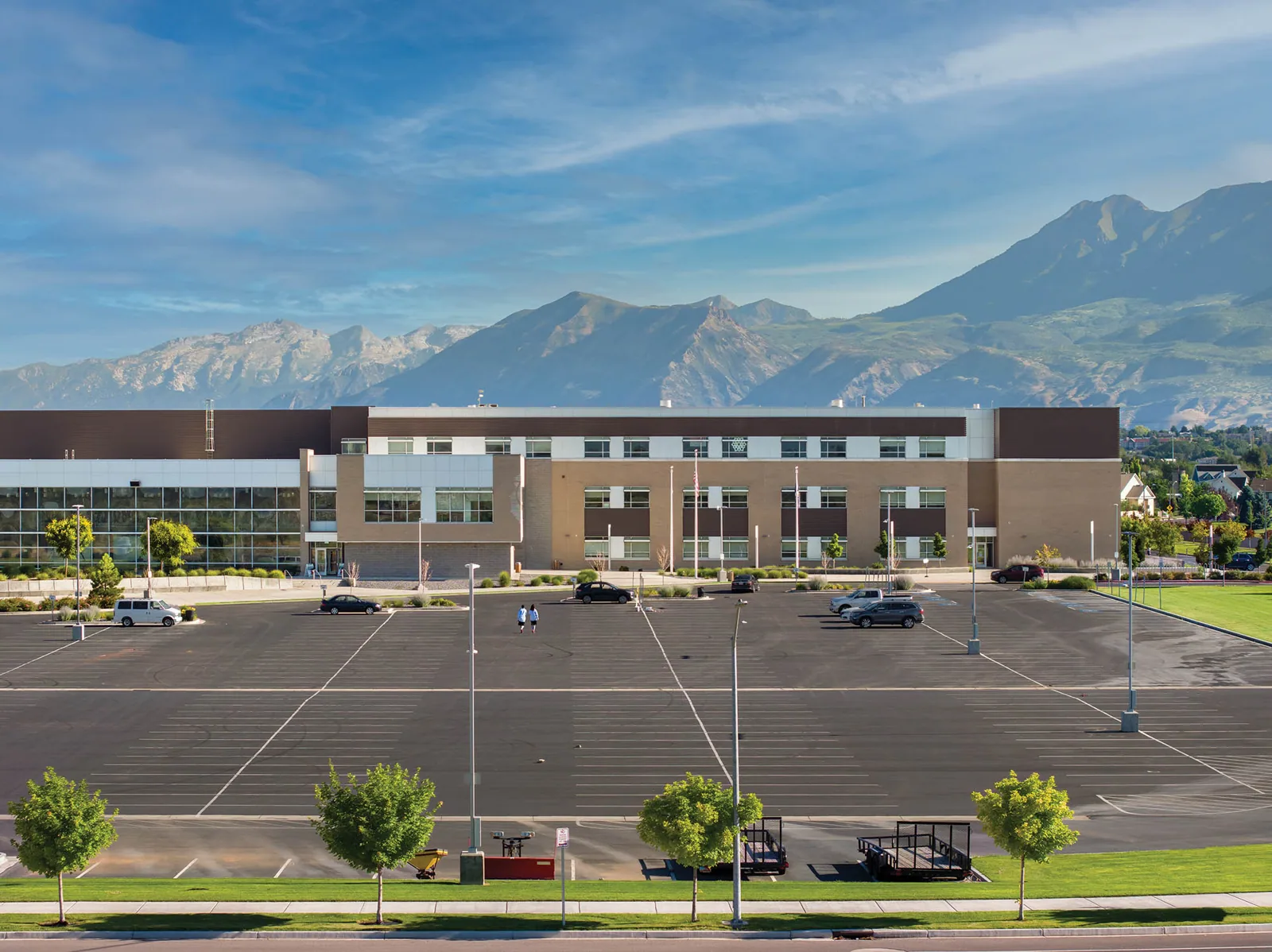
A ceiling stain in a classroom needs a roof investigation and a safe plan for the space below it. We compare the reported room with the roof plan, inspect nearby seams, curbs, drains, and walls, then mark what the visit confirms. Rock Hill's building mix includes institutional campuses and downtown redevelopment around Winthrop University and Knowledge Park. Fort Mill is a growing county center where schools and other services support nearby commercial and residential development. Those settings can bring different access and scheduling needs, but the roof condition must be checked at each campus. We plan around the facility's calendar near Knowledge Park or across the Fort Mill area.
Trace the Leak Before Moving a Classroom
The visible ceiling mark may be several roof details away from the opening. Water can follow a deck joint, framing member, pipe, or insulation seam before appearing inside. We compare the room location with rooftop curbs, vents, skylights, drains, and wall transitions, then follow the most likely path. A field mark identifies where the roof was checked and keeps a suspected route separate from a confirmed defect.
School buildings often have classrooms, corridors, kitchens, gymnasiums, and mechanical areas with different ceiling construction. A leak above one use can travel into an adjacent room or emerge around a light fixture. We ask which space was affected, when the water appeared, and whether the symptom returned after rain or equipment work. A commercial leak investigation can document the route tested and any location that remains uncertain.
The local pattern of hot months and recurring rain makes roof drainage worth checking, but a campus inspection must establish whether a defect is present. We photograph openings, lifted material, or interior damage that can be observed and identify areas not reached. A roof inspection can set a broader condition baseline when the leak history is incomplete.
Coordinate Campus Access and Protection
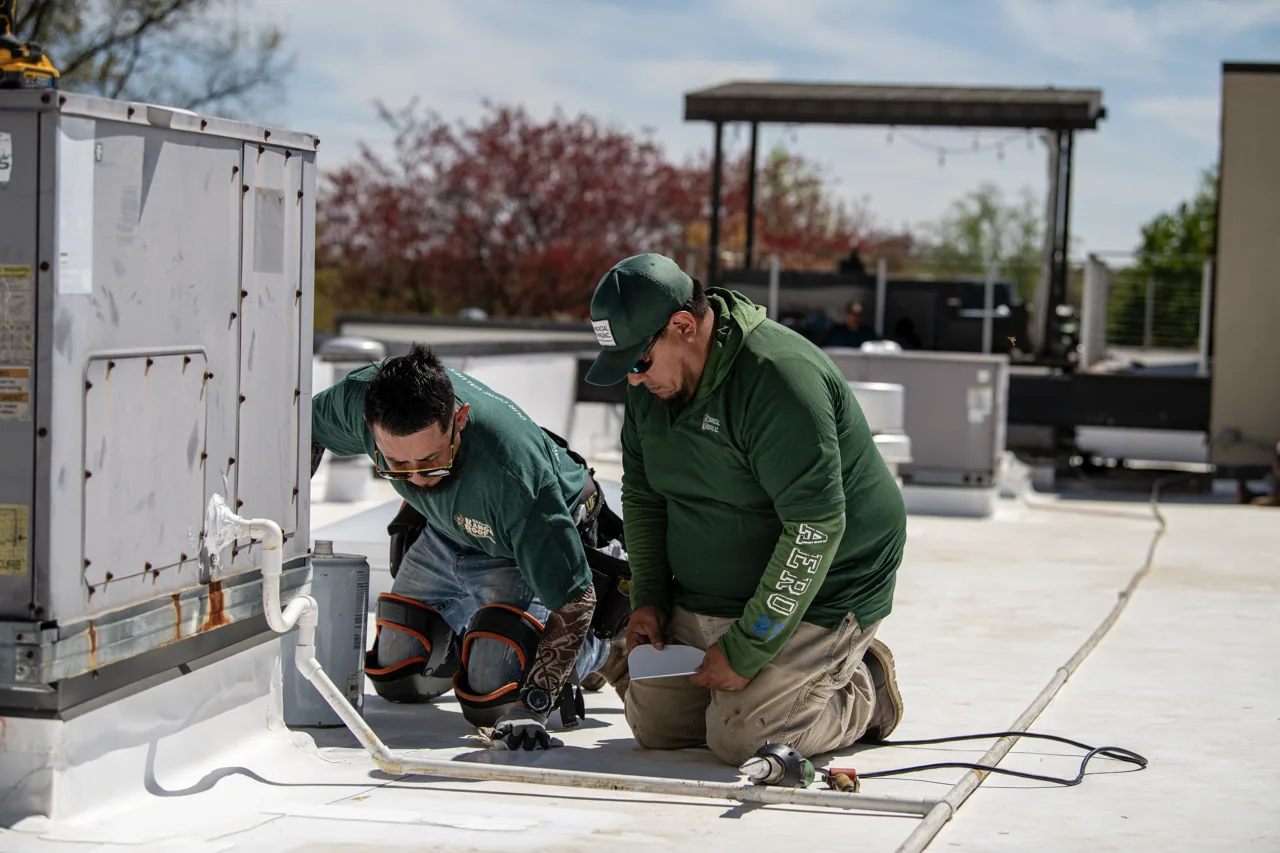
Roof work near students and staff needs an agreed access route, staging area, and interior protection plan. We confirm campus hours, roof hatches, escorts, vehicle paths, and rooms that should remain clear with the facility contact. If the repair requires a ceiling opening or access to an occupied room, the school identifies the appropriate time and point of contact. The work boundary describes which rooms and roof zones are included.
A repair may be scheduled during a break, after classes, or in a separate work area while the campus is active. The right sequence depends on the building use, roof access, weather, and the condition found. We plan temporary protection before removing membrane and explain how an open area will be secured if the work pauses. When the roof has multiple wings or additions, we keep each work phase tied to its own drain, seam, curb, and closure check.
Knowledge Park links downtown Rock Hill with Winthrop University in a shared urban district. Around a campus property, pedestrian routes, deliveries, and public access can affect material staging and lift placement. We coordinate those details with the school contact instead of assuming every roof zone can be reached from one route. A sequence for roofing over an active building can organize access and temporary protection without treating all campus areas alike.
Inspect Drains, Roof Edges, and Transitions
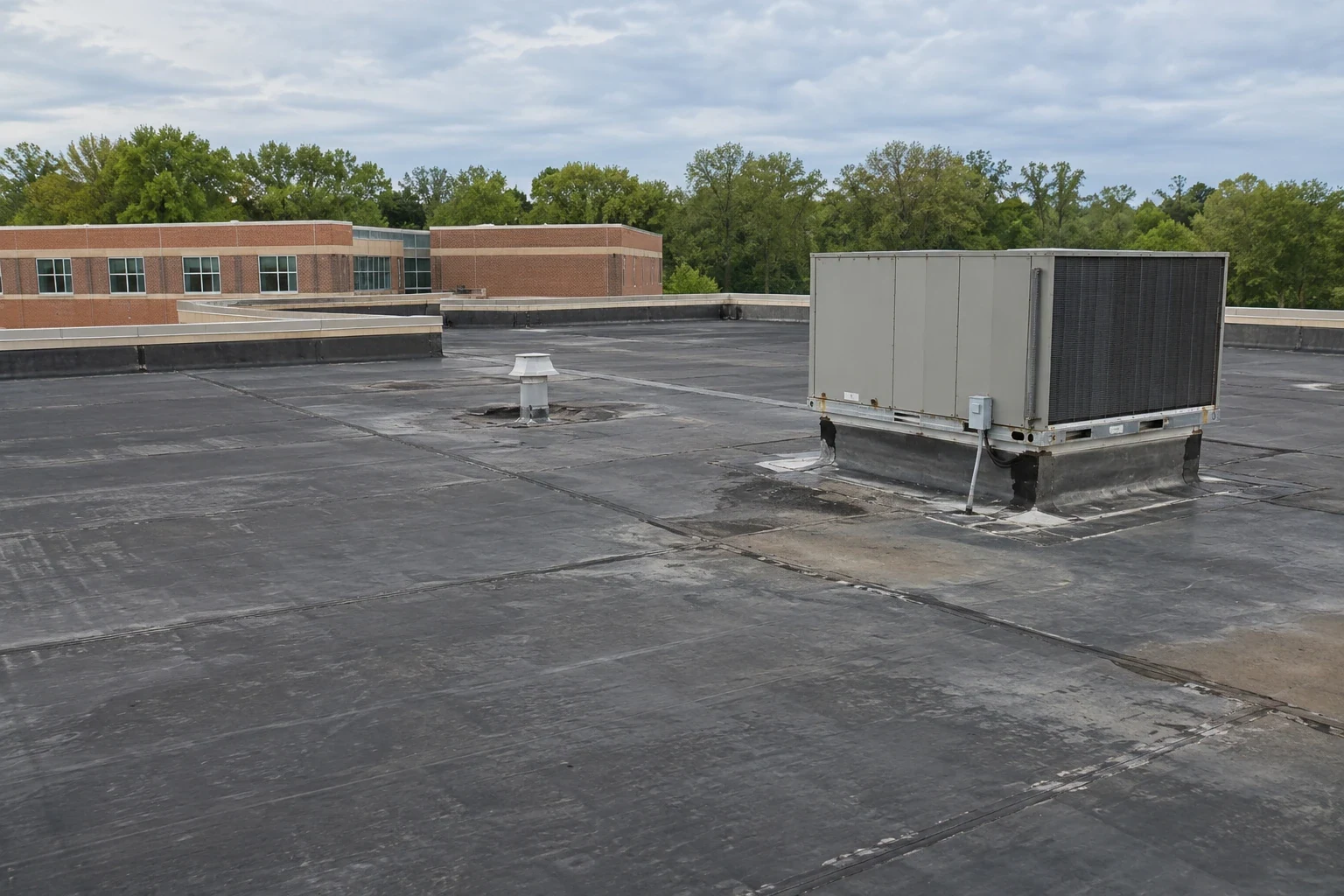
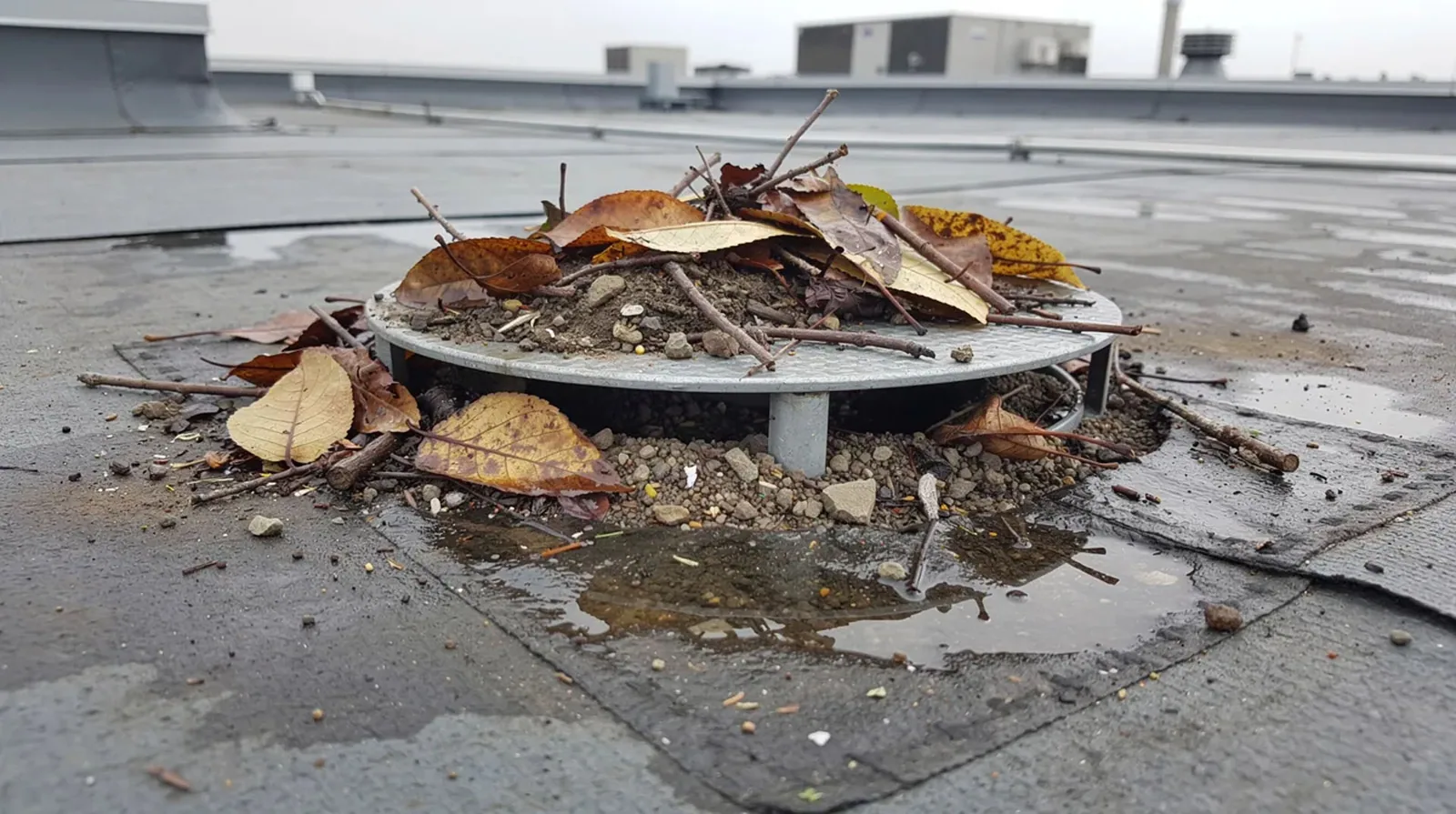
School roofs may have internal drains, scuppers, gutters, overflow routes, and roof-to-wall transitions. We inspect the outlet and surrounding membrane, then look for recurring ponding, overflow marks, loose coping, or separated flashing. A blocked bowl is different from a low roof area or a failed drain connection. We identify which condition is present and keep debris removal separate from work on slope, membrane, or metal.
After severe weather, we inspect the school roof itself before defining work. We check field membrane, perimeter metal, rooftop equipment, penetrations, and interior reports on each wing. The record identifies displaced or punctured areas and the zones reached; if several wings show symptoms, we compare those areas before treating one visible mark as the full scope.
Repairing a drain or scupper can restore the roof-to-outlet connection. At the roof edge, coping and perimeter metal needs a compatible attachment and transition. The maintenance plan can prioritize water entry and safety concerns while noting low-priority wear for a later visit.
Choose a Repair That Fits the School Calendar
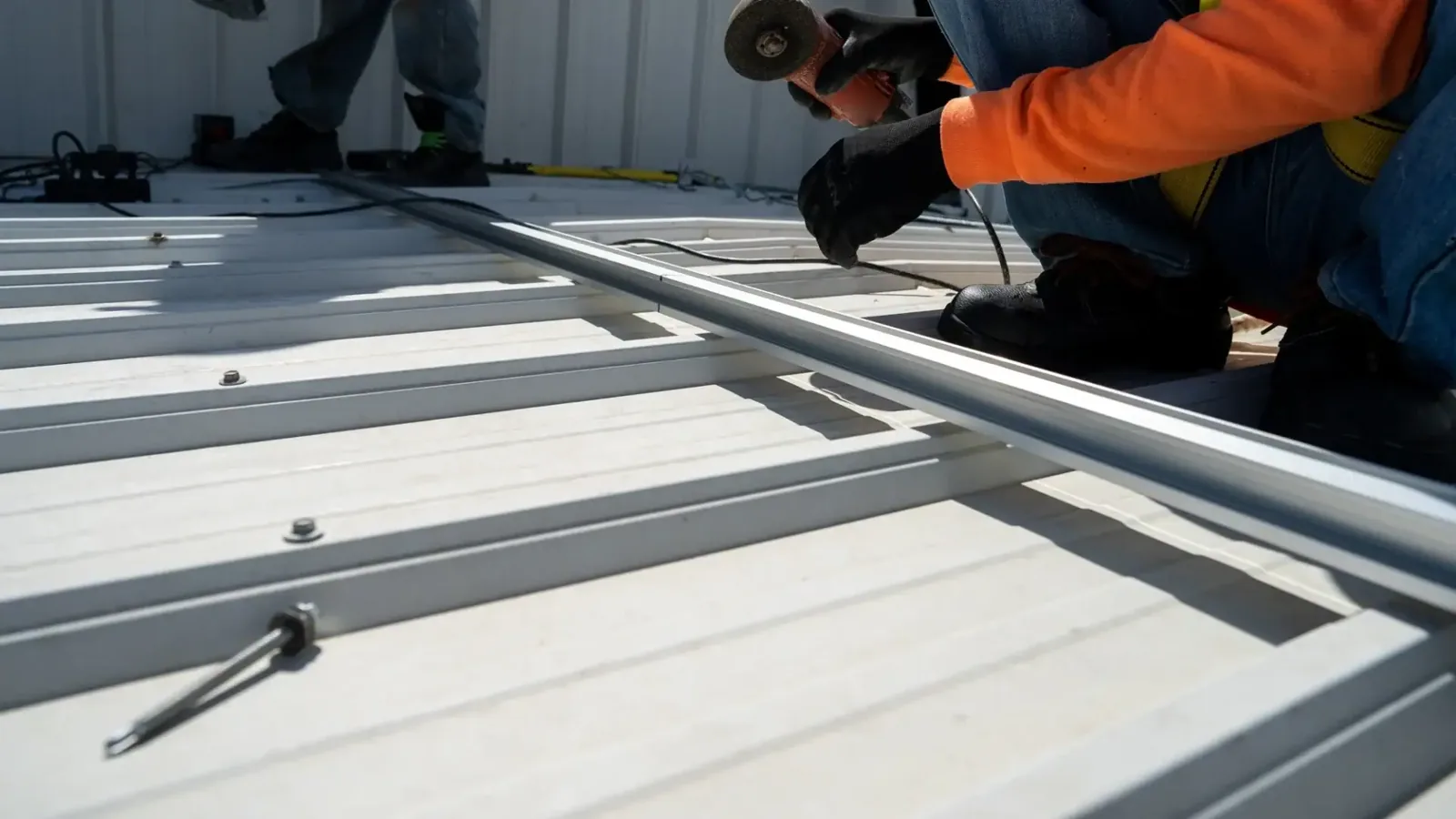
We confirm the roof material before selecting a patch. A TPO weld, EPDM adhesive detail, bitumen repair, or metal-panel correction requires different preparation and materials. If an old coating or repair conceals the assembly, we identify what is known and propose a test only when the result would change the work. The repair boundary follows sound material, not just the visible ceiling stain.
Repair length, detail count, access, interior protection, and concealed moisture affect schedule and cost. If removal exposes wet insulation or damaged decking, we photograph the condition and confirm the added scope before continuing. A repair above a cafeteria or gym may need a different work window from a corridor or storage room. We coordinate debris, tools, and temporary covering with the campus contact so the work area is clear when students return.
Repeated seam failures, widespread wet insulation, or loose attachment can call for more than a local patch. A repair scope can group related findings, while replacement planning can evaluate the entire assembly. A college or university roof may involve connected campus buildings; a hospital roof can carry additional patient-care controls. The actual roof and use of the building set the appropriate sequence.
Keep a Campus Roof Record
We record repaired zones, photos, drains and penetrations checked, test locations, and any areas that could not be reached. A school facilities team can compare those notes with later leaks, service work, and planned capital projects. The record separates an observed defect from a section that was not opened or was inaccessible. That distinction helps prevent a patch in one classroom wing from being treated as a roof-wide conclusion.
A maintenance visit can return to accessible seams, edges, curbs, and outlets. Share current roof plans, prior repairs, upcoming equipment work, calendar restrictions, and the classrooms or rooms affected before the visit. We will set the inspection route around the campus operation and identify the work boundary clearly.
Rock Hill's school and institutional settings vary across the city and neighboring communities. We will tie recommendations to the roof zones actually examined, explain whether repair, testing, or renewal is supported, and state what remains unanswered before another phase is authorized.

Questions About School Roofing
It can be coordinated when roof access, material staging, and any interior protection stay clear of active routes. We review the school calendar and affected rooms with the facility contact, then set work zones. If a roof opening cannot be safely closed within the planned window, the sequence changes before work begins.
Water can move along a deck, framing member, pipe, or insulation seam before it becomes visible inside. We compare the affected room with roof details and trace the likely route. The report identifies the opening confirmed during inspection and any area that still needs testing.
We coordinate the room and roof boundary, temporary covering, and access timing with the school contact. The method depends on the ceiling and repair location. If removal reveals a larger wet area, we document it and confirm the additional protection and scope before expanding work.
We revisit accessible drains, scuppers, seams, curbs, perimeter metal, and prior repair zones. The route also accounts for roof traffic and any equipment changes. Notes identify the date, areas checked, and any access restriction that prevented a complete view.
Plan a School Roof Inspection
Share the affected room, campus calendar, roof plans, leak history, equipment changes, and access limits. We will trace the roof condition, coordinate protection and staging, and define a repair or renewal scope tied to the zones inspected.