
Commercial roof evaluations and repairs for Lesslie properties, with roof findings, access limits, and proposed work recorded by area.
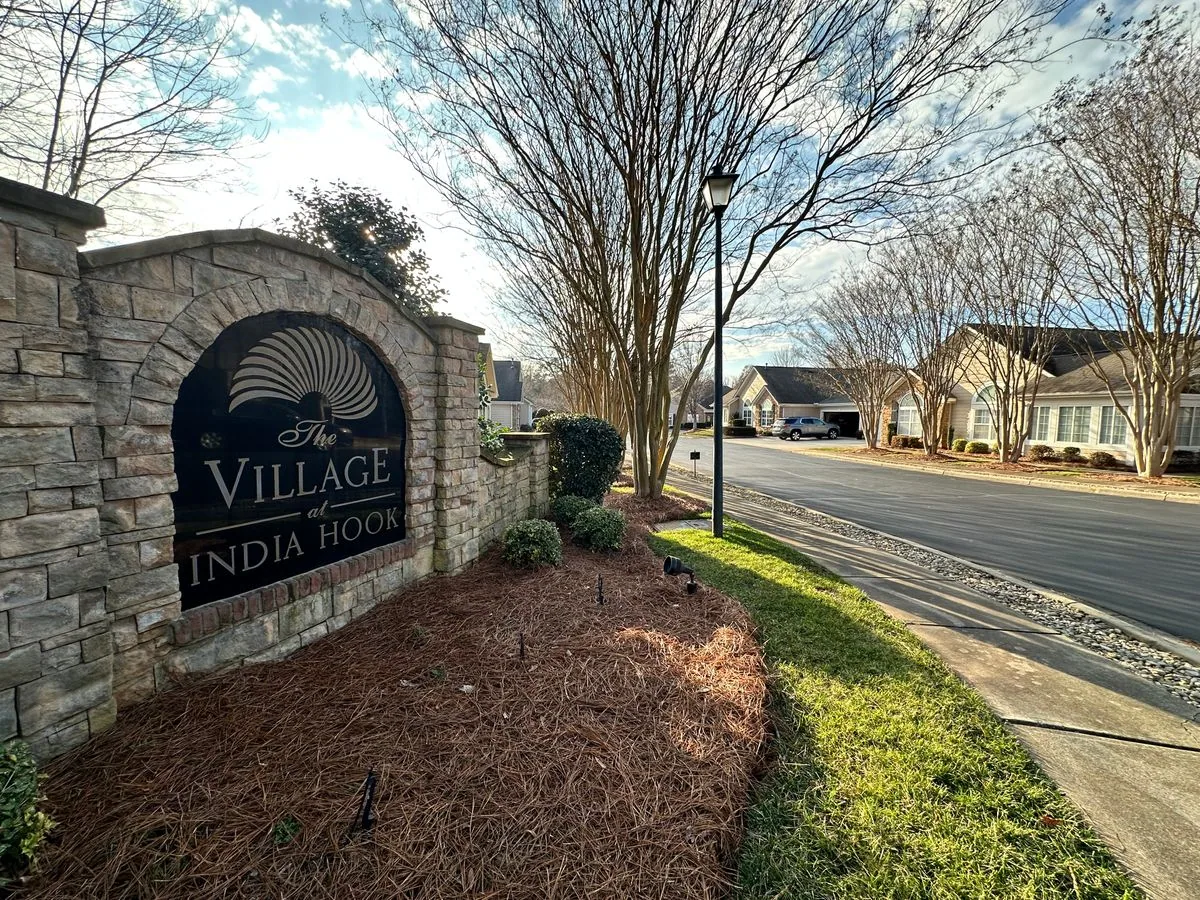
A commercial leak in Lesslie calls for a roof-zone mark before a broad conclusion about the property. Lesslie is a named York County community southeast of Rock Hill, connected to the city and I-77 by the eastern county road network. We check the assembly and discharge path before recommending repair. Service also reaches Newport and India Hook, with separate work limits for each building.
Mark the Symptom and Roof Boundary
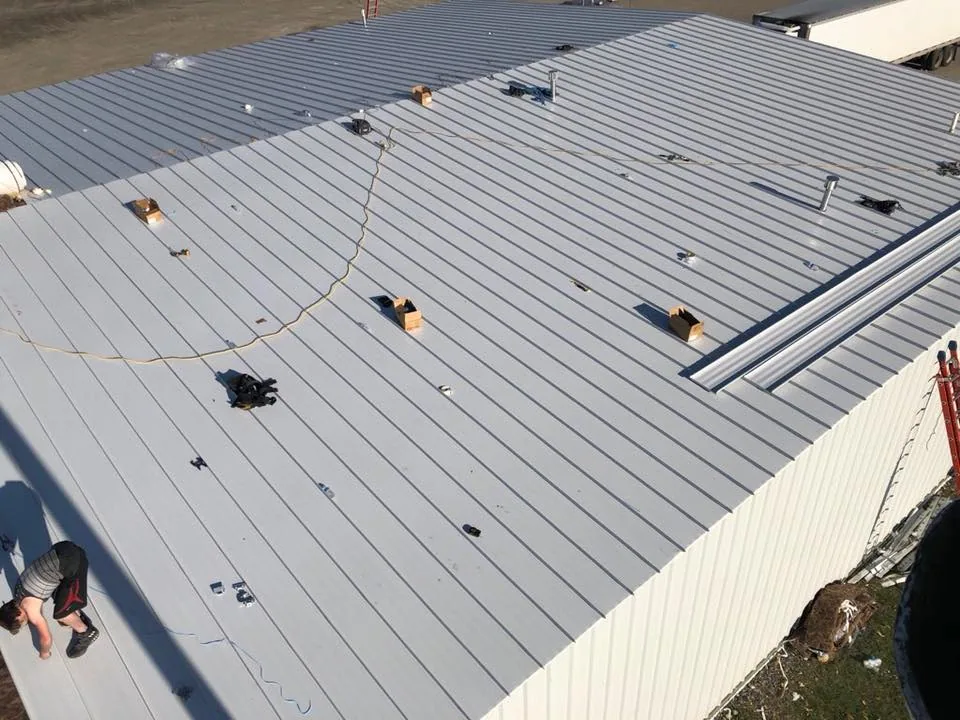
Start with the interior area where moisture appeared, when it was first noticed, and whether equipment or roof work changed nearby. We use that account to choose a roof route, then look at accessible membrane or metal, seams, flashing, penetrations, outlets, and previous repairs. A roof inspection records the surfaces reached and any place that needs another access method.
Lesslie's mapped connection toward Rock Hill and I-77 places it in the eastern county's commercial-growth area. That regional context does not identify a building's age, material, or use. Plans and maintenance records help us separate original assembly from an overlay or prior patch. If a section changes pitch or crosses an addition, we note the transition because it can redirect water into a different roof zone.
Water may travel laterally before it appears on a ceiling or wall. At the reported location, we compare the timeline with drains, laps, curbs, parapets, and nearby work. A leak trace notes whether the entry was observed or remains a possibility. When the evidence is incomplete, we identify a practical next check instead of assigning cause to the nearest roof detail.
Check the Details That Control Water
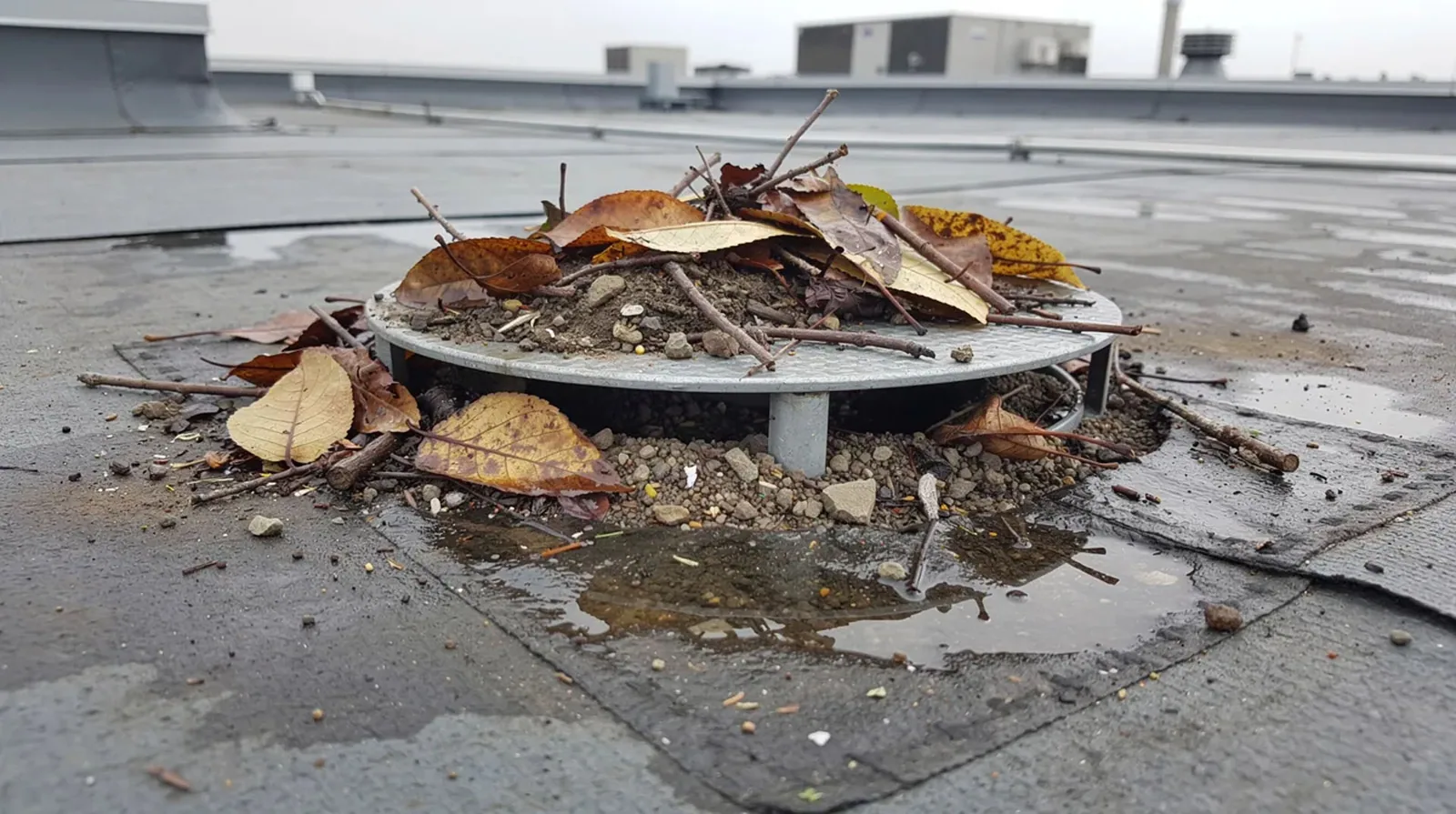
At a roof drain, we look inside the bowl, around the clamping or flashing area, and across the surrounding membrane for separation or a low point. A scupper, gutter, and overflow route need their own review because each can fail at a different connection. A drain or scupper correction applies when the roof-side defect is clear. Concealed piping may require a plumbing review beyond the membrane scope.
Roof edges, coping joints, and wall transitions are examined for loose attachment, open laps, or a break in the flashing. We compare each visible condition with the reported interior path and photograph the detail before disturbance. A water mark directly below an edge is not enough to prove that edge is the source. The recommendation states what observation supports repair and which route still requires confirmation.
If moisture may be concealed below a membrane, we can discuss whether an infrared scan or a controlled test opening answers the question. The chosen method must fit the roof surface and access conditions. We record the limits of that method and do not extend a result beyond the area it examined.
Rock Hill's warm, humid Piedmont climate includes recurring rainfall across a long warm season. For a Lesslie property, those market conditions affect how we protect exposed materials if a repair pauses. They do not show that a particular roof has ponding, a leak, or storm damage. We base those findings on the roof's actual slope, outlet condition, and surfaces reached during the visit.
Set the Work Route Before Mobilization
The eastern road network connects Lesslie with Rock Hill and I-77, while roof access remains controlled by the property. We confirm the contact, entry procedure, delivery route, lift position, staging surface, and areas that cannot be blocked. If a test or repair could affect occupied space below, the plan also names the protection and closure steps for that zone.
On an occupied building, a work sequence can limit how many roof areas are open at one time. We identify where materials will sit, how the crew reaches the work face, and who can approve an added boundary if removal reveals wet insulation or damaged deck. Weather, surface preparation, and hidden conditions influence progress; the proposal identifies these controls rather than promising an unchanged operating day.
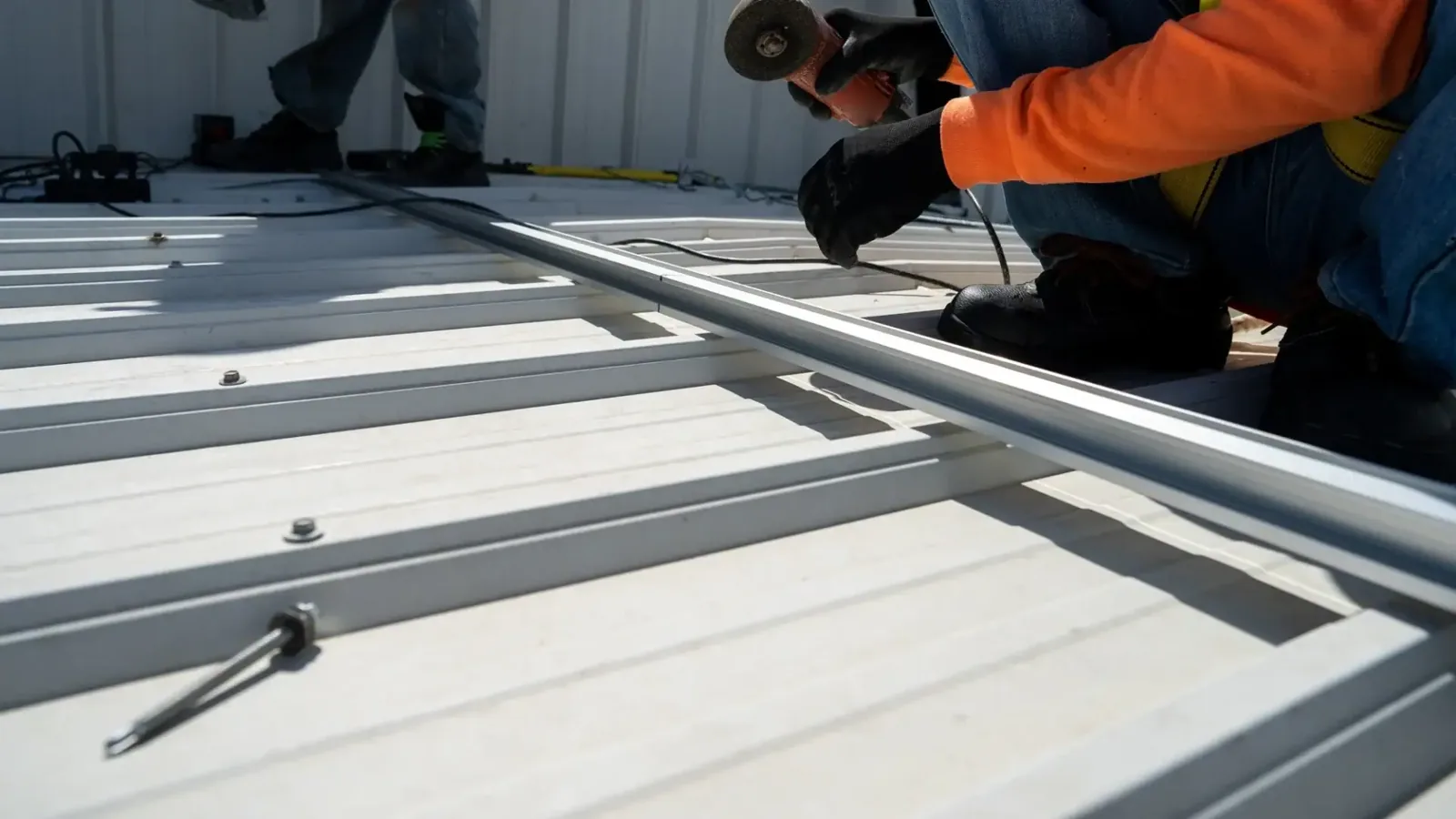
A roof can also intersect with mechanical service, electrical lines, or a later building project. We check penetrations included in the scope and agree on a trade handoff if equipment movement is needed. A penetration-flashing repair can restore a roof connection after its configuration and responsible trade are identified. Work on the equipment itself stays separate unless included in writing.
Choose Between a Patch and a Larger Scope
A repair can stay local when one defect is confirmed, surrounding material remains stable, and the selected product can join it correctly. Several leak routes, soft areas, open laps, or weak attachment may justify added testing or a wider renewal comparison. A repair scope lists preparation, materials, flashing, access, protection, and the edges of the work so the building team knows what is included.
Estimate and work duration are affected by the roof assembly, the number of junctions requiring labor, how equipment can be moved, and what must be protected below. Tear-off, waste handling, lift access, and concealed layers can add separate tasks to the proposal. A recover or replacement option needs separate assumptions for layers, insulation, drainage, and perimeter work. If a sample or moisture survey may change the selection, we explain its purpose before making it part of the larger proposal. For a recovery, we also check whether the existing layers, attachment, and drainage support adding another assembly. A replacement scope can expose concealed conditions but also changes staging, disposal, and protection needs. We lay out those differences so the decision follows the roof evidence and the owner's project constraints.
Prompt temporary protection can keep an exposed area from taking on more water while the permanent scope is reviewed. That is a separate stage: we document the covered zone, note any open question, and define what remains before a final tie-in. A maintenance route can later revisit specific drains, seams, or prior repairs without treating uninspected sections as complete.
Keep Each Finding Traceable
Closeout records the roof zones visited, the evidence found, materials installed, photos, and any test or access limit. If the owner has a roof drawing, we can locate a field mark against its labels. That record helps a property team compare later symptoms with the same seam, edge, or outlet and distinguish finished work from an item that still needs approval.
Share the building use, symptom history, roof plans, previous repairs, and access restrictions when requesting commercial roofing in Lesslie. Those details help set the initial route and determine whether interior protection or a test opening should be planned. Rock Hill's surrounding commercial area supplies regional context; the inspected building supplies the facts used to select its next roof decision. Photos can show a seam before and after repair, while the written scope identifies preparation, materials, and the point where the repair ends. If access was limited, that restriction stays visible for the next visit.
Questions About Lesslie
No. We identify the assembly from field conditions and available records. The area's growth and road access describe the regional setting, not a particular building's construction.
We compare the interior sign with seams, changes in slope, outlets, and penetrations above it. The report separates a confirmed entry from a route that still needs testing.
Yes. The active leak, follow-up checks, and broader renewal options can be listed as separate decisions, each with its own roof zone and material boundary.
Roof drawings, earlier repair records, leak dates, equipment work, and entry restrictions give us a starting route. We confirm the actual assembly and condition in the field.
Define a Commercial Roof Inspection in Lesslie
Provide the building use, affected area, roof plan, repair history, and access limits. We will set an inspection route and prepare a scope that follows the observed roof conditions.
