Inspect Holcim Elevate EPDM, TPO and PVC roofing in Rock Hill, SC. We verify the membrane, attachment and flashing before choosing repair materials.
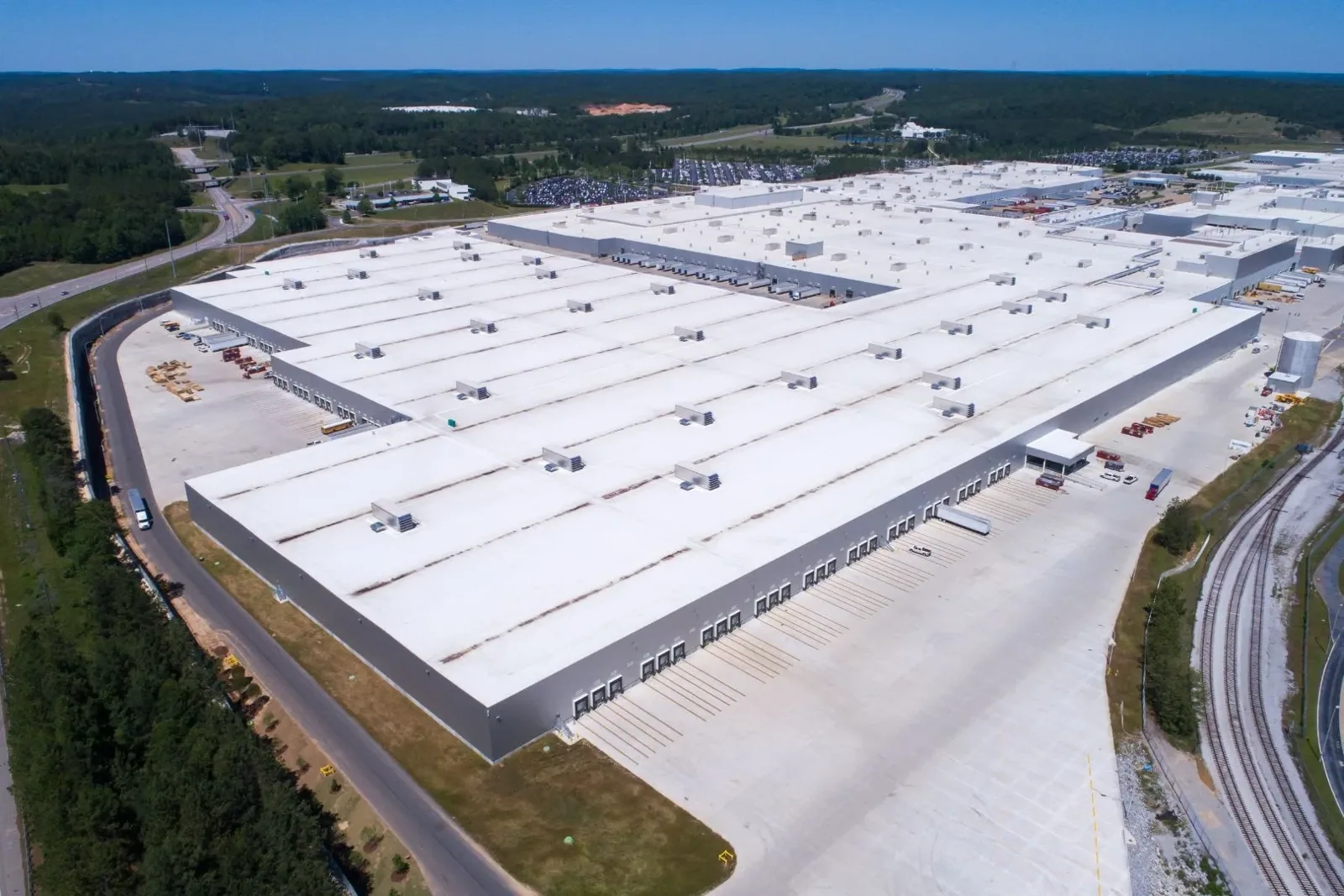
Finding a black RubberGard sheet, white UltraPly membrane or manufacturer label narrows the system search, but it does not define the entire roof. The insulation, attachment, cover board, flashing and later repairs still need field confirmation. In Rock Hill, SC, we map those parts by roof zone before setting a work boundary. Riverwalk Business Park and Legacy Park are Rock Hill business and industrial parks; each building still needs its roof mapped by system and zone before repair. We match the exposed assembly to available records, then select an inspection or repair method that fits the confirmed material.
Compare EPDM, TPO and PVC
Holcim Elevate's US portfolio includes RubberGard EPDM, UltraPly TPO and PVC roof systems. Each membrane family has different seam, flashing and accessory requirements. EPDM is a rubber membrane whose field connections rely on compatible adhesive, tape or flashing details. TPO and PVC are thermoplastic sheets with heat-welded seams where their system designs specify that approach. Holcim Elevate's PVC KEE products add a particular formulation; they are not interchangeable with every PVC membrane. A RubberGard inspection, UltraPly TPO review or PVC condition check begins with the sheet and seam actually present.
The assembly may include insulation, cover board, vapor controls, fasteners or adhesive selected for the deck and project design. Product data can help identify permitted components, but the roof must be checked for later additions, wet materials and incompatible repairs. We review roof records, exposed edges and representative details rather than inferring attachment from a membrane color. If the property has more than one Holcim Elevate product family, we mark each transition so a repair on one section does not carry an unsuitable method onto another.
Map what is installed
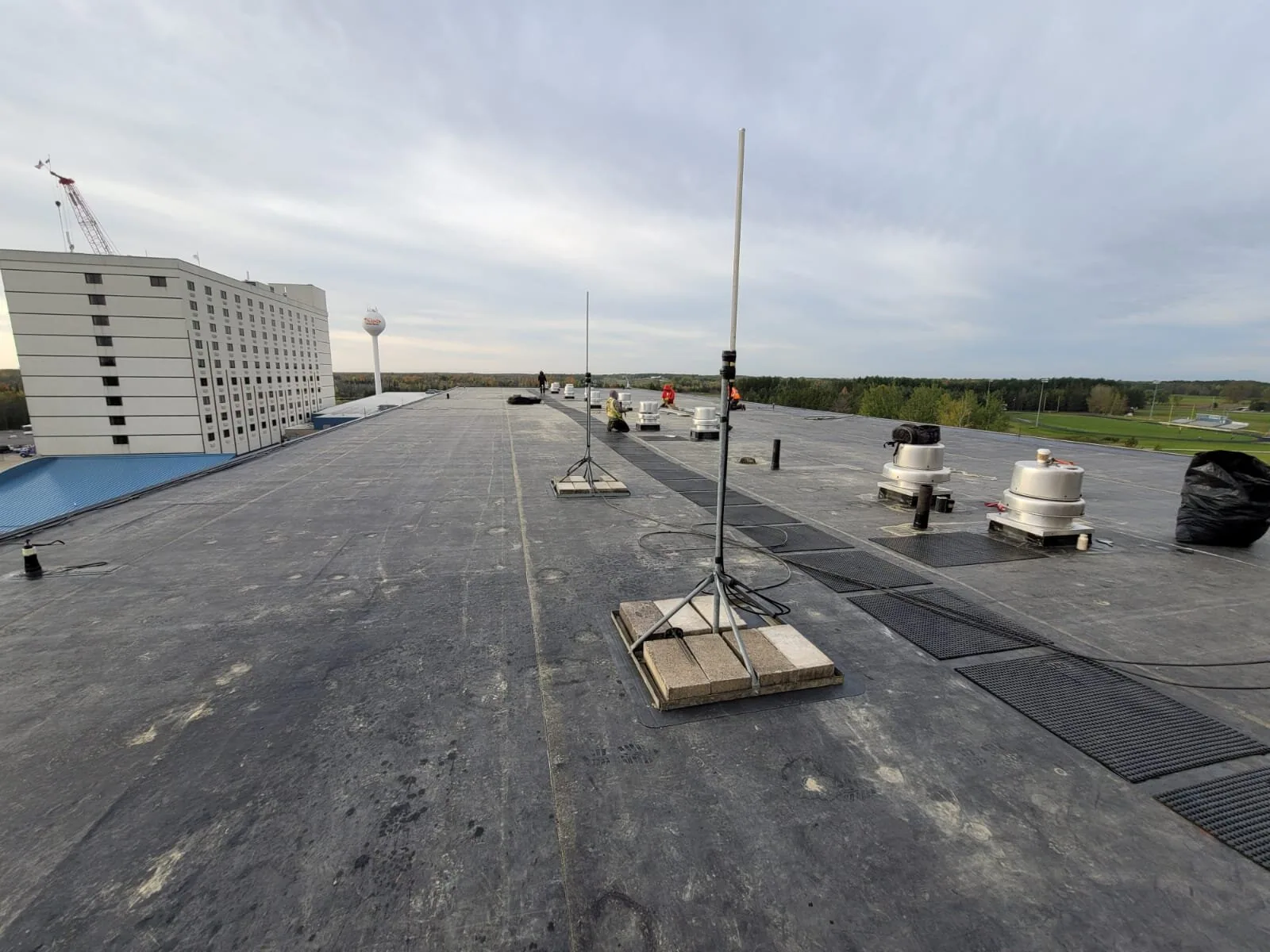
Start at the leak, seam concern or planned mechanical change. We photograph the membrane, probe accessible laps where appropriate, inspect perimeter metal and follow the water path toward drains and overflows. Curbs, pipe supports, wall transitions and pitch pockets receive separate attention because repair details often change at those locations. We check whether a patch has lifted, a weld is incomplete, or moisture may extend into the substrate. Readings and test areas are marked; a result from one opening does not describe every roof zone.
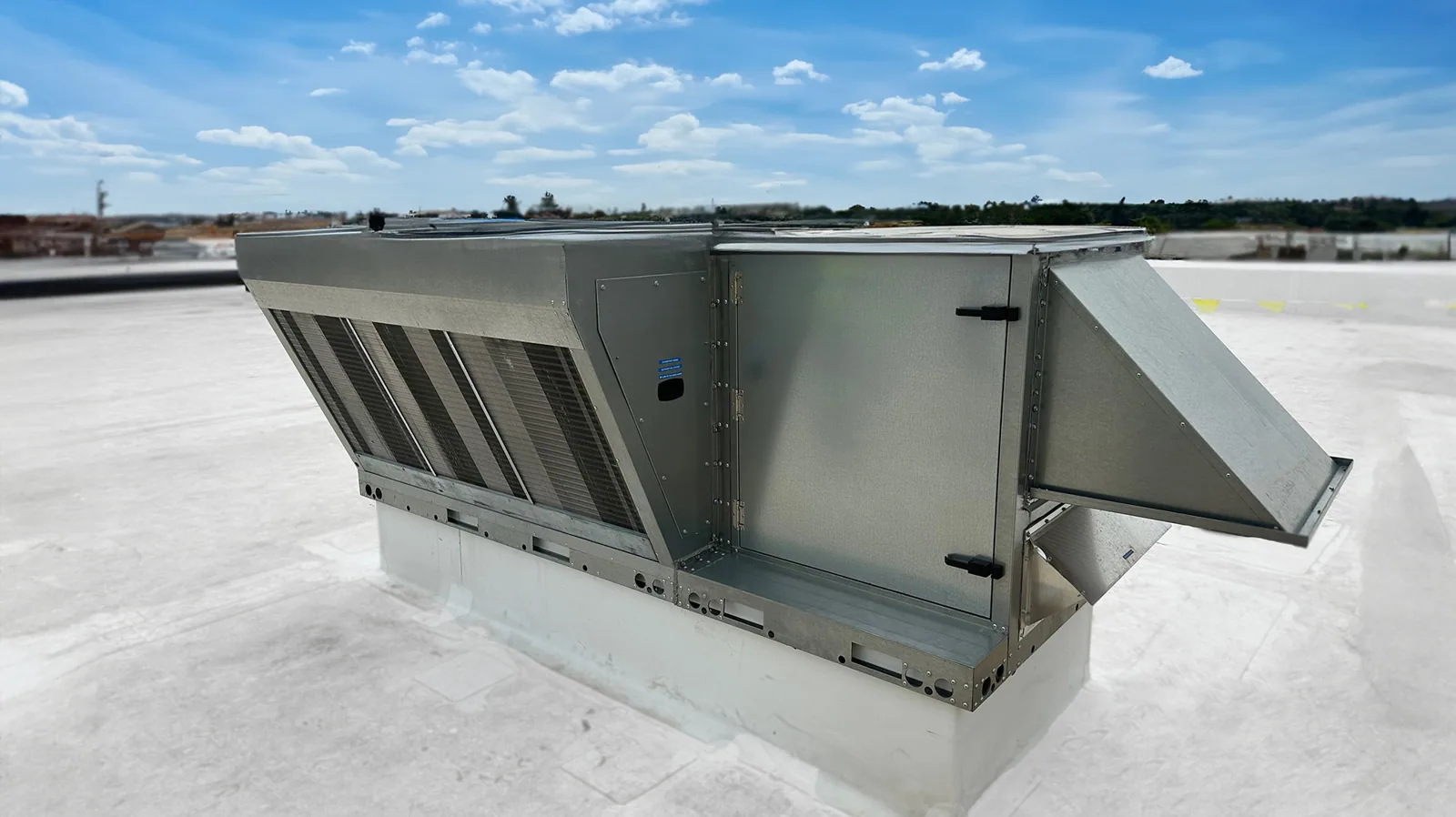
If the project file lists a Holcim Elevate system, we compare its product, thickness and attachment detail with the visible roof. A past recover may hide the original sheet, and an addition may use a different membrane. The facility contact confirms roof access, lift staging, exhaust restrictions and work hours so the inspection does not interrupt nearby operations. A commercial roof inspection records system clues and accessible boundaries; a curb and equipment review can define a separate tie-in before HVAC work opens the roof.
Make the repair material-specific
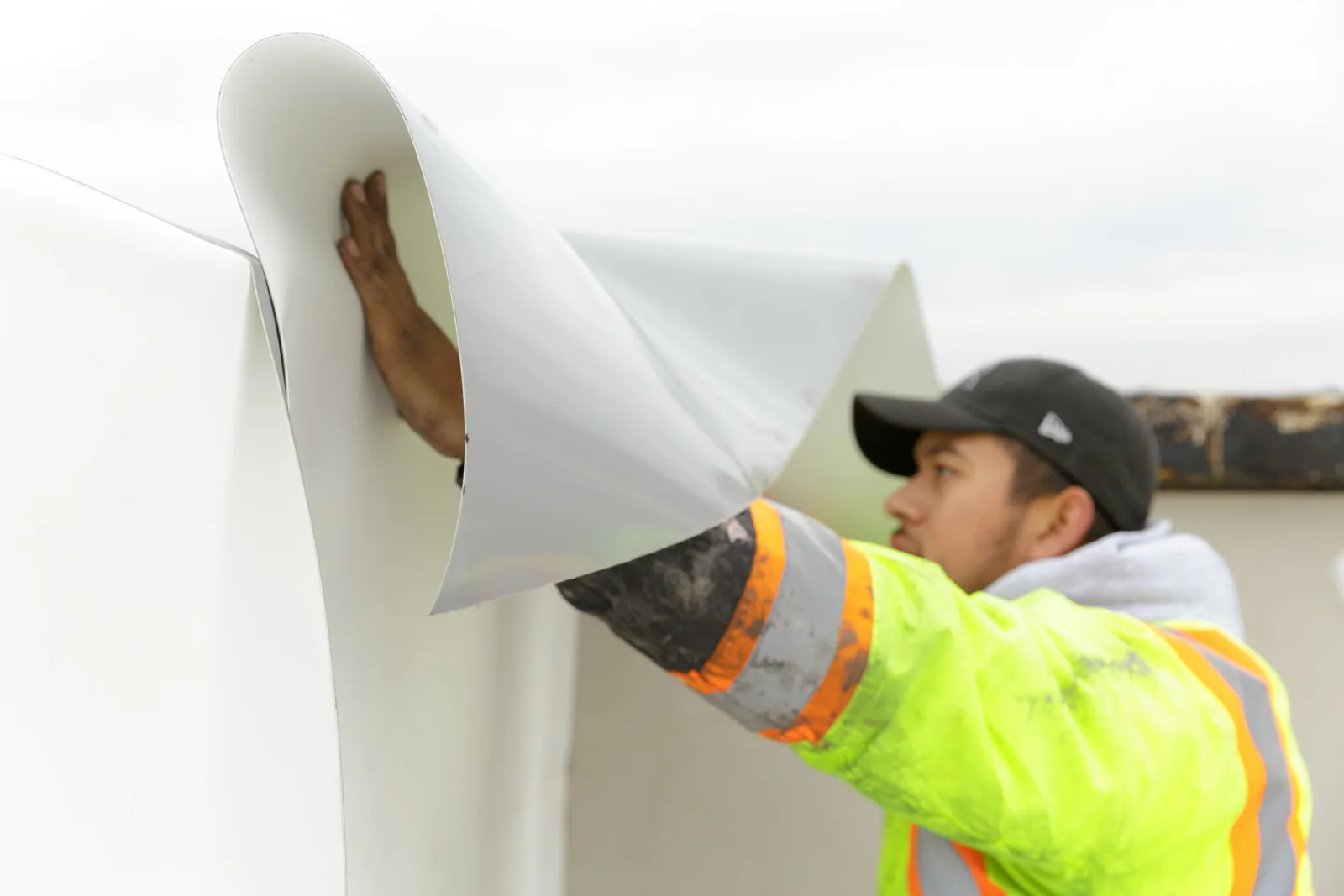
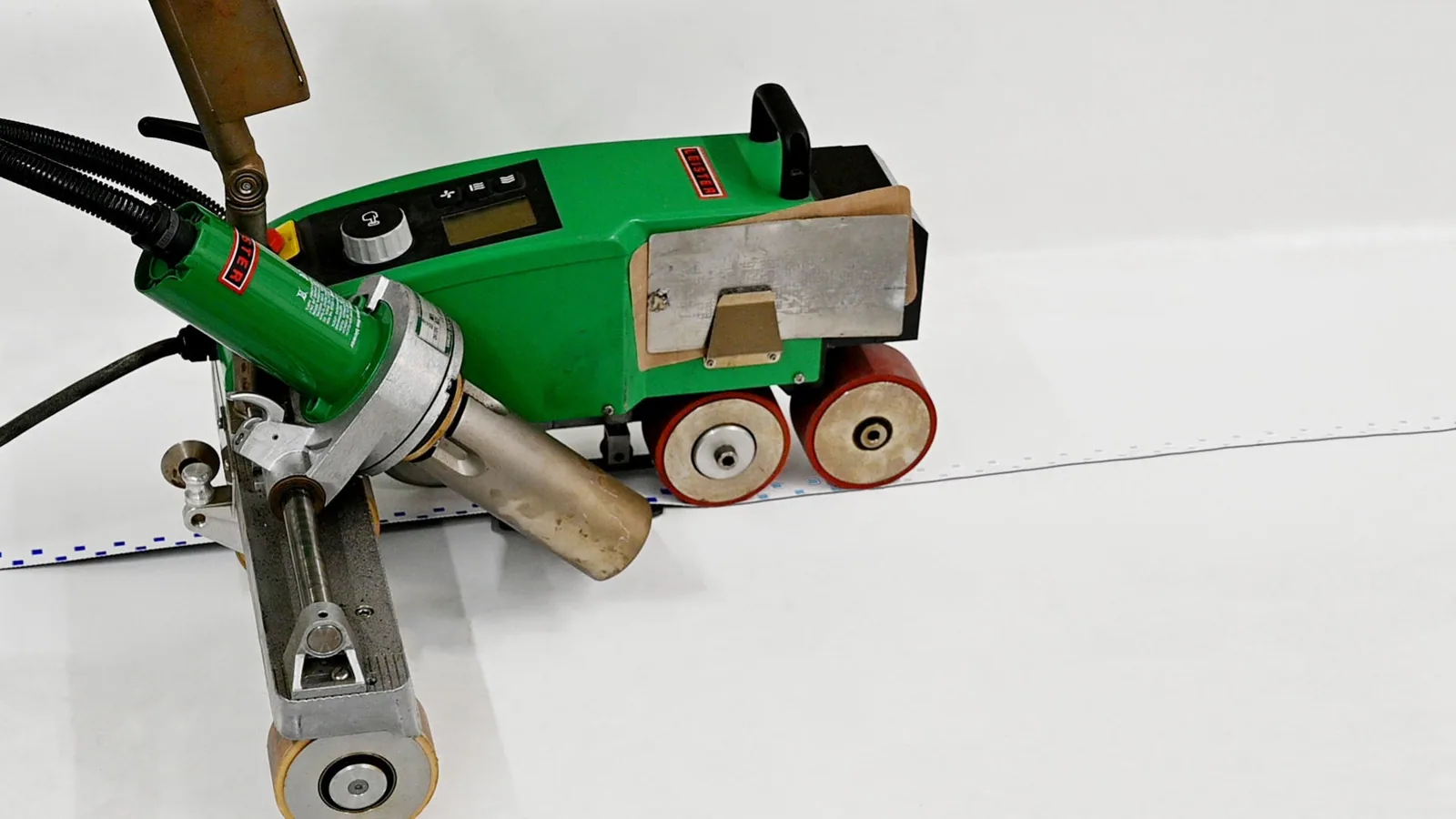
For TPO or PVC, the surface must be clean and the weld must fuse compatible membrane beyond the damaged edge. A field patch does not correct a wet substrate, a moving seam or an attachment problem underneath. We prepare the area, confirm that the existing sheet can accept the planned weld, and inspect the finished connection. EPDM repair follows a different sequence: prepare the rubber, apply compatible tape or adhesive, and roll the connection without trapping dirt or moisture. If the original product is uncertain, we can check an inconspicuous test location before extending a repair.
Flashing repairs include corners, terminations and the transition onto the wall or equipment base. A fastener placed through an unsecured patch can create another leak path. If membrane shrinkage has pulled material away from a curb, the scope may need to reset the flashing rather than cover the gap. A seam repair is appropriate when failure is localized and adjacent material remains sound. Where several details have opened or insulation is wet, we document the broader area and compare repair with replacement.
Heat and rain in the Piedmont
The Rock Hill area sees a long warm season, humidity and regular rain. Heat can make surfaces difficult to work and can stress older flashings; recurring rainfall tests drainage and lap continuity. After a storm, we look for displaced edge metal, punctures, opened seams, damaged equipment supports and debris that blocks outlets. York County has tornado history, so after a reported event we inspect exposed edge metal, seams, equipment supports, and drains at the property. The inspection ties each finding to a photograph, roof zone and date.
Legacy Park and Riverwalk Business Park have distinct site layouts, deliveries and roof access arrangements. We do not assume that the same weather exposure, system or work window applies across either district. On a large roof, we identify which sections are over occupied or temperature-sensitive spaces and which equipment needs protection during work. If a report names hail, we check soft metal, membrane and drainage separately; an indentation is not automatically a membrane opening. Holcim Elevate's product details can guide compatible work once the installed membrane is known.
Tie the scope to the roof zone
A small, dry area with stable attachment may support a localized repair. Wet insulation, multiple overlays, widespread seam loss or a deck concern can change the work to removal or replacement. A recover may be considered only when the existing roof can remain, the surface is suitable, and the added height works at drains, walls and curbs. We separate temporary leak control from permanent scope and record the boundary where work stops. Cost and timing depend on area, access, removal, equipment coordination and the condition uncovered after opening.
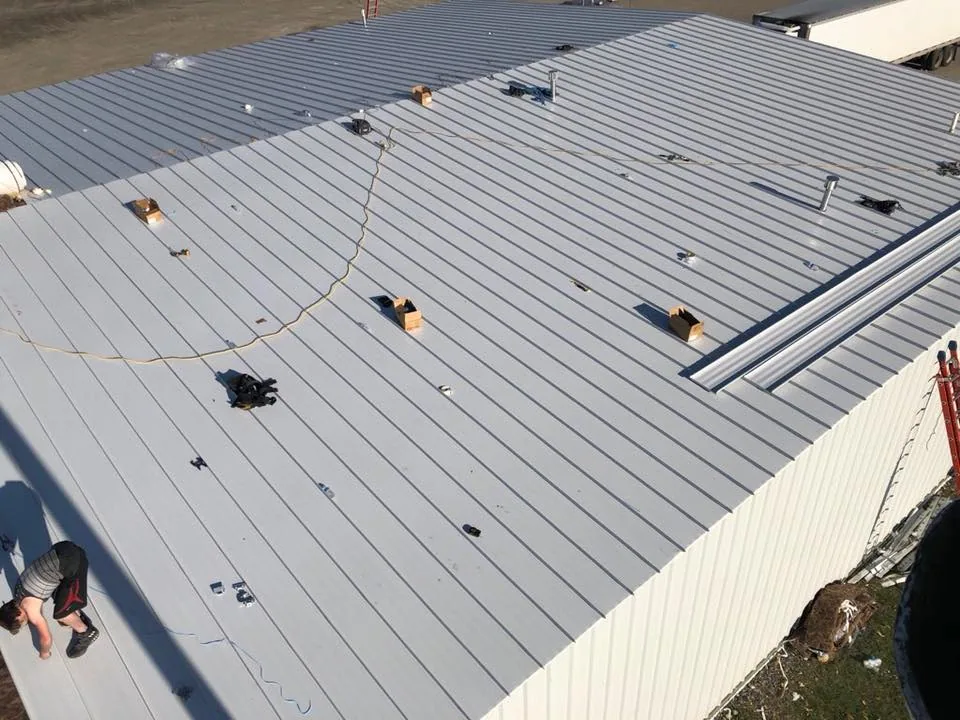
When the roof includes more than one manufacturer, each transition needs its own compatibility check. An Holcim Elevate field adjoining a GAF membrane or Johns Manville system should not be bridged with an unverified patch material. The inspection report identifies accessible sections, test results, drainage conditions and unresolved questions. For a Holcim Elevate roof in Legacy Park, the next maintenance visit can use the marked map to compare the same edge, curb and drain locations. That record helps the owner decide whether to monitor, repair or budget for a larger project.
Product names matter most when they help match a real component to its repair detail. We note where a RubberGard, UltraPly or PVC assembly is confirmed and where identification remains uncertain. If a test opening is authorized, we photograph the layers, measure the area and restore the roof under the approved method. The scope distinguishes observed conditions from concealed areas, allowing the owner to request another test or proceed within the confirmed work boundary.
Questions About Holcim Elevate Commercial Roofing
Not by itself. Later additions and repairs may use different products. We inspect each section, compare product labels and records, and mark where a system change or unknown layer remains.
No. EPDM and TPO use different materials and connection methods. We identify the membrane and select compatible preparation, flashing and seam work for that system.
It identifies a local connection to check. We inspect surrounding welds, sheet condition, attachment and moisture to determine whether a bounded patch will address the failure or the scope extends further.
No. It supports scheduling an inspection after a reported event. The roof surface, edge details and drainage must show current conditions before damage or repair quantity can be stated.
Send the product or assembly documents, repair history, leak location and building access rules. The property contact can confirm escort, lift and work-hour requirements before inspection.
Verify the Holcim Elevate roof assembly
Share the building use, reported condition, available Holcim Elevate records and site limits. We will identify the roof zones and details that need inspection before selecting a repair.