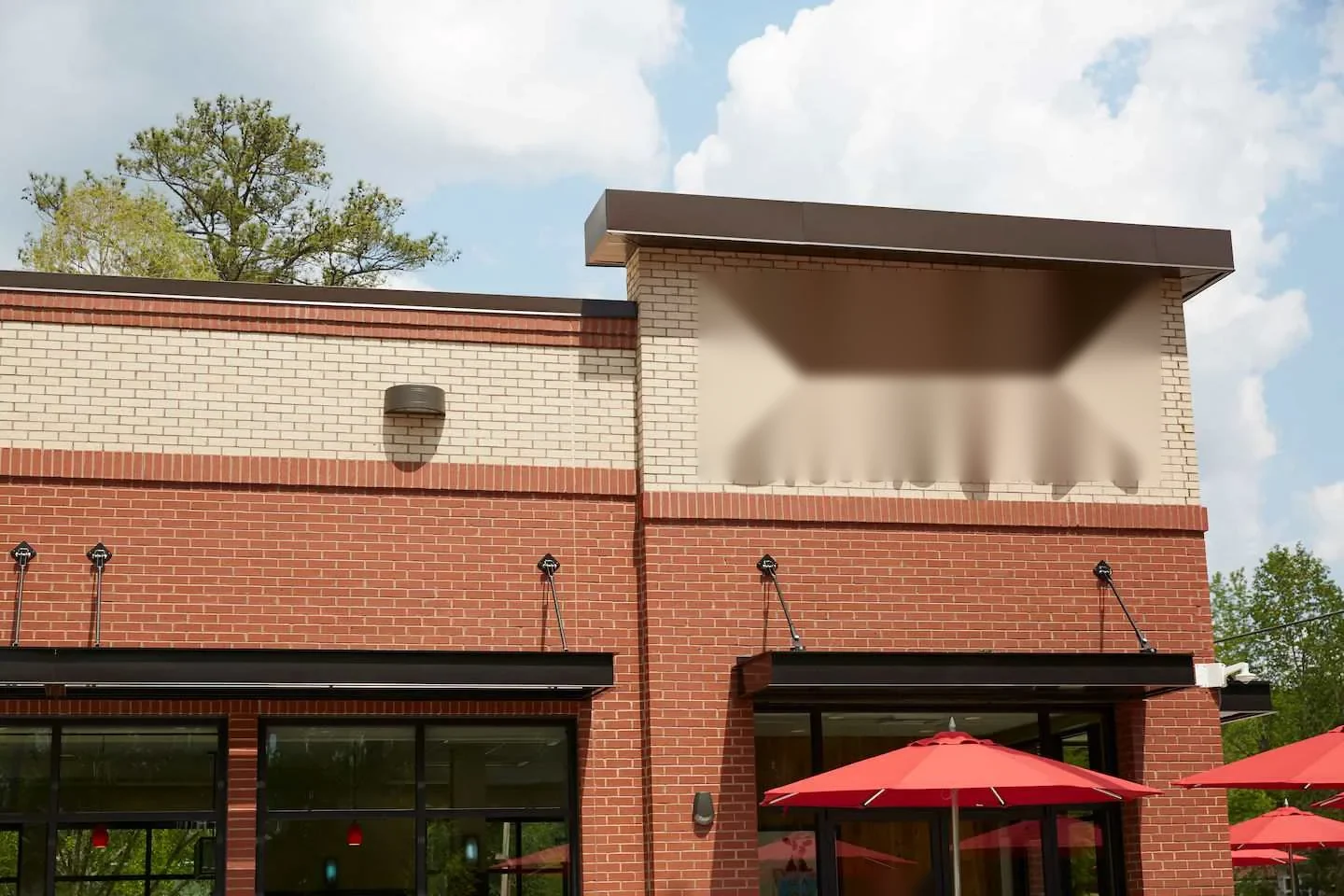
Coordinate roof inspections and repairs across retail and restaurant locations with repeatable reporting and property-specific work plans.
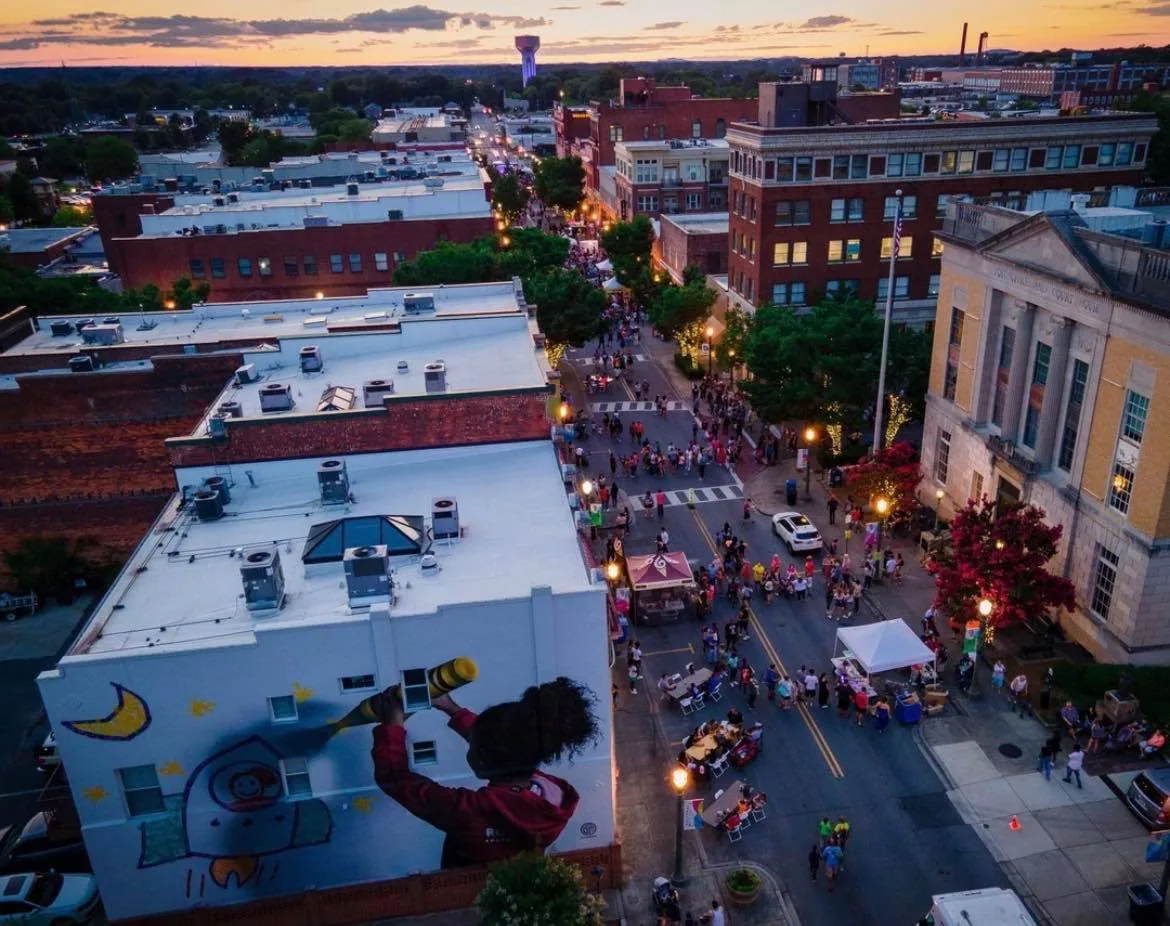
Multi-location roof work needs repeatable reporting without assuming every store has the same assembly or operating limits. We document each property separately, trace reported leaks, and coordinate repairs around deliveries, customers, kitchens, and staff access. Rock Hill's commercial activity includes the Dave Lyle Boulevard and Cherry Road corridors, with regional development also reaching Carowinds Boulevard. We coordinate visits near Dave Lyle Boulevard or the Cherry Road corridor with the local facility contact.
Standardize Records Across Local Locations
A chain can use one report format for property, roof zone, system, issue, photos, repair, and follow-up. We can apply the company's building labels and approval steps while retaining the distinct conditions observed at each address. We confirm each store's membrane type, warranty terms, repair history, and access route before comparing it with another location.
A commercial roof inspection can record accessible seams, drains, curbs, edges, and previous patches. We list areas reached and any blocked access. If a roof test or opening is needed, the report identifies its purpose and closure plan. A site visit is not a destructive review of every roof layer and does not replace a system record that the owner may have.
The I-77 South corridor includes restaurants, hotels, retail, and office space, while Rock Hill's commercial network includes industrial parks and mixed-use development. Those different settings bring distinct equipment, customer routes, and loading conditions, so the property-specific inspection and operations plan guide each work order.
Trace a Store or Restaurant Leak Before Patching
A stain near a display, kitchen, cooler, or seating area may sit below a different roof detail. We compare the reported location and timing with roof seams, drains, walls, skylights, and equipment bases. A leak investigation follows the water path and records whether the entry point is confirmed or only suspected. The nearest curb is not treated as the cause without evidence.
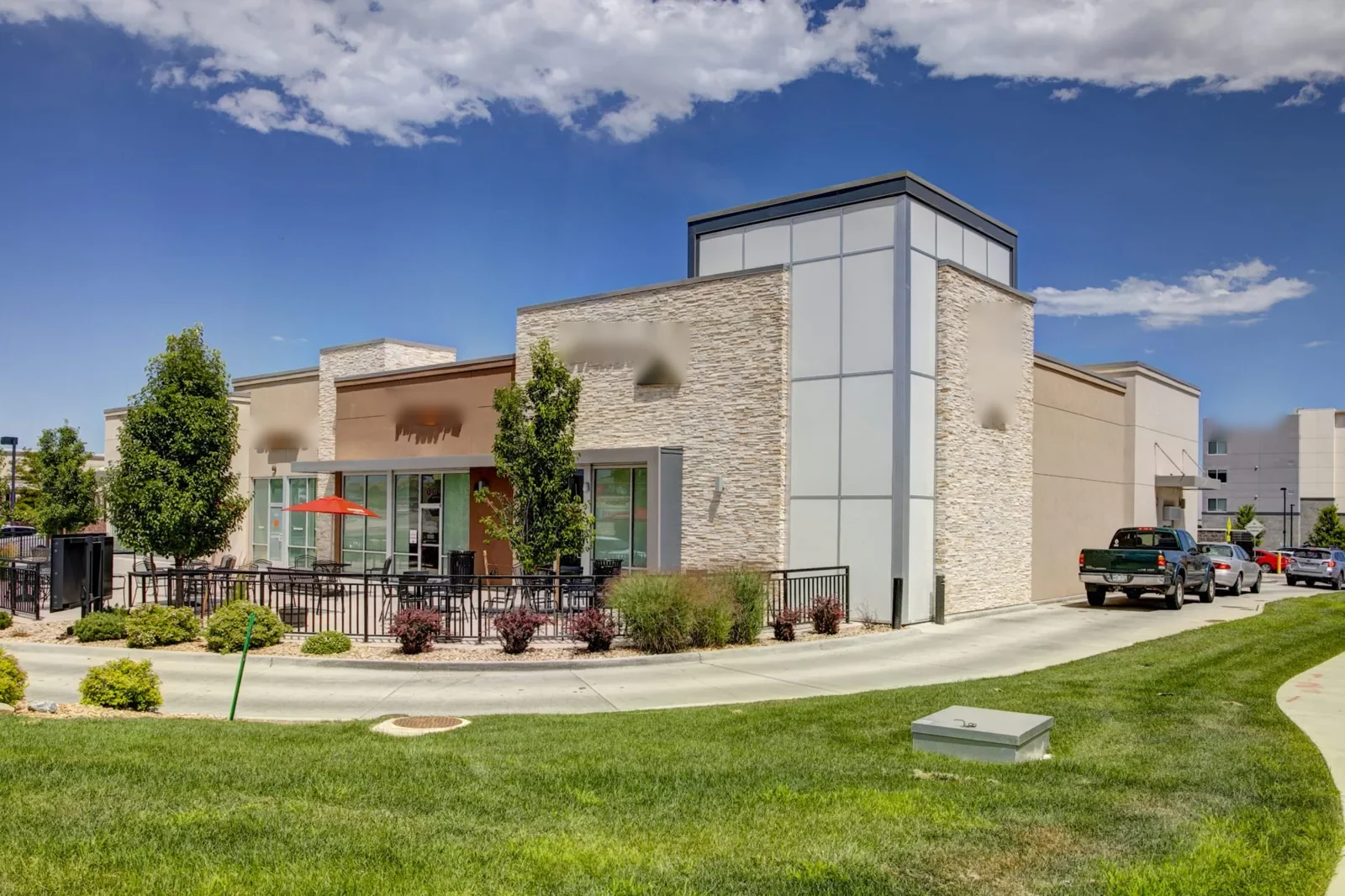
For a restaurant, exhaust discharge, fan replacement, and kitchen access may influence the inspection. For a retail site, merchandise protection, floor traffic, and deliveries can shape staging. We coordinate interior entry and any temporary covering with the manager. Before opening ceiling or membrane, we agree on the test boundary and closure steps. If removal reveals wet insulation or deck damage, we record the area and review additional work before expanding scope.
Rain is regular through Rock Hill's long warm season, and York County has local hail and tornado exposure. After an event, we check each store's edges, penetrations, drains, and flashing for visible change.
Check Equipment Curbs, Exhaust, and Drainage
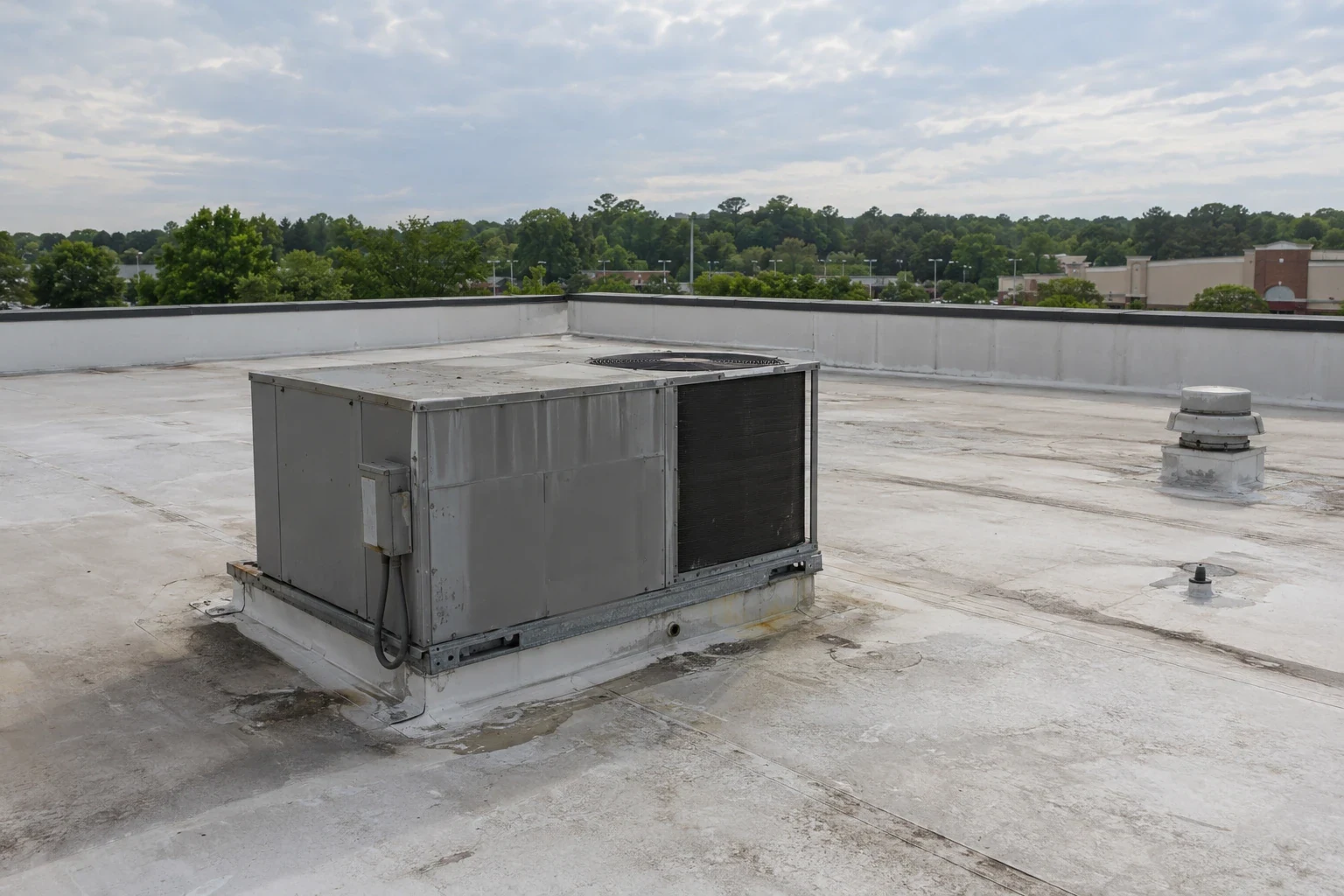
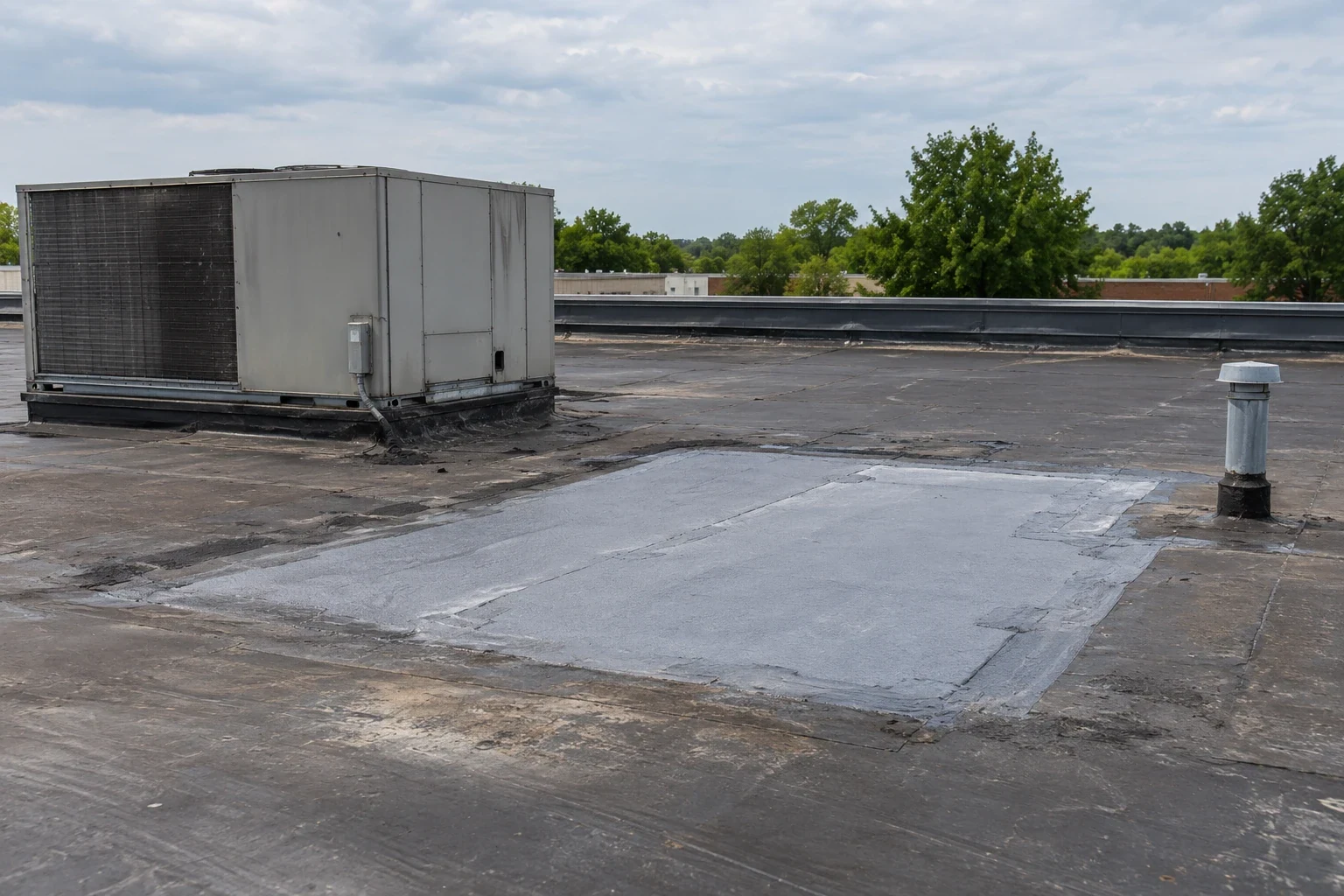
HVAC units, kitchen exhaust, plumbing vents, refrigeration lines, and conduit introduce roof transitions that can move after equipment service. We inspect flashing corners, curb attachment, seams, and previous repairs around those details. If an old curb remains after a unit change, the roof still needs a defined closure. Mechanical vendors handle equipment removal and service unless the written scope assigns that work to the roofing crew.
Internal drains, scuppers, gutters, and overflow paths can also affect a retail property. We inspect the outlet and membrane tie-in included in the visit and note whether water can discharge toward a service entrance or customer area. A blocked drain, failed connection, and low roof section are separate findings. Cleaning is recorded separately from repair to the outlet or roof assembly.
If the membrane material is unclear, we check visible edges and available records before selecting a patch. TPO, PVC, EPDM, bitumen, and metal each have different preparation and compatibility needs. A repair scope should name the product, roof zone, and limit. A surface treatment that does not bond with the actual system can leave the original condition unresolved.
Coordinate Work With Store and Kitchen Hours
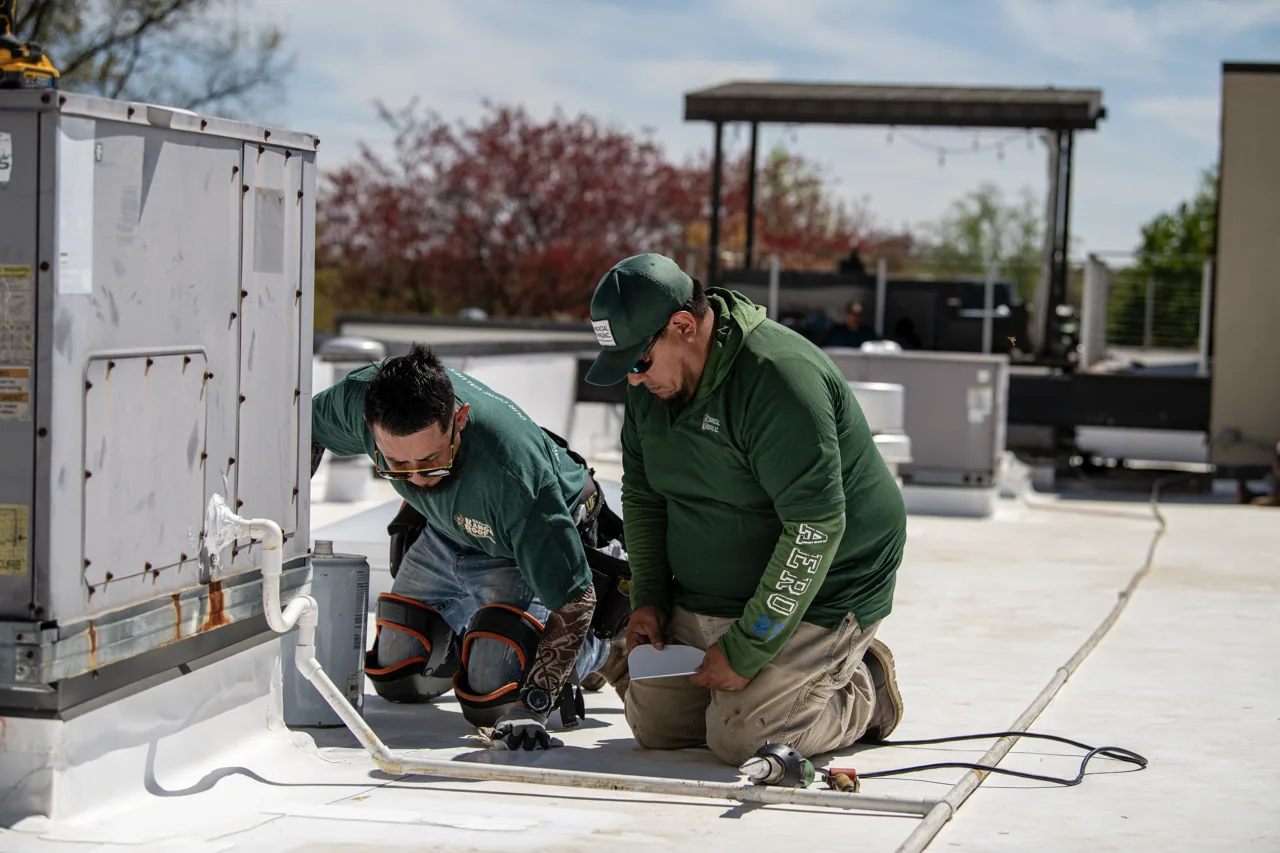
Before mobilization, we confirm opening hours, delivery windows, loading areas, roof access, staging, and any space that must remain available. A location contact can identify food-service routes, customer entrances, stock areas, drive lanes, and safe lift placement. We agree which areas need protection and how roof sections will close if weather or an unexpected condition pauses work.
A phased work plan can move through defined roof zones while parts of a property remain active. This depends on material, weather, preparation, equipment coordination, and whether an interior area needs to be cleared. We provide the work boundary and access impact so the location manager can coordinate its own staff and customer communications.
For chains with several nearby properties, group inspections can reduce repeated travel, but each facility still requires its own notes and approval. The regional operator can identify a shared report format and escalation contact; the local manager can confirm roof access and daily restrictions. This split keeps portfolio oversight consistent without treating each location as interchangeable.
Separate Local Repairs From Portfolio Renewal
A localized defect with sound surrounding material may support a focused patch. Widespread seam failure, repeat leaks, or moisture across several zones can justify a broader scope review. We explain which observations support repair, testing, recovery, or replacement and identify areas not examined. Cost and timing depend on the roof system, detail count, access, protection, disposal, and any concealed damage.
For a larger renewal, the proposal should state roof area, existing layers, insulation assumptions, perimeter work, penetrations, drainage, staging, and any location closure. If a project is phased across multiple stores, each phase can list its own work limits and approval contact. If an opening exposes a different system or deteriorated deck, the team secures the roof and reviews the change before proceeding beyond the approved boundary.
A hospitality group may coordinate lodging and food-service assets, while a property manager may handle multiple ownership and tenant relationships. A chain's roofing program can use common measures for urgency and closeout while still tailoring each work plan to building use.
Give Corporate and Local Teams Clear Closeout
Closeout notes include the property, zone, condition, repair, materials, photos, access limits, and remaining recommendation. Corporate facilities can compare locations using the same headings, and local managers can see what work is complete. An inaccessible roof section or unconfirmed leak source remains stated as a limitation.
A maintenance visit can return to drains, seams, curbs, flashing, and past repair locations. Share operating hours, equipment changes, roof plans, store contacts, leak history, and seasonal access rules before a visit. We can identify whether the next step is routine review or a separate repair proposal.
Rock Hill's retail corridors and the nearby I-77 commercial spine include varied properties and tenant uses. Each roof plan should follow its own installation, equipment, drainage, and business schedule. We document what the inspection supports and provide the local contact with a clear handoff to the chain's facilities or ownership team.

Questions About Retail and Restaurant Chains
A chain can standardize reporting and approval steps, but each location's roof system, condition, access, and operating plan should be confirmed separately. A standard format helps compare findings without assuming identical construction.
Multiple properties can be scheduled together when access and contacts are arranged. Each building receives separate findings, photos, roof-zone notes, and any limitations that apply to that specific site.
We coordinate staging, deliveries, work zones, temporary protection, and closure checks with each location contact. The sequence depends on the roof work and conditions, and may require temporary restrictions in the area below.
Share the affected room or sales area, roof plan, recent equipment changes, prior leaks, access rules, delivery schedule, and the person authorized to approve a test or scope change.
Coordinate Roofing Across Store Locations
Share the location list, roof records, operating windows, leak history, and local access contacts. We will document each roof separately and coordinate repairs with the store's operational needs.