
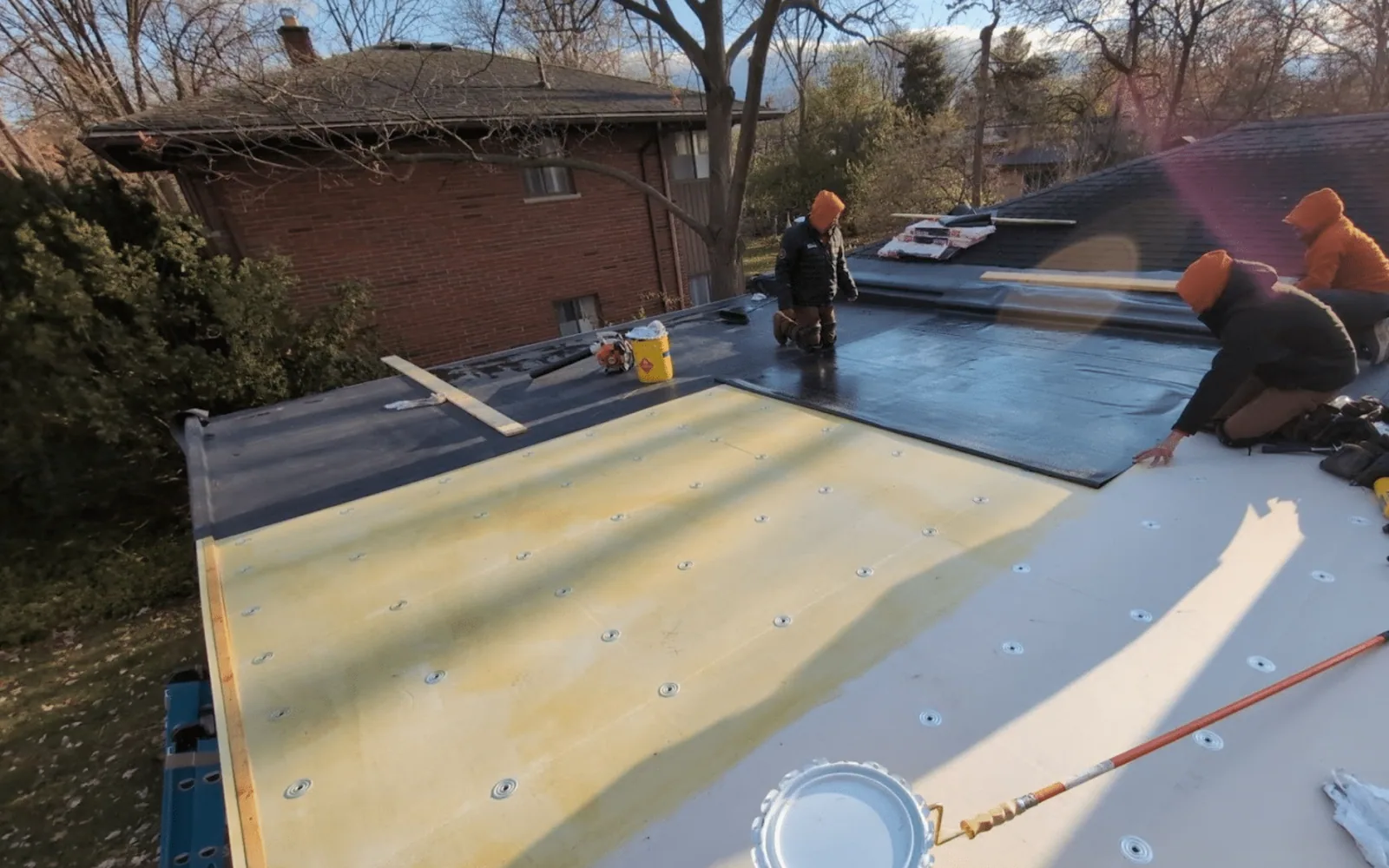
Locate and repair commercial roof punctures from equipment activity, foot traffic, or debris with compatible materials and documented work limits.
A puncture can be small on the surface and still allow water beneath the roof system. We locate the reported area, inspect the surrounding membrane and transitions, and define repair limits based on the material and damage. Rock Hill's industrial and mixed-use districts include Riverwalk Business Park and Knowledge Park, but a place name does not indicate a particular roof's construction. We coordinate access around Riverwalk Business Park or Knowledge Park with the facility contact.
Locate the Puncture and Check Nearby Material
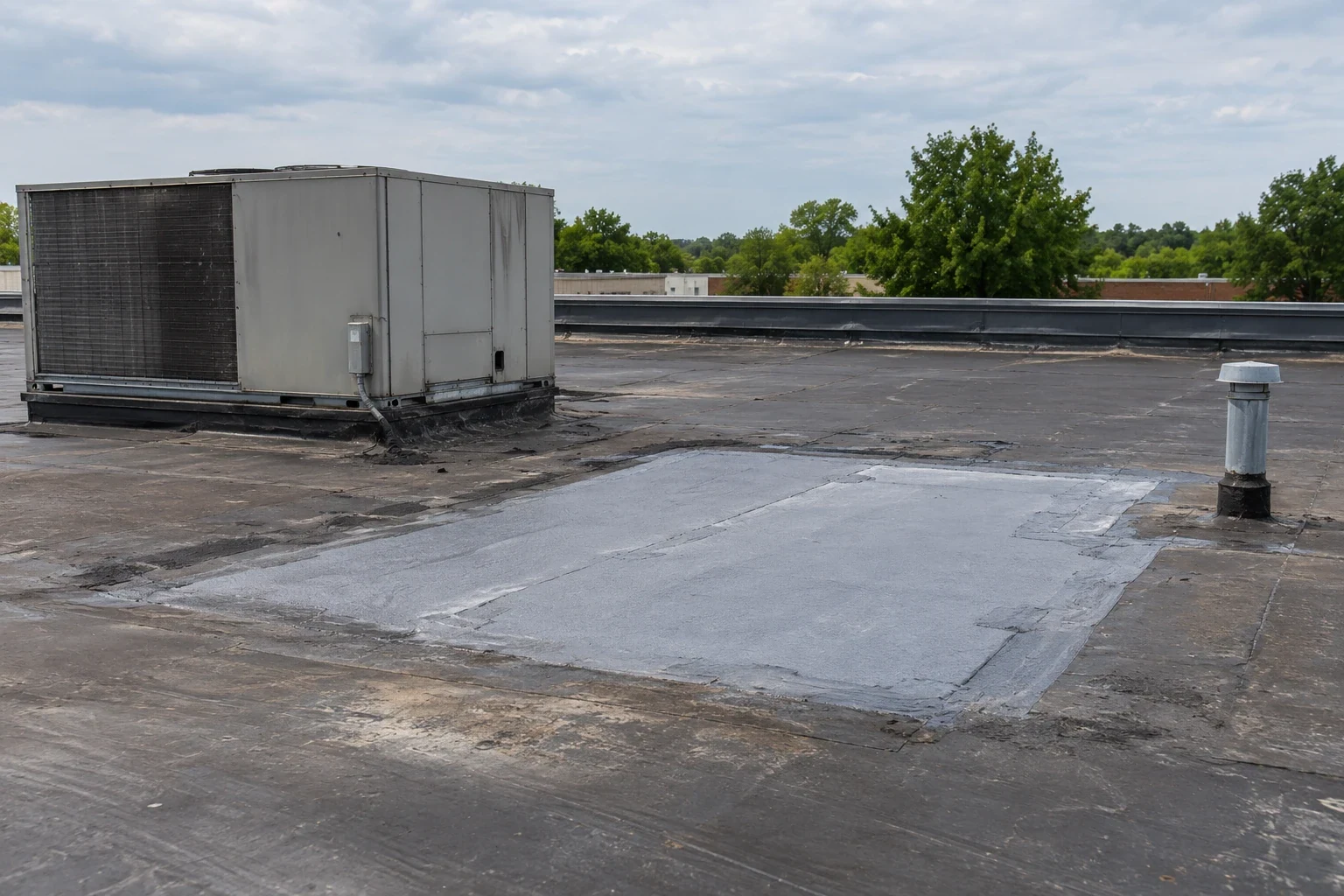
We examine the reported mark, surrounding surface, seams, flashings, equipment routes, and any patch already in place. A hole may result from dropped tools, fasteners, sharp debris, maintenance traffic, or an unknown event. The cause is not assumed from the shape alone. We also inspect whether a previous patch edge has lifted and whether the puncture joins an existing seam or curb detail. That distinction affects the repair area and helps avoid covering a separate defect with a small surface patch. A commercial roof inspection can document the accessible zone and note whether the puncture is isolated or appears among other roof defects.
Photos should show the puncture in relation to a roof feature and scale. We check whether the membrane is torn, displaced, compressed, or cut and whether water could have reached insulation or deck. If the surface has a coating or previous overlay, we identify what layer is visible and whether a test would change the repair detail.
When an interior leak is reported, we compare the ceiling location and timing with the roof route. Water can move before appearing, and a small puncture may not be directly overhead. A leak investigation can document the path and distinguish a confirmed entry from a suspected source. Any ceiling opening is coordinated with the owner and occupant before testing.
Rock Hill sees humid summers and recurring precipitation. Before opening a roof area, we record its condition and closure plan, then compare the puncture with the material, nearby details, and any recent work.
Check Traffic, Equipment Work, and Debris
Maintenance routes, rooftop equipment service, loose tools, and fasteners can create punctures or abrasion. We ask whether a recent vendor visit, unit replacement, or roof access occurred near the affected area. That history helps us choose which nearby seams, curbs, and fasteners to inspect first. We note visible scuffs, cuts, impact marks, exposed reinforcement, and nearby fasteners separately.
Foot traffic may also wear a path or move ballast. If access routes are unclear, the property can establish walk paths and protective pads for future service. A curb and support scope can address a roof connection disturbed during equipment work, while mechanical service remains with the responsible trade unless included in writing.
We look beyond the visible hole to determine whether the surrounding membrane can accept a patch. If the puncture reaches insulation, we may need to remove material within a defined area and replace wet layers. The size of the interior stain does not set the repair boundary; removal and testing establish what must be repaired.
At a roof with several systems or additions, the puncture may sit near an incompatible transition. We identify the material on each side and define how the repair will tie into both. If the assembly cannot be confirmed, a test cut or owner record may be needed before materials are selected.
Patch the Roof With a Compatible Detail
Repair method depends on membrane type, puncture size, substrate condition, and whether the damage reaches through multiple layers. Thermoplastic surfaces may use welded patches; EPDM, bitumen, and coated systems require other preparations and compatible materials. We verify the roof before specifying a patch rather than using one product for every system.
A commercial roof repair defines surface preparation, patch size, edge treatment, fastening or adhesion, and any insulation replacement. If the membrane is wet or torn beyond the first opening, removal may need to extend to sound material. We photograph what is uncovered and ask the authorized contact to approve additional work before continuing.
If the damage affects a seam, a seam-failure review can address that separate joint condition. If impact marks are widespread after a weather event, a hail-damage inspection can examine the broader roof. The repair record distinguishes the puncture from any additional conditions found nearby.
Temporary protection may be used before permanent material is available. The proposal states where it is placed, what it covers, and what remains to be repaired. No temporary cover or single patch confirms unrelated roof areas are sound.
Protect the Space Beneath the Repair
Before opening the roof, we identify the interior area below, nearby equipment or inventory, and any room requiring a covering. The facility contact approves roof access, staging, and a temporary restriction if necessary. If water has reached electrical or sensitive equipment, the owner coordinates the appropriate qualified trade before roofing work proceeds.
Roof openings need a secure closure at the end of a shift or if weather changes. We plan materials and crew access so the exposed area can be covered before work pauses. If concealed wet insulation or deck deterioration appears, we protect the opening and share the extent before expanding the work limit.
For an occupied building, a phased work sequence can identify which area is active and when interior protection is needed. The schedule depends on roof material, preparation, weather, and access. We coordinate with site staff rather than assuming a puncture repair will be invisible to operations.
Record the Repair and Reduce Repeat Damage
Closeout notes show the puncture location, roof system, material removed, patch installed, photos, and any testing or limits. The record can identify nearby maintenance routes or equipment details for future checks. The property team can use the marked location when approving later service access and comparing future leak reports over time. If the repair was made without opening insulation, that scope limit is stated instead of implying a concealed layer was evaluated.
A maintenance visit can revisit patches, seams, curb bases, and access paths. Share equipment service records, roof plans, previous repairs, and leak reports before the visit. We can mark the repair zone and note where additional access or sampling would be useful.
Riverwalk Business Park supports industrial, distribution, and office users, while Knowledge Park links downtown Rock Hill and Winthrop University in a mixed-use district. That local variety means roof access and use can differ from building to building. The repair recommendation follows the actual puncture and assembly documented in the field.

Questions About Commercial Roof Membrane Puncture Repair
Water may move beneath the membrane or along the deck before appearing indoors. We inspect the puncture and trace the reported path, then state whether the entry point is confirmed or needs additional testing.
That depends on membrane type, damage depth, and moisture below the opening. We verify the assembly and surrounding material before recommending a surface patch or removal of affected layers.
Clear access routes, compatible walk pads, tool control, and coordination between trades can reduce avoidable damage. We can document the roof system and repair limits for the facility's service records.
Provide the roof plan, photos, leak location, recent equipment or maintenance activity, prior repairs, and access rules. This information helps identify the affected zone and interior protection needs.
Repair a Punctured Commercial Roof
Share photos, roof plans, leak reports, equipment service history, and access instructions. We will inspect the affected area and define a compatible patch or additional repair based on what is found.
