
Commercial roof inspections and repair planning in Pineville, tied to the roof system, reported condition, access, and work limits.
A roof with a leak report needs a clear inspection route before anyone selects a repair. Pineville sits north of Rock Hill in the south Charlotte area, with I-77 and US 21 connecting the regional market. The neighboring Fort Mill and Rock Hill employment mix includes distribution, manufacturing, healthcare, retail, and corporate offices, but the roof at each property still requires its own review. Our coverage includes Fort Mill and Steele Creek, with separate scopes for each location.
Identify the Roof Before Choosing a Repair
We begin with the reported room or work area, the timing of the symptom, and any recent equipment or construction activity. On the roof, we check accessible membrane or metal, laps, fasteners, penetrations, drains, edge details, and prior patches. A commercial inspection records the roof sections reached and identifies where a lift, escort, or test would be needed to continue.
I-77 and US 21 connect Pineville with Fort Mill and Rock Hill, but those routes do not determine a building's roof type or access procedure. We confirm entry, staging, delivery limits, and the assembly from owner records and direct observation. If the surface has multiple layers or a previous coating, we note what is visible and where a sample could resolve uncertainty before a broader repair is priced.
A water stain can appear far from the point of entry. We compare interior reports with roof geometry, seam direction, drain locations, wall transitions, and equipment bases. A leak investigation distinguishes a source we have located from a path that remains plausible. Where several details align with the report, we identify them separately and state what evidence would narrow the result.
Follow the Water to an Outlet
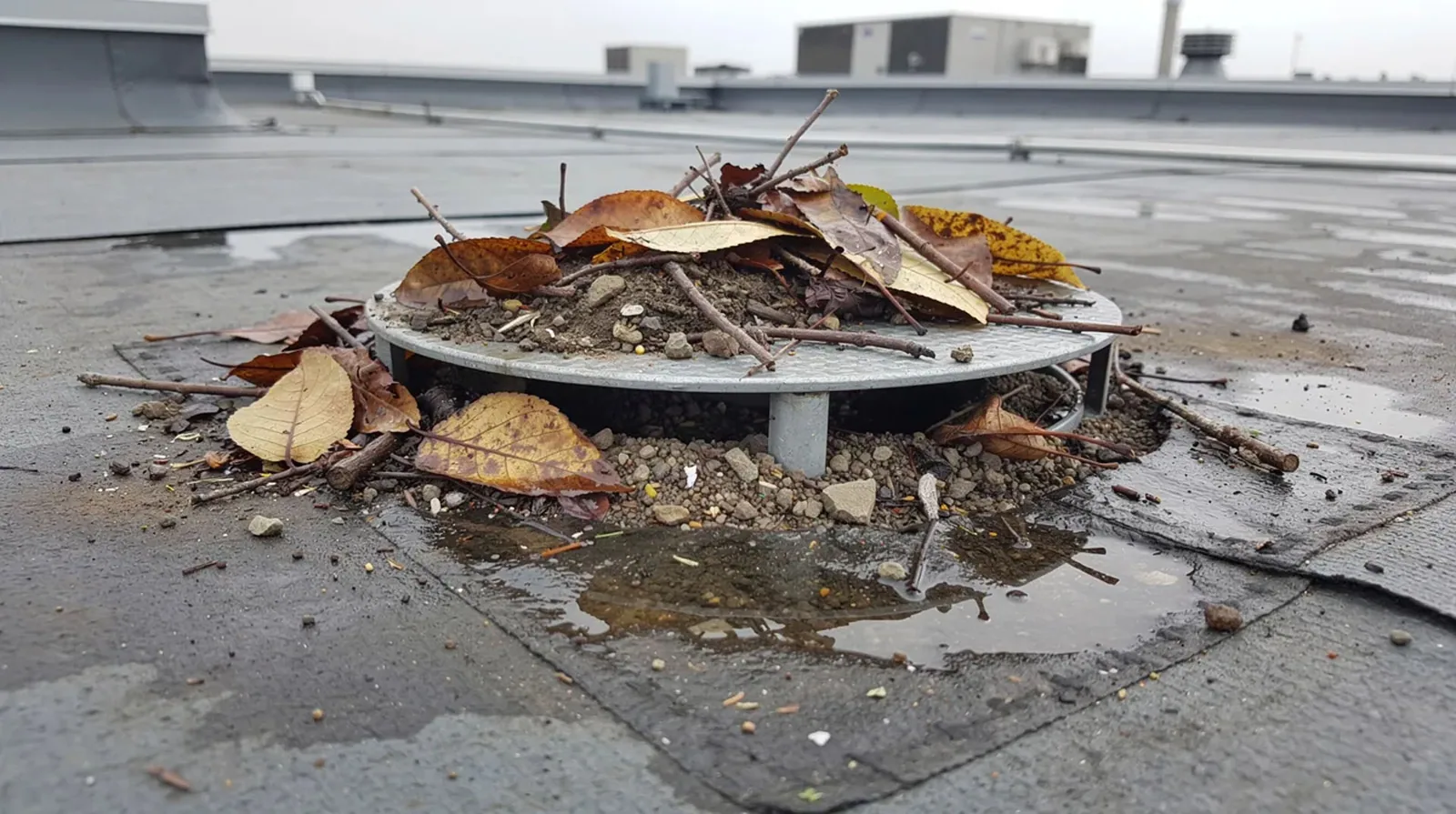
At a drain, scupper, or gutter, the opening, membrane connection, and visible discharge route each matter. We check the bowl, flashing, surrounding roof surface, overflow path, and any visible restriction. A roof drain correction applies to a confirmed defect at the roof connection. If the pipe is concealed or the water path continues inside a wall, the recommendation marks the point where another investigation is needed.
Edges and penetrations need a compatible transition from the field membrane. We inspect parapet terminations, coping joints, curb corners, vent bases, and skylight flashing where present in the inspected area. Loose metal, open laps, or failed sealant may direct water into the assembly, but each observation must connect to the reported path. We photograph the detail and keep suspected causes distinct from confirmed conditions.
Rock Hill's warm, humid Piedmont climate brings recurring rainfall through a long warm period. We account for that when planning temporary closure, then inspect Pineville's actual slope, drainage layout, and exposed materials to choose protection if removal spans more than one work period.
Set the Access and Protection Controls
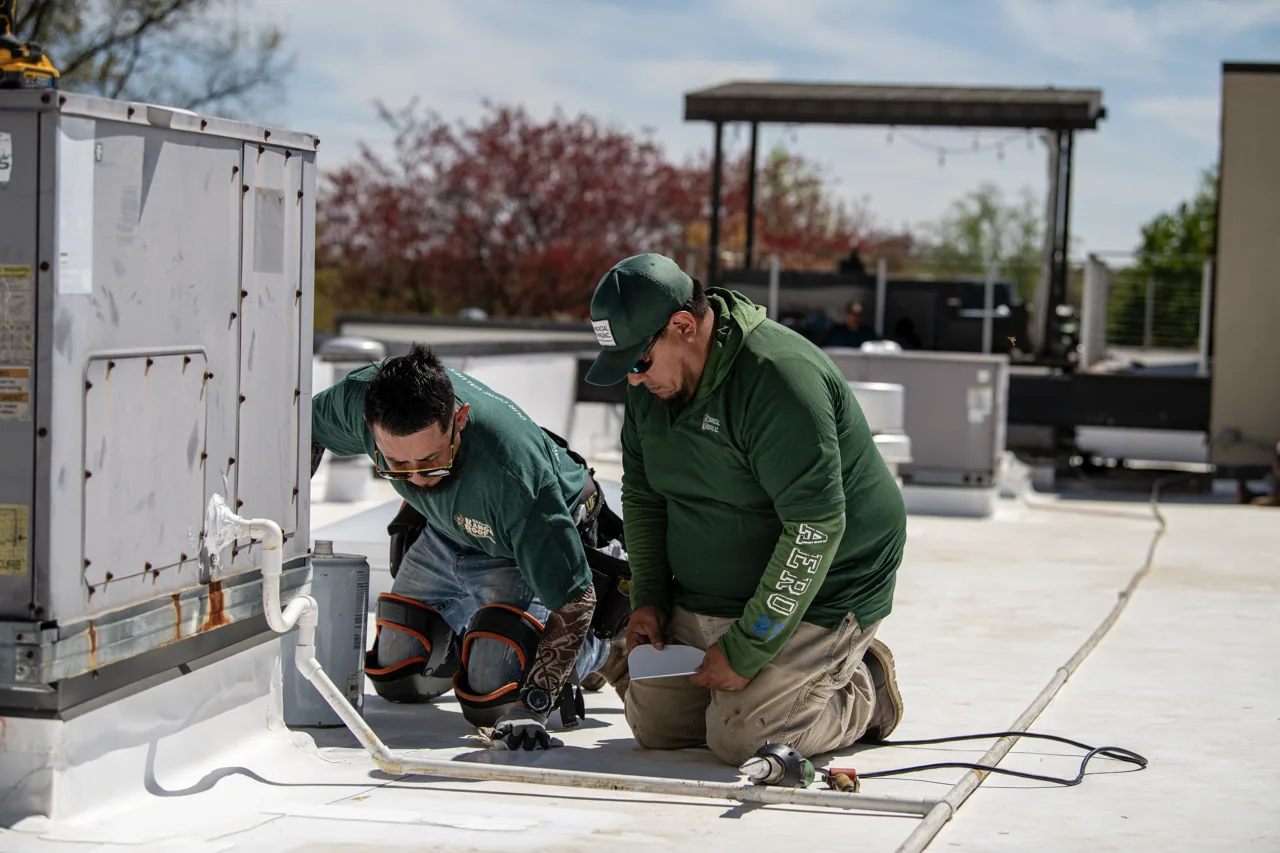
Before mobilization, we confirm the contact who can authorize work, roof entry, equipment movement, lift placement, and delivery conditions. We confirm where material can be kept and which entrance or operating zone must remain clear. If interior protection is needed, we define the area below the roof work and how it will be checked after each closure.
Work on a facility can be divided into roof zones to limit the open area. Weather, material preparation, and what removal exposes can change the sequence. We identify a stop point and temporary cover method for the active section, then record any change that needs approval. That gives facility staff a practical view of access effects without promising that all operations will remain unaffected.
The regional employment base spans several uses, including manufacturing, healthcare, distribution, retail, and offices in Fort Mill and Rock Hill. Those nearby industries can involve different delivery, room-protection, or production needs; we confirm each Pineville property's operating constraints with its facility contact. A phased roof plan can list confirmed limits after the owner identifies the actual use and access needs.
Compare a Local Fix With Renewal
A patch may resolve one confirmed opening when nearby material remains stable and allows a compatible tie-in. Repeated leaks, loose attachment, widespread wet insulation, or several failing transitions can support testing or a broader review. A repair proposal names the preparation, product, roof zone, access, protection, and field limits. It should not treat an uninspected area as included simply because it shares a roofline.
Cost and duration depend on assembly, repair extent, seam or flashing count, access, staging, disposal, interior protection, and concealed damage. Recover work also needs a review of retained layers, attachment, insulation, and drainage; replacement adds tear-off and closure requirements. We identify assumptions and exclusions before comparing the options. If testing can change the recommendation, the proposal states what the test can prove and where its result applies.
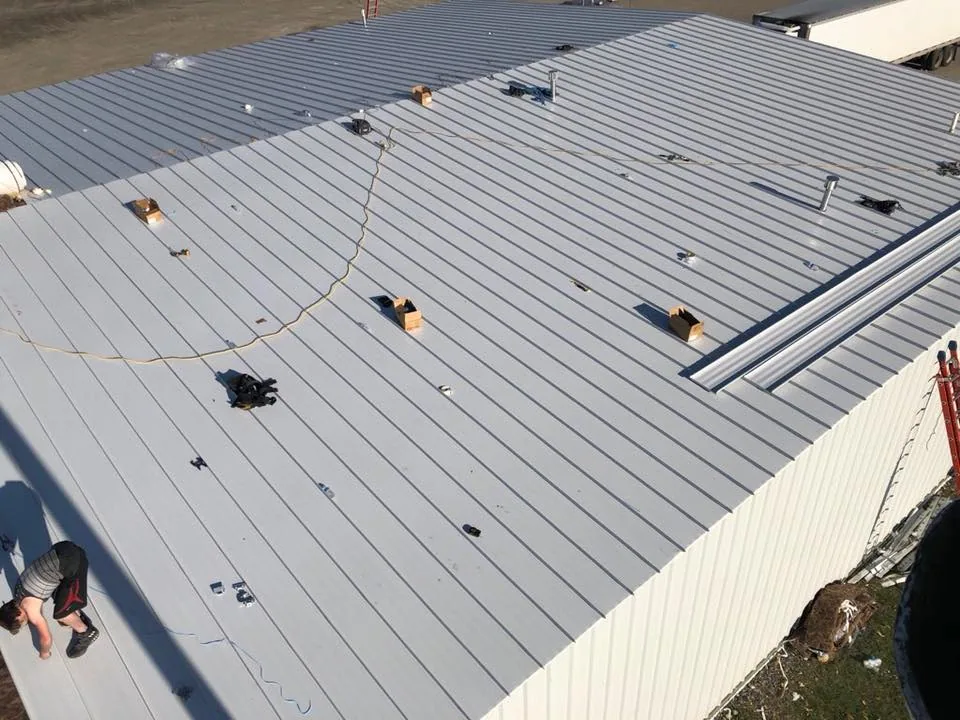
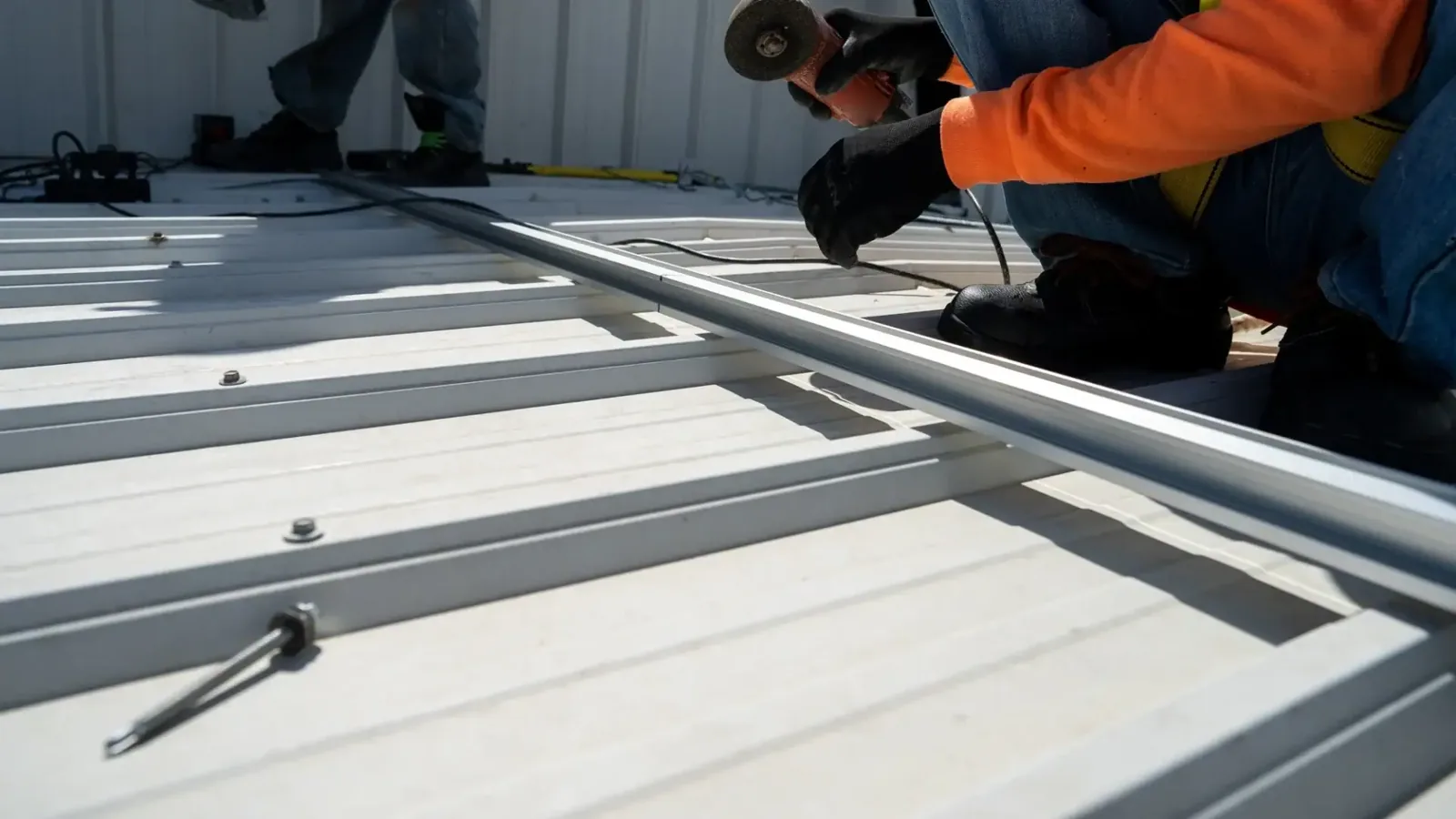
For metal roofing, we inspect fastener condition, panel laps, end joints, and transitions before treating a leak as a sealant-only issue. For a membrane, we focus on seam integrity, flashing compatibility, attachment, and the substrate at the repair edge. The same symptom can call for different preparation depending on the assembly. We identify the material actually present and avoid specifying a generic patch across incompatible surfaces.
Temporary cover and permanent correction have different purposes. A cover limits exposure while the condition is assessed, while the finished repair needs a compatible connection and completed detail. We record each phase and any part awaiting approval. A maintenance program can revisit selected seams, outlets, and previous repairs as the roof's history develops, with the route based on observed needs instead of a generalized schedule.
Leave a Clear Roofing Handoff
Closeout lists what was inspected, what material was installed, which photos show the work, and whether any test or access restriction remains. A roof plan lets us relate findings to the owner's zone names. When a later leak or equipment change occurs, the next inspection can check the same transition and determine whether the condition has changed or a separate area is involved. The file can also show where a trade handoff occurred and what remains for the next scheduled review. Pineville's position on the I-77 and US 21 connection makes regional travel direct, but the property manager should identify delivery restrictions, staging limits, and roof-entry rules before material arrives.
For commercial roofing in Pineville, share the building use, symptom, roof plan, repair history, recent rooftop work, and any entry rules. Those details help set the initial route and identify whether the estimate needs an access allowance or a test. Fort Mill, Rock Hill, and the I-77/US 21 connection supply regional context, but the work recommendation stays tied to the Pineville roof inspected.
Questions About Pineville
No. The industries associated with nearby Fort Mill and Rock Hill do not identify an individual property's assembly. We check records and visible material before selecting a repair method.
We compare each candidate detail with the interior report and roof geometry. The findings show which source is confirmed and what access or test could resolve the remaining possibilities.
The retained layers, moisture, attachment, drainage, and edge condition affect whether another assembly can be added. We inspect those items and state the assumptions behind either comparison.
Yes. A phased scope can separate active zones, protection, and closure points. We define each area and note how access or weather could affect the sequence.
Plan Commercial Roofing in Pineville
Send the property use, reported condition, roof drawing, prior work, and access restrictions. We will set the inspection route and prepare a roofing scope tied to the findings.