Government building roof service in Rock Hill, SC, with condition reporting, leak repair, maintenance, and code-aware renewal planning for public facilities.
A leak in a public counter area, records room, courtroom, or service garage can change how a building operates. Government building roofing in Rock Hill, SC, begins with the affected room, the roof plan, and the contact authorized to arrange access. We inspect the roof zone, trace visible water paths, and record what remains untested. Rock Hill’s building stock includes institutional campuses and downtown redevelopment, while Fort Mill supports healthcare, manufacturing, and office employers. A downtown Rock Hill roof review and a Fort Mill facility assessment still require separate site findings.
Identify Each Public-Facing Zone
Public buildings often combine offices, meeting rooms, public counters, storage, and mechanical areas. A single roof may cover several departments, but the leak record should identify the room and roof zone involved. Check the plan against drains, perimeter walls, skylights, pipe penetrations, equipment curbs, and earlier repairs. Trace the likely water path before deciding whether a patch is sufficient. If only one wing was reached, state that boundary clearly and leave other areas open for a later inspection.
Set access with the facility contact before the crew arrives. Confirm check-in, security escort, roof hatch location, safety controls, public hours, and any area that cannot be closed. Work near a records room or public counter may require temporary protection below, while mechanical spaces may need an equipment contact. A commercial inspection can document the inspected section, photographs, and test limits. Keep public operations in the schedule, not as an assumption that all rooms are available at once.
Separate the Roof Leak from Other Sources
Interior water can follow a deck, beam, or conduit before it appears at a ceiling. Compare the reported timing with rainfall, HVAC operation, and recent work on rooftop equipment. On the surface, check laps, flashing, drains, scuppers, wall transitions, and penetrations above the affected area. Photograph the suspected opening and the surrounding field so a decision-maker can see whether the condition is isolated or repeated.
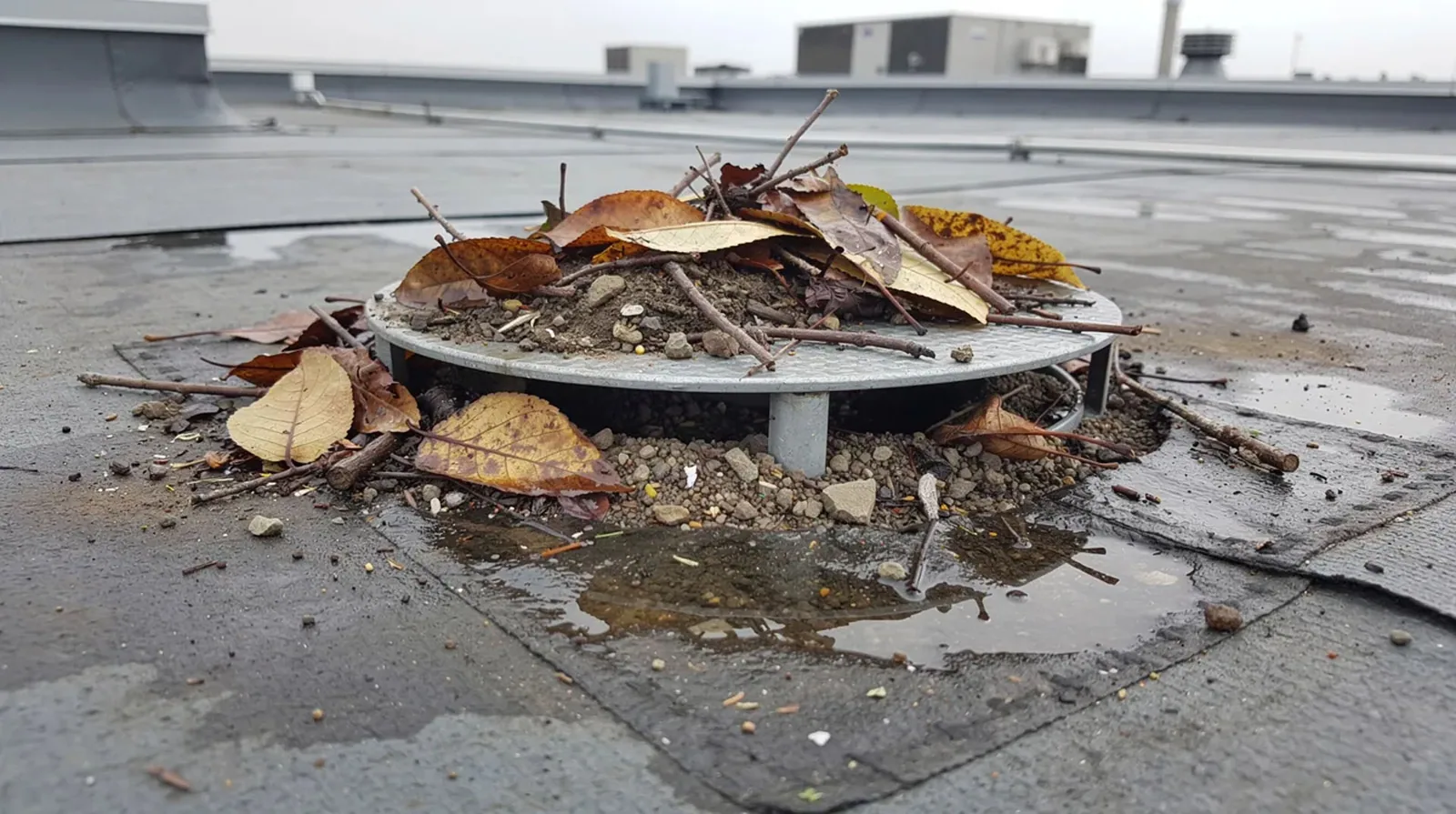
Where insulation may be wet, surface observations alone may not show its extent. Moisture mapping or a controlled test opening can provide additional evidence, each with a defined limit. Record the method, location, materials exposed, and closure detail. If plumbing or condensation remains plausible, note what needs to be checked by another trade instead of attributing every stain to the roof. Drain and scupper work should identify the outlet, membrane tie-in, and discharge route, not just clear debris from the bowl.
Keep the Assembly and Code Record Together
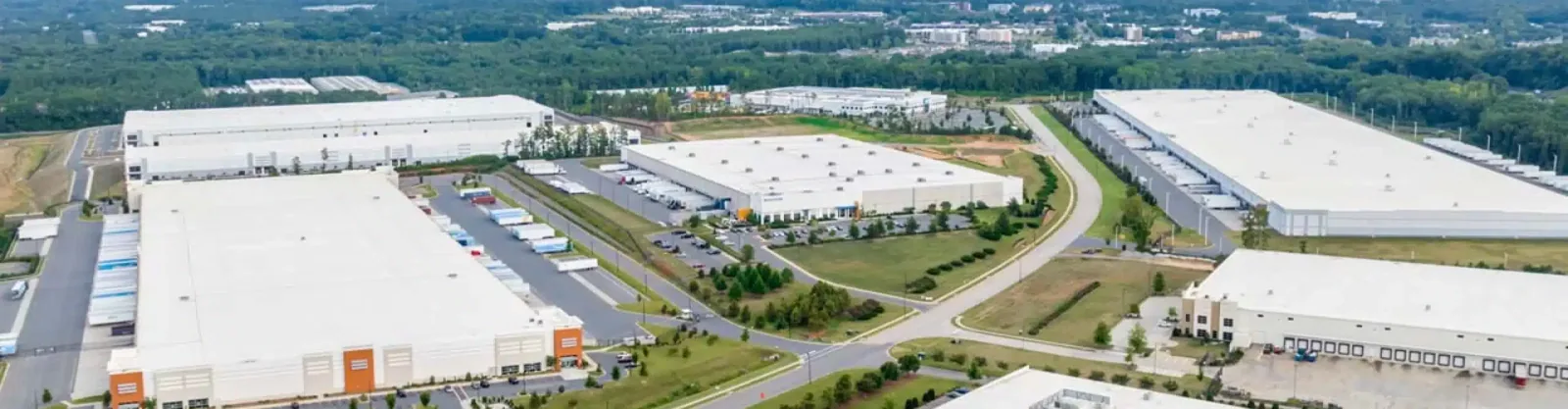
South Carolina municipalities and counties enforce the 2021 International Building Code with state modifications, effective in 2023. The state commercial energy code schedule identifies the 2009 International Energy Conservation Code as adopted for commercial work. These facts help the facility team frame code review, but they do not determine the requirements for a particular alteration. Confirm the scope with the authority having jurisdiction and the design professional before changing insulation, roof height, drainage, or edge conditions. The wider market includes Riverwalk Business Park, a Rock Hill business and industrial park with I-77 access. Its listed uses include manufacturing, distribution, and office space. Those neighboring settings do not establish a government building's roof condition, but they reinforce the value of keeping separate records when a public owner manages different property types across York County. Index each inspection by building and roof zone, then identify the facility contact who can approve testing or repairs. A Riverwalk-area roof review remains specific to the property inspected that day. Keep each site's access limits, assembly, photographs, and follow-up dates attached to the right record.
Record the existing membrane or panel system, number of layers when known, deck type, insulation condition, perimeter attachment, and any equipment that crosses the work zone. A recover proposal must account for existing layers, moisture, load, drainage, and finished elevation. If drawings differ from field conditions, show the discrepancy before quantities are finalized. A roof condition report can organize photographs and follow-up items for building staff, while an office roof review illustrates a related property type with its own access needs.
Protect Services During Construction
Public schedules can include hearings, elections, permit counters, deliveries, and routine occupancy. Map these activities to roof zones and work hours before setting a sequence. Identify a loading or staging area that does not obstruct public entry, emergency access, or service vehicles. If noise or odor will affect a room below, note the duration and provide an alternate space when the facility can arrange one. The roofing scope should say what opens each day and how the roof will be secured before work pauses.
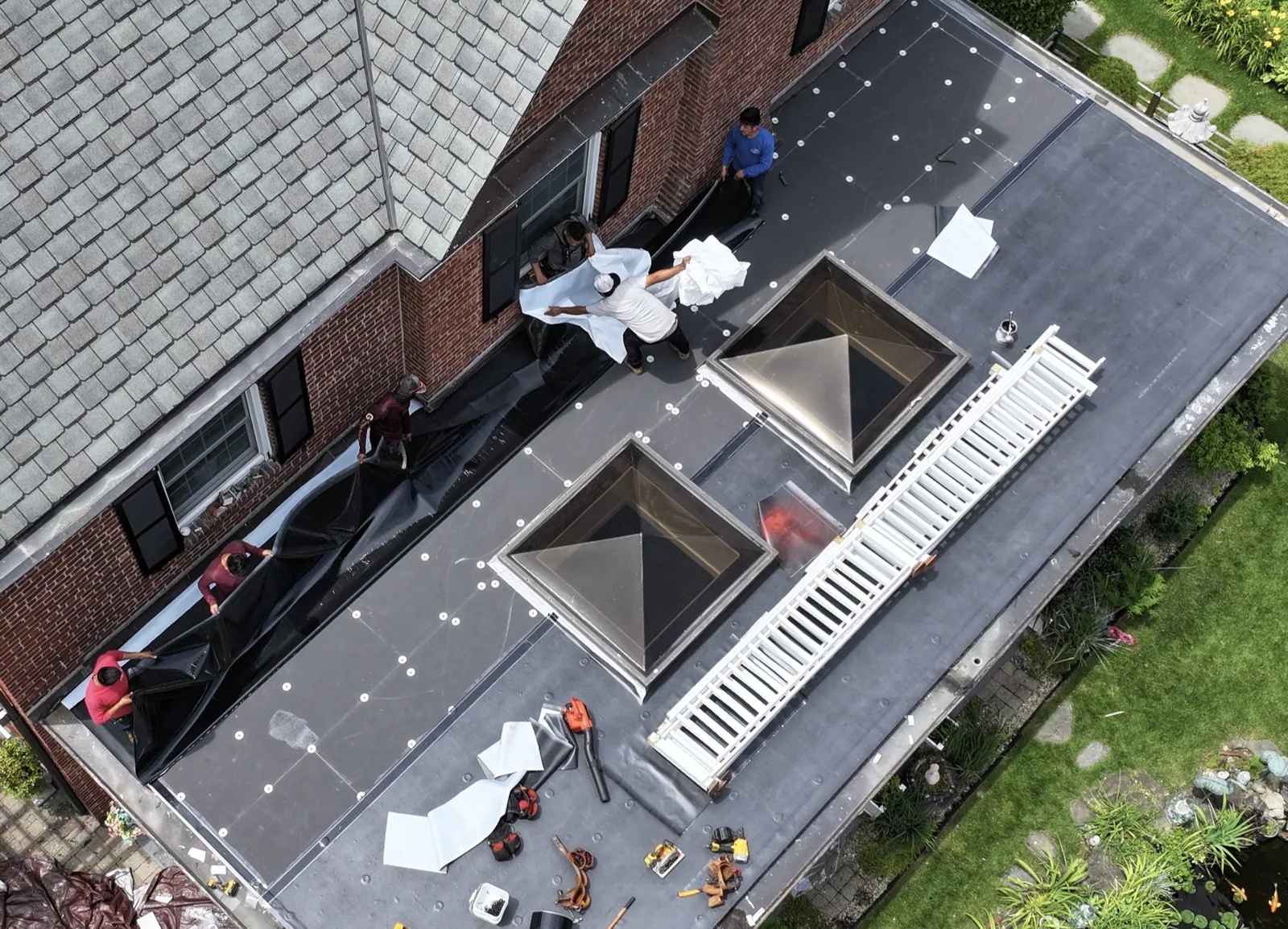
For larger renewal, divide the work by wing or building and set daily closeout points. Maintain a temporary dry-in plan for changing weather, and identify who checks it after the crew leaves. Tie each change order to an observed condition and approval record. School roof planning faces similar scheduling pressure around occupied buildings; government facilities need their own operating calendar and access rules. Keep repair work separate from security, electrical, or HVAC tasks performed by other vendors.
Build a Repeatable Condition File
At each visit, record the date, weather, roof zone, detail inspected, photographs, action taken, and any area that could not be reached. Track seam movement, drain condition, sealant separation, open flashing, loose edge metal, and previous repair locations. If the same detail returns, compare the new image with the prior record before authorizing another patch. A clear history helps facility staff distinguish a recurring defect from a new event. List the building's public and staff entrances separately so occupants know which route remains open during each phase. Confirm whether a roof hatch, lift, or escort is required, and identify who can stop work if a public event changes the schedule. Those details belong beside the roof-zone sequence, not buried in a general construction note. When concealed conditions change quantities, photograph the exposed layer and request approval before extending the repair boundary.
Capital planning should compare the condition of each assembly, not assume that all buildings in a public portfolio are alike. Separate completed maintenance from recommended testing, active repairs, and long-term renewal. If the work requires a tear-off, verify the deck and concealed conditions as the roof is opened, then update the record when materials or quantities change. A maintenance program can preserve that history across visits. Send the roof plan, affected department, access limits, and approval path to establish the first inspection boundary.
Questions About Government Building Roofing
We coordinate check-in, access routes, work hours, staging, and temporary protection with the facility contact. A multi-zone building may need phased work, each with a defined opening and end-of-day closeout.
List the roof zone, observed assembly, photographs, test locations, repairs completed, and any area that still needs inspection. The file should separate maintenance, confirmed damage, and recommended investigation.
No. The code edition is context for review, while the actual project requirements depend on the alteration and authority having jurisdiction. Confirm design questions before setting insulation, edge height, drainage, or attachment.
We compare the roof condition with the timing, HVAC operation, and nearby plumbing or construction. The record states what the roof inspection confirms and what needs review by another trade.
Repeated repairs, wet insulation, attachment concerns, deck condition, and drainage all affect the decision. Compare those findings by assembly and zone rather than treating an entire portfolio as one roof.
Review a Public Facility Roof
Share the building plan, affected department, roof history, operating hours, security steps, and approval contact. We will document the inspection boundary, report visible conditions, and identify the next repair or capital decision supported by the evidence.