
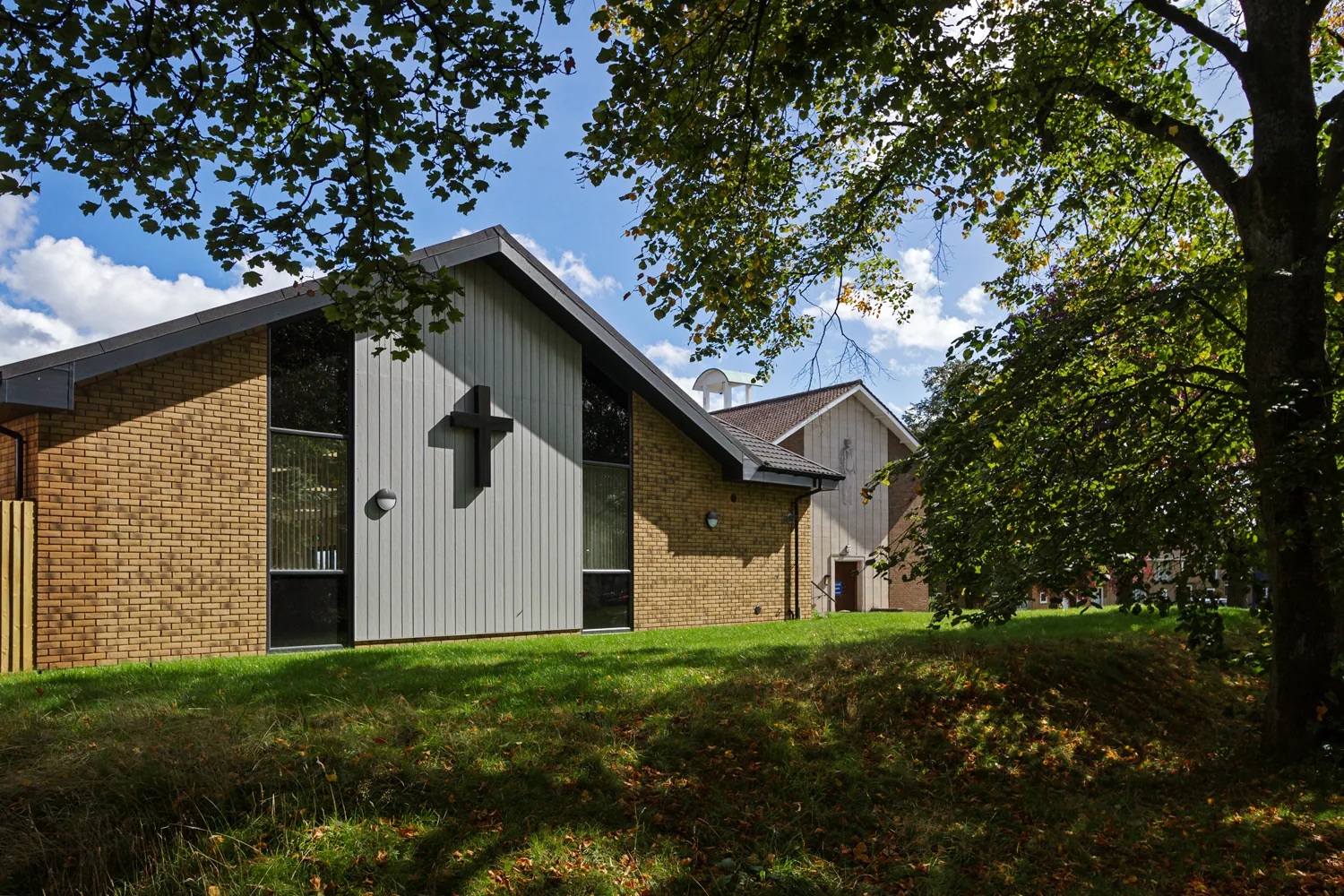
Church roof repair and maintenance in Rock Hill, SC, with inspection plans for worship, education, offices, and community-use buildings.
A leak above a sanctuary, fellowship hall, or weekday classroom can affect different spaces under one roof. Church roofing in Rock Hill, SC, begins with the room where the issue appeared and the roof section that serves it. We inspect the surface, edge conditions, penetrations, and drainage, then set out what can be confirmed. The market includes institutional campuses as well as downtown redevelopment and retail; I-77 links Rock Hill's business parks with the wider county. Downtown Rock Hill and Waterford Business Park illustrate different property settings, while each congregation’s building keeps its own roof record.
Separate the Sanctuary from the Annex
A church property may combine a taller worship space, lower classroom wings, offices, a kitchen, and covered entries. Roof slopes and materials can change between those sections. During inspection, identify each roof plane, its transition, and the interior rooms below. Check valleys, wall flashing, skylights, drains, scuppers, and penetrations without assuming that a leak in one wing began at the nearest roof detail.
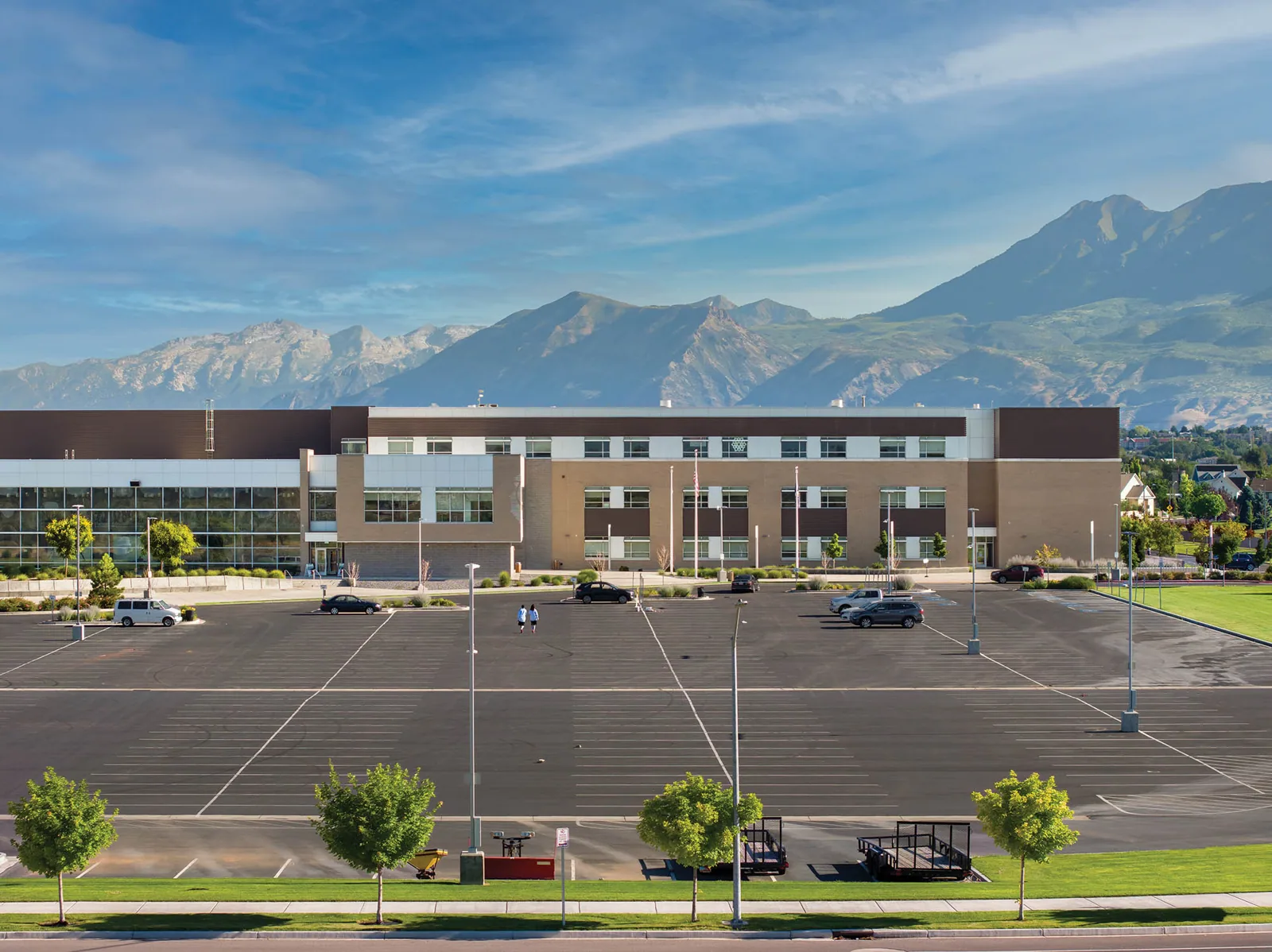
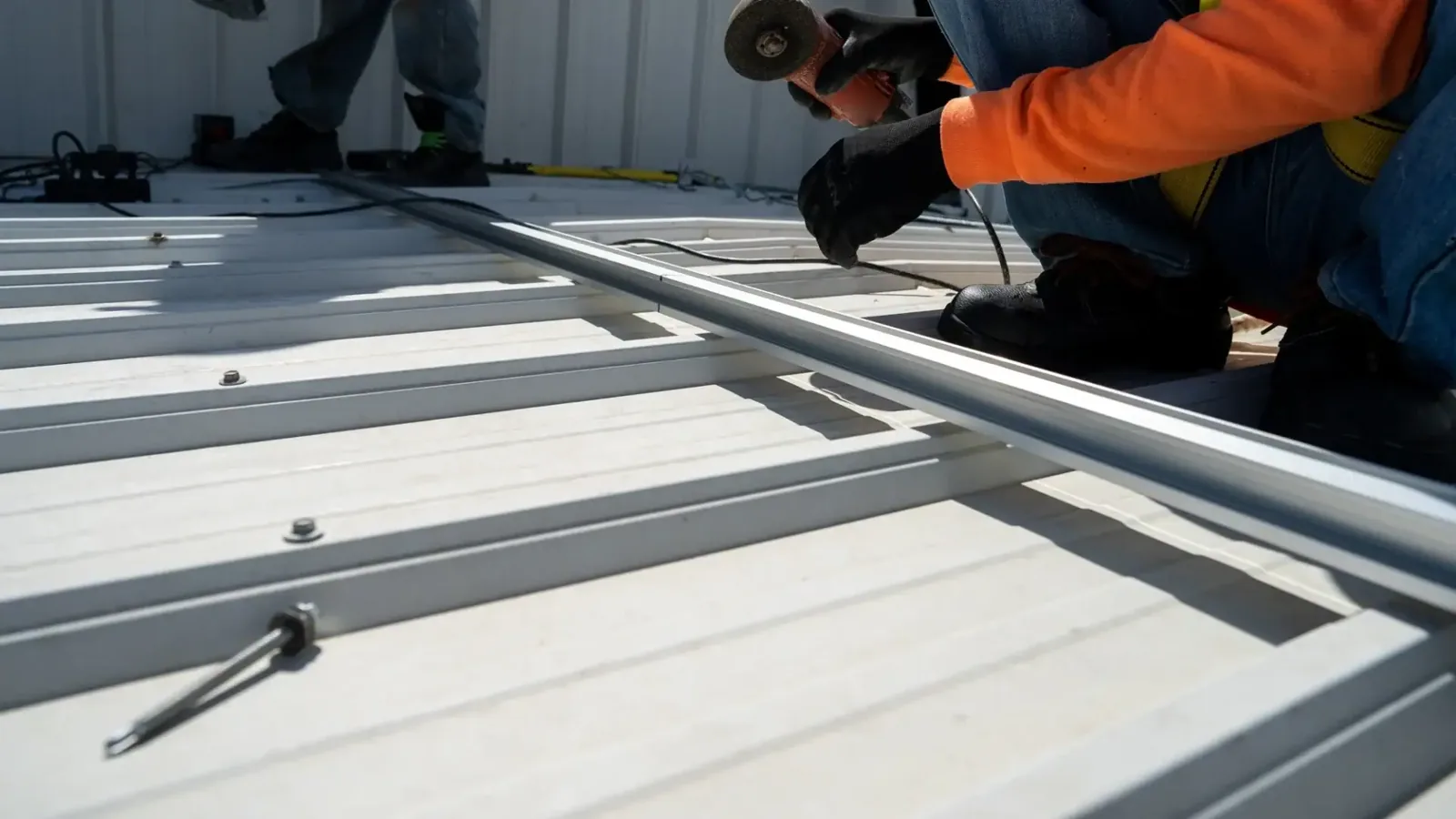
On a sloped roof, look for loose or displaced panels, failed fasteners, open seams, and flashing at ridges or walls. A low-slope section needs a different review of membrane seams, ponding, drains, and edge termination. The work record should name the area inspected and the system observed. If the property has several additions, mark where the assembly changes before comparing repair methods. A school roof assessment raises similar questions about multi-wing layouts, but the church’s own plan and use determine the inspection sequence.
Trace Entry Before Opening the Roof
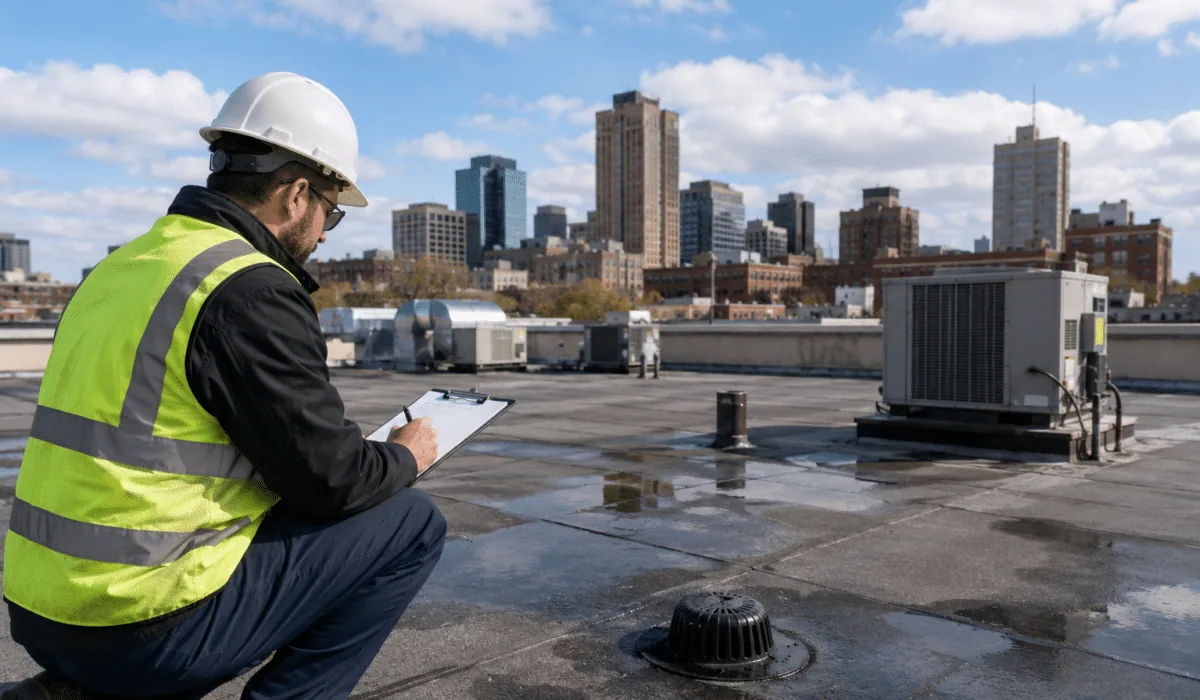
We compare a ceiling stain with the roof framing, insulation path, drains, and nearby penetrations to locate the opening before repair. Ask when the leak occurs, whether wind direction or rain intensity changes it, and whether a recent service visit touched rooftop equipment. Then compare those details with the roof plan. We inspect the likely water path and nearby transitions, photograph the condition, and distinguish a confirmed entry point from a location that still needs testing.
If concealed moisture is suspected, map the area before cutting. A test opening should be placed deliberately, protected during the work, and closed with compatible materials after the inspection. Record the sample location and what each layer shows. If the interior evidence points instead to plumbing or HVAC, keep that possibility separate until the source is confirmed. A commercial leak investigation can define the roof portion of the review, with additional trades coordinated when the evidence leads beyond the membrane.
Plan Around Gatherings and Daily Access
Roof access can cross parking areas used for services, school pickup, food deliveries, or community programs. Set the work window with the facility contact and identify where equipment, debris, and temporary protection will be placed. If a lift or material delivery could affect accessible entrances, agree on an alternate route before mobilization. The work plan should also identify rooms directly under the repair zone and any activity that needs a pause while the roof is open.
Small repairs may fit between scheduled uses; a larger tear-off may need phases across separate wings. Temporary dry-in materials, daily cleanup, and a clear closeout inspection belong in the sequence. Do not assume every section can be reached from the same ladder or staging point. For facilities with several building types, occupied-building reroofing can keep open areas and active work zones distinct. The final schedule should name the affected section, contact, and condition for reopening that area.
Use Local Weather as a Maintenance Cue
Rock Hill’s warm, humid Piedmont climate brings regular rainfall, while York County appears in western Carolina records for hail and tornadoes. Rock Hill's rainfall and York County's tornado history make post-event roof checks useful; inspection findings determine whether a church roof needs repair. After a reported storm, check roof edges, penetrations, loose metal, drains, and older repair points. Photograph the same locations used in earlier records so the facility team can compare changes rather than rely on memory.
Routine visits should clear leaves and other debris where safe, inspect the drain path, and look for sealant separation or movement at roof-to-wall transitions. Where trees or nearby construction affect access, document what was reached and what was obscured. Keep maintenance findings separate from storm repairs and capital recommendations. A maintenance visit can establish recurring observations for each roof section, while a hail-damage review should record specific impact evidence before repair quantities are set.
Compare Repair with Renewal Evidence
One active leak does not answer whether a whole roof should be replaced. Review membrane or panel condition, attachment, moisture extent, deck, drainage, perimeter details, and the history of repairs in each zone. A recover proposal also needs the existing layers, substrate, drainage, and finished height to be known. If several additions were completed at different times, record each system and its condition instead of treating the campus as a single assembly. A board packet can separate immediate protection from permanent work. Note whether a leak is active, what material is exposed, and whether interior protection or a temporary cover remains. If the repair depends on dry weather, another trade, or material availability, give the facility contact a clear next check. Do not leave an open roof section without a closeout plan. When volunteers or outside maintenance staff report a leak, preserve the date, room, weather, and photographs, then have qualified personnel review the roof before anyone walks it. Steep surfaces, skylights, and weak decks present fall or breakthrough hazards; an unapproved climb is not an acceptable inspection method. Where worship, administration, and rental offices share a campus, office-building roof planning can help separate those scopes while the church keeps its own assembly record. Confirm who may approve access, temporary protection, and any change to the agreed repair boundary.
A useful church roof file includes drawings, photographs, prior invoices, test locations, material information, and limits on what was inspected. It should distinguish repair completed from work proposed and list any follow-up needed. The board or property committee can then compare options against the same roof zones and operating needs. Send the roof plan, the room affected, the recent maintenance record, and any access dates the congregation needs protected. We will set an inspection boundary and describe the decisions supported by the findings.



Questions About Church Roofing
Often the visit can be scheduled around the building calendar, but access, roof layout, and the affected room matter. We confirm the work window and any restricted entrance with the facility contact before starting.
Water can move along framing, insulation, or a sloped deck before it becomes visible. We compare the interior location with the roof plan and inspect nearby transitions rather than assuming the closest penetration is the source.
We map each wing and transition, then record the material and visible condition by zone. Repair methods can differ between a metal roof, a membrane section, and an older addition.
A prompt visual review can document displaced details, impact marks, debris, and active water entry. We record the areas reached and tested, then tie any repair recommendation to visible conditions at the property.
Compare moisture extent, repeated repairs, attachment, deck, drainage, and the condition of each roof section. If the evidence covers only one area, expand the inspection before making a campus-wide decision.
Inspect a Church Roof
Share the affected room or wing, roof plan, known materials, past repairs, operating calendar, and access limits. We will trace the reported condition, record each roof zone, and identify the repair or renewal questions that need a decision.
