Coordinate inspections, maintenance, repairs, and reporting across multiple commercial roofs with building-specific scopes and priorities.
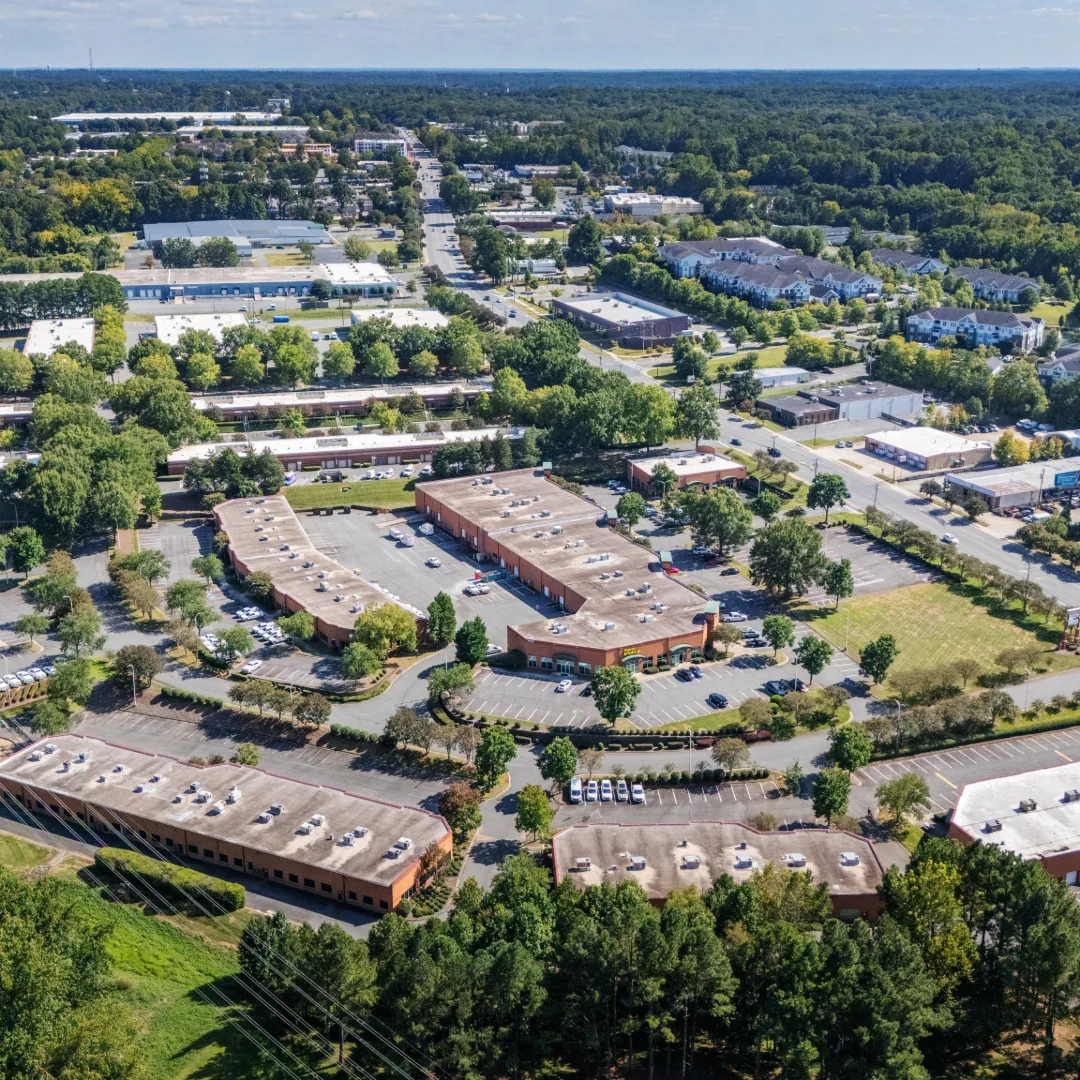
A multi-site roof program needs a repeatable way to track work while preserving each building's system, access, and condition. We can organize inspections and repairs across a group of properties using common report fields and separate roof-zone findings. Rock Hill's business districts include Riverwalk Business Park and TechPark, with varied industrial, distribution, office, and technology activity. Each roof still receives its own field assessment.
Set Portfolio Rules and Property-Level Records
Before a program starts, we confirm the property list, owner priorities, access contacts, approval path, reporting format, and any sites that should be excluded. Each asset can retain building labels, system details, roof plans, repair history, warranties, and open conditions. A shared format makes the records easier to compare without applying one roof's findings to another.
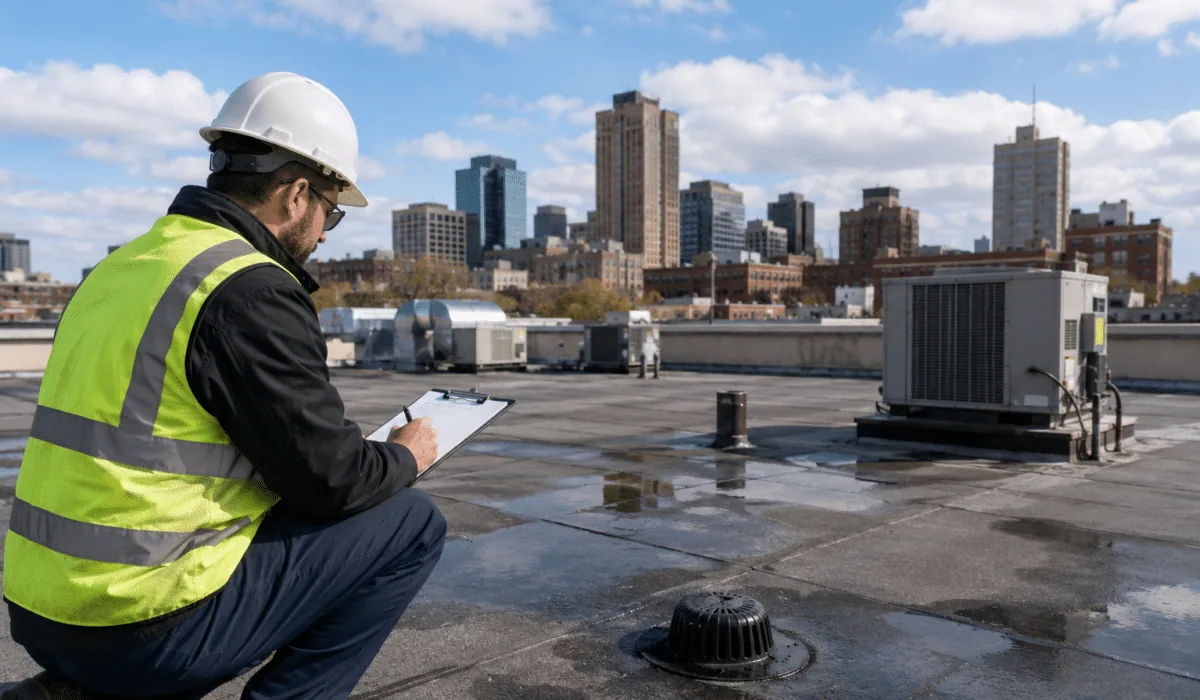
A commercial roof inspection can document the visible assembly, drains, seams, curbs, edges, and previous repairs at each included site. The report identifies areas reached and what still needs testing. A portfolio rollup can summarize common work themes, but individual condition conclusions remain tied to the property inspection.
York County planning points to the I-77 South corridor as a key location for a large share of recent commercial and industrial projects. Rock Hill also lists multiple business and industrial parks. Set coverage from the portfolio list, building use, roof access limits and the condition records for each property. The program starts from the owner's asset list and verified site information.
If the company uses its own location identifiers or facility-management system, we can carry those references into field records. If two site records appear to describe the same property, the owner confirms which identifier controls. Clear asset naming avoids mixed photos, repair history, and approval status across locations.
Apply Consistent Triage to Different Roofs
Each report can distinguish active leaks, safety concerns, routine maintenance, repairs, testing, and longer-range renewal. The priority is based on observed condition, use, and access rather than a generic label applied to an entire region. A leak investigation can trace a reported symptom, with findings recorded under the property and roof zone involved.
When multiple sites report similar symptoms, a common checklist can help compare observations. The roofs may still differ in membrane, age, equipment, drainage, or prior work. We document those differences and avoid treating a repeated symptom as proof of a shared defect.
Rock Hill's warm, humid climate has a long warm season and regular rainfall. That context makes drainage and exposed details useful inspection items across the portfolio, but weather does not identify a property-specific failure. If a regional event is reported, each site requires its own inspection before damage is assigned.
The owner can define escalation levels and who receives a notification for each category. We can report urgent openings separately from routine observations, then identify the site contact authorized to approve temporary protection, test openings, or permanent repair.
Coordinate Maintenance and Repair Across Locations
A scheduled maintenance visit can follow each roof's access plan and check drains, seams, penetrations, edges, and previous patches. Frequency should reflect the system, current condition, warranty documents, and owner objectives. The closeout record separates completed repairs, follow-up items and any roof zones the crew could not access.
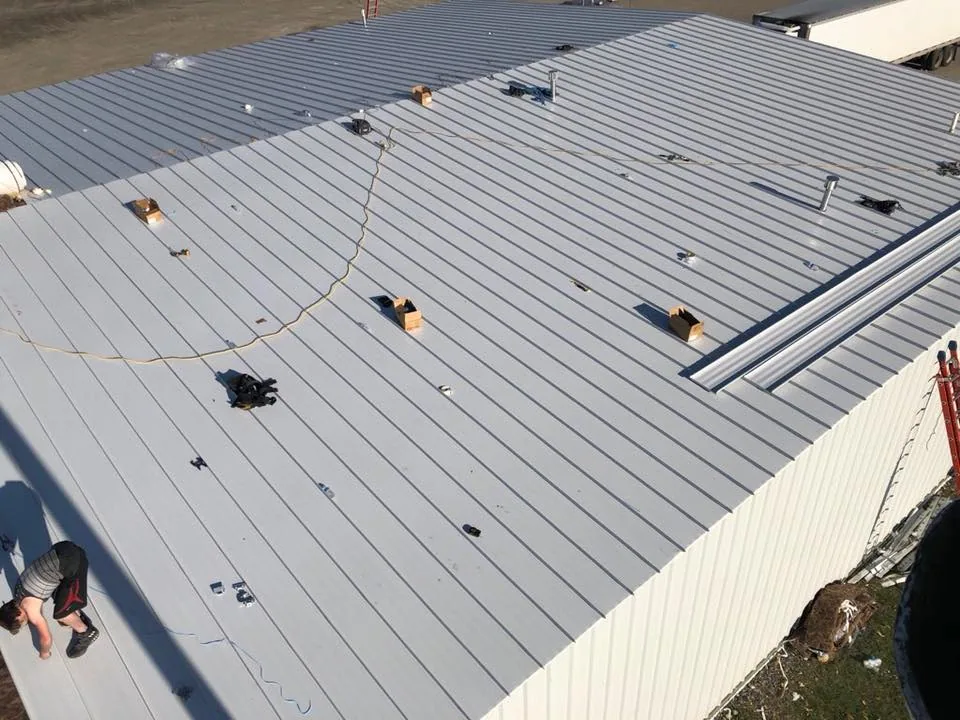
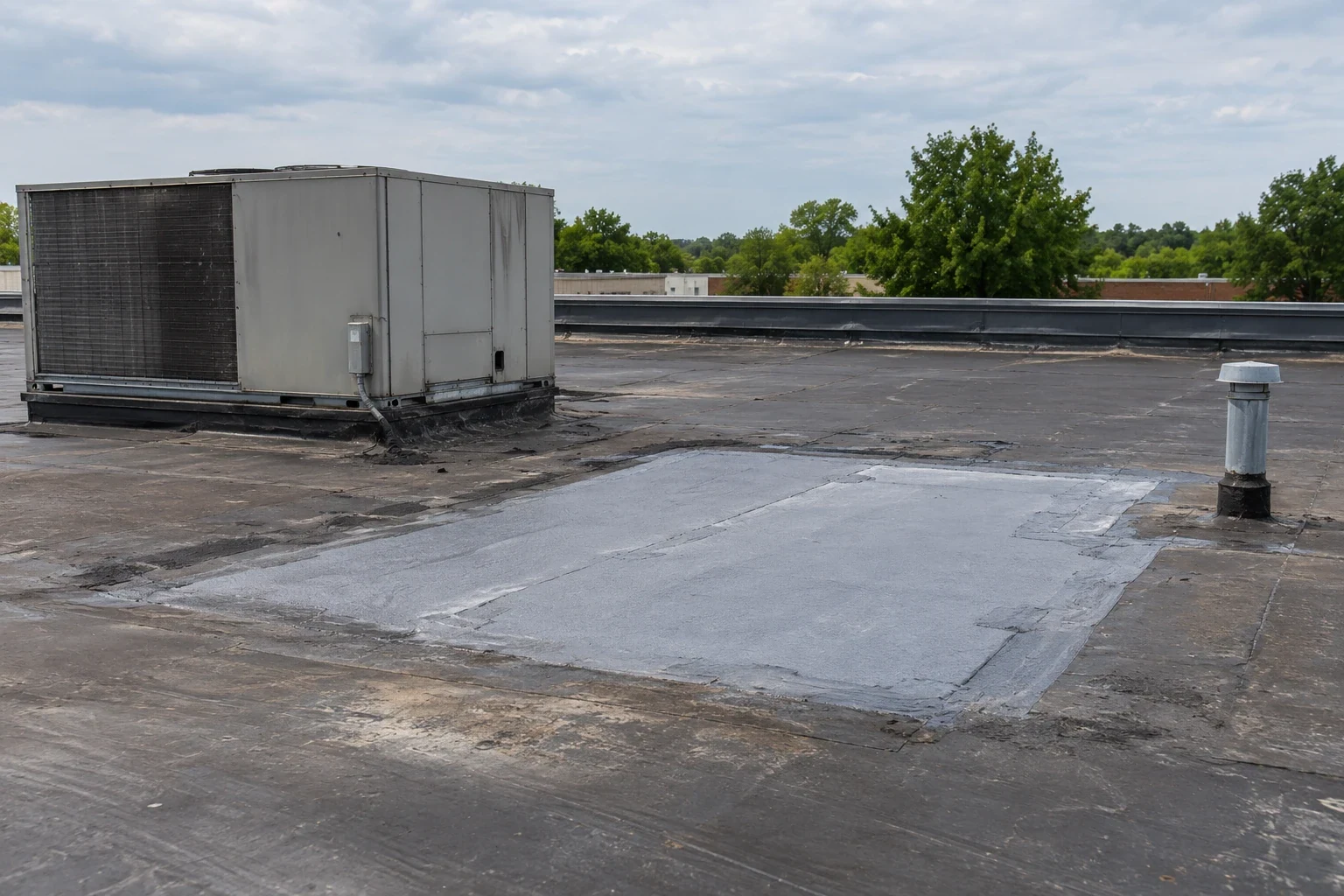
For repairs, we define the roof zone, material, preparation, compatible patch, access, protection, and closeout. A repair scope can be grouped by site or scheduled by priority. Cost and timing depend on roof type, repair count, detail complexity, access, disposal, and concealed conditions. We do not assume the same proposal applies to all buildings.
A larger work sequence may be phased around operating sites. A phased plan can identify access and closure steps for each location. Weather, equipment movement, production, tenant hours, and material preparation affect the schedule. If hidden damage appears, the team documents the finding and confirms added work before extending the boundary.
Where a site is near an active corridor or business park, staging and delivery access may differ from another location. The site contact confirms gates, loading routes, lift placement, parking, roof hatches, and restricted areas before the crew arrives.
Use Portfolio Reports for Budget and Follow-Up
A portfolio report can summarize inspections completed, active repairs, recurring issues, test needs, and upcoming decisions. The supporting records include photos, dates, materials, roof zones, and access limits. The summary should not imply that a property without an inspection was cleared or that a separate site shares the same condition.
A roof asset record can hold maintenance and repair history, while a condition report can preserve inspection findings for each building. Those documents support a capital discussion, but the owner determines reserve amounts and project timing.
When a roof replacement is considered, compare each property's system, drainage, edge conditions, access, and concealed risks. One contractor schedule can coordinate multiple projects, yet scopes should remain separate where assemblies or operating requirements differ. The owner can group similar work only after the specific roof evidence supports it.
If an acquisition, refinance, or tenant change introduces a new site, we add it after confirming its owner label, access contact, roof plan, and available records. The program remains useful when new buildings are added without blending them into historical findings from existing sites.
Keep Approvals and Closeout in Sync
Before mobilization, the portfolio lead and local site contact confirm who approves access, interior protection, testing, and scope changes. If the crew finds wet insulation or damaged decking, the area is secured and evidence shared before expansion. The approval record identifies the affected site, roof zone, and revised scope.
Closeout notes list locations completed, work performed, materials, photos, tests, and remaining actions. If access failed or work was deferred, that status is recorded by site rather than rolled into a general program completion number. This helps property teams see which decisions remain open.
Share the asset list, work calendar, roof plans, contacts, access rules, maintenance requirements, and approval thresholds. We can structure the inspections and repairs around those inputs. Riverwalk and TechPark help situate the service area, but the actual property plan and field conditions determine each work order.
Program summaries can show the number of inspections completed, work orders approved, and properties awaiting access. Those counts should reflect the assigned scope and actual visit status. We can report separately on findings that are pending an owner decision, so a scheduled task is not mistaken for a completed repair.
A replacement project can be tracked separately from routine repairs with its own scope, phase, and closeout record. That separation helps owners distinguish capital work from maintenance activity when reviewing portfolio results.

Questions About Multi-Site Commercial Roofing Programs
Yes, when each property, roof area, access contact, and reporting need is defined. Each building receives its own findings, photos, and limitations within the shared program format.
A common calendar can organize visits, but the appropriate route and frequency depend on each roof's system, condition, access, and any applicable warranty requirements.
We identify the property and affected roof zone, trace the reported condition, and keep the findings separate from other locations. The portfolio contact can receive a priority update while the local team coordinates access.
Provide the property list, roof plans, history, access rules, site contacts, approval process, maintenance priorities, and desired reporting format. We can identify gaps before visits are scheduled.
Build a Multi-Site Roof Program
Share the property list, roof records, access contacts, maintenance priorities, approval steps, and reporting format. We will organize site-specific inspections, repairs, and follow-up without combining unrelated roof conditions.