
Commercial roofing inspections, repairs, and renewal planning in Kingsley Business Park, scoped to the roof and the facility's work requirements.
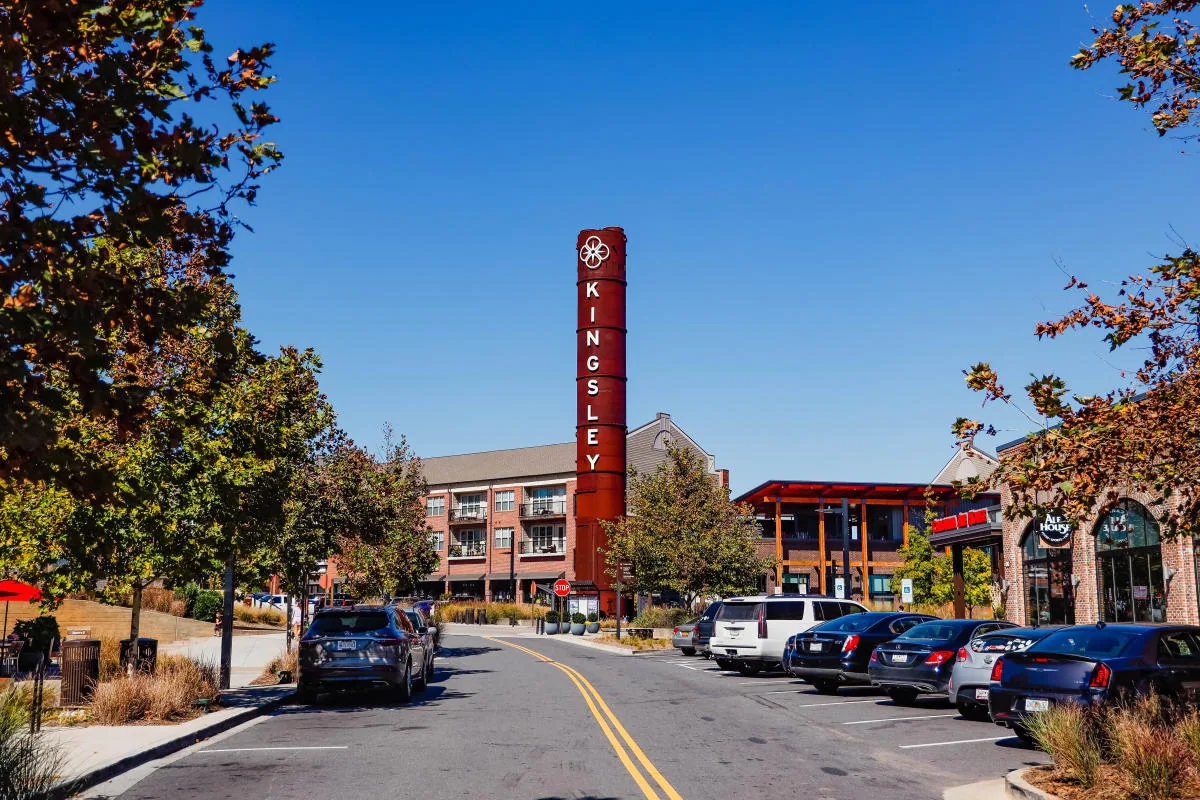
A commercial or industrial roof needs a route that reaches its seams, drains, edge details, and equipment bases before a repair is priced. Kingsley Business Park is a major commercial and industrial development area in Fort Mill. We confirm the building's roof system and operating requirements at the property rather than assigning a standard roof type to the park. Buildings across Fort Mill and Kingsley Town Center still need separate roof records and access plans.
Inspect the Assembly Across Its Work Zones
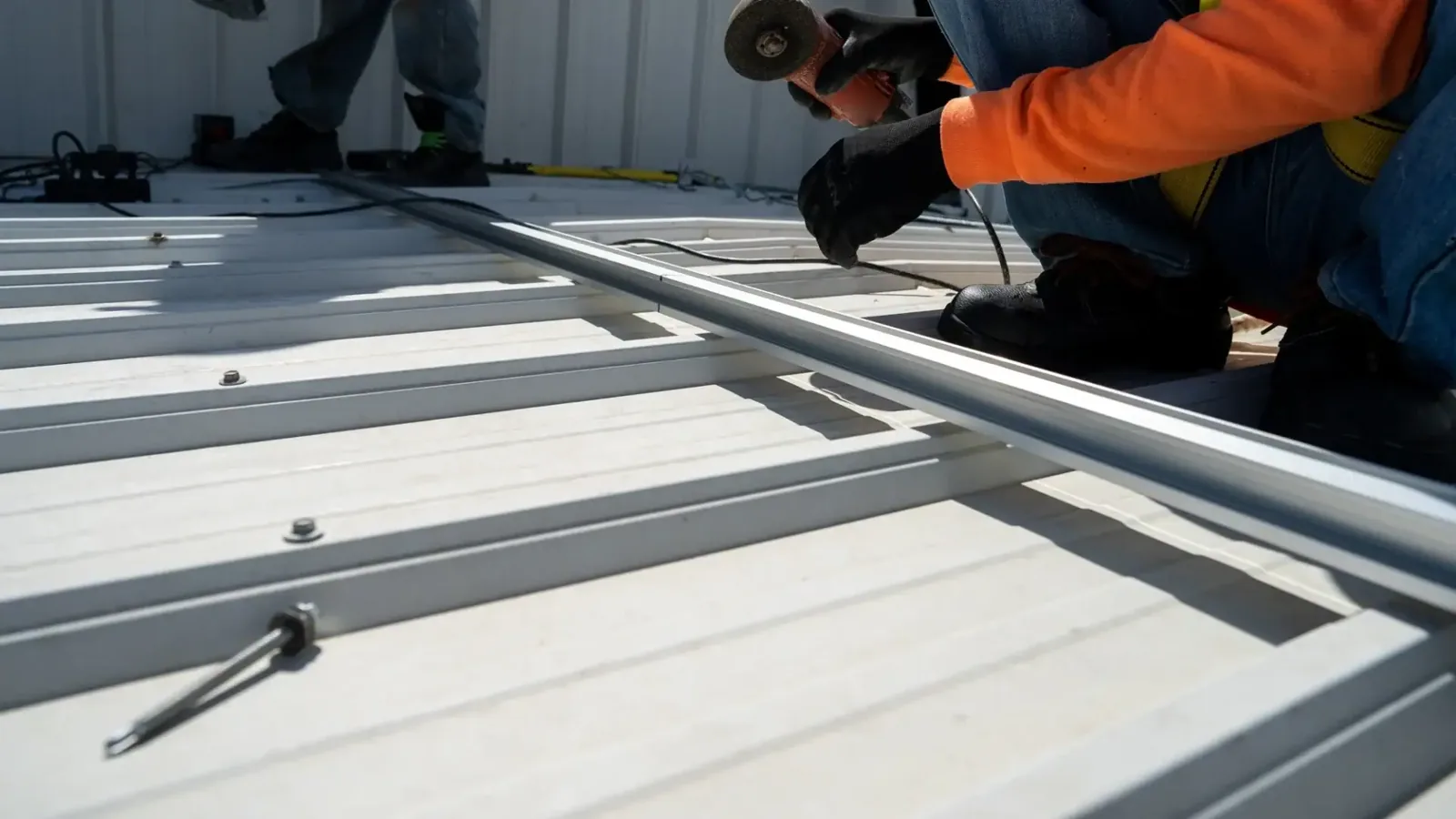
We start with roof records, the access point, and the reported condition. The field walk follows the accessible zones, checking membrane or metal, laps, fasteners, penetrations, curbs, drain bowls, and previous repairs. A commercial roof inspection can document which sections were reached and flag areas where a lift, escort, or test is needed. If multiple additions connect, each transition is recorded rather than treated as one uniform surface.
Kingsley Business Park includes commercial and industrial development. We compare each building's plans and repair history with visible roof details. An overlay or later addition can hide the original membrane, so we identify whether sampling would change the patch selection.
For a reported leak, the room, timing, and any recent rooftop work guide the inspection route. We compare the symptom with drainage, seams, roof-to-wall transitions, and equipment bases. A leak investigation documents the route examined and whether the source is confirmed. If a stain appears after mechanical service, the timing is useful context, but the flashing connection still needs direct inspection before responsibility is assigned.
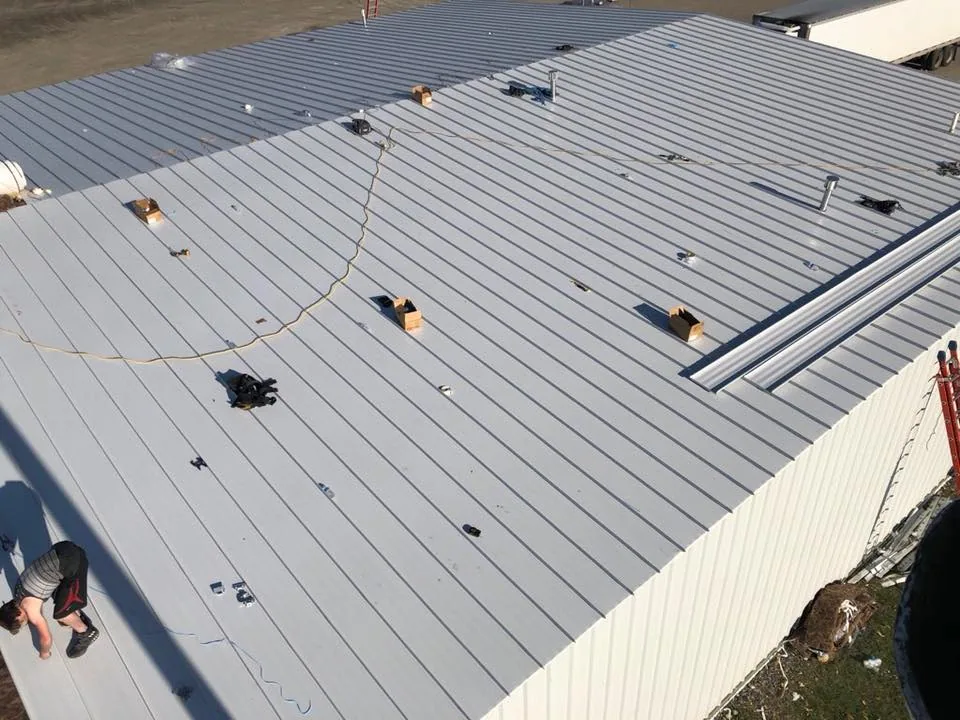
Long roof runs can contain changes in attachment or slope that are not visible from a single vantage point. We examine accessible seams and edges, mark any change in membrane or metal, and note where a fall-protection or access limit ends the route. A written report describes those boundaries so the owner can decide whether a broader survey is needed for a capital plan.
Follow the Drainage Route and Roof Edge
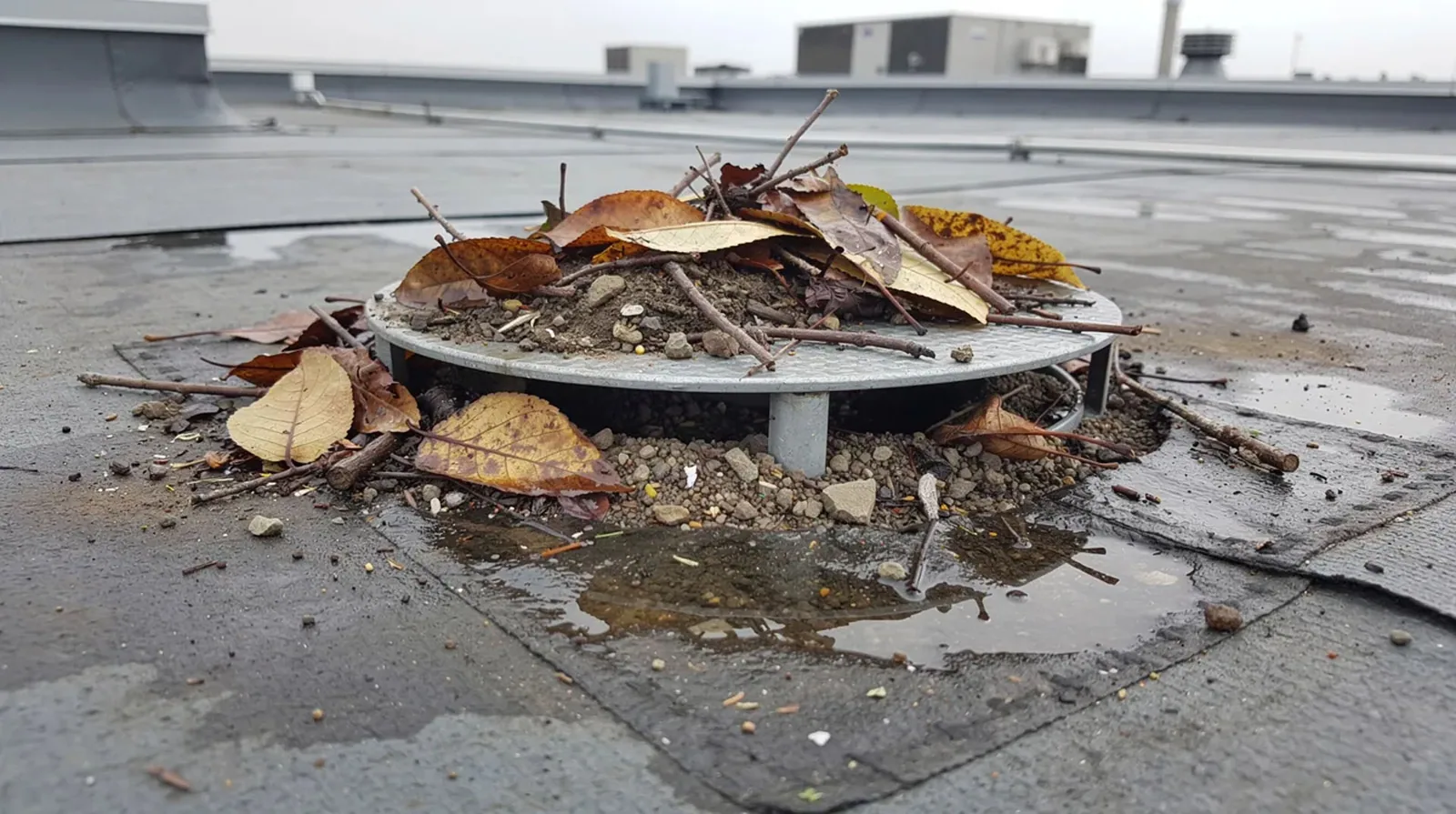
At each outlet, the inspection checks the opening, strainer, membrane tie-in, and visible discharge. A blocked drain, a failed connection, and a low area that retains water are different conditions. We identify which one the evidence supports before recommending cleaning, repair, or design review. If an outlet runs through concealed piping, we note that limitation rather than assuming the downstream line is clear.
Edges and parapets need a continuous transition between roof surface and wall. We check coping, edge metal, attachment, sealant, and flashing laps for movement or separation. A water mark near the perimeter does not prove the edge is the entry point. We compare it with the roof plan, drainage pattern, and nearby equipment so the proposed repair follows the path indicated by the inspection.
Rock Hill's warm, humid Piedmont brings recurring rain through a long season. At each Kingsley property, we check the roof slope, outlet, and discharge route, then plan temporary dry-in for any material exposed during repair.
Where a drain connection, unit curb, or wall transition is repaired, we identify the surrounding material needed for a compatible tie-in. If removal exposes a second layer or wet insulation, the crew protects the area and documents the added condition. The authorized contact reviews any expanded boundary before the work continues.
Stage Repairs Around Site Logistics
Fort Mill connects with Rock Hill and Charlotte by US 21 and I-77, and is a growing York County employment center. The property contact confirms delivery, security, and roof-access procedures. We confirm truck approach, loading time, lift location, overhead clearance, roof hatch, and any entrance or lane that must remain open before materials move.
Active commercial and industrial use can require clear emergency routes, production paths, or employee entrances during roof work. The facility contact identifies the restrictions and the areas below the repair zone. We agree on barriers, interior protection, and a daily closure step. Material preparation, weather, and conditions exposed during removal can affect the schedule, so we note which conditions could require a change in sequencing.
Rooftop equipment can require a coordinated handoff. Before a unit or line is moved, we identify who handles service, shutdown, temporary covering, and restoration of its roofing connection. The roofing scope names each curb or penetration included and leaves mechanical, electrical, or plumbing service separate unless assigned in writing.
Choose Between a Patch and a Larger Scope
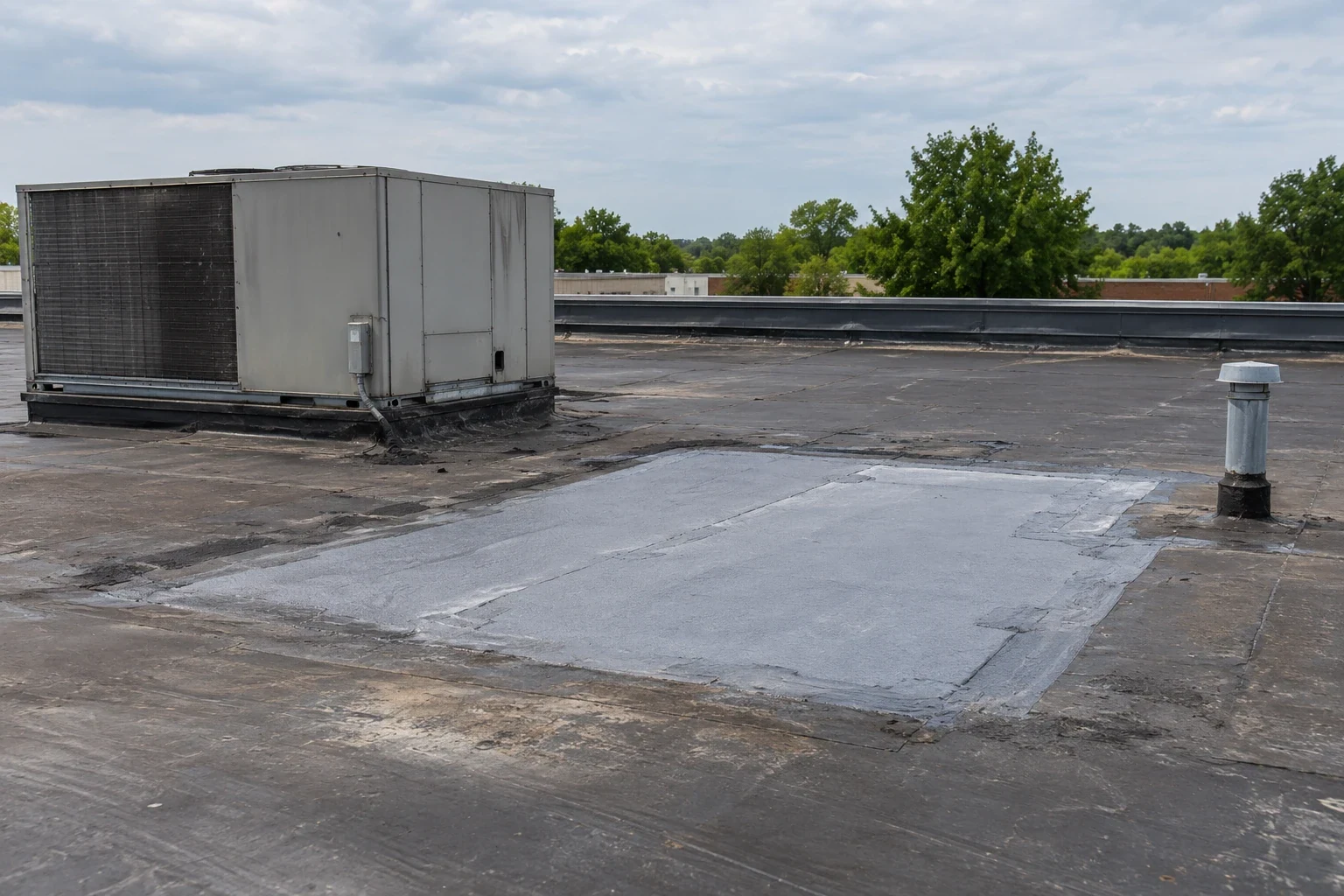
A localized weld or seal repair is worth considering when inspection confirms one defect and the surrounding sheet can accept preparation for a sound connection. Moisture across sections, repeated openings, or attachment loss may shift the work toward investigation or renewal. A scoped repair maps material, prep, access, and the endpoint for the authorized work.
Cost and timing depend on system, repair length, detail count, access, lift and staging, disposal, site restrictions, and concealed conditions. Recovery or replacement requires assumptions about existing layers, attachment, drainage, insulation, and penetrations. We describe what is known and whether an additional survey or sample could alter the choice before expanding a localized repair estimate.
Fort Mill's employer mix includes healthcare, manufacturing, finance, and corporate services. A facility's use can affect when and how work is staged, but the building operation does not identify its roof assembly. We tie options to inspection findings and the property contact's constraints. If one issue is active and others can wait, the scope can list them separately for staged approval.
When roof removal exposes weak deck or moisture beyond the planned patch, we stop at a protected boundary and seek a decision before proceeding. The owner receives the observed extent and any additional work required to close the opening. That keeps a defined repair from quietly becoming a replacement project without review.
Keep the Roof History Current
The closeout record identifies what was inspected, the work zone, material installed, photos, and any limitation or follow-up need. If roof plans use section names, those labels can locate the repair. A later leak report can then be compared with the same seam, drain, or edge without assuming the whole building was included.
A maintenance visit can revisit the conditions most relevant to the system, such as seams, drains, fasteners, flashing, and past repairs. Share prior reports, roof drawings, equipment work, and access rules before setting the route. The record should identify what was reached and which recommendations remain open.
Kingsley Business Park and Kingsley Town Center sit within Fort Mill's broader commercial growth area, but each property retains separate access requirements and roof documents. We keep the findings attached to the individual building and state what additional survey or owner decision is needed to evaluate adjoining sections.
For a roof review, provide the building use, symptom location, current plan, and operating constraints. We will set the inspection boundary and explain whether the evidence supports a local repair, further testing, or a broader renewal comparison. The scope ends at the work the owner authorizes.
Questions About Kingsley Business Park, Fort Mill
Buildings in a business park can have different roof assemblies. We confirm material, attachment, drainage, and repair history at the property before selecting a method.
We coordinate entry, staging, barriers, and protection with the site contact. Work sequence depends on the roof condition, access, weather, and the facility's operating limits.
We mark the affected roof zone, compatible tie-in, access, and protection steps, then record any adjoining area that was not inspected or included.
We protect the opening, document what is exposed, and review the added work with the authorized contact before extending the scope.
Set a Kingsley Business Park Inspection Route
Share the building use, roof plan, leak or damage details, equipment schedule, and access restrictions. We will inspect the defined zones and document the repair or follow-up that the findings support.
